Inflammation/Immunology
-
Inflammation/Immunology Related Products (20636)
Related Products (20636)

-
Antibodies (115)
-
Related Compound Screening Libraries (4)
-
Chick CB12 of type II collagen
 0 ImagesCat. No.: HY-NP0241DSynonyms: Chick cyanogen bromide digested peptide 12
Chick CB12 of type II collagen (Chick cyanogen bromide digested peptide 12) is a cyanobromide digested peptide (CB-peptide) fragment of type II collagen, which can be used to study B cell and T cell epitopes of type II collagen. This product is pepsin-free, making it ideal for studying T cell epitope specificity through proliferation assays. Chick CB12 of type II collagen can also be used as an antigen for analyzing antibody epitope specificity via ELISA.
-
Sigma-1 receptor antagonist 7
 0 ImagesCat. No.: HY-187185CAS No.: 3050643-44-9
Sigma-1 receptor antagonist 7 is a selective sigma-1 receptor antagonist capable of crossing the blood-brain barrier, with an IC50 of 12.7 nM against guinea pig σ1R. Sigma-1 receptor antagonist 7 binds to σ1R, and its binding affinity decreases in the presence of Phenytoin (HY-B0448). Sigma-1 receptor antagonist 7 alleviates mechanical and thermal hyperalgesia induced by acute inflammation in rats. Sigma-1 receptor antagonist 7 can be used for research related to hyperalgesia.
-
Bisindolylmaleimide X
 0 ImagesCat. No.: HY-108136CAS No.: 131848-97-0Synonyms: BIM-X; Ro31-8425
Bisindolylmaleimide X (Ro 31-8425, BIM-X) is a cell-penetrating PKC inhibitor. Bisindolylmaleimide X is a potent cyclin-dependent kinase 2 (CDK2) antagonist with an IC50 of 200 nM. Bisindolylmaleimide X inhibits the proliferation of CD4 T cells in vitro. Bisindolylmaleimide X inhibits eNOS-Ser1177 phosphorylation in human embryonic vein endothelial cells. Bisindolylmaleimide X can be used for research on the immune system and cardiovascular diseases.
-
hCAIX/XII-IN-9
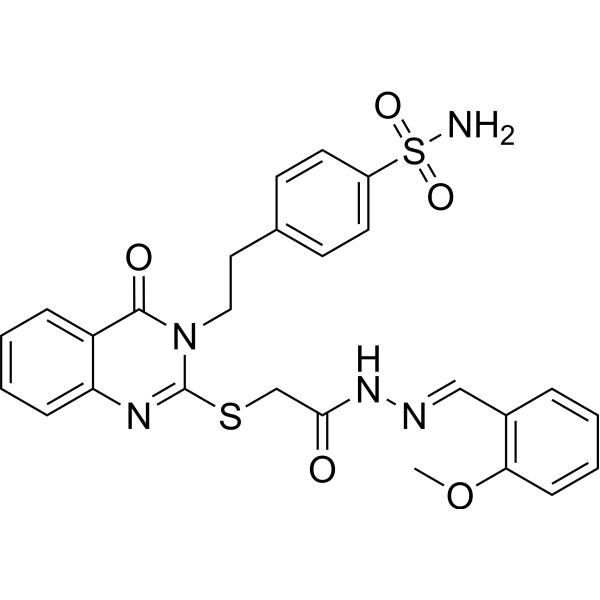 0 ImagesCat. No.: HY-162063
hCAIX/XII-IN-9 (compound 8) is a potent carbonic anhydrase (CA) inhibitor with Ki values of 1658 nM, 184.8 nM, 8.9 nM, 64.8 nM for hCA I, hCA II, hCA IX, and hCA XII, respectively.
-
N-Cholyl-L-threonine
 0 ImagesCat. No.: HY-176965CAS No.: 103444-73-1Synonyms: ThrCA
N-Cholyl-L-threonine (ThrCA) is a Cholic acid (HY-N0324) conjugated with L-threonine (HY-N0658). N-Cholyl-L-threonine possesses PXR agonism activity. N-Cholyl-L-threonine can be used in the research of Crohn's disease.

-
Pheniramine (Standard)
 0 ImagesCat. No.: HY-B0971ARCAS No.: 86-21-5Synonyms: Prophenpyridamine (Standard); Tripoton (Standard); Pheniramine solution (Standard)
Pheniramine (Standard) is the analytical standard of Pheniramine. This product is intended for research and analytical applications. Pheniramine (Prophenpyridamine;Tripoton) is a first-generation histamine H1 receptor antagonist, acts on the central nervous system (CNS) with sedative and hypnotic effect. Pheniramine displays antitumor effect and induces leukemia cells apoptosis. Pheniramine is also a safe and effective local agent that can suppress or relieve pain, with antipruritic effects.
-
QX-004N
 0 ImagesCat. No.: HY-P991277Synonyms: HS-20137
QX-004N (HS-20137) is a monoclonal antibody inhibitor targeting the p19 subunit of interleukin-23 (IL-23). QX-004N is promising for research of immune system diseases and diseases of digestive system.
-
Methyl (E)-cinnamate-d5
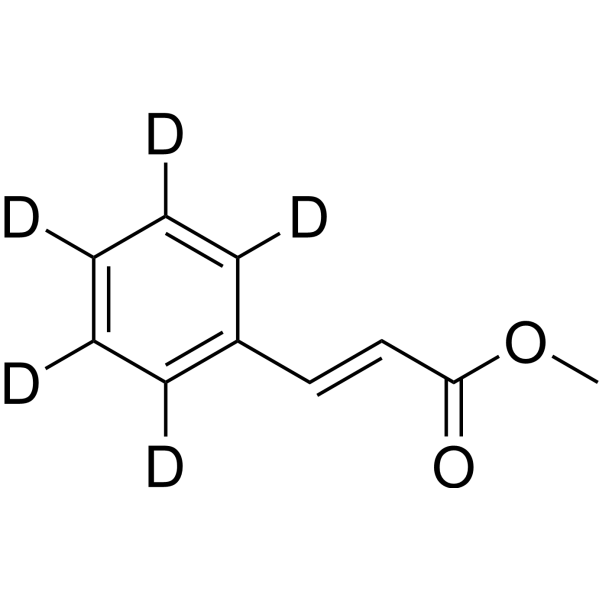 0 ImagesCat. No.: HY-W067056SCAS No.: 61764-82-7Synonyms: Methyl(E)-3-phenylpropenoate-d5
Methyl (E)-cinnamate-d5 is the deuterium labeled Methyl (E)-cinnamate. Methyl (E)-cinnamate (Methyl (E)-3-phenylpropenoate) is a natural flavor compound with anti-inflammatory properties found in Alpinia katsumadai Hayata. Methyl (E)-cinnamate induces apoptosis via reduced anti-apoptotic protein expression, increased TUNEL-positive cells, and apoptotic morphological changes. Methyl (E)-cinnamate can be used for the research of abnormalities of osteoblast function in bone diseases.
-
RG 14893
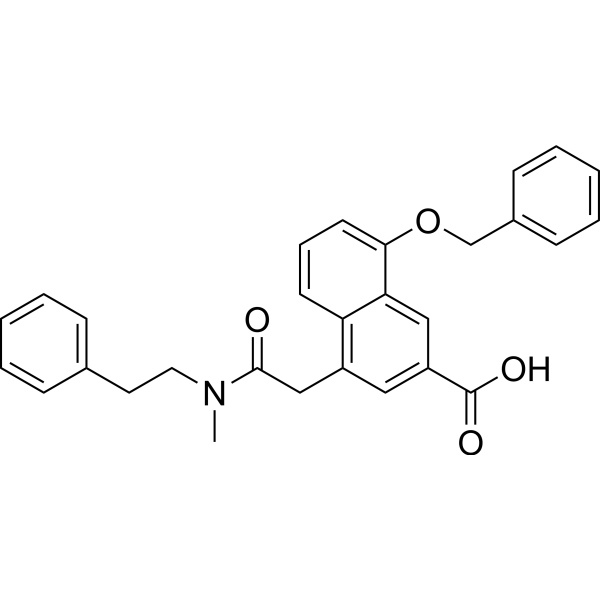 0 ImagesCat. No.: HY-112736CAS No.: 141835-49-6
RG 14893 is a high affinity, competitive, orally active leukotriene B4 receptor antagonist.
-
Urease-IN-7
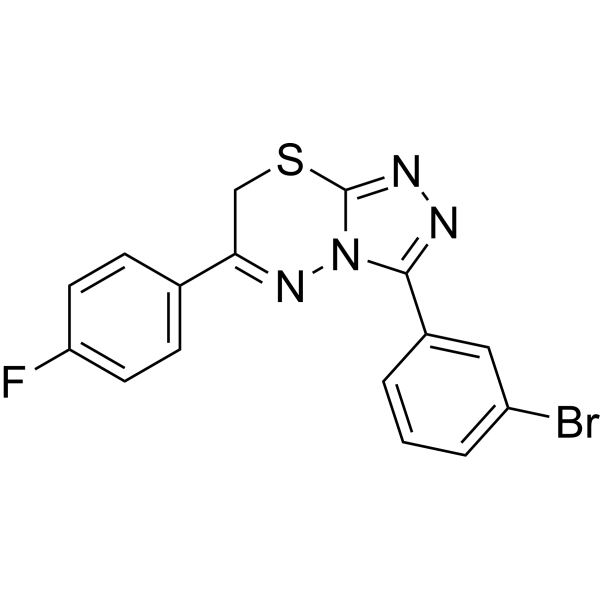 0 ImagesCat. No.: HY-155970CAS No.: 1129406-54-7
Urease-IN-7 (Compound 5k) is a competitive Urease inhibitor (IC50: 3.33 μM, Ki: 3.62 μM). Urease-IN-7 can be used for research of peptic and gastric ulcers.
-
BRD4-IN-3
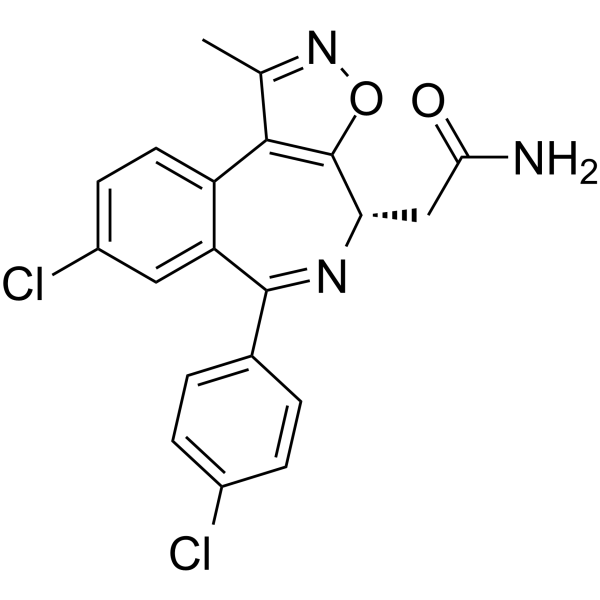 0 ImagesCat. No.: HY-104072CAS No.: 1380087-86-4
BRD4-IN-3 (compound 141) is a potent BRD4 inhibitor with an IC50 of <0.5 µM. BRD4-IN-3 shows cytoxicity for MYC-Raji with an IC50 value of >1 µM.

-
Cys-PKHB1
 0 ImagesCat. No.: HY-P11205CAS No.: 2378833-51-1Synonyms: Cys-txCD47
Cys-PKHB1 (Cys-txCD47) is a peptide conjugated to PKHB1, a CD47 agonist peptide and a thrombospondin-1 peptide mimic with antitumor effects. PKHB1 induces mitochondrial alterations, ROS generation, intracellular Ca+ accumulation, and calcium-dependent cell death in breast cancer cells. PKHB1 induces immune system activation in breast cancer cells through immunogenic cell death.

-
Shionone (Standard)
 0 ImagesCat. No.: HY-N0829RCAS No.: 10376-48-4
Shionone (Standard) is the analytical standard of Shionone. This product is intended for research and analytical applications. Shionone is the major triterpenoid isolated from Aster tataricus, has anti-tussive, anti-inflammatory activities. Shionone possesses a unique six-membered tetracyclic skeleton and 3-oxo-4-monomethyl structure.
-
QA-68
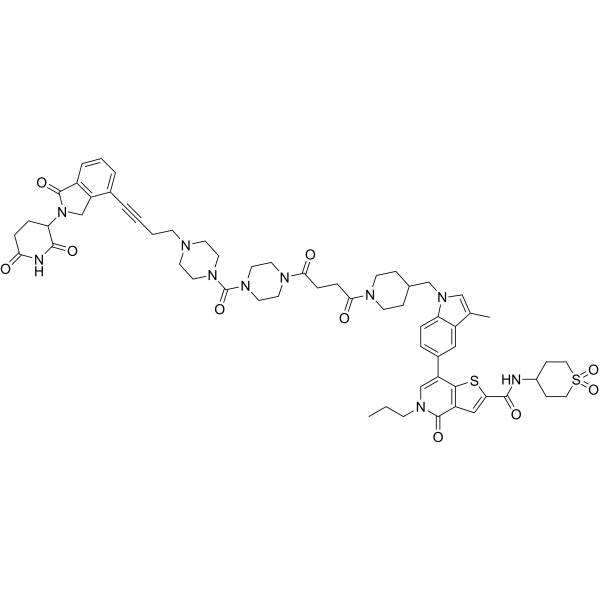 0 ImagesCat. No.: HY-150797Synonyms: QA-68-ZU81
QA-68 (QA-68-ZU81) is an effective PROTAC-class BRD9 degrader. QA-68 can inhibit cell cycle progression and cell colony formation. QA-68 has antiproliferative activity against acute myeloid leukemia (AML) cell lines
-
Centella asiatica extract
 0 ImagesCat. No.: HY-N18667CAS No.: 84696-21-9
Centella asiatica extract is an orally active herbal extract. Centella asiatica extract scavenges free radicals, increases stratum corneum hydration, improves epidermal barrier function, and reduces skin redness and skin pH. Centella asiatica extract inhibits pro-inflammatory cytokines, suppresses p38 MAPK phosphorylation, reduces mast cell infiltration, and decreases the expression of TNF-α, IL-4, IL-5, IL-6, IL-17, CXCL9, iNOS and COX-2. Centella asiatica extract upregulates the expression of BDNF and downregulates the expression of VGLUT1, and exhibits neuroprotective effects under hypoxic conditions. Centella asiatica extract inhibits pro-inflammatory M1 macrophage polarization and prevents adipose tissue senescence. Centella asiatica extract can be used in studies related to hypoxia-induced neurological dysfunction, atopic dermatitis, and obesity-induced insulin resistance.
-
TCL065
 0 ImagesCat. No.: HY-176754CAS No.: 1872269-57-2
TCL065 is an ionizable lipid with a pKa of 6.3. TCL065 can be used to generate lipid nanoparticles (LNPs) for the delivery of mRNA as well as single-guide RNA (sgRNA) both in vitro and in vivo. TCL065-containing LNPs can studied in research for Duchenne muscular dystrophy and gene-editing technologies.
-
INSP-0154
 0 ImagesCat. No.: HY-181753
INSP-0154 is a potent creatine kinase B (CKB)/creatine transporter (SLC6A8) inhibitor. INSP-0154 binds to the SLC6A8 occluded pocket, prevents creatine transport into cells, and protects SLC6A8 cysteine residue C144 from irreversible inactivation. INSP-0154 inhibits creatine uptake in mouse heart tissue. INSP-0154 can be used for the research of cancer.