Inflammation/Immunology
-
Inflammation/Immunology Related Products (20898)
Related Products (20898)

-
Antibodies (115)
-
Related Compound Screening Libraries (4)
-
Hupehenine (Standard)
 0 ImagesCat. No.: HY-N0413RCAS No.: 98243-57-3
Hupehenine (Standard) is the analytical standard of Hupehenine (HY-N0413). This product is intended for research and analytical applications. Hupehenine is an orally active isosteroidal alkaloid that can be extracted from F. hupehensis. Hupehenine exhibits activities such as antitussive, expectorant, anticancer, and antiparasitic. In vitro, Hupehenine can also inhibit α-synuclein seeded fibril formation, making it applicable for the research of Parkinson's disease and other related disorders.
-
HM-279
 0 ImagesCat. No.: HY-185430CAS No.: 3039954-64-5
HM-279 is a potent and orally active ALK5 inhibitor with an IC50 of 4.7 nM. HM-279 shows cross-reactivity with ALK7 (IC50 = 6.8 nM), but HM-279 has fair to good selectivity against other TGF-β receptor family kinases, with 4.5-693-fold selectivity. HM-279 demonstrates antitumor activity in vivo through CD8+ T cell immunity. HM-279 can be used for the research of colon cancer.
-
BLX-2477
 0 ImagesCat. No.: HY-117317CAS No.: 1080008-87-2
BLX-2477 is a potent and selective 15-lipoxygenase-1 (15-LOX-1) inhibitor with an IC50 value of 99 nM. BLX-2477 can inhibit the generation of inflammatory lipid mediators such as 15-hydroxy-eicosatetraenoic acid (15-HETE). BLX-2477 can be used for the research of inflammation and immunology.
-
Ciliatoside A
 0 ImagesCat. No.: HY-N21694CAS No.: 303084-57-3
Ciliatoside A is a naturally bioactive compound that exhibits significant anti-inflammatory, antiviral, and neuroprotective activities. Ciliatoside A serves as a mitophagy inducer and NLRP3 inflammasome inhibitor, activating AMPK, SIRT1, and the PINK1/Parkin axis, and inhibiting pyroptosis and apoptosis. Ciliatoside A promotes autophagic flux, autophagosome-lysosome fusion, mTOR inhibition, and p62-dependent HBc degradation; reduces Aβ aggregation, plaque deposition, microglial/astrocyte activation, and bacterial load; and maintains neuronal integrity, mitochondrial membrane potential, and ATP production. Ciliatoside A is used in research on Alzheimer's disease, Klebsiella pneumoniae-induced pneumonia, hepatitis B virus infection, and inflammation.
-
LQ23
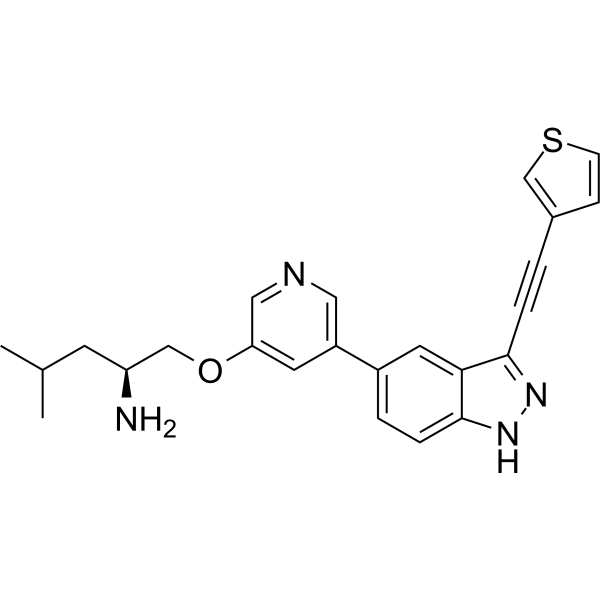 0 ImagesCat. No.: HY-162398CAS No.: 2997615-62-8
LQ23 is a selective inhibitor for CDC2-like kinase 2 (CLK2) with an IC50 of 1.4 nM. LQ23 exhibits anti-inflammatory activity.
-
4-Amino-TEMPO-d17
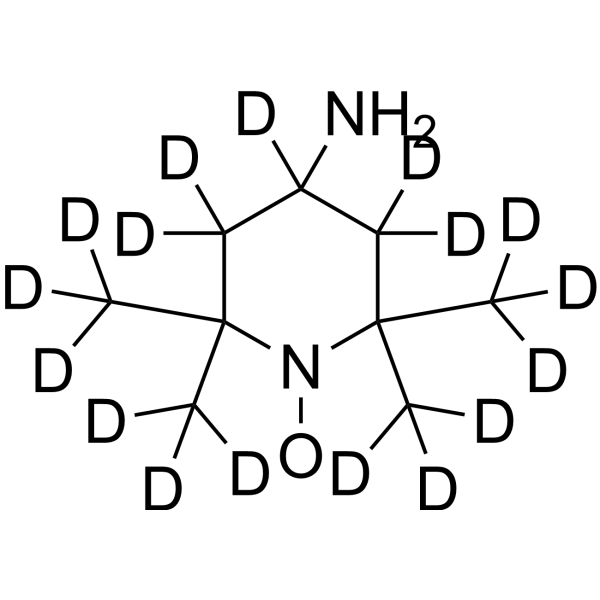 0 ImagesCat. No.: HY-W002004S1CAS No.: 70588-04-4Synonyms: 4-Amino-2,2,6,6-tetramethylpiperidine-1-oxyl-d17
4-Amino-TEMPO-d17 (4-Amino-2,2,6,6-tetramethylpiperidine-1-oxyl-d17) is the deuterium labeled 4-Amino-TEMPO (HY-W002004). 4-Amino-TEMPO (4-Amino-2,2,6,6-tetramethylpiperidine-1-oxyl) is a stable nitroxide radical and N-nucleophile based on TEMPO. 4-Amino-TEMPO has superoxide dismutase-mimetic activity, can protect cells from oxidative damage, and has radioprotective effects. 4-Amino-TEMPO is widely used in fields such as biomedicine, materials science, and industrial production. 4-Amino-TEMPO can be used as a spin label to detect free radicals, an oxidation catalyst in industrial production, and an antioxidant stabilizer for polymers, among others.
-
STAT6-IN-8
 0 Images
STAT6-IN-8 is a STAT6 inhibitor with an IC50 of 0.45 μmol/L. STAT6-IN-8 exhibits potential anti-inflammatory and anti-allergic effects. STAT6-IN-8 can be used for the research of atopic dermatitis.
-
Amfenac
 0 ImagesCat. No.: HY-17479CAS No.: 51579-82-9
Amfenac (AHR 5850) is an orally active and potent anti-inflammatory compound possessing antipyretic and analgesic properties. Amfenac can be used for the research of acute and chronic inflammation.
-
Anti-CD300A Antibody
 0 ImagesCat. No.: HY-P992207
-
Pan-RAS-IN-8
 0 ImagesCat. No.: HY-177762CAS No.: 3103594-37-9
Pan-RAS-IN-8 (Page 152, third row, third from left to right) is a pan-RAS inhibitor. Pan-RAS-IN-8 blocks the binding of RAS to downstream effector molecules by forming a ternary complex, thereby inhibiting the activation of the MAPK and PI3K-AKT signaling pathways. Pan-RAS-IN-8 can be used for the research of cancer, inflammatory diseases and autoimmune diseases.
-
Okra fruit extract
 0 ImagesCat. No.: HY-N20321Synonyms: Abelmoschus esculentus fruit extract
Okra fruit extract (Abelmoschus esculentus fruit extract) is an extract of okra (Abelmoschus esculentus) containing a variety of bioactive components, with properties such as anti-diabetic, antioxidant, antimalarial, antibacterial, anticancer, analgesic, antidiarrheal, and anti-inflammatory effects.
-
Sinulatumolin C
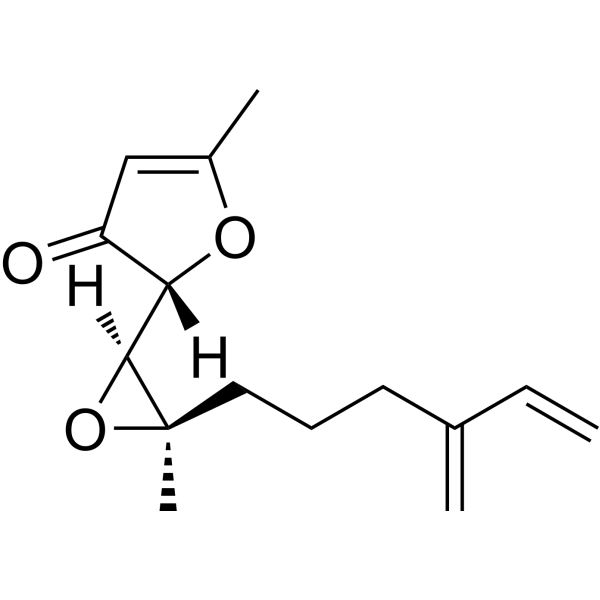 0 ImagesCat. No.: HY-N10454CAS No.: 2570255-84-2
Sinulatumolin C (compound 3) is an anti-inflammatory agent. Sinulatumolin C has significant TNF-α inhibitory activity with an IC50 value of 2.6 μM.
-
ELB041
 0 ImagesCat. No.: HY-P991947Synonyms: AFS98; TG3003
ELB041 (AFS98) is a rat monoclonal anti-murine c-fms antibody (IgG2a). AFS98 inhibits M-CSF–dependent colony formation and cell growth by blocking the binding of M-CSF to its receptor. AFS98 prevents development of fatty streaks in ApoE-deficient mice. ELB041 can be used for the research of atherosclerosis.
-
Viscumneoside V
 0 Images
Viscumneoside V is a plant-derived anti-inflammatory agent present in Viscum album var. coloratum. Viscumneoside V inhibits the expression of MCP-1 and promotes the production of RANTES in LPS-stimulated immune cells. Viscumneoside V can be used for research related to skin rashes.
-
MC4R antagonist-3
 0 ImagesCat. No.: HY-W559510CAS No.: 746661-28-9
-
VB-85247
 0 ImagesCat. No.: HY-173404
VB-85247 is a STING agonist. VB-85247 induces upregulation of inflammatory cytokines IFNα/β, TNFα, IL6, and CXCL10, as well as maturation and activation of dendritic cells by activating the STING pathway. VB-85247 can achieve regression of intrabladder tumors and can be used in bladder cancer research.

-
3-Acetylumbelliferyl β-D-Glucopyranoside
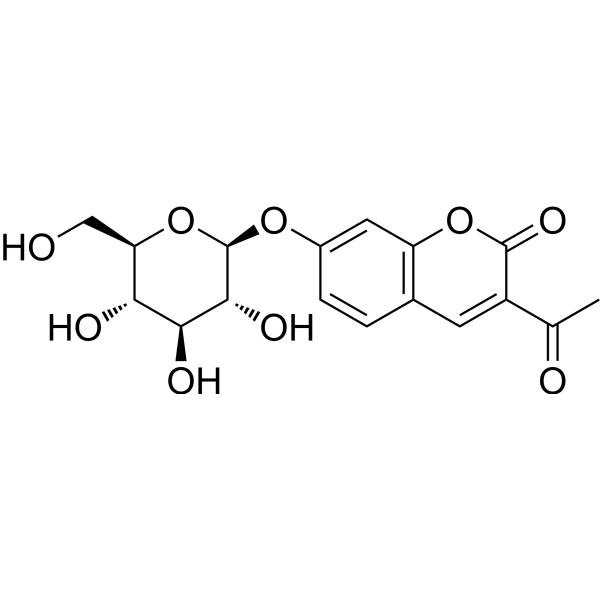 0 ImagesCat. No.: HY-W357142CAS No.: 20943-16-2
3-Acetylumbelliferyl β-D-Glucopyranoside is a fluorogenic substrate for β-glucosidase and can be used as a positive control substrates for β-D-glucosidase.
-
Sirt1/CXCR3-IN-1
 0 ImagesCat. No.: HY-184899
Sirt1/CXCR3-IN-1 is a dual Sirt1/CXCR3 inhibitor with an IC50 of 0.77 μM against Sirt1. Sirt1/CXCR3-IN-1 inhibits dengue virus replication, upregulates the expression of interferon-stimulated genes, and enhances the antiviral defense capacity of the host. Sirt1/CXCR3-IN-1 suppresses CXCR3-mediated T cell chemotaxis and cytokine release, thereby reducing immune activation and inflammatory responses. Sirt1/CXCR3-IN-1 is applicable to research related to dengue virus infection.
-
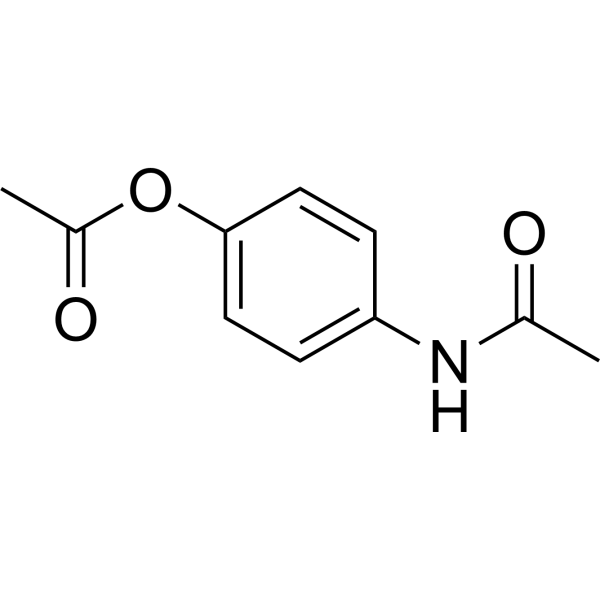
4-Acetamidophenyl acetate (Standard)
 0 Images
4-Acetamidophenyl acetate (Standard) is the analytical standard of 4-Acetamidophenyl acetate (HY-66004). This product is intended for research and analytical applications. 4-Acetamidophenyl acetate is an impurity of Acetaminophen (HY-66005). 4-Acetamidophenyl acetate acts as an intermediate in the synthesis of Acetaminophen. Acetaminophen is a selective COX-2 inhibitor (IC50=25.8 μM), and is a potent hepatic N-acetyltransferase 2 (NAT2) inhibitor.