



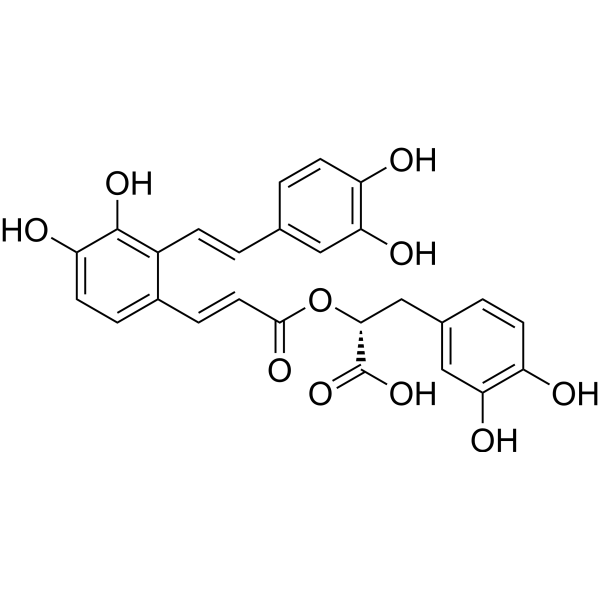
Salvianolic acid A
Based on 13 publication(s) in Google Scholar
Salvianolic acid A could protect the blood brain barrier through matrix metallopeptidase 9 (MMP-9) inhibition and anti-inflammation.
For research use only. We do not sell to patients.
- Purity : 99.72%
- CAS No.: 96574-01-5
- Formula: C26H22O10
- Molecular Weight:494.45
-
Storage:
4°C, protect from light
* In solvent : -80°C, 1 year; -20°C, 6 months (protect from light)

To place orders, for customer services and technical support, please contact: MedChemExpress USA
Tel: 609-228-6898 E-mail: [email protected] [email protected]


-
 Biological Activity
-
Chemical Information
-
Solvent & Solubility
- Protocols
- Purity & Documentation
- References
-
 Help & FAQs


-
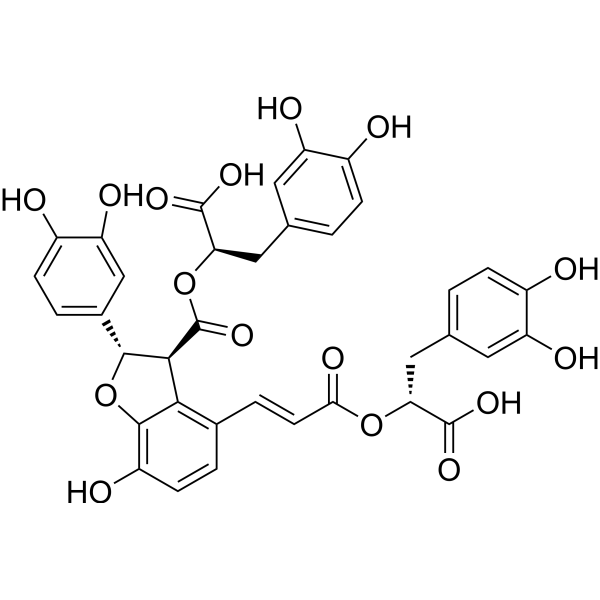
HY-N1362
Salvianolic acid BAntioxidant -

HY-N0318R
Salvianolic acid A (Standard)MMP-9 Inhibitor -
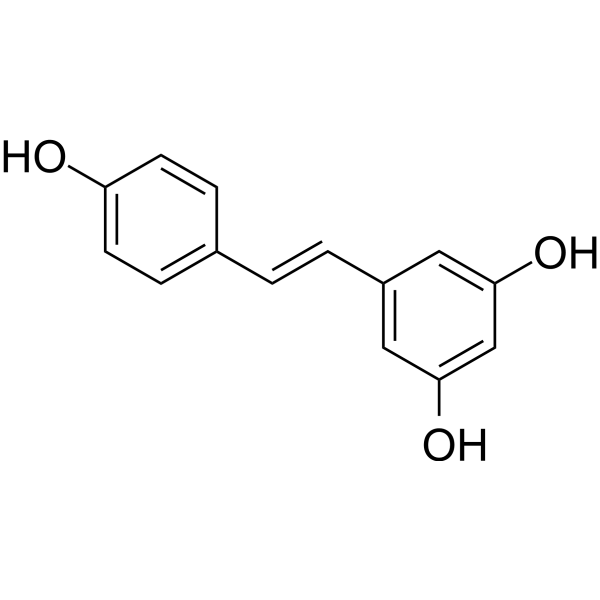
HY-16561
ResveratrolPolyphenolic Phytoalexin -
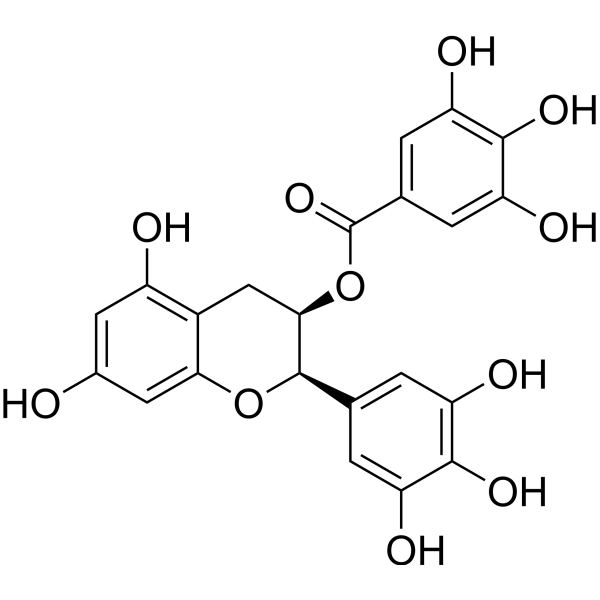
HY-13653
(-)-Epigallocatechin GallateAnticancer Agent -
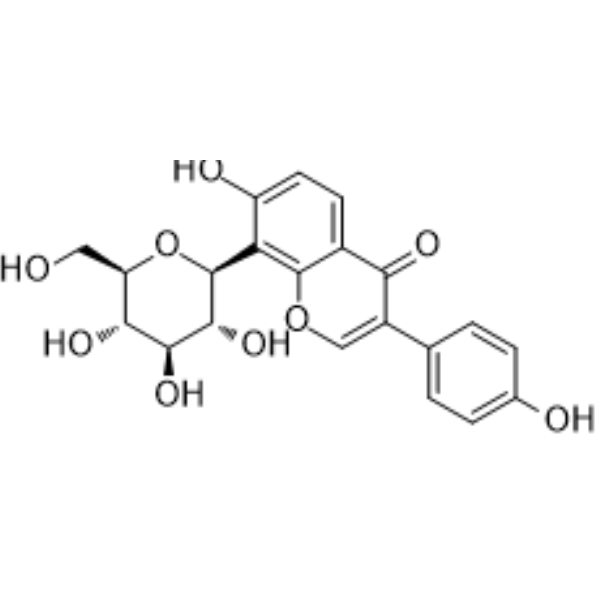
HY-N0145
Puerarin5-HT Receptor Antagonist -
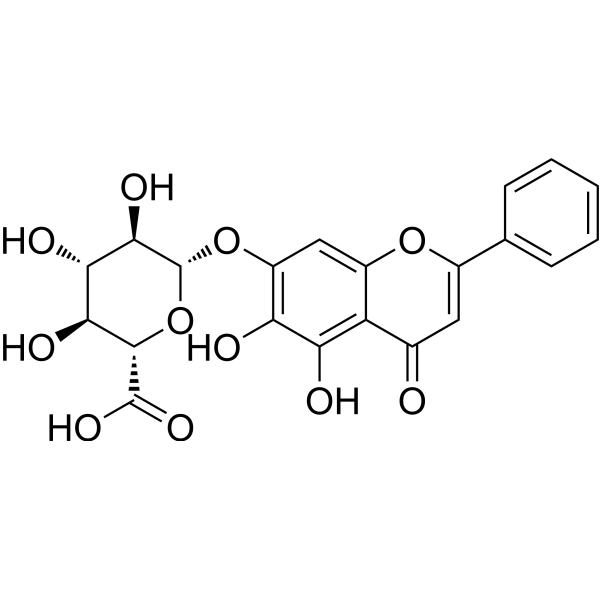
HY-N0197
BaicalinAutophagy Inducer -
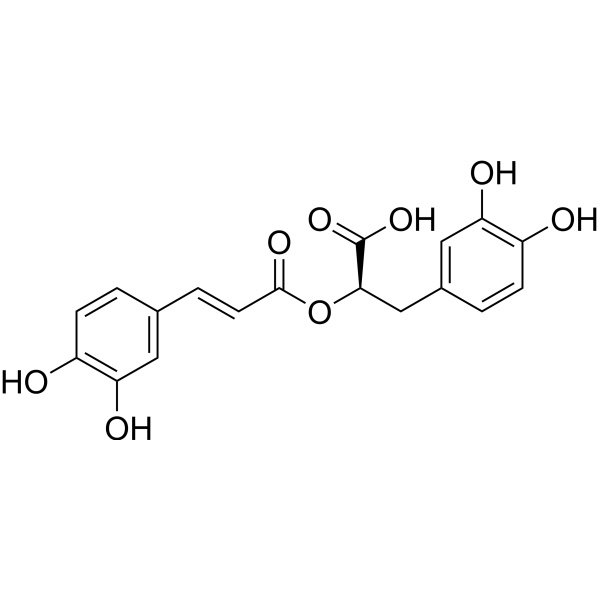
HY-N0529
Rosmarinic acidAnti-Inflammatory Agent -
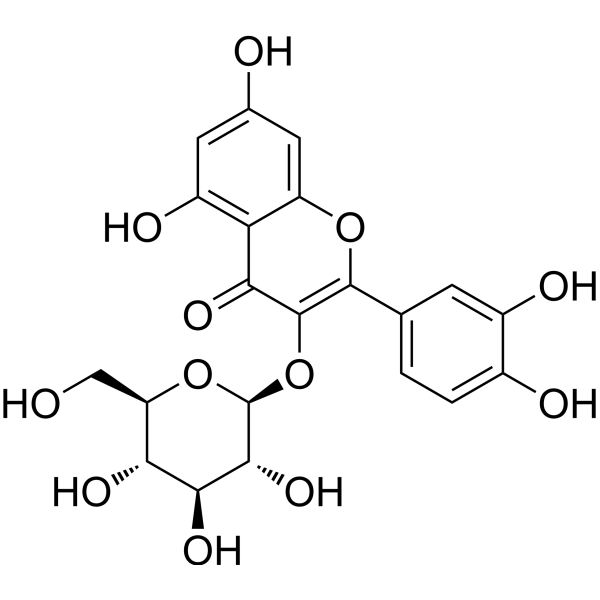
HY-N1445
IsoquercitrinNO Synthase Inhibitor -
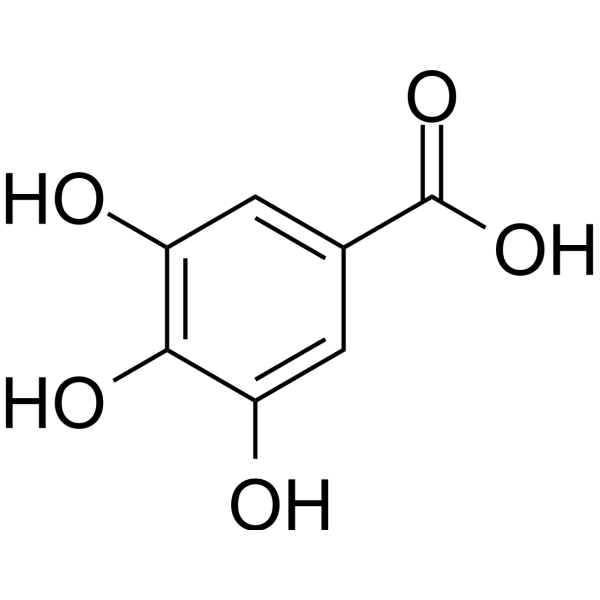
HY-N0523
Gallic acidBioactive Polyhydroxyphenolic Compound -
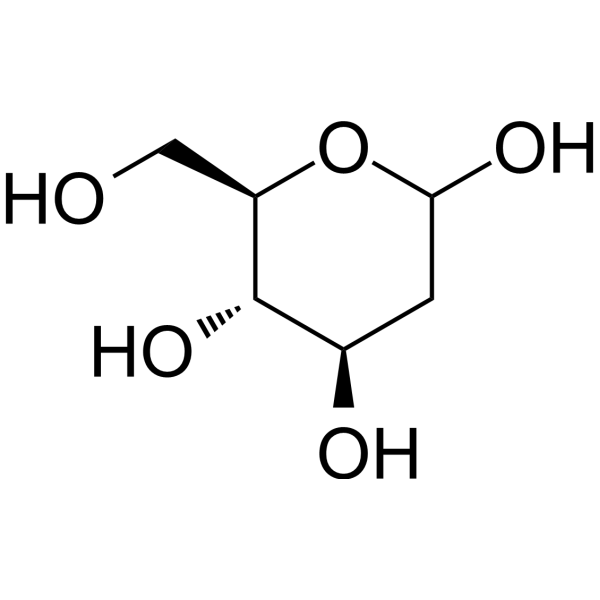
HY-13966
2-Deoxy-D-glucoseGlycolysis Inhibitor -
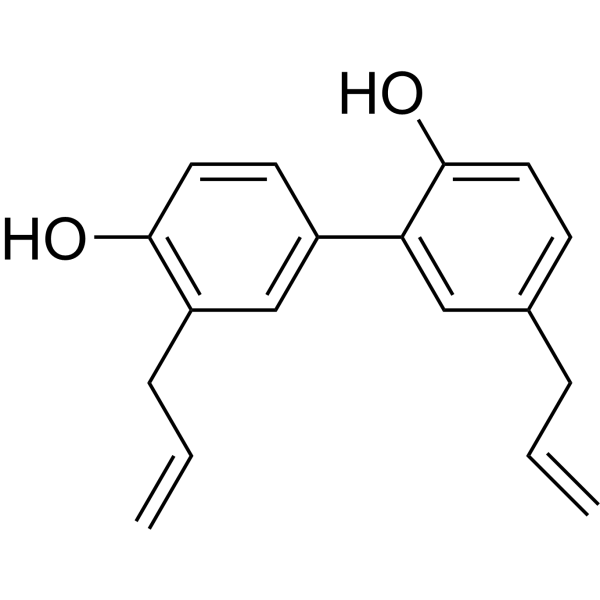
HY-N0003
HonokiolAutophagy Inducer -
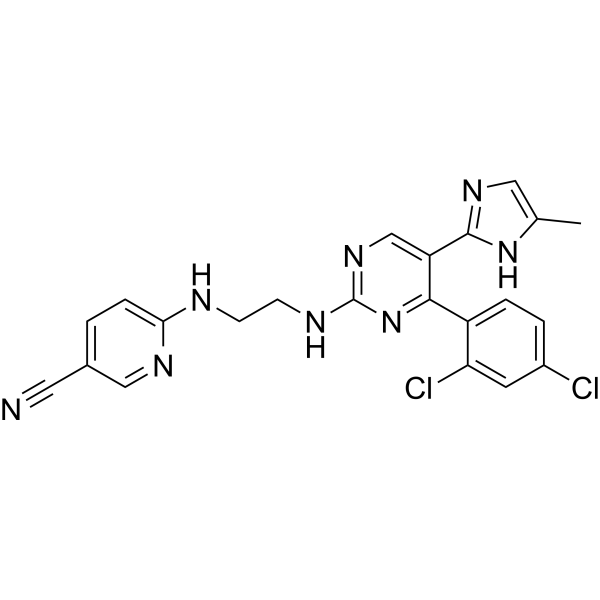
HY-10182
LaduviglusibGSK-3 Inhibitor
Publications Citing Use of MedChemExpress (MCE) Salvianolic acid A
More- Adv Sci (Weinh). 2026 Jul 3:e76401. [Abstract]
- Phytomedicine. 2024 Nov:134:156015. [Abstract]
- Acta Pharmacol Sin. 2025 Sep 3. [Abstract]
- Phytother Res. 2025 Aug 6. [Abstract]
- Life Sci. 2026 Aug 1:398:124444. [Abstract]
- Pharmaceuticals (Basel). 2026 Feb 12;19(2):307. [Abstract]
- Mol Nutr Food Res. 2026 Jan;70(1):e70371. [Abstract]
- Neurochem Res. 2025 Apr 25;50(3):152. [Abstract]
- FASEB J. 2025 Jan 31;39(2):e70364. [Abstract]
- J Virol. 2026 Feb 17;100(2):e0204325. [Abstract]
- Vet Res. 2025 Sep 25;56(1):182. [Abstract]
- Scand J Immunol. 2025 Apr;101(4):e70017. [Abstract]
- Evid Based Complement Alternat Med. 2022 Oct 5:2022:8954035. [Abstract]
 Customer Validation & Images

-
In Vivo Efficacy Study
-
In Vivo Efficacy Study
-
In Vivo Efficacy Study
-
PK/PD Analysis
-
Bio/Physico-chemical Assay


Biological Activity
Description
IC50 & Target
|
MMP-9 |
Cellular Effect
|
Cell Line

|
Type | Value | Description | References |
|---|---|---|---|---|
| HepG2 | CC50 |
86 μM
Compound: 7
|
Cytotoxicity against human HepG2 cells assessed as cell viability incubated for 12 days by WST-1 assay
Cytotoxicity against human HepG2 cells assessed as cell viability incubated for 12 days by WST-1 assay
|
[PMID: 37216809] |
| MOLM-13 | IC50 |
2.5 μM
Compound: 13
|
Antiproliferative activity against human MOLM13 cells by Cell-Titer Glo assay
Antiproliferative activity against human MOLM13 cells by Cell-Titer Glo assay
|
[PMID: 30370766] |
| MOLM-14 | IC50 |
6.2 μM
Compound: 13
|
Antiproliferative activity against human MOLM14 cells by Cell-Titer Glo assay
Antiproliferative activity against human MOLM14 cells by Cell-Titer Glo assay
|
[PMID: 30370766] |
| MV4-11 | IC50 |
>10 μM
Compound: 13
|
Antiproliferative activity against human MV4-11 cells by Cell-Titer Glo assay
Antiproliferative activity against human MV4-11 cells by Cell-Titer Glo assay
|
[PMID: 30370766] |
In Vivo
MedChemExpress (MCE) has not independently confirmed the accuracy of these methods. They are for reference only.
Clinical Trial
| NCT Number | Sponsor | Condition | Start Date |
Phase
|
|---|---|---|---|---|
| NCT01329991 | Plexxikon| | 2011-05 | PHASE1 |


Chemical Information
-
CAS No. 96574-01-5
-
Appearance Solid
-
Molecular Weight 494.45
-
Formula C26H22O10
-
Color Light yellow to yellow
-
SMILES
OC1=CC=C(/C=C/C(O[C@@H](C(O)=O)CC2=CC(O)=C(O)C=C2)=O)C(/C=C/C3=CC(O)=C(O)C=C3)=C1O
-
Structure Classification
-
Shipping
Room temperature in continental US; may vary elsewhere.
-
Storage
4°C, protect from light
* In solvent : -80°C, 1 year; -20°C, 6 months (protect from light)


Publications (13)
-
Journal Impact Factor
-
Most Recent
-
Adv Sci (Weinh)
Cerium Nanoparticle-Mediated Inhibition of the NSUN2/m5C Axis Suppresses Synovial Aggression in Rheumatoid Arthritis. [Abstract]2026 Jul 3:e76401. PMID: 42397077 -
Phytomedicine
Salvianolic acid A inhibits pseudorabies virus infection by directly inactivating the virus particle. [Abstract]2024 Nov:134:156015. PMID: 39244942 -
Acta Pharmacol Sin
Salvianolic acid A from Salvia miltiorrhiza identified as a cap-dependent endonuclease inhibitor for pathogenic arenaviruses. [Abstract]2025 Sep 3. PMID: 40903541
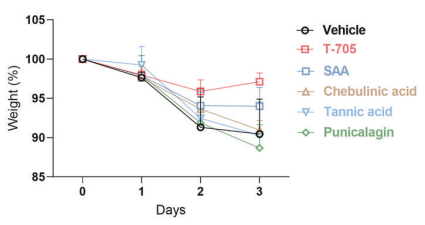
Salvianolic acid A purchased from MedChemExpress. Usage Cited in: Acta Pharmacol Sin. 2025 Sep 3. [Abstract]
Body weight changes in Female BALB/c mice aged 6–8 weeks after treatment with 20 mg/kg of Salvianolic acid A (SAA), Chebulinic Acid, Tannic acid, or Punicalagin via i.g. upon challenge once daily for 3 days. 300 mg/kg T-705 administered via i.g. was used as a positive control.
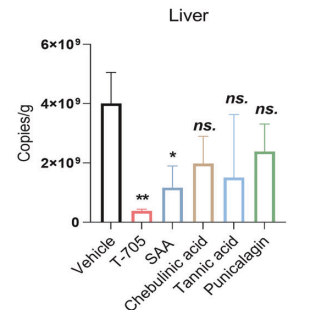
Salvianolic acid A purchased from MedChemExpress. Usage Cited in: Acta Pharmacol Sin. 2025 Sep 3. [Abstract]
T-705 and SAA significantly reduced viral copies in the liver in Female BALB/c mice aged 6–8 weeks after treatment with 20 mg/kg of Salvianolic acid A (SAA), Chebulinic Acid, Tannic acid, or Punicalagin via i.g. upon challenge once daily for 3 days. 300 mg/kg T-705 administered via i.g. was used as a positive control.
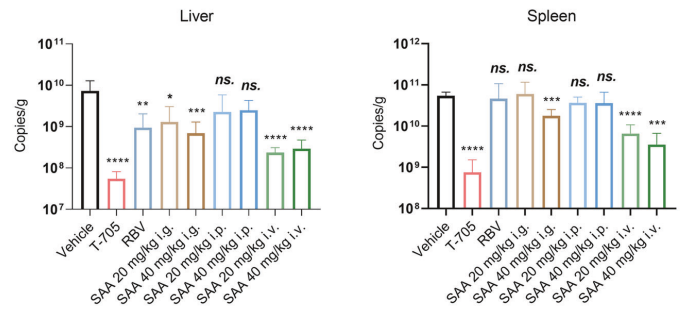
Salvianolic acid A purchased from MedChemExpress. Usage Cited in: Acta Pharmacol Sin. 2025 Sep 3. [Abstract]
Viral copies in livers and spleens were determined at 3 dpi using RT-qPCR through the standard curve method, after the treatments of 20 or 40 mg/kg Salvianolic acid A (SAA) via i.g., i.p., or i.v., or the treatment of 300 mg/kg T-705 or 30 mg/kg RBV via i.g once daily for 3 days in Female BALB/c mice aged 6–8 weeks.
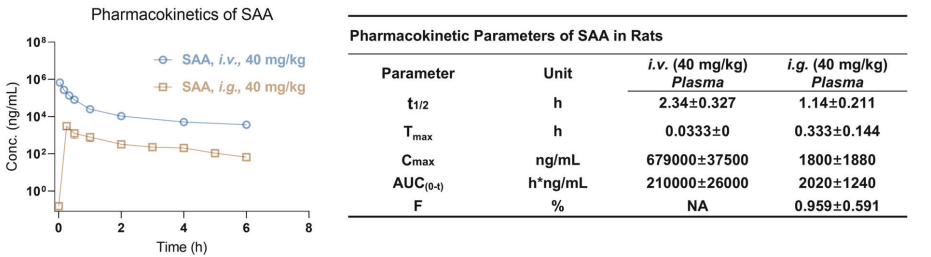
Salvianolic acid A purchased from MedChemExpress. Usage Cited in: Acta Pharmacol Sin. 2025 Sep 3. [Abstract]
Metabolic kinetic data of Salvianolic acid A (SAA) in rats (n = 3) were determined through both i.g. and i.v. administration routes. The table presents the half-life (t1/2), maximum concentration time (Tmax), maximum blood concentration (Cmax), area under curve (AUC), and bioavailability (F) of SAA across various administration methods.
Salvianolic acid A purchased from MedChemExpress. Usage Cited in: Acta Pharmacol Sin. 2025 Sep 3. [Abstract]
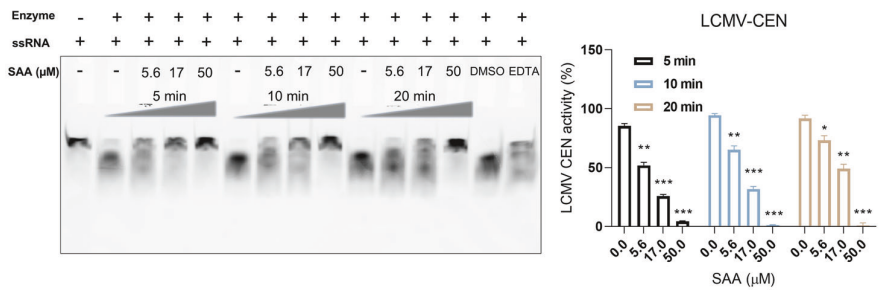
The inhibitory effect of Salvianolic acid A (SAA; 5.6, 17, 50 μM) on the cleavage of LCMV CEN on ssRNA substrate was examined at 5, 10, and 20 min via acrylamide-urea gel electrophoresis. Gray analysis of the corresponding strips was calculated for the inhibition rate, shown in the right panel. The divalent metal ion chelator, EDTA, was used as a positive control.
-
Phytother Res
Salvianolic Acid A Mitigates Osteoporotic Bone Loss by Repressing Reactive Oxygen Species via the Nrf2-HO-1 Pathway. [Abstract]2025 Aug 6. PMID: 40765418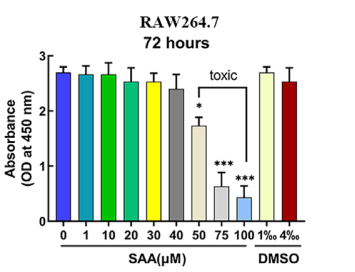
Salvianolic acid A purchased from MedChemExpress. Usage Cited in: Phytother Res. 2025 Aug 6. [Abstract]
Viability of RAW264.7 cells tested by CCK-8 assay after treatment with the indicated dose of Salvianolic acid A (SAA; 0-100 μM) for 72 h.
Salvianolic acid A purchased from MedChemExpress. Usage Cited in: Phytother Res. 2025 Aug 6. [Abstract]
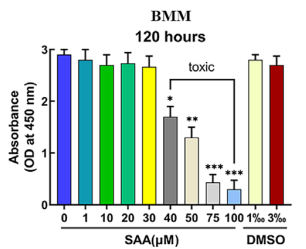
BMMs tested by CCK‐8 assay after treatment with the indicated dose of Salvianolic acid A (SAA; 0-100 μM) for 120 h.
Salvianolic acid A purchased from MedChemExpress. Usage Cited in: Phytother Res. 2025 Aug 6. [Abstract]
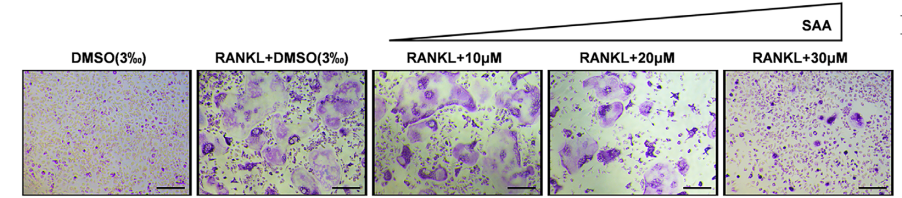
Images of TRAcP staining demonstrating that Salvianolic acid A (SAA; 10, 20, 30 μM) dose-dependently inhibited 3-day osteoclastogenesis of RAW264.7 cells.
-
Life Sci
Salvianolic acid A inhibits tumor cell proliferation and induces chromosomal abnormalities by blocking the citrullinating enzyme PADs. [Abstract]2026 Aug 1:398:124444. PMID: 42107692 -
Pharmaceuticals (Basel)
Discovery of Plant-Derived Natural Compounds as Novel GABA Aminotransferase Inhibitors: Structure-Based Discovery, Experimental Validation, and Molecular Dynamics Analysis. [Abstract]2026 Feb 12;19(2):307. PMID: 41754847 -
Mol Nutr Food Res
Salvianolic Acid A Protects Against Angiotensin II-Induced Hypertensive Kidney Disease by Targeting TLR4 and Inhibiting TLR4/Myd88/PI3K/AKT/NF-κB Pathway. [Abstract]2026 Jan;70(1):e70371. PMID: 41543314 -
Neurochem Res
Salvianolic Acid A Alleviates Sciatic Nerve Injury in Rats Via Inhibiting NLRP3 Inflammasome Through the Activation of Schwann Cells Autophagy. [Abstract]2025 Apr 25;50(3):152. PMID: 40279045 -
FASEB J
Salvianolic acid A promotes bone-fracture healing via balancing osteoblast and osteoclast differentiation. [Abstract]2025 Jan 31;39(2):e70364. PMID: 39878631 -
J Virol
Salvianolic acid A exerts antiviral effects by targeting the S protein, a virulence factor of porcine epidemic diarrhea virus. [Abstract]2026 Feb 17;100(2):e0204325. PMID: 41504445 -
Vet Res
Salvianolic acid A inhibits PRRSV replication via binding to Keap1 to activate the MKRN1-Nrf2-NQO1 pathway. [Abstract]2025 Sep 25;56(1):182. PMID: 40999490 -
Scand J Immunol
Salvianolic Acid A From Salvia miltiorrhiza Suppresses Endometrial Carcinoma Progression via CD40-AKT-NF-κB Pathway. [Abstract]2025 Apr;101(4):e70017. PMID: 40134253 -
Evid Based Complement Alternat Med
Network Pharmacology Analyses of the Pharmacological Targets and Therapeutic Mechanisms of Salvianolic Acid A in Myocardial Infarction. [Abstract]2022 Oct 5:2022:8954035. PMID: 36248430


Solvent & Solubility
In Vitro:
DMSO : 83.33 mg/mL (168.53 mM; Need ultrasonic; Hygroscopic DMSO has a significant impact on the solubility of product, please use newly opened DMSO)
Please refer to the solubility information to select the appropriate solvent. Once prepared, please aliquot and store the solution to prevent product inactivation from repeated freeze-thaw cycles.
Storage method and period of stock solution: -80°C, 1 year; -20°C, 6 months (protect from light). When stored at -80°C, please use it within 1 year. When stored at -20°C, please use it within 6 months.
Please refer to the solubility information to select the appropriate solvent. Once prepared, please aliquot and store the solution to prevent product inactivation from repeated freeze-thaw cycles.
Storage method and period of stock solution: -80°C, 1 year; -20°C, 6 months (protect from light). When stored at -80°C, please use it within 1 year. When stored at -20°C, please use it within 6 months.
Concentration (start) × Volume (start) = Concentration (final) × Volume (final)
In Vivo:
Select the appropriate dissolution method based on your experimental animal and administration route.
- For the following dissolution methods, please ensure to first prepare a clear stock solution using an In Vitro approach and then sequentially add co-solvents:
- To ensure reliable experimental results, the clarified stock solution can be appropriately stored based on storage conditions. As for the working solution for In Vivo experiments, it is recommended to prepare freshly and use it on the same day.
- The percentages shown for the solvents indicate their volumetric ratio in the final prepared solution. If precipitation or phase separation occurs during preparation, heat and/or sonication can be used to aid dissolution.
Add each solvent one by one: 10% DMSO 40% PEG300 5% Tween-80 45% Saline
Solubility: ≥ 2.17 mg/mL (4.39 mM); Clear solution
This protocol yields a clear solution of ≥ 2.17 mg/mL (saturation unknown).
Taking 1 mL working solution as an example, add 100 μL DMSO stock solution (21.7 mg/mL) to 400 μL PEG300, and mix evenly; then add 50 μL Tween-80 and mix evenly; then add 450 μL Saline to adjust the volume to 1 mL.
Preparation of Saline: Dissolve 0.9 g sodium chloride in ddH₂O and dilute to 100 mL to obtain a clear Saline solution.
Add each solvent one by one: 10% DMSO 90% (20% SBE-β-CD in Saline)
Solubility: ≥ 2.17 mg/mL (4.39 mM); Clear solution
This protocol yields a clear solution of ≥ 2.17 mg/mL (saturation unknown).
Taking 1 mL working solution as an example, add 100 μL DMSO stock solution (21.7 mg/mL) to 900 μL 20% SBE-β-CD in Saline, and mix evenly.
Preparation of 20% SBE-β-CD in Saline (4°C, storage for one week): 2 g SBE-β-CD powder is dissolved in 10 mL Saline, completely dissolve until clear.
For the following dissolution methods, please prepare the working solution directly:
It is recommended to prepare fresh solutions and use them promptly within a short period of time.
The percentages shown for the solvents indicate their volumetric ratio in the final prepared solution. If precipitation or phase separation occurs during preparation, heat and/or sonication can be used to aid dissolution.
Add each solvent one by one: Saline
Solubility: 20 mg/mL (40.45 mM); Clear solution; Need ultrasonic
In Vivo Dissolution Calculator
Please enter the basic information of animal experiments:
-
-
-
-
Recommended: Prepare an additional quantity of animals to account for potential losses during experiments.
Please enter your animal formula composition:
-
%DMSO +
Recommended: Keep the proportion of DMSO in working solution below 2% if your animal is weak.
-
%+
-
+%Tween-80 + +
-
%Saline +
The co-solvents required include: DMSO, . All of co-solvents are available by MedChemExpress (MCE). , Tween 80. All of co-solvents are available by MedChemExpress (MCE).
Working solution concentration: 0.22 mg/mL
Method for preparing stock solution: mg drug dissolved in μL DMSO. Stock solution concentration: mg/mL. * In solvent : -80°C, 1 year; -20°C, 6 months (protect from light)
1. Take μL DMSO stock solution;
2. Add μL .
μL , mix evenly;
3. Then add μL Tween 80, mix evenly;
4. Then add μL
Please ensure that the stock solution in the first step is dissolved to a clear state, and add co-solvents in sequence. You can use ultrasonic heating (ultrasonic cleaner, recommended frequency 20-40 kHz), vortexing, etc. to assist dissolution.

Protocols
-
Mitochondrial membrane-potential fluorescent assay
Mitochondrial membrane potential fluorescent assays estimate ΔΨm in living cells using lipophilic cationic dyes such as TMRM, TMRE, rhodamine 123, and JC-1, which accumulate in mitochondria according to membrane polarization; loss of signal after FCCP or CCCP treatment is interpreted as mitochondrial depolarization. TMRM/TMRE and rhodamine 123 are commonly used for semi-quantitative live-cell microscopy or flow cytometry, while JC-1 can report a shift from red aggregate fluorescence to green monomer fluorescence during depolarization; interpretation requires controls because dye concentration, quenching mode, cell type, dye efflux, and mitochondrial mass can affect fluorescence independently of ΔΨm.
-
Mitochondrial membrane-potential and mitochondrial mass staining
Mitochondrial membrane potential staining measures the electrochemical polarization across the mitochondrial inner membrane in live cells using lipophilic cationic fluorescent probes; early rhodamine-based work showed that selective mitochondrial dye accumulation is lost when the mitochondrial transmembrane potential is dissipated. JC-1 reports mitochondrial polarization by shifting from green monomer fluorescence to red J-aggregate fluorescence as dye concentration increases within energized mitochondria; therefore, the red/green fluorescence ratio is used as a relative readout of mitochondrial membrane potential. TMRE or TMRM staining provides a single-channel relative readout because these cationic rhodamine esters accumulate in polarized mitochondria, and lower fluorescence indicates reduced mitochondrial polarization when acquisition and dye-loading conditions are controlled. Mitochondrial mass staining is commonly performed with MitoTracker Green FM or related MitoTracker dyes as
-
Research Protocol for Inflammation-related Diseases
The NLRP3 inflammasome is a cytosolic innate immune signaling platform that integrates priming signals and danger-signal activation to promote caspase-1 activation, maturation of IL-1β and IL-18, and gasdermin D-mediated pyroptotic cell death. The core experimental logic is to determine whether inflammatory disease phenotypes are driven by increased NLRP3 expression, ASC-containing inflammasome assembly, caspase-1 cleavage, GSDMD cleavage, and extracellular release of IL-1β/IL-18 rather than by nonspecific cell injury alone. The pathway is strongly linked to inflammation-related disease phenotypes because monosodium urate crystals activate NALP3/NLRP3 inflammasome signaling in gout-like crystal inflammation, cholesterol crystals activate NLRP3 inflammasomes in atherogenesis models, and DSS-induced intestinal inflammation has been reported to involve NLRP3 inflammasome activity. However, experimental colitis studies also show context-dependent protective effects of NLRP3 inflammasome co


Purity & Documentation
-
Data Sheet (276 KB)
-
SDS (394 KB)
- English - EN (394 KB)
- Français - FR (394 KB)
- Deutsch - DE (394 KB)
- Norwegian - NO (394 KB)
- Español - ES (394 KB)
- Swedish - SV (394 KB)
- Italian - IT (394 KB)
- Korean - KR (394 KB)
- Portuguese - PT (394 KB)
-
Handling Instructions (2659 KB)
References


Complete Stock Solution Preparation Table
Please refer to the solubility information to select the appropriate solvent. Once prepared, please aliquot and store the solution to prevent product inactivation from repeated freeze-thaw cycles.
Storage method and period of stock solution: -80°C, 1 year; -20°C, 6 months (protect from light). When stored at -80°C, please use it within 1 year. When stored at -20°C, please use it within 6 months.
| Optional Solvent | Concentration Solvent Mass | 1 mg | 5 mg | 10 mg | 25 mg |
|---|---|---|---|---|---|
| DMSO | 1 mM | 2.0224 mL | 10.1122 mL | 20.2245 mL | 50.5612 mL |
| 5 mM | 0.4045 mL | 2.0224 mL | 4.0449 mL | 10.1122 mL | |
| 10 mM | 0.2022 mL | 1.0112 mL | 2.0224 mL | 5.0561 mL | |
| 15 mM | 0.1348 mL | 0.6741 mL | 1.3483 mL | 3.3707 mL | |
| 20 mM | 0.1011 mL | 0.5056 mL | 1.0112 mL | 2.5281 mL | |
| 25 mM | 0.0809 mL | 0.4045 mL | 0.8090 mL | 2.0224 mL | |
| 30 mM | 0.0674 mL | 0.3371 mL | 0.6741 mL | 1.6854 mL | |
| 40 mM | 0.0506 mL | 0.2528 mL | 0.5056 mL | 1.2640 mL | |
| 50 mM | 0.0404 mL | 0.2022 mL | 0.4045 mL | 1.0112 mL | |
| 60 mM | 0.0337 mL | 0.1685 mL | 0.3371 mL | 0.8427 mL | |
| 80 mM | 0.0253 mL | 0.1264 mL | 0.2528 mL | 0.6320 mL | |
| 100 mM | 0.0202 mL | 0.1011 mL | 0.2022 mL | 0.5056 mL |


Salvianolic acid A Related Classifications
HY-N0318 Related Classifications
 Powered by Bioz