



Sincalide
Based on 4 publication(s) in Google Scholar
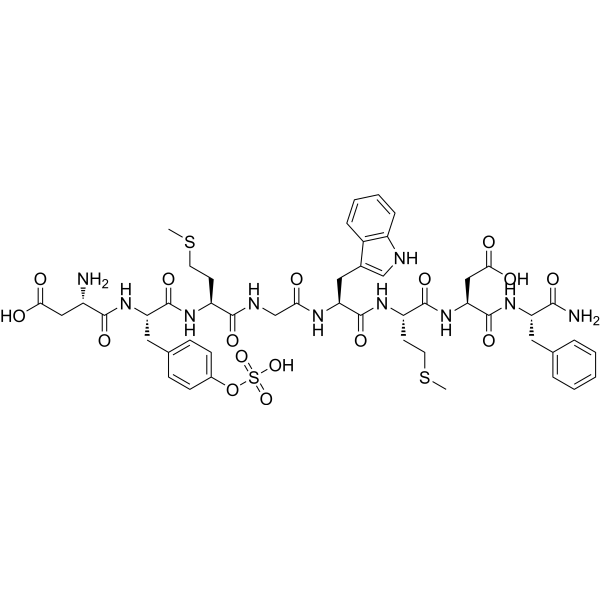
Sincalide (Cholecystokinin octapeptide, CCK-8) is a rapid-acting amino acid polypeptide hormone analogue of cholecystokinin (CCK) for intravenous use in postevacuation cholecystography. Sincalide is a major bioactive segment of CCK that retains most of the biological activities of CCK. Sincalide can promote gallbladder contraction by injection and helps diagnose gallbladder and pancreas disorders. Sincalide can increase bile secretion, cause the gallbladder to contract and relax the sphincter of Oddi, resulting in bile drainage into the duodenum. Sincalide is a major bioactive segment of CCK that retains most of the biological activities of CCK.
Nur für Forschungszwecke. Wir verkaufen nicht an Patienten.
- Reinheit : 99.30%
- CAS. Nr.: 25126-32-3
- Formel: C49H62N10O16S3
- Molecular Weight:1143.27
-
Speicherung:
Sealed storage, away from moisture and light, under nitrogen.
Powder -80°C, 2 years , -20°C, 1 year* In solvent : -80°C, 6 months; -20°C, 1 month (sealed storage, away from moisture and light, under nitrogen)

To place orders, for customer services and technical support, please contact: MedChemExpress USA
Tel: 609-228-6898 E-mail: [email protected] [email protected]


-
 Biologische Aktivität
-
Chemical Information
-
Lösungsmittel & Löslichkeit
- Protokoll
- Reinheit & Dokumentation
- Verweise
-
 Help & FAQs


-
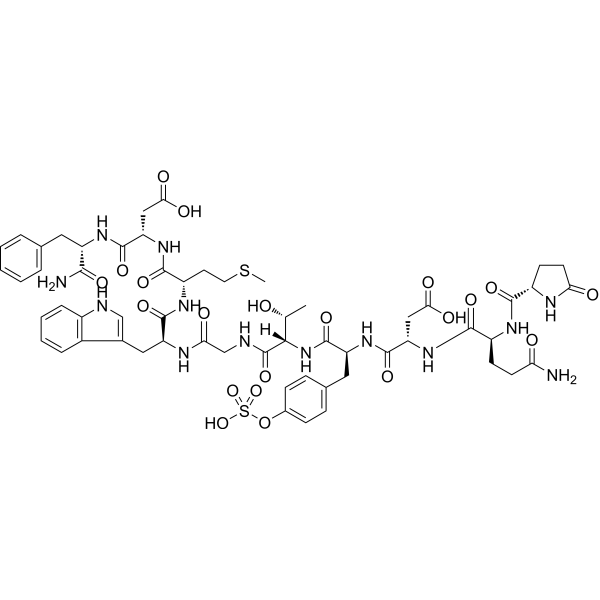
HY-A0190
CaeruleinCholecystokinin Receptor Agonist -
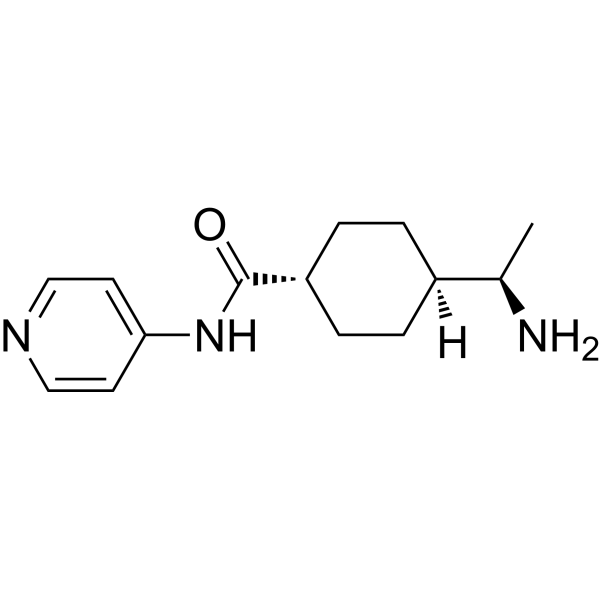
HY-10071
Y-27632ROCK Inhibitor -
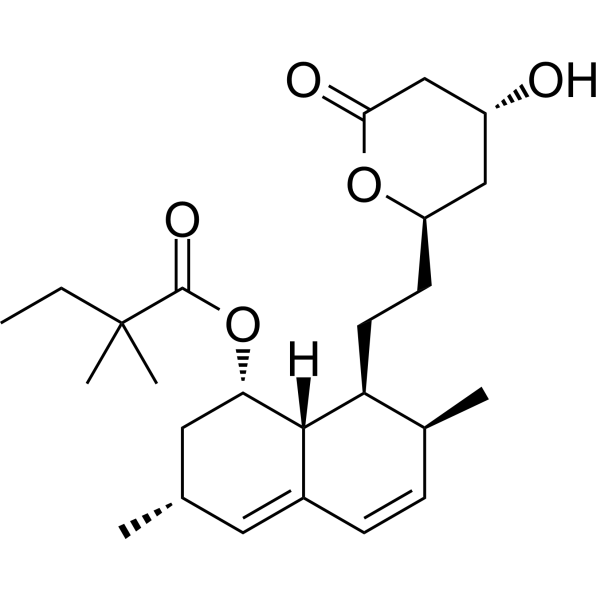
HY-17502
SimvastatinHMGCR Inhibitor -
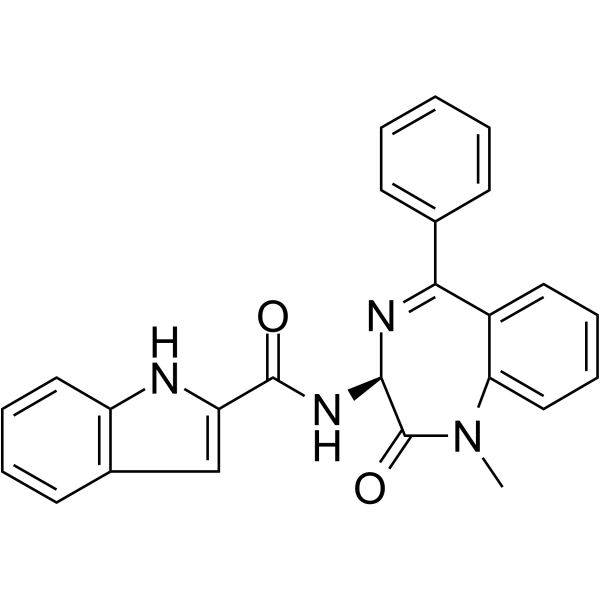
HY-106301
DevazepideCCK Receptor Antagonist -
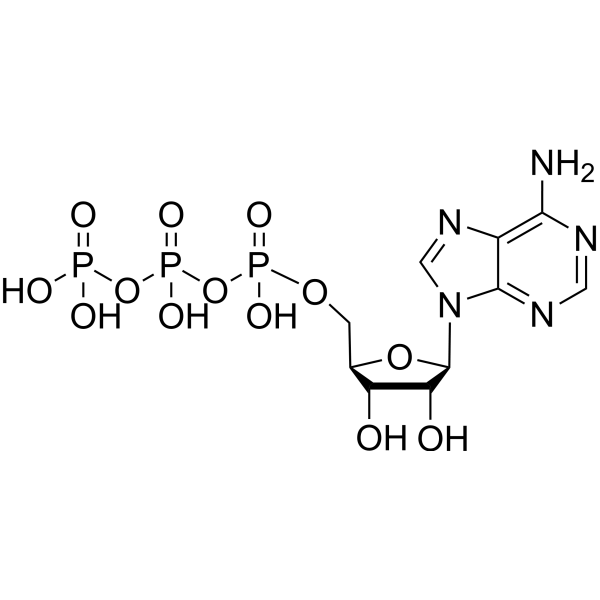
HY-B2176
ATPEndogenous Metabolite -
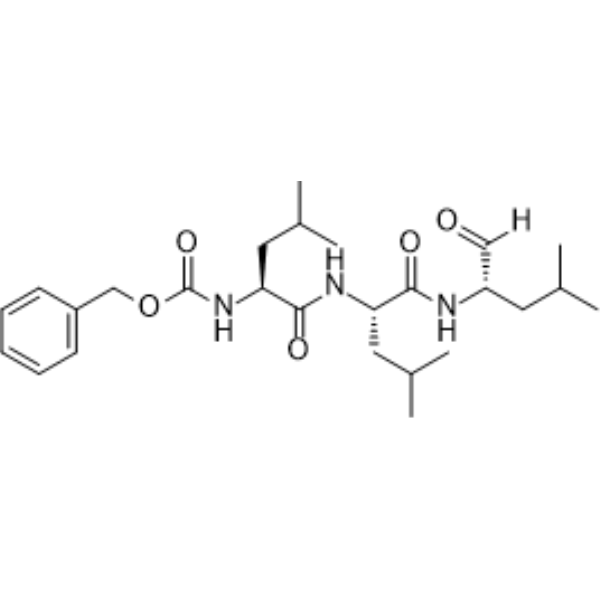
HY-13259
MG-132Proteasome Inhibitor -
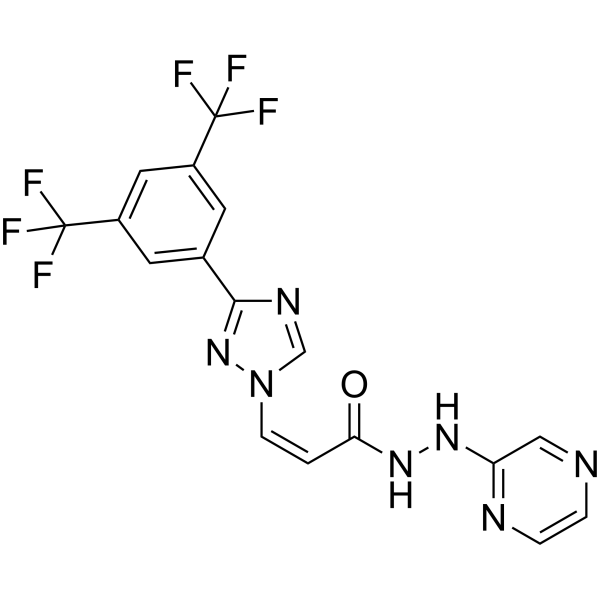
HY-17536
SelinexorCRM1 Inhibitor -
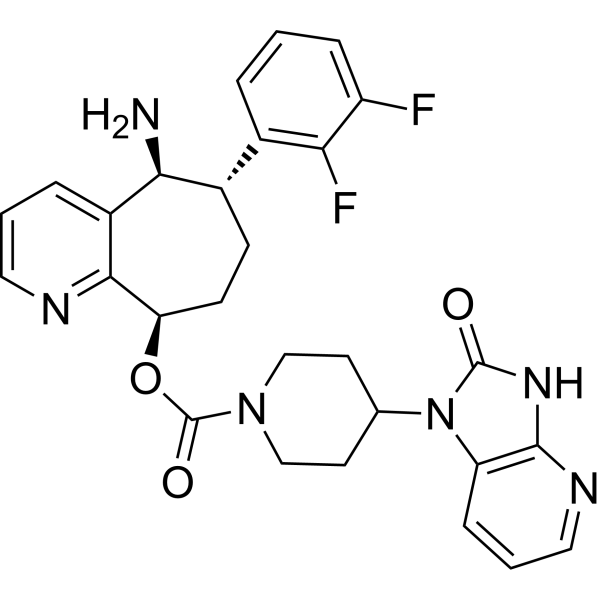
HY-15498
RimegepantCGRP/AMY1 Receptor Antagonist -
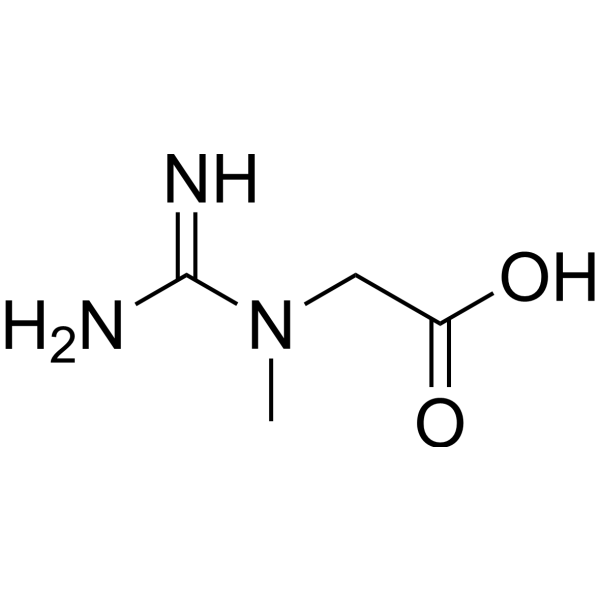
HY-W010388
CreatineEndogenous Metabolite -
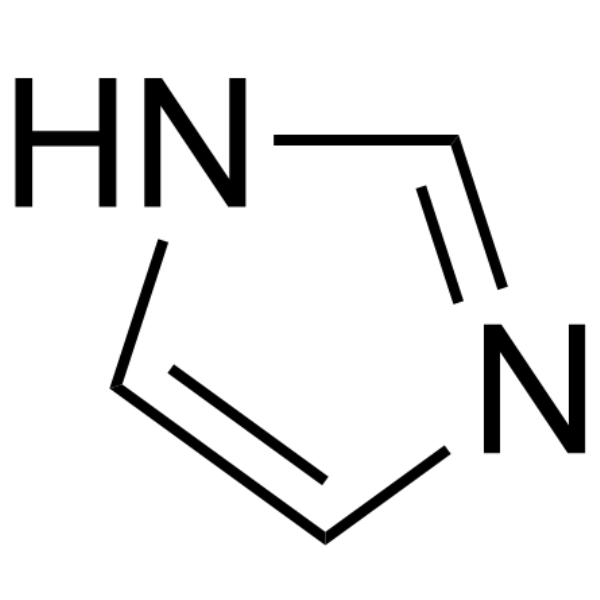
HY-D0837
ImidazoleAChEI Inhibitor, XO Inhibitor, Thromboxane Inhibitor -
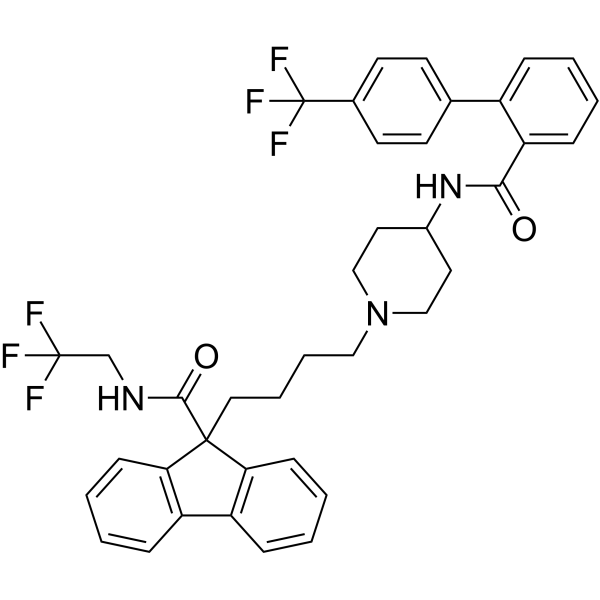
HY-14667
LomitapideMTP Inhibitor -
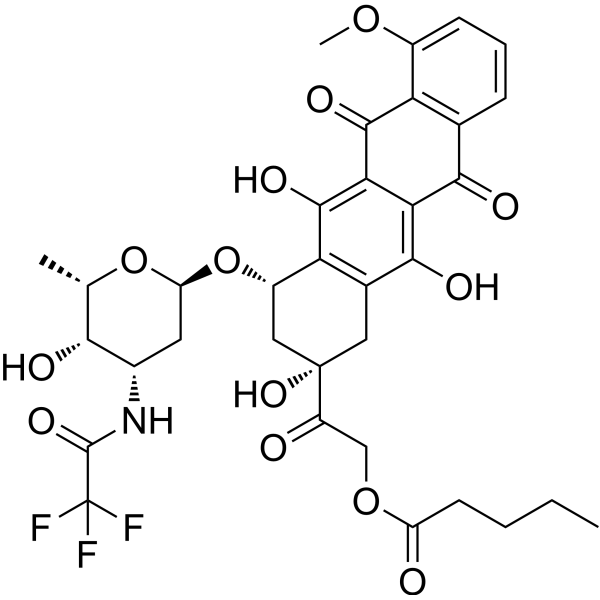
HY-13772
ValrubicinAntibiotic
Publications Citing Use of MedChemExpress (MCE) Sincalide
More Customer Validation & Images

-
RT-PCR
-
Cell Proliferation/Viability Assay
-
Cell Proliferation/Viability Assay
-
Bio/Physico-chemical Assay
-
Cell Imaging/Staining


Biologische Aktivität
Beschreibung
Cellular Effect
|
Cell Line

|
Type | Value | Description | References |
|---|---|---|---|---|
| CHO | EC50 |
0.63 nM
Compound: CCK-8
|
Affinity against Cholecystokinin type B receptor expressed in CHO cells on rat brain.
Affinity against Cholecystokinin type B receptor expressed in CHO cells on rat brain.
|
[PMID: 11020275] |
| CHO | IC50 |
1.2 x 10⁻¹⁰ M
Compound: CCK-8s
|
Displacement of [125I]CCK-8s from human recombinant CCK-B receptor expressed in CHO cells
Displacement of [125I]CCK-8s from human recombinant CCK-B receptor expressed in CHO cells
|
[PMID: 26988801] |
| CHO | IC50 |
1.3 x 10⁻¹⁰ M
Compound: CCK-8s
|
Displacement of [125I]CCK-8s from human recombinant CCK-A receptor expressed in CHO cells
Displacement of [125I]CCK-8s from human recombinant CCK-A receptor expressed in CHO cells
|
[PMID: 26988801] |
| CHO | IC50 |
1.2 x 10⁻¹⁰ M
Compound: CCK-8s
|
Displacement of [125I]CCK-8s from human recombinant CCK2 receptor expressed in CHO cells measured after 60 mins by scintillation counting method
Displacement of [125I]CCK-8s from human recombinant CCK2 receptor expressed in CHO cells measured after 60 mins by scintillation counting method
|
[PMID: 27876250] |
| CHO | IC50 |
1.3 x 10⁻¹⁰ M
Compound: CCK-8s
|
Displacement of [125I]CCK-8s from human recombinant CCK1 receptor expressed in CHO cells measured after 60 mins by scintillation counting method
Displacement of [125I]CCK-8s from human recombinant CCK1 receptor expressed in CHO cells measured after 60 mins by scintillation counting method
|
[PMID: 27876250] |
| CHO | EC50 |
0.63 nM
Compound: CCK8
|
Effective concentration for the stimulation of Inositol Phosphate accumulation in CHO cells expressing wild-type Cholecystokinin type B receptor
Effective concentration for the stimulation of Inositol Phosphate accumulation in CHO cells expressing wild-type Cholecystokinin type B receptor
|
[PMID: 9057851] |
| HEK293 | EC50 |
27 nM
Compound: CCK-8, SO3
|
Antagonist activity at CCK2 receptor expressed in HEK293 cells assessed as accumulation of [3H]inositol phosphates by PI assay
Antagonist activity at CCK2 receptor expressed in HEK293 cells assessed as accumulation of [3H]inositol phosphates by PI assay
|
[PMID: 16686530] |
| HEK293 | EC50 |
28 nM
Compound: CCK-8, SO3
|
Antagonist activity at CCK1 receptor expressed in HEK 293 cells assessed as accumulation of [3H]inositol phosphates by PI assay
Antagonist activity at CCK1 receptor expressed in HEK 293 cells assessed as accumulation of [3H]inositol phosphates by PI assay
|
[PMID: 16686530] |
| Jurkat | EC50 |
2 nM
Compound: CCK-8S
|
Compound was evaluated for calcium mobilization in Jurkat cells
Compound was evaluated for calcium mobilization in Jurkat cells
|
[PMID: 10866391] |
| Jurkat | EC50 |
0.093 nM
Compound: sincalide
|
Displacement of [125I]CCK-8 from CCK2 receptor in human FGS7 Jurkat cells
Displacement of [125I]CCK-8 from CCK2 receptor in human FGS7 Jurkat cells
|
[PMID: 16562853] |
In Vitro
Sincalide (Cholecystokinin octapeptide, CCK-8), as a novel cardiovascular hormone, has a significant inhibitory effect on myocardial fibrosis in noninfarcted areas. Sincalide also plays a positive role in fighting inflammation, apoptosis and collagen deposition. Sincalide protects H9c2 cardiomyoblasts from Ang II-induced apoptosis partly via activation of the CCK1 receptor and the phosphatidyqinositol-3 kinase/protein kinase B (PI3K/Akt) signaling pathway[3].
MedChemExpress (MCE) has not independently confirmed the accuracy of these methods. They are for reference only.
-
Cell Line:H9c2 cells
-
Concentration:0.001, 0.01, 0.1, 1, 10, or 100 μmol/L
-
Incubation Time:24 h
-
Result:Attenuated Ang II‐induced toxicity in H9c2 cells
-
Cell Line:H9c2 cells
-
Concentration:0.001, 0.01, 0.1, 1, 10, or 100 μmol/L
-
Incubation Time:24 h
-
Result:Decreased apoptotic cells, and prevented Ang II‐induced cytotoxicity that involves modulation of the PI3K/Akt pathway.
-
Cell Line:H9c2 cells
-
Concentration:0.001, 0.01, 0.1, 1, 10, or 100 μmol/L
-
Incubation Time:24 h
-
Result:Expressed the protein and mRNAs of CCK and both its receptors in H9c2 cells.
-
Cell Line:H9c2 cells
-
Concentration:0.001, 0.01, 0.1, 1, 10, or 100 μmol/L
-
Incubation Time:24 h
-
Result:Increased the protein and mRNA expression levels of CCK and decreased CCK 1 receptor expression levels at both the protein and mRNA levels with Ang II stimulation markedly.
In Vivo
MedChemExpress (MCE) has not independently confirmed the accuracy of these methods. They are for reference only.
-
Animal Model:MI rat model[4]
-
Dosage:50 μg/kg
-
Administration:i.p.; 50 μg/kg/d; for 4 weeks
-
Result:Had significant inhibitory effect on myocardial fibrosis in noninfarcted areas.


Chemical Information
-
CAS. Nr. 25126-32-3
-
Appearance Solid
-
Molecular Weight 1143.27
-
Formel C49H62N10O16S3
-
Color White to off-white
-
Synonyms
Cholecystokinin octapeptide; CCK-8; SQ19844
-
Sequence
Asp-{SO3H-Tyr}-Met-Gly-Trp-Met-Asp-Phe-NH2
-
Sequence Shortening
D-{SO3H-Tyr}-MGWMDF-NH2
-
Versand
Room temperature in continental US; may vary elsewhere.
-
Speicherung
Sealed storage, away from moisture and light, under nitrogen
Powder -80°C 2 years -20°C 1 year * In solvent : -80°C, 6 months; -20°C, 1 month (sealed storage, away from moisture and light, under nitrogen)


Publications (4)
-
Journal Impact Factor
-
Most Recent
-
Antioxidants (Basel)
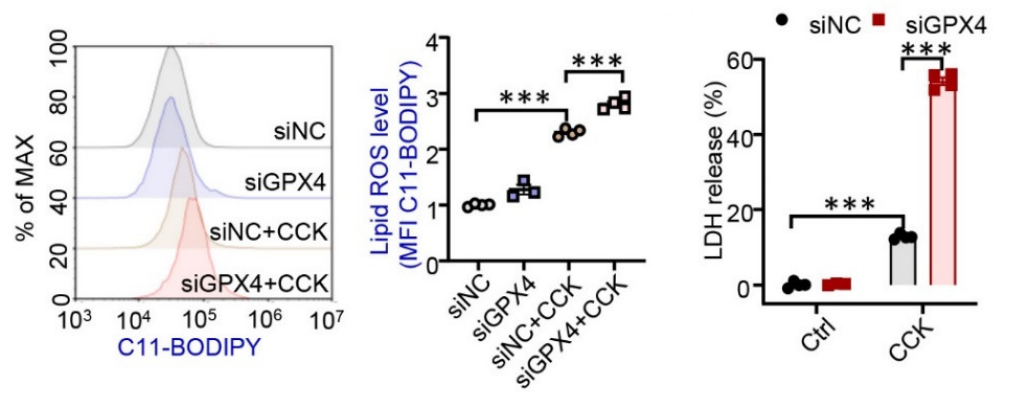
Identification of AP-1 as a Critical Regulator of Glutathione Peroxidase 4 (GPX4) Transcriptional Suppression and Acinar Cell Ferroptosis in Acute Pancreatitis. [Abstract]2022 Dec 31;12(1):100. PMID: 36670963
Sincalide purchased from MedChemExpress. Usage Cited in: Antioxidants (Basel). 2022 Dec 31;12(1):100. [Abstract]
After transfection with GPX4 siRNA, mouse pancreatic acinar carcinoma 266-6 cells were treated with Sincalide (Cholecystokinin; CCK) (5 μM; 6 h), and lipid reactive oxygen species (ROS) levels and the extent of cell death were determined.
-
J Gene Med
2025 Dec;27(12):e70063. PMID: 41340461
Sincalide purchased from MedChemExpress. Usage Cited in: J Gene Med. 2025 Dec;27(12):e70063. [Abstract]
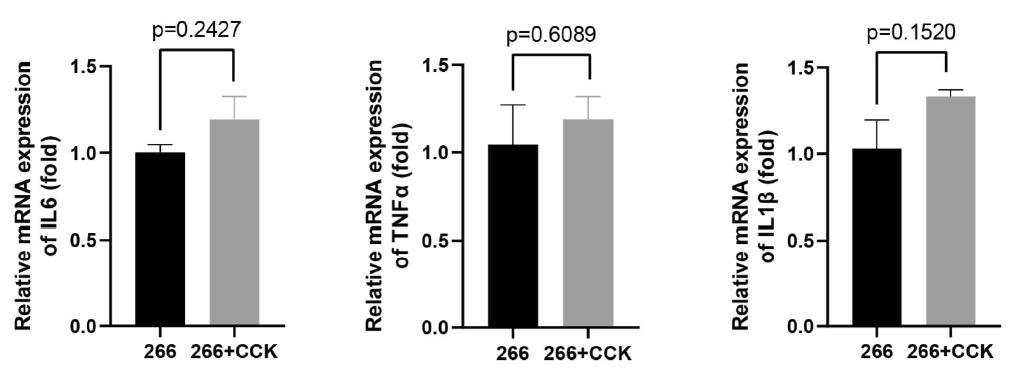
Sincalide (Cholecystokinin; CCK) increased the expression of IL-6, TNF-α, and IL-1β in 266-6 cells.
-
Immunogenetics
IL4I1 enhances PD-L1 expression through JAK/STAT signaling pathway in lung adenocarcinoma. [Abstract]2023 Feb;75(1):17-25. PMID: 36056935
Sincalide purchased from MedChemExpress. Usage Cited in: Immunogenetics. 2023 Feb;75(1):17-25. [Abstract]
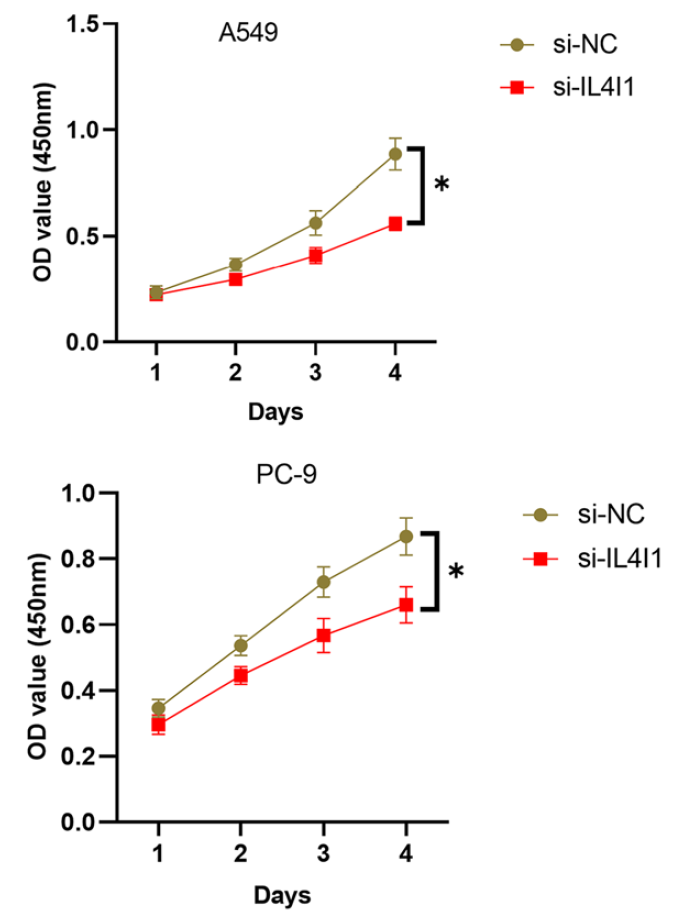
Sincalide (CCK-8) (10 μL; 37 ℃; 2 h) was used to evaluate the proliferative ability of LUAD cells.
Sincalide purchased from MedChemExpress. Usage Cited in: Immunogenetics. 2023 Feb;75(1):17-25. [Abstract]
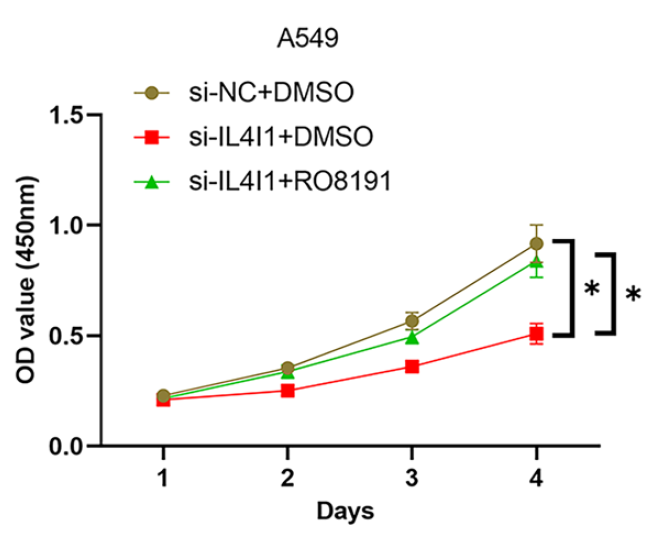
Sincalide (CCK-8) (10 μL; 37 ℃; 2 h) was used to illustrate that si-IL4I1 + RO8191 had the ability to reverse the restraining impact of si-IL4I1 on LUAD cell proliferation.
-
Biomed Pharmacother
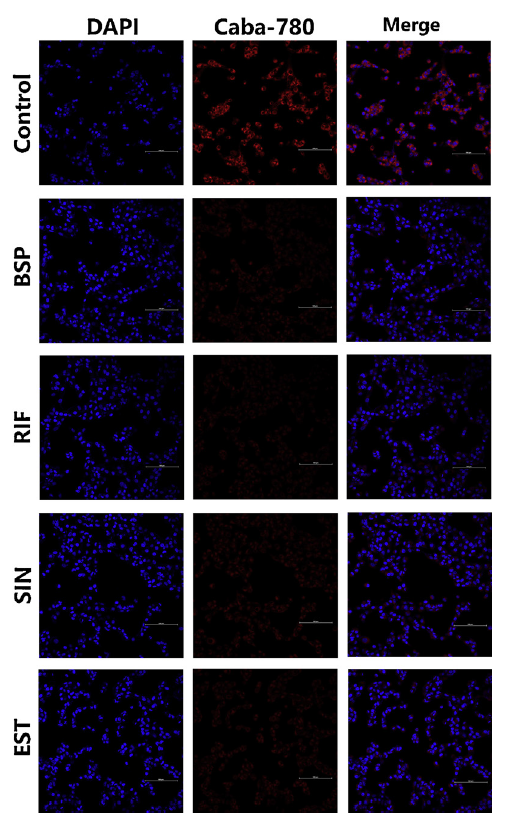
Coupling the near-infrared fluorescent dye IR-780 with cabazitaxel makes renal cell carcinoma chemotherapy possible. [Abstract]2019 Aug:116:109001. PMID: 31146114
Sincalide purchased from MedChemExpress. Usage Cited in: Biomed Pharmacother. 2019 Aug:116:109001. [Abstract]
The OATP superfamily blocker Sincalide (SIN) (20 μM; 2 h) blocked Caba-780 uptake in renal cell carcinoma (RCC) cells.


Lösungsmittel & Löslichkeit
In Vitro:
H2O : 50 mg/mL (43.73 mM; ultrasonic and adjust pH to 11 with NH3·H2O)
DMF : 50 mg/mL (43.73 mM; Need ultrasonic)
DMSO : 25 mg/mL (21.87 mM; Need ultrasonic; Hygroscopic DMSO has a significant impact on the solubility of product, please use newly opened DMSO)
Please refer to the solubility information to select the appropriate solvent. Once prepared, please aliquot and store the solution to prevent product inactivation from repeated freeze-thaw cycles.
Storage method and period of stock solution: -80°C, 6 months; -20°C, 1 month (sealed storage, away from moisture and light, under nitrogen). When stored at -80°C, please use it within 6 months. When stored at -20°C, please use it within 1 month.
* Note: If you choose water as the stock solution, please dilute it to the working solution, then filter and sterilize it with a 0.22 μm filter before use.
Please refer to the solubility information to select the appropriate solvent. Once prepared, please aliquot and store the solution to prevent product inactivation from repeated freeze-thaw cycles.
Storage method and period of stock solution: -80°C, 6 months; -20°C, 1 month (sealed storage, away from moisture and light, under nitrogen). When stored at -80°C, please use it within 6 months. When stored at -20°C, please use it within 1 month.
* Note: If you choose water as the stock solution, please dilute it to the working solution, then filter and sterilize it with a 0.22 μm filter before use.
Konzentration (Stammlösung) × Volumen (Stammlösung) = Konzentration (Ziellösung) × Volumen (Ziellösung)
In Vivo:
Select the appropriate dissolution method based on your experimental animal and administration route.
- For the following dissolution methods, please ensure to first prepare a clear stock solution using an In Vitro approach and then sequentially add co-solvents:
- To ensure reliable experimental results, the clarified stock solution can be appropriately stored based on storage conditions. As for the working solution for In Vivo experiments, it is recommended to prepare freshly and use it on the same day.
- The percentages shown for the solvents indicate their volumetric ratio in the final prepared solution. If precipitation or phase separation occurs during preparation, heat and/or sonication can be used to aid dissolution.
Add each solvent one by one: 10% DMSO 90% (20% SBE-β-CD in Saline)
Solubility: ≥ 2.5 mg/mL (2.19 mM); Clear solution
This protocol yields a clear solution of ≥ 2.5 mg/mL (saturation unknown).
Taking 1 mL working solution as an example, add 100 μL DMSO stock solution (25.0 mg/mL) to 900 μL 20% SBE-β-CD in Saline, and mix evenly.
Preparation of 20% SBE-β-CD in Saline (4°C, storage for one week): 2 g SBE-β-CD powder is dissolved in 10 mL Saline, completely dissolve until clear.
Add each solvent one by one: 10% DMF 90% Corn Oil
Solubility: ≥ 2.5 mg/mL (2.19 mM); Clear solution
In Vivo Dissolution Calculator
Please enter the basic information of animal experiments:
-
-
-
-
Recommended: Prepare an additional quantity of animals to account for potential losses during experiments.
Working solution concentration: 0.22 mg/mL
This product has good water solubility, please refer to the measured solubility data in water/PBS/Saline for details.


Reinheit & Dokumentation
-
Data Sheet (292 KB)
-
SDS (394 KB)
- English - EN (394 KB)
- Français - FR (394 KB)
- Deutsch - DE (394 KB)
- Norwegian - NO (394 KB)
- Español - ES (394 KB)
- Swedish - SV (394 KB)
- Italian - IT (394 KB)
- Korean - KR (394 KB)
- Portuguese - PT (394 KB)
-
Handling Instructions (2659 KB)
Verweise
[1]. Maher KA et al. Kinevac (sincalide for injection)/Squibb Diagnostics. Gastroenterol Nurs. 1991 Oct;14(2):98-100. [Content Brief]
[2]. Ziessman HA. Sincalide: A Review of Clinical Utility, Proper Infusion Methodology, and Alternative Cholecystogogues. J Nucl Med Technol. 2019 Sep;47(3):210-212. [Content Brief]
[3]. Can Wang, et al. Protective effect of cholecystokinin octapeptide on angiotensin II-induced apoptosis in H9c2 cardiomyoblast cells. J Cell Biochem. 2020 Jul;121(7):3560-3569. [Content Brief]
[4]. Can Wang, et al. Cholecystokinin octapeptide reduces myocardial fibrosis and improves cardiac remodeling in post myocardial infarction rats. Int J Biochem Cell Biol. 2020 Aug;125:105793. [Content Brief]


Complete Stock Solution Preparation Table
Please refer to the solubility information to select the appropriate solvent. Once prepared, please aliquot and store the solution to prevent product inactivation from repeated freeze-thaw cycles.
Storage method and period of stock solution: -80°C, 6 months; -20°C, 1 month (sealed storage, away from moisture and light, under nitrogen). When stored at -80°C, please use it within 6 months. When stored at -20°C, please use it within 1 month.
| Optional Solvent | Concentration Solvent Mass | 1 mg | 5 mg | 10 mg | 25 mg |
|---|---|---|---|---|---|
| DMSO / H2O / DMF | 1 mM | 0.8747 mL | 4.3734 mL | 8.7468 mL | 21.8671 mL |
| 5 mM | 0.1749 mL | 0.8747 mL | 1.7494 mL | 4.3734 mL | |
| 10 mM | 0.0875 mL | 0.4373 mL | 0.8747 mL | 2.1867 mL | |
| 15 mM | 0.0583 mL | 0.2916 mL | 0.5831 mL | 1.4578 mL | |
| 20 mM | 0.0437 mL | 0.2187 mL | 0.4373 mL | 1.0934 mL | |
| H2O / DMF | 25 mM | 0.0350 mL | 0.1749 mL | 0.3499 mL | 0.8747 mL |
| 30 mM | 0.0292 mL | 0.1458 mL | 0.2916 mL | 0.7289 mL | |
| 40 mM | 0.0219 mL | 0.1093 mL | 0.2187 mL | 0.5467 mL |
* Note: If you choose water as the stock solution, please dilute it to the working solution, then filter and sterilize it with a 0.22 μm filter before use.


Sincalide Related Classifications
HY-P0093 Related Classifications
 Powered by Bioz