



Angiotensin Receptor Agonist
- 1
-
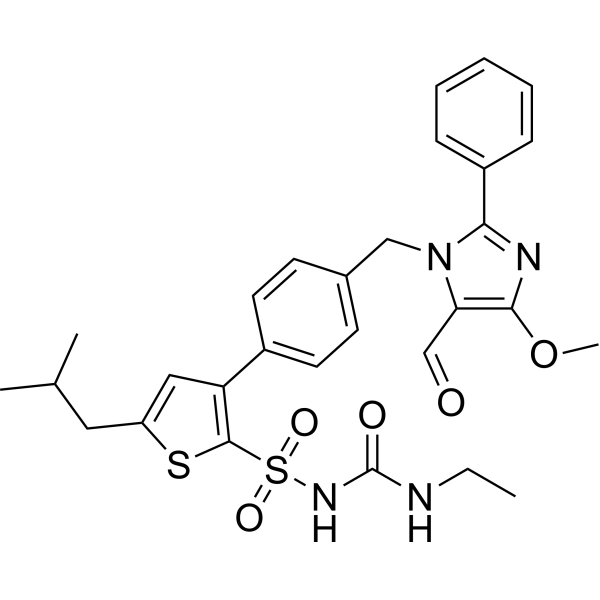
AVE 0991
 0 Images
AVE 0991 is a nonpeptide and orally active angiotensin-(1-7) receptor agonist with an IC50 of 21 nM.
-
Angiotensin II 5-valine
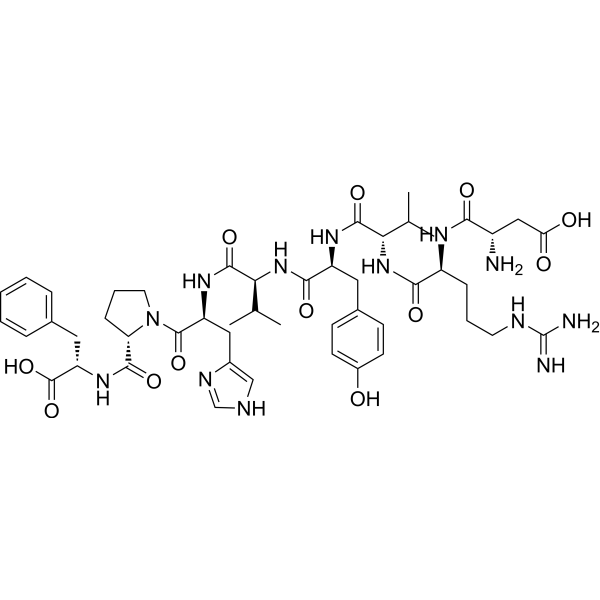 0 ImagesSynonyms: Valine angiotensin II; 5-L-Valine angiotensin II
Angiotensin II 5-valine is an agonist of angiotensin receptor.
-
Aclerastide
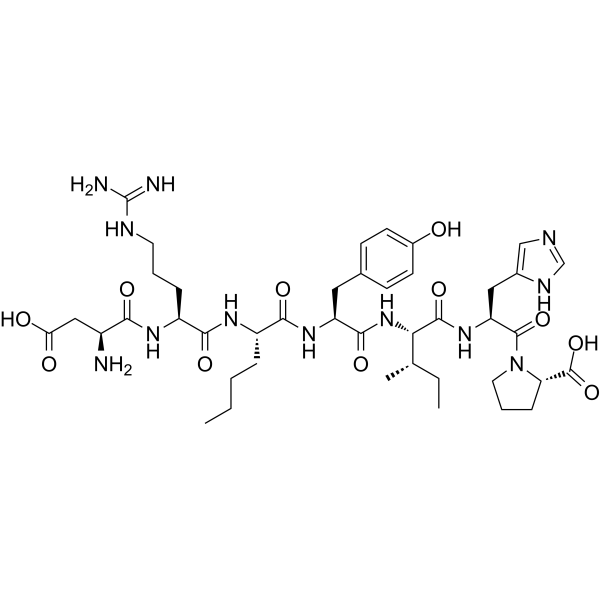 0 ImagesSynonyms: DSC-127; NorLeu3-A(1-7)
Aclerastide (DSC-127) is an angiotensin receptor agonist. Aclerastide also is a peptide analog of angiotensin II. Aclerastide can be used for the research of tissue regeneration in diabetic ulcers.
-
L-162313
 0 Images
L-162313 is a non-peptide angiotensin II AT1 and AT2 receptor agonist, with IC50 values of 1.1 and 2.0 nM for AT1 and AT2 receptor, respectively. L-162313 can be used for the research of vasoconstriction, aldosterone release, and cardiovascular growth.
-
AVE 0991 sodium salt
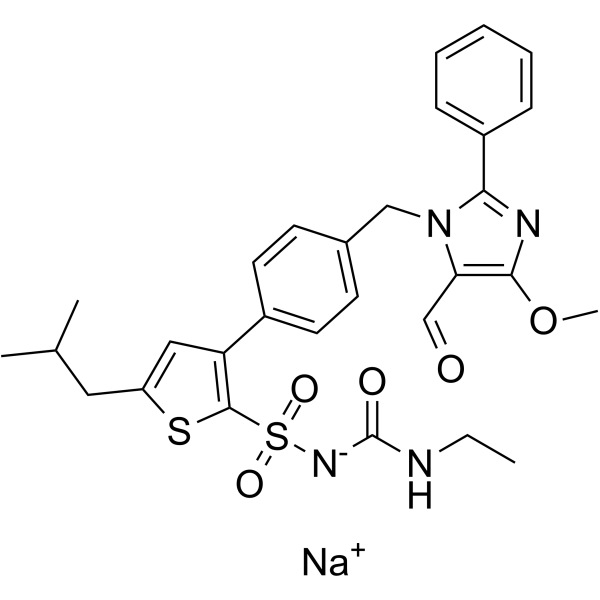 0 Images
AVE 0991 sodium salt is a nonpeptide and orally active Ang-(1-7) receptor Mas agonist. AVE 0991 competes for high-affinity binding of [125I]-Ang-(1-7) to bovine aortic endothelial cell membranes with IC50 of 21 nM.
-
Sar-Arg-Val-Tyr-Val-His-NH2
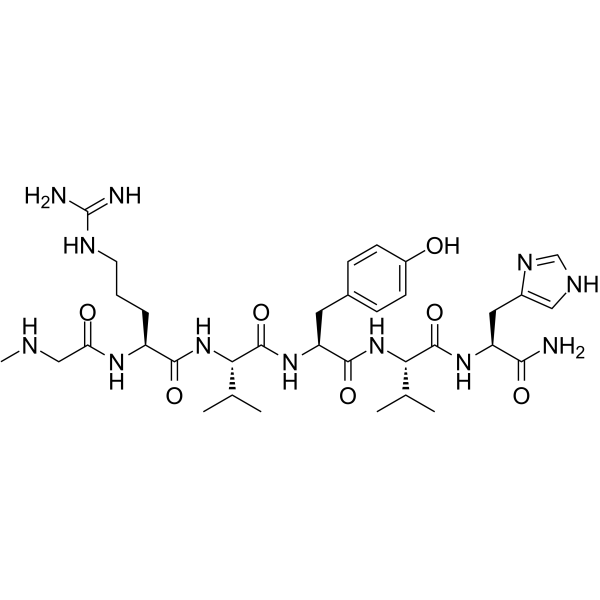 0 ImagesCat. No.: HY-P2381CAS No.: 2410957-04-7
Sar-Arg-Val-Tyr-Val-His-NH2 is a Gq-biased agonists, exhibits 10-fold larger molecular efficacies at the AT1R-Gq fusion protein compared with the AT1R-βarr2 fusion protein.
-
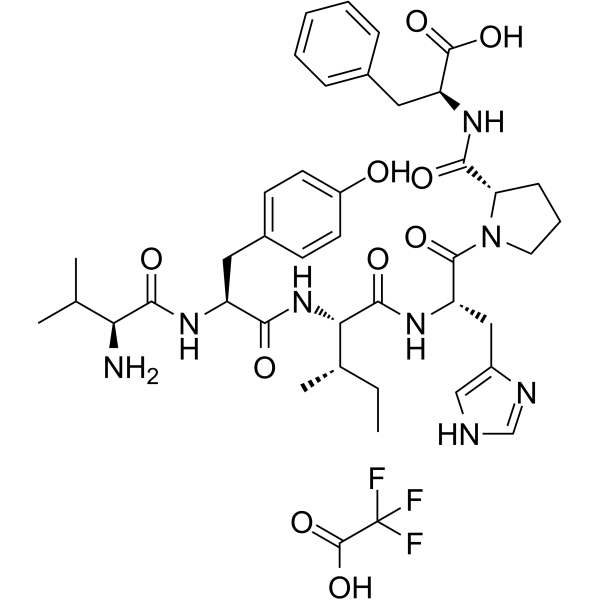
Angiotensin II (1-4), human TFA
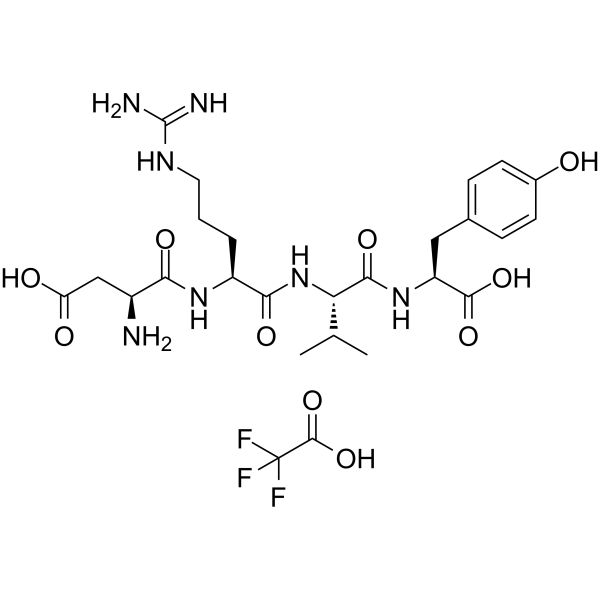 0 ImagesCat. No.: HY-P1792A
Angiotensin II (1-4), human (TFA) is an endogenous peptide produced from AT I by angiotensin-converting-enzyme (ACE). Angiotensin II binds the AT II type 1 (AT1) receptor, stimulating GPCRs in vascular smooth muscle cells and increasing intracellular Ca2+ levels. Angiotensin II also acts at the Na+/H+ exchanger in the proximal tubules of the kidney.
-
Angiotensin II (1-4), human
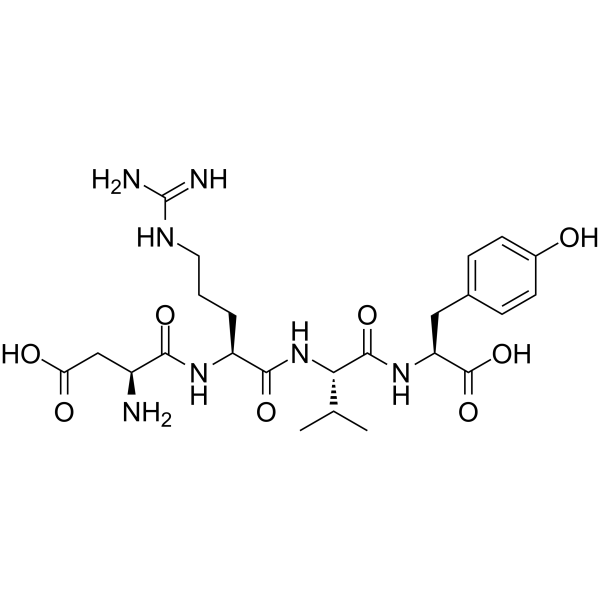 0 ImagesCat. No.: HY-P1792CAS No.: 52580-29-7
Angiotensin II (1-4), human is an endogenous peptide produced from AT I by angiotensin-converting-enzyme (ACE). Angiotensin II binds the AT II type 1 (AT1) receptor, stimulating GPCRs in vascular smooth muscle cells and increasing intracellular Ca2+ levels. Angiotensin II also acts at the Na+/H+ exchanger in the proximal tubules of the kidney.
-
Angiotensin II (3-8), human
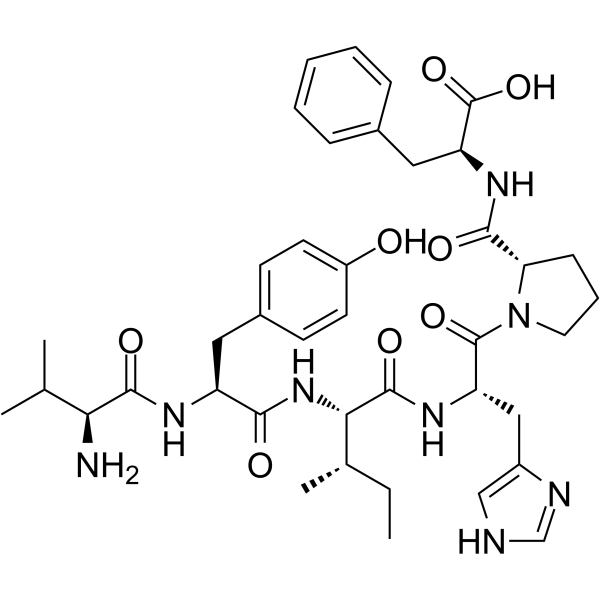 0 ImagesCat. No.: HY-P1515CAS No.: 12676-15-2
Angiotensin II (3-8), human is a less effective agonist at the angiotensin AT1 receptor.
-
Buloxibutid (Standard)
 0 ImagesCat. No.: HY-100113RCAS No.: 477775-14-7Synonyms: AT2 receptor agonist C21 (Standard)
Buloxibutid (AT2 receptor agonist C21) (Standard) is the analytical standard of Buloxibutid (HY-100113). This product is intended for research and analytical applications. Buloxibutid is an orally active, selective angiotensin II type 2 receptor (AT2R) agonist, with a Ki value of 0.4 nM for porcine AT2R. Buloxibutid exerts effects such as vasodilation, anti-inflammation, anti-fibrosis (promoting the expression of collagenase MMP-13) and tissue repair mainly by activating the NO/cGMP pathway, inhibiting the pro-proliferative MAPK signaling, and suppressing the pro-fibrotic TGF-β/Smad pathway as well as the inflammatory NF-κB pathway. Buloxibutid can be used in research related to idiopathic pulmonary fibrosis, hypertension, and systemic sclerosis.
- 1



