



Arp2/3 Complex
Actin-related protein 2/3 complex
The Arp2/3 complex is originally identified in Acanthamoeba and consists of seven proteins (actin-related proteins; Arp2 and Arp3, and Arp2/3 complex subunits; ARPC1-5) that are conserved in all eukaryotes, with the exception of some algae, microsporidia and protists. The complex plays an essential role in a wide variety of cellular processes including lamellipodia-mediated cell migration, endocytosis and phagocytosis, by virtue of its ability to generate branched actin filament networks.
Activation of Arp2/3 requires interaction with actin nucleation-promoting factors (NPFs). Regulation of Arp2/3 activity is achieved by endogenous inhibitory proteins through direct binding to Arp2/3 and competition with NPFs or by binding to Arp2/3-induced actin filaments and disassembly of branched actin networks. Arp2/3 inhibition has recently garnered more attention as it has been associated with attenuation of cancer progression, neurotoxic effects during drug abuse, and pathogen invasion of host cells.
All Product Categories
-
Arp2/3 Complex Related Products (42)
Related Products (42)

-
Antibodies (99)
-
Protein kinase inhibitor H-7
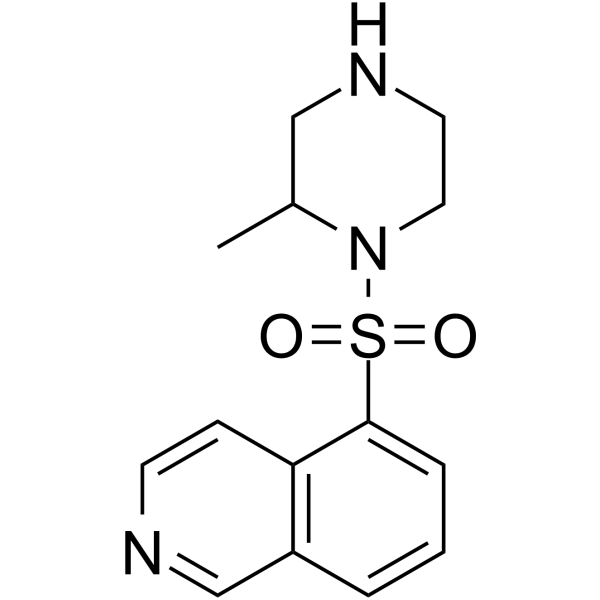 0 ImagesProtein kinase inhibitor H-7 is a selective inhibitor of PKC and cyclic nucleotide-dependent protein kinases, with a Ki value of 6.0 μM for rabbit protein kinase C, a Ki value of 3.0 μM for rabbit cAMP-dependent protein kinase, and a Ki value of 5.8 μM for porcine cGMP-dependent protein kinase. Protein kinase inhibitor H-7 has no effect on Ca2+-calmodulin-dependent enzymes. Protein kinase inhibitor H-7 regulates the Actin cytoskeleton, inhibits contractility, disrupts stress fibers, induces protrusive activity, stabilizes intercellular junctions, and triggers rapid and reversible cytoskeletal reorganization. Protein kinase inhibitor H-7 serves as a research tool for elucidating the functions of protein kinase C-mediated signaling systems.
-
TR-100
 0 ImagesTR-100 is a small molecule inhibitor of tumor-associated troponin (Tpm). TR-100 affects the interaction of Tpm3.1 with actin filaments by binding to the C-terminal of Tpm3.1, thereby affecting the stability and function of the actin filaments. This mechanism of action allows TR-100 to specifically affect actin filaments in cancer cells without compromising heart muscle function. TR-100 can be used to study the role of Tpm3.1 in cancer cell proliferation and survival and the effects of Tpm3.1 on insulin-stimulated glucose uptake and insulin secretion.
-
187-1, N-WASP inhibitor
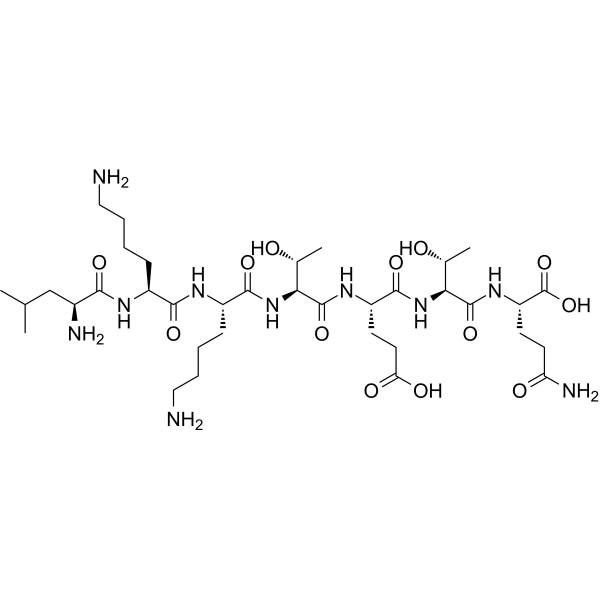
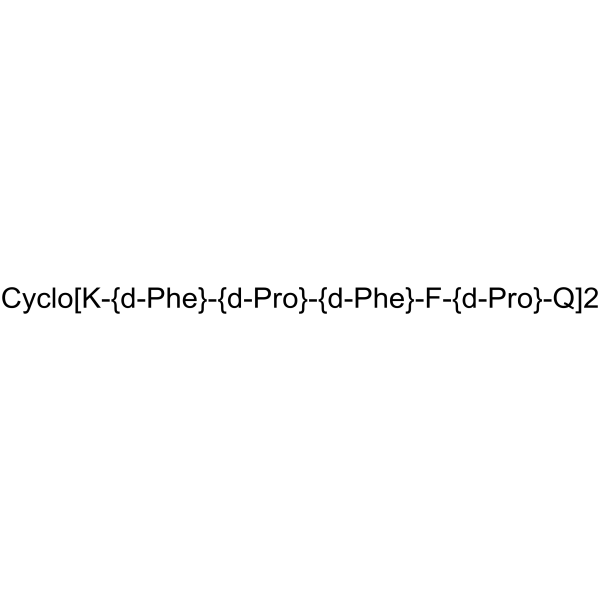 0 Images187-1, N-WASP inhibitor, a 14-aa cyclic peptide, is an allosteric neural Wiskott-Aldrich syndrome protein (N-WASP) inhibitor. 187-1, N-WASP inhibitor potently inhibits actin assembly induced by phosphatidylinositol 4,5-bisphosphate (PIP2) with an IC50 of 2 μM. 187-1, N-WASP inhibitor prevents the activation of Arp2/3 complex by N-WASP by stabilizing the autoinhibited state of the protein.
-
Phallacidin
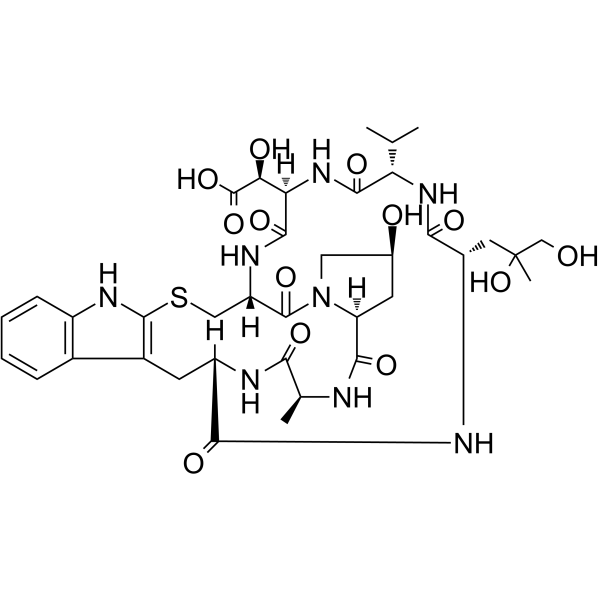 0 ImagesCat. No.: HY-P2031CAS No.: 26645-35-2Phallacidin is a natural bicyclic heptapeptide derived from the poisonous mushroom Amanita phalloides. Phallacidin binds to filamentous actin specifically with high affinity, with a Kd of 20 nM. After binding to F-actin, Phallacidin strongly inhibits its depolymerization, stabilizes microfilament structures, and prevents their disruption by drugs such as cytochalasins. When conjugated with a fluorophore, Phallacidin serves as a specific fluorescent probe for F-actin, which is used to clearly visualize the distribution of actin in the cytoskeleton (e.g., stress fibers, cortical peripheral bands) under fluorescence microscopy.
-
CK-548
 0 ImagesCat. No.: HY-123312CAS No.: 388604-55-5Synonyms: CK-0993548
-
Salvianolic acid A derivative-1
 0 ImagesCat. No.: HY-177249Salvianolic acid A derivative-1 (Compound SAA-30) is a orally active derivative of Salvianolic acid A (HY-N0318). Salvianolic acid A derivative-1 binds to transgelin with a KD of 2.39 μM. Salvianolic acid A derivative-1 promotes cell contractions by facilitating the aggregation of actin. Salvianolic acid A derivative-1 can be used for prevention of myocardial ischemia or other diseases associated with IR tissue injuries.
-
Spire2-FMN2 PPI-IN-1
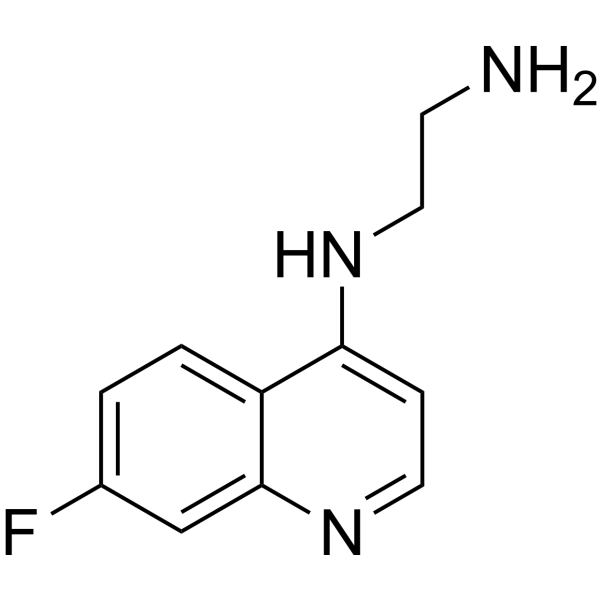 0 ImagesCat. No.: HY-161011CAS No.: 1557337-03-7Spire2/FMN2 PPI-IN-1 (Compound 13) is a selective inhibitory fragment targeting the Spire2-FMN2 interaction, with an IC50 of 62 μM. Spire2/FMN2 PPI-IN-1 has affinity for KIND2, with a Kd of 87.7 μM, and does not inhibit KIND1. Spire2/FMN2 PPI-IN-1 can be used for the development of chemical probes for the Spire2-FMN2 interaction.
-
Spire2-FMN2 PPI-IN-1 dihydrochloride
 0 ImagesCat. No.: HY-161011APurity: 98.99%Spire2/FMN2 PPI-IN-1 (Compound 13) dihydrochloride is a selective inhibitory fragment targeting the Spire2-FMN2 interaction, with an IC50 of 62 μM. Spire2/FMN2 PPI-IN-1 dihydrochloride has affinity for KIND2, with a Kd of 87.7 μM, and does not inhibit KIND1. Spire2/FMN2 PPI-IN-1 dihydrochloride can be used for the development of chemical probes for the Spire2-FMN2 interaction.

-
19-O-Acetylchaetoglobosin A
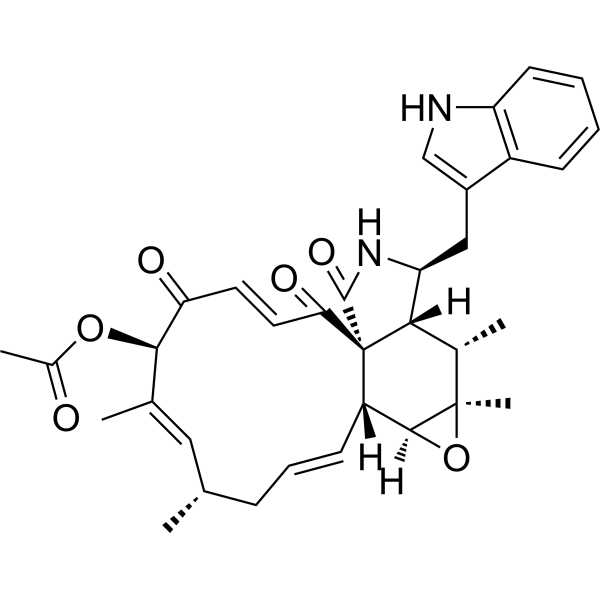 0 ImagesCat. No.: HY-126989CAS No.: 50939-69-019-O-Acetylchaetoglobosin A, a cytochalasan alkaloid, is a fungal metabolite originally isolated from C. globosum that has actin polymerization inhibitory and cytotoxic activities. 19-O-Acetylchaetoglobosin A is cytotoxic to HeLa cervical cancer cells.
-
CK37
 0 ImagesCat. No.: HY-101145CAS No.: 1001478-90-5CK37 is a competitive choline kinase-α inhibitor. CK37 inhibits purified recombinant human choline kinase-α activity. CK37 suppresses MAPK and PI3K/AKT signaling, disrupts actin cytoskeletal organization. CK37 diminishs activating phosphorylations of ERK. CK37 exhibits anticancer activity against cervical cancer, melanoma, Lewis lung carcinoma, lung adenocarcinoma, breast cancer, and leukemia.
-
RA-VII
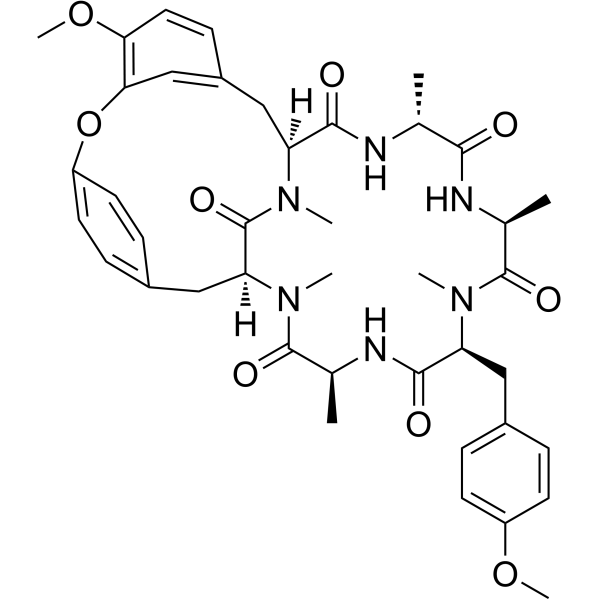 0 ImagesCat. No.: HY-P2045CAS No.: 86229-97-2RA-VII is an antitumor agent that exhibits significant activity against L1210, B-16 melanoma, Lewis lung carcinoma, Colon 38 and Ehrlich carcinoma.
-
187-1, N-WASP inhibitor TFA
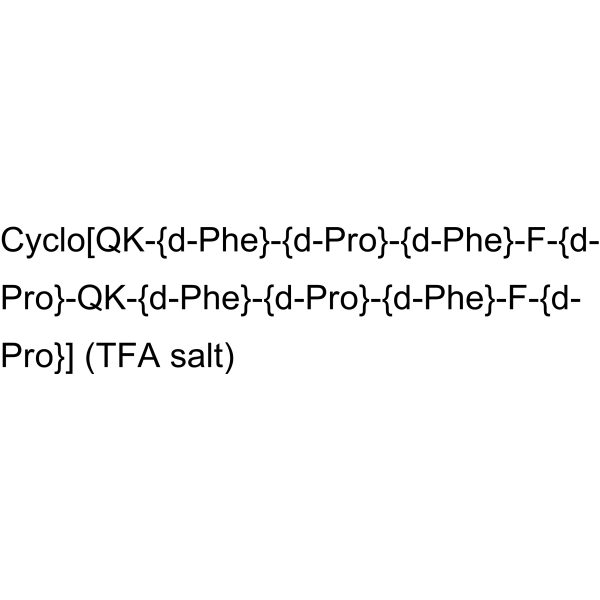 0 ImagesCat. No.: HY-P1045A187-1, N-WASP inhibitor TFA, a 14-aa cyclic peptide, is an allosteric neural Wiskott-Aldrich syndrome protein (N-WASP) inhibitor. 187-1, N-WASP inhibitor TFA potently inhibits actin assembly induced by phosphatidylinositol 4,5-bisphosphate (PIP2) with an IC50 of 2 μM. 187-1, N-WASP inhibitor TFA prevents the activation of Arp2/3 complex by N-WASP by stabilizing the autoinhibited state of the protein.
-
Cytochalasin B (Standard)
 0 ImagesCat. No.: HY-16928RCAS No.: 14930-96-2Synonyms: Phomin (Standard)(R)-Duloxetine (Standard) is the analytical standard of (R)-Duloxetine. This product is intended for research and analytical applications. (R)-Duloxetine is a form of Duloxetine (HY-B0161) that causes tonic and usage-dependent impairment of neuronal Na+ channels. (R)-Duloxetine can be used in pain research.
-
Phalloidin-TRITC (solution)
 0 ImagesCat. No.: HY-P2270YCAS No.: 915013-10-4Phalloidin-TRITC (solution) is a fluorescein derivative of Phalloidin, which can specifically label myof lin and display red fluorescence when labeled and can be observed using Tesred channels.
-
6,7-Epoxy-latrunculin A
 0 ImagesCat. No.: HY-127042CAS No.: 122876-48-6Synonyms: 6,7-Epoxy-LAT-A
-
Myelin Basic Protein (Porcine)
 0 ImagesCat. No.: HY-NP208Myelin Basic Protein (Porcine), the second most abundant protein in central nervous system myelin, is responsible for adhesion of the cytosolic surfaces of multilayered compact myelin. Myelin Basic Protein (Porcine) mediates interactions with actin and tubulin and effect of post-translational modifications.
-
Cytochalasin F
 0 ImagesCat. No.: HY-N14567CAS No.: 36084-18-1Cytochalasin F has many biological activities, such as inhibiting cytoKinesis reversibly, inhibiting megasophil endocytosis and exocytosis.
-
Cytochalasin G
 0 ImagesCat. No.: HY-N14568CAS No.: 54874-57-6Cytochalasin G has many biological activities, such as inhibiting cytoKinesis reversibly, inhibiting megasophil endocytosis and exocytosis.




