



Bacterial
Anything that destroys bacteria or suppresses their growth or their ability to reproduce. Heat, chemicals such as chlorine, and antibiotic drugs all have antibacterial properties. Many antibacterial products for cleaning and handwashing are sold today. Such products do not reduce the risk for symptoms of viral infectious diseases in otherwise healthy persons. This does not preclude the potential contribution of antibacterial products to reducing symptoms of bacterial diseases in the home.
All Product Categories
-
Bacterial Inhibitors
(7483)
View all products
-
Bacterial Agonists
(3)
View all products
-
Bacterial Antagonists
(9)
View all products
-
Bacterial Activators
(23)
View all products
-
Bacterial Modulators
(23)
View all products
-
Bacterial Chemicals
(2)
View all products
-
Bacterial Inducers
(7)
View all products
-
Bacterial Controls
(14)
View all products
-
Bacterial Substrates
(2)
View all products
-
Bacterial Ligand
(1)
View all products
-
Bacterial Related Products (8800)
Related Products (8800)

-
Antibodies (14)
-
Related Compound Screening Libraries (1)
-
Centaurein
 0 ImagesCat. No.: HY-N13614CAS No.: 35595-03-0Centaurein, a flavonoid, is an IFN-γ promoter enhancer. Centaurein up-regulates the activity of NFAT and NF-κB enhancers. Centaurein increases the IFN-γ expression in T and NK cells and the serum IFN-γ level in mice. Centaureidin completely relaxes the contractions in intact rat aortic rings. Centaurein effectively protects mice against Listeria infection[1][2][3][4].

-
VEGFR-2/DHFR-IN-2
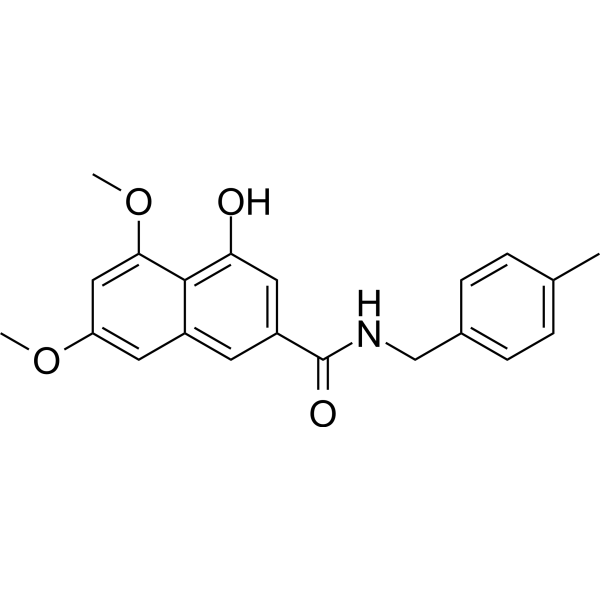 0 ImagesCat. No.: HY-151459CAS No.: 2831498-09-8VEGFR-2/DHFR-IN-2 (compound 5b) is an inhibitor of VEGFR-2 and DHFR with IC50s of 0.623 and 9.085 μM, respectively. VEGFR-2/DHFR-IN-2 exhibits good cytotoxic activities against C26, HepG2, and MCF7 cancer cell lines with IC50 values of 3.59-8.38 μM. VEGFR-2/DHFR-IN-2 can be used for the research of cancer.
-
Phospholine
 0 ImagesCat. No.: HY-106843CAS No.: 124123-09-7Phospholine is an antibiotic. The IC50 (μg/mL) of Ll 210, P388 and EL-4 cells are 3.37, 2.20 and 1.99, respectively.
-
Antimicrobial agent-33
 0 ImagesCat. No.: HY-131048CAS No.: 51244-45-2Antimicrobial agent-33 (Compound 2b) is an antimicrobial agent, with MIC values of 2-64 μg/mL. Antimicrobial agent-33 is an active compound against Staph. Aureus.
-
Grapefruit oil terpeneless
 0 ImagesCat. No.: HY-N18793CAS No.: 68916-46-1Grapefruit Oil Terpeneless is a natural compound extracted from grapefruit, demonstrating profound antimicrobial and antioxidant effects.
-
PXYC2
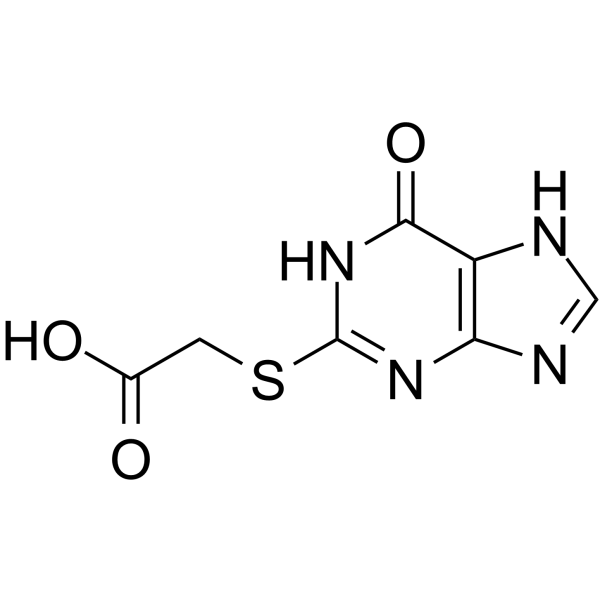 0 ImagesCat. No.: HY-146450CAS No.: 865101-22-0PXYC2 is a ribosomal protein S1 (RpsA) antagonist with Kds of 6.35 and 5.11 μM for RpsA-CTD and RpsA-CTD Δ438A, respectively. RpsA plays an important role in the trans-translation process of Mycobacterium Tuberculosis (Mtb).
-
Antibacterial agent 358
 0 ImagesCat. No.: HY-184584Antibacterial agent 358 is an antibacterial agent. Antibacterial agent 358 selectively interacts with PG on bacterial cell membranes, causing membrane damage. Antibacterial agent 358 induces bacterial cell membrane depolarization, increased membrane permeability and leakage of intracellular components. Antibacterial agent 358 inhibits biofilm formation and disrupts established biofilms. Antibacterial agent 358 reduces bacterial load and alleviates tissue inflammation in a mouse skin abscess model. Antibacterial agent 358 can be used in research related to Gram-positive bacterial infections and skin abscesses.
-
Anti-infective agent 2
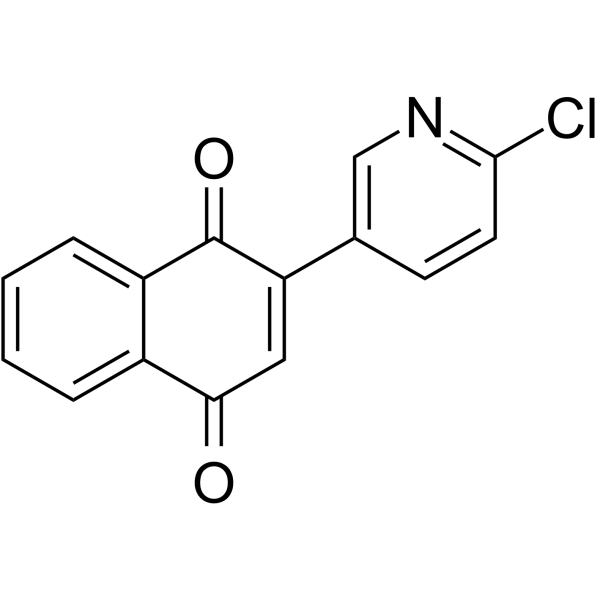 0 ImagesCat. No.: HY-146488CAS No.: 2521629-84-3Anti-infective agent 2 (compound 3k) shows antiparasitic activity against P. falciparum and T. brucei rhodesiense, with IC50 values of 0.07 and 2.20 μM, respectively. Anti-infective agent 2 shows antimycobacterial activity against Mycobacterium smegmatis with a MIC of 32 μg/mL.
-
Tiamulin Fumarate-13C4
 0 ImagesCat. No.: HY-W766785Tiamulin Fumarate-13C4 is the 13C-labeled Tiamulin. Tiamulin (Thiamutilin) fumarate is a diterpenic antibiotic that is widely used in pigs and poultry for the control of infectious diseases. Tiamulin fumarate is effectively used in the study of airsacculitis, which is primarily caused by Mycoplasma spp.
-
Antibacterial agent 145
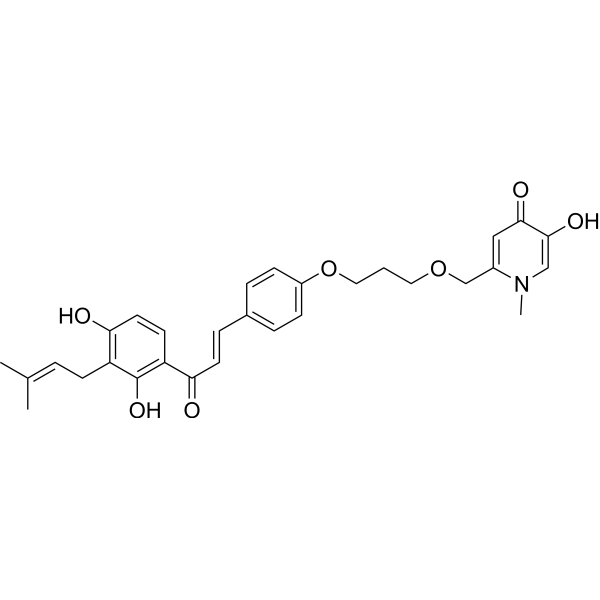 0 ImagesCat. No.: HY-149353Antibacterial agent 145 (compound 1b) is an antibacterial agent depending on bacterial iron uptake pathway. Antibacterial agent 145 disrupts cytoplasmic membrane integrity and inhibits cell metabolism but exhibits low cytotoxic effects to normal cells.
-
PXYC13
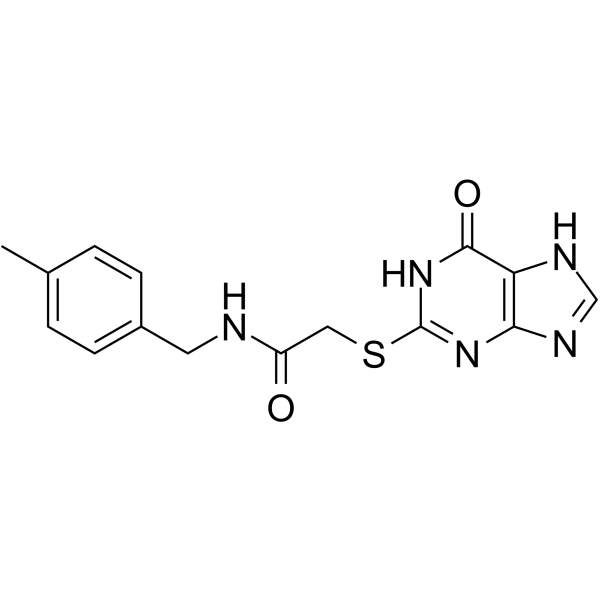 0 ImagesCat. No.: HY-146447CAS No.: 1031940-69-8PXYC13 is a ribosomal protein S1 (RpsA) antagonist with Kds of 7.61 and 8.50 μM for RpsA-CTD and RpsA-CTD Δ438A, respectively. RpsA plays an important role in the trans-translation process of Mycobacterium Tuberculosis (Mtb).
-
Polyphemusin II
 0 ImagesCat. No.: HY-P10684CAS No.: 125139-68-6Polyphemusin II is an antimicrobial peptide which can be isolated from Limulus polyphemus hemocytes. Polyphemusin II exhibits antimicrobial activities against various Gram (+)/(-) bacteria and fungi.
-
YM-17K
 0 ImagesCat. No.: HY-105213CAS No.: 127521-69-1Synonyms: MC-352YM-17K (MC-352) is a macrolide antibiotic. YM-17K exhibits antimicrobial activity against Gram-positive bacteria, Gram-negative bacteria, and anaerobic bacteria. YM-17K exhibits stable activity in serum and is less affected by pH values.
-
XT17
 0 ImagesCat. No.: HY-172264XT17 is an anthrone compound with broad-spectrum antibacterial activity. It exerts its antibacterial effect by disrupting the cell wall and inhibiting DNA synthesis. XT17 exhibits weak hemolytic activity, low cytotoxicity against mammalian cell lines, and a low frequency of drug resistance. Meanwhile, XT17 shows in vivo efficacy in a mouse corneal infection model induced by Staphylococcus aureus or Pseudomonas aeruginosa. Further docking studies have confirmed that XT17 can form a stable complex with bacterial gyrase. XT17 can be used in the research of the anti - infection field.
-
Antimicrobial agent-9
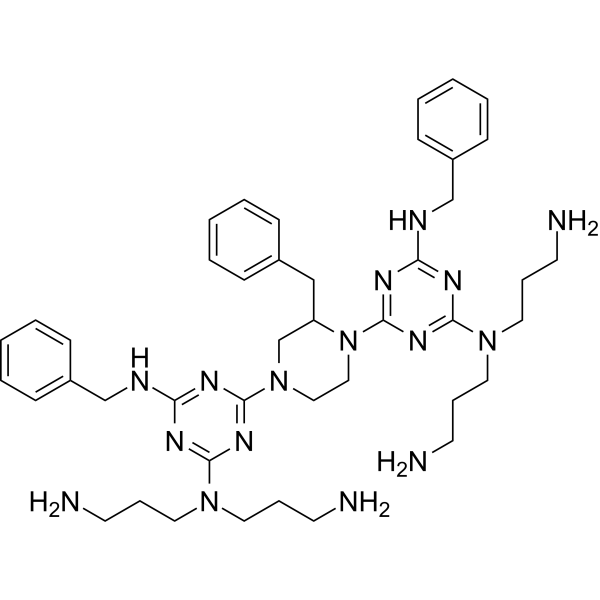 0 ImagesCat. No.: HY-151403CAS No.: 2978694-25-4Antimicrobial agent-9 (Compound 16) is an antimicrobial agent with an MIC range of 4-8 μg/mL against gram-positive and gram-negative bacteria. Antimicrobial agent-9 also shows anti-inflammatory activity.
-
Plaunotol
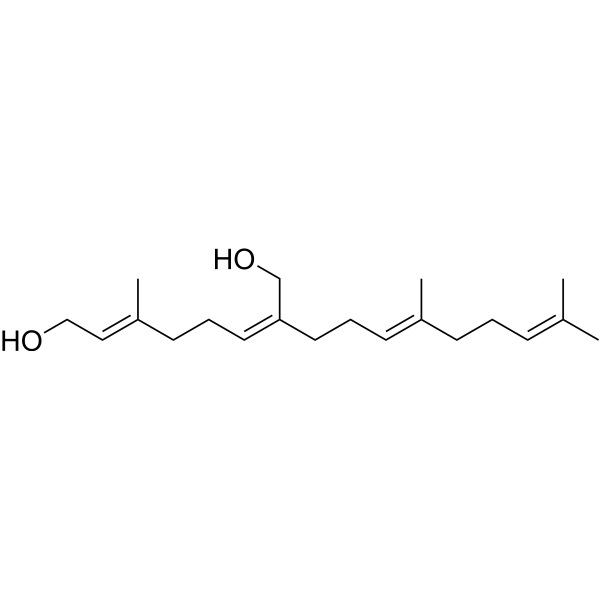 0 ImagesCat. No.: HY-106789CAS No.: 64218-02-6Synonyms: CS-684Plaunotol is an orally active acyclic diterpene alcohol. Plaunotol has antibacterial activity against Helicobacter pylori which causes peptic ulcer . Plaunotol inhibits tumor angiogenesis and cell proliferation. Plaunotol induces apoptosis by activation of caspase 8 and caspase 9 pathways. Plaunotol is a potential anticancer agent against colon cancer .
-
Antibacterial agent 190
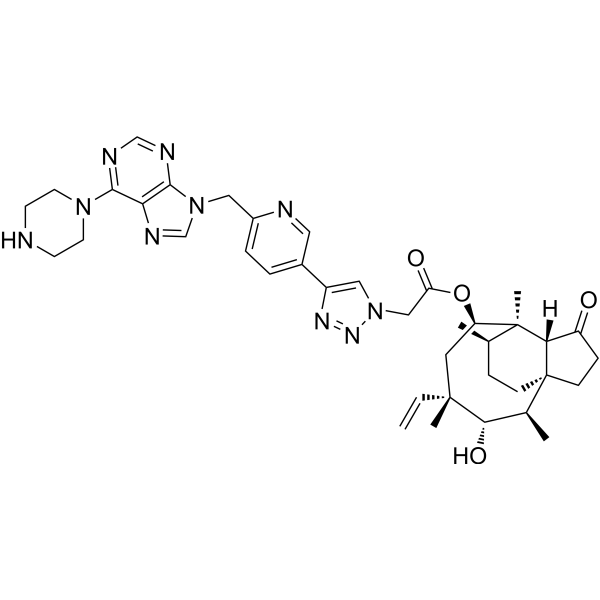 0 ImagesCat. No.: HY-163342Antibacterial agent 190 (compound 16) is a antibacterial agent. Antibacterial agent 190 shows antibacterial activity. Antibacterial agent 190 reduces the bacterial burden of the peritoneum and blood.
-
Maximin H4
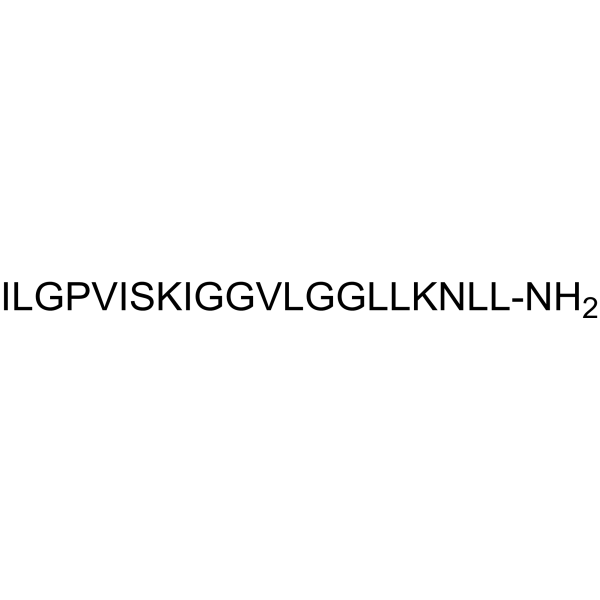 0 ImagesCat. No.: HY-P5655Maximin H4 is an antimicrobial peptide derived from the skin secretions of Chinese red belly toad Bombina maxima. Maximin H4 has activity against Escherichia coli ATCC25922, Staphylococcus aureus ATCC2592, Bacillus pyocyaneus CMCCB1010 and Candida albicans ATCC2002, the MIC values are 12, 6, 12, 6 μg/ml, respectively.
-
Mollicellin K
 0 ImagesCat. No.: HY-178724CAS No.: 1179374-63-0Mollicellin K is a depsidone that can be isolated from the fungus Chaetomium brasiliense. Mollicellin K exhibits antimicrobial activity against Myobacterium tuberculosis, antimalarial activity (IC50 = 1.2 μM) against Plasmodium falciparum as well as antifungal property (IC50 = 1.2 μM) against Candida albicans. Mollicellin K is cytotoxic against KB (IC50 = 1.9 μM), BC1 (IC50 = 6.8 μM), NCI-H187 (IC50 = 0.35 μM), and five cholangiocarcinoma cell lines. Mollicellin K also has an MIC of 12.5 μM for tuberculosis.




