



Caspase 7 Agonist
-
Eftozanermin alfa
 0 ImagesSynonyms: ABBV-621
Eftozanermin alfa (ABBV-621) is a tumor necrosis factor-related apoptosis-inducing ligand receptor (TRAIL-R) agonist. Eftozanermin alfa is a fusion protein consisting of a mutant immunoglobulin G1-Fc linked to 2 single-chain trimers of TRAIL. Eftozanermin alfa induces apoptosis in tumor cells by activation of death receptors (DR4 receptor and DR5 receptor) with Kds of 780 nM and 635 nM. Eftozanermin alfa can be used for the research of multiple solid and heme malignancies.
-
IGN523
 0 ImagesCat. No.: HY-P991669Synonyms: AML-01
IGN523 is an anti-CD98 antibody (hCD98, KD = 0.55 nM). IGN523 induces antibody-dependent cell-mediated cytotoxicity (ADCC) activity, lysosomal membrane permeabilization, and inhibition of essential amino acid transport, ultimately leading to caspase-3 and caspase-7-mediated apoptosis of tumor cells. IGN523 inhibits tumor growth in multiple tumor xenograft models. IGN523 is useful in the research of non-small cell lung cancer (NSCLC), acute myeloid leukemia (AML), and other cancers..
-
CD00509
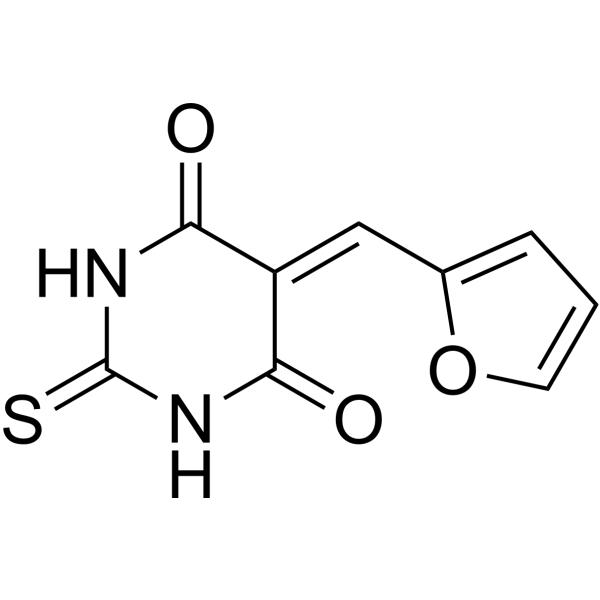 0 Images
CD00509 is a tyrosyl-DNA phosphodiesterase (PDE) Tdp1 inhibitor with an IC50 of 0.71 μM. CD00509 increases DNA damage and promotes apoptosis of MCF-7 cells. CD00509 can sensitize breast cancer cells and wild-type murine embryonic fibroblasts (MEFs) to Camptothecin (CPT) (HY-16560). CD00509 can be used for the study of cancers such as breast cancer.
-
SV119
 0 ImagesCat. No.: HY-177345CAS No.: 913815-82-4
SV119 is a selective sigma-2 (σ₂) receptor ligand (Ki ≈ 5-10 nM). SV119 induces apoptosis in various human cancer cell lines by activating caspase-3 and promoting mitochondrial depolarization. SV119 can enhance the effects of chemotherapeutic agents such as Paclitaxel (HY-B0015), increasing their cytotoxicity against tumor cells. SV119 significantly inhibits tumor growth in mouse xenograft models, both alone and in combination. SV119 is useful in the research of cancers such as breast, prostate, and pancreatic cancer.
-
HDAC-IN-91
 0 ImagesCat. No.: HY-175021
HDAC-IN-91 is a multiple inhibitor of HDAC (IC50 = 134.22 nM for HDAC1, 66.29 nM for HDAC2), carbonic anhydrase (CA) (Ki = 72.03 nM for CA IX, 50.76 nM for XII), and tubulin polymerization ( IC50 = 2.56 μM). HDAC-IN-91 inhibits PARP1 and increases the Bax/Bcl-2 ratio. HDAC-IN-91 blocks the cell cycle at the G2/M phase and induces apoptosis through a mitochondrial apoptosis activation mechanism. HDAC-IN-91 can exert potent cytotoxic activity through tubulin polymerization inhibition. HDAC-IN-91 can be used in breast, colorectal, cervical and lung cancer research.
-
MMP-9-IN-14
 0 ImagesCat. No.: HY-181272
MMP-9-IN-14 is a MMP-9 inhibitor (IC50 = 34.46 μM). MMP-9-IN-14 induces G1-phase cell cycle arrest and caspase-dependent apoptosis in cancer cells. MMP-9-IN-14 promotes the accumulation of phosphorylated γH2AX. MMP-9-IN-14 inhibits the migration and invasion of cancer cells, and downregulates the expressions of MMP-2, MMP-9 and hTERT in cancer cells. MMP-9-IN-14 inhibits tumor growth and angiogenic spread in animal models. MMP-9-IN-14 can be used for the research of cancers such as lung adenocarcinoma, cervical cancer and colorectal cancer.
-
4-Methoxycinnamic acid ethyl ester
 0 Images
4-Methoxycinnamic acid ethyl ester (Ethyl p-methoxycinnamate) is an orally active natural compound found. 4-Methoxycinnamic acid ethyl ester exerts anti-inflammatory effects by inhibiting cyclooxygenase (COX-1 (IC50 = 1.12 μM) and COX-2 (IC50 = 0.83 μM)), NF-κB (IC50 = 88.7 μM) and cytokine production (TNF-α (IC50 = 96.84 μg/mL) and IL-1β (IC50 = 166.4 μg/mL)). 4-Methoxycinnamic acid ethyl ester inhibits tumor cell proliferation, migration and cancer metabolism and induces apoptosis.4-Methoxycinnamic acid ethyl ester inhibits VEGF expression, thereby inhibiting angiogenesis. 4-Methoxycinnamic acid ethyl ester has a significant inhibitory effect on dengue virus and Mycobacterium tuberculosis. 4-Methoxycinnamic acid ethyl ester has analgesic effects in rats.



