



Fungal
An antifungal agent is a drug that selectively eliminates fungal pathogens from a host with minimal toxicity to the host.
Classes: 1. Polyene Antifungal Drugs: Amphotericin, nystatin, and pimaricin interact with sterols in the cell membrane (ergosterol in fungi, cholesterol in humans) to form channels through which small molecules leak from the inside of the fungal cell to the outside. 2. Azole Antifungal Drugs: Fluconazole, itraconazole, and ketoconazole inhibit cytochrome P450-dependent enzymes (particularly C14-demethylase) involved in the biosynthesis of ergosterol, which is required for fungal cell membrane structure and function. 3. Allylamine and Morpholine Antifungal Drugs: lylamines (naftifine, terbinafine) inhibit ergosterol biosynthesis at the level of squalene epoxidase. The morpholine drug, amorolfine, inhibits the same pathway at a later step. 4. Antimetabolite Antifungal Drugs: 5-Fluorocytosine acts as an inhibitor of both DNA and RNA synthesis via the intracytoplasmic conversion of 5-fluorocytosine to 5-fluorouracil.
All Product Categories
-
Fungal Related Products (2751)
Related Products (2751)

-
Antibodies (1)
-
Related Compound Screening Libraries (1)
-
Sclerotioramine
 0 ImagesCat. No.: HY-135535CAS No.: 34695-81-3Sclerotioramine (Compound 1), a red pigment, is an antioxidant compound. Sclerotioramine can be isolated from the endolichenic fungus Penicillium sp.-strain 1322P. Sclerotioramine has potent antibacterial activity with MICs of 3.125, 3.125 and 6.25 μg/mL for Bacillus subtilis, Bacillus megaterium and Shigella dysentery, respectively. Sclerotioramine also has significant antifungal activity against Pestalotiopsis theae, Cochliobolus miyabeanus and Exserohilum turcicum.
-
Nafuredin A
 0 ImagesCat. No.: HY-184460CAS No.: 224427-79-6Nafuredin A is a trinorsesquiterpene and polyketide derivative found in the mangrove sediment-derived fungi Talaromyces sp. SCSIO 41412 and Trichoderma harzianum D13. Nafuredin A regulates the ferroptosis pathway and upregulates ferroptosis-related genes. Nafuredin A alleviates hypoxia-reoxygenation-induced injury in oxygen-glucose deprivation/reperfusion cell models. Nafuredin A reduces pro-inflammatory cytokines and exerts hepatoprotective effects in animal models of hepatic ischemia-reperfusion injury. Nafuredin A inhibits the growth of phytopathogenic fungi Magnaporthe oryzae and Valsa mali. Nafuredin A can be used in studies related to hepatic ischemia-reperfusion injury and phytopathogenic fungal infections.
-
N-Heptyl 4-hydroxybenzoate
 0 ImagesSynonyms: p-OxybenzoesaureheptylesterN-Heptyl 4-hydroxybenzoate (p-Oxybenzoesaureheptylester) is an antimicrobial agent that inhibits S. aureus with MIC of 12.5 μg/mL. N-Heptyl 4-hydroxybenzoate also against plant pathogenic fungi, such as Alternaria brassicicola, F. solani, C. dematium and C. acutatum.
-
Mycophenolic acid sodium (Standard)
 0 ImagesSynonyms: Mycophenolate sodium (Standard)Mycophenolic acid (sodium) (Standard) is the analytical standard of Mycophenolic acid (sodium). This product is intended for research and analytical applications. Mycophenolic acid sodium is a potent uncompetitive inosine monophosphate dehydrogenase (IMPDH) inhibitor with an EC50 of 0.24 μM. Mycophenolic acid sodium demonstrates antiviral effects against a wide range of RNA viruses including influenza. Mycophenolic acid sodium is an immunosuppressive agent. Antiangiogenic and antitumor effects.
-
Coniferin (Standard)
 0 ImagesConiferin (Standard) is an analytical standard for Coniferin. This product is intended for research and analytical applications. Coniferin (Laricin) is a glucoside of coniferyl alcohol. Coniferin inhibits fungal melanization. Coniferin inhibits the release of certain hormones from cells, including Prostaglandin E2 and Thromboxane B2.
-
Enpyracymid
 0 ImagesCat. No.: HY-185574CAS No.: 2757172-25-9Enpyracymid is a succinate dehydrogenase inhibitor (SDHI) fungicide with fungicidal activity against fungal. It can be used in studies related to Fusarium head blight (FHB).
-
Cladospirone bisepoxide
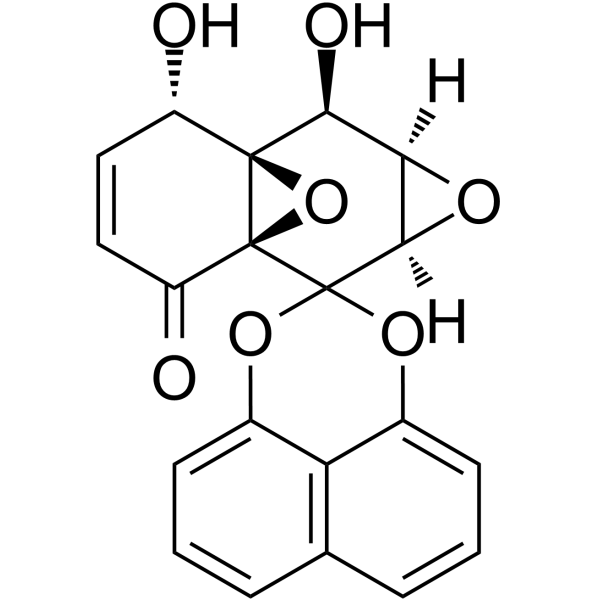 0 ImagesCat. No.: HY-113622CAS No.: 152607-03-9Synonyms: Palmarumycin C13; Diepoxin ζ; Antibiotic Sch53514Cladospirone bisepoxide is a metabolite that isolated from cultures of a fungus. Cladospirone bisepoxide displays selective antibiotic activity against several bacteria and fungi and inhibits germinations of Lepidium sativum at low concentrations.
-
Arcyriaflavin A (Standard)
 0 ImagesCat. No.: HY-103382RCAS No.: 118458-54-1Phenyramidol (Hydrochloride) (Standard) is the analytical standard of Phenyramidol (Hydrochloride). This product is intended for research and analytical applications. Phenyramidol hydrochloride is an anticoagulant and analgesic with activity that increases detection sensitivity in biological samples. Phenyramidol hydrochloride can be oxidized in aqueous media by electrochemical methods to achieve its quantitative analysis. The detection of Phenyramidol hydrochloride using an amino-functionalized multi-walled carbon nanotube-modified glassy carbon electrode showed significant enhancement of the current peak.
-
27-O-Demethylrapamycin
 0 ImagesCat. No.: HY-142003CAS No.: 141392-23-627-O-Demethylrapamycin, a Rapamycin (HY-10219) derivative, is an antifungal agent. 27-O-Demethylrapamycin inhibits Candida albicans, Saccharomyces cerevisiae, and Fusarium oxysporum.
-
12-O-Methyl chebulic acid
 0 ImagesCat. No.: HY-N19663CAS No.: 1359826-53-112-O-Methyl chebulic acid is an antifungal agent, methylated chebulic acid derivative and probable isolation artifact from Terminalia dhofarica leaves. 12-O-Methyl chebulic acid inhibits growth of several plant pathogens. 12-O-Methyl chebulic acid can be used for the research of phytopathogenic fungal infection and phytopathogenic oomycete infection.
-
Fosetyl-aluminum
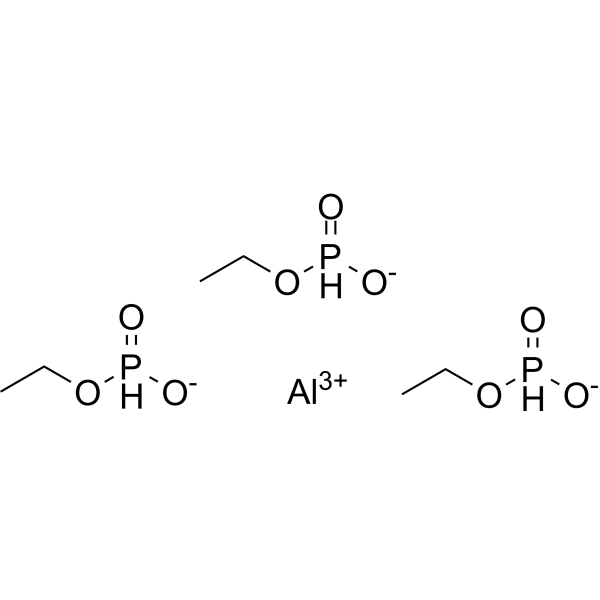 0 ImagesCat. No.: HY-136425CAS No.: 39148-24-8Synonyms: Fosetyl-AlFosetyl-aluminum (Fosetyl-Al) is an active ingredient in many fungicides against downy mildew. Fosetyl-aluminum is used to control many diseases caused by Phytophthora spp. on agricultural and horticultural crops.
-
Cytochalasin R
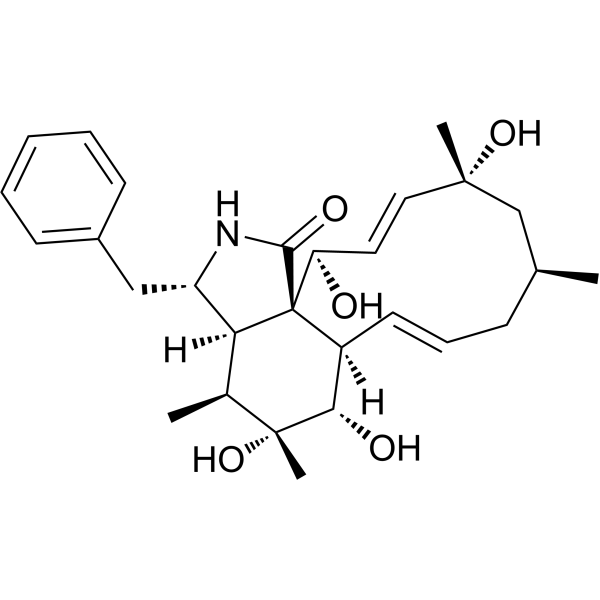 0 ImagesCat. No.: HY-N12195CAS No.: 121964-47-4Cytochalasin R (compound 17) is a cytochalasin analogue that can be isolated from the endophytic fungus Phomopsis sp. xz-18. Cytochalasin R shows potential antifungal activity.
-
Trigonelline-d3-1 chloride
 0 ImagesCat. No.: HY-N0415S1Synonyms: Trigonelline-d3-1 hydrochlorideTrigonelline-d3-1 chloride (Trigonelline-d3-1 hydrochloride) is the deuterium labeled Trigonelline chloride (HY-N0415). Trigonelline chloride is an alkaloid with potential antidiabetic activity that can be isolated from Trigonella foenum-graecum L or Leonurus artemisia. Trigonelline chloride is a potent Nrf2 inhibitor that blocks Nrf2-dependent proteasome activity, thereby enhancing apoptosis in pancreatic cancer cells. Trigonelline chloride also has anti-HSV-1, antibacterial, and antifungal activity, and induces ferroptosis.
-
Iprovalicarb-d8
 0 ImagesCat. No.: HY-W749483Iprovalicarb-d8 is the deuterium labeled Iprovalicarb (HY-121766). Iprovalicarb (Fencaramid; SZX-0722) is a fungicide that can be used for the study of?fungal?diseases in the wine sector.
-
Etisazole
 0 ImagesEtisazole (Ectimar; Bay Va 5387) is an animal antifungal agent with skin sensitizing properties in humans.
-
Diamthazole
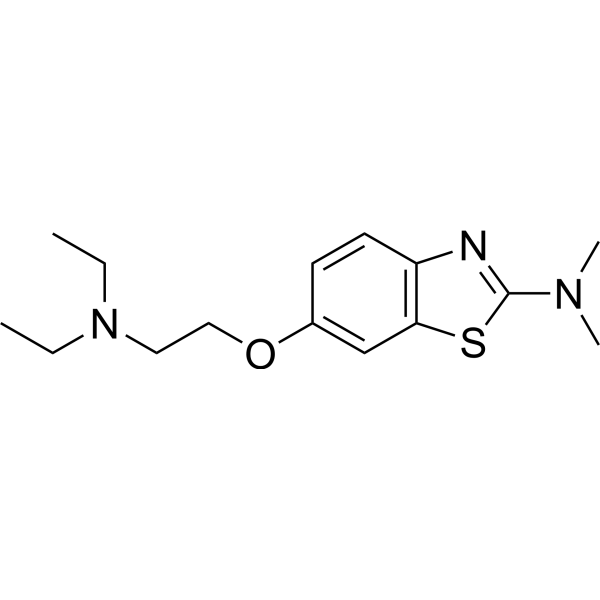 0 ImagesDiamthazole (Dimazole) is an antifungal agent. Diamthazole can be used for the research of infection.
-
Fenhexamid-d10
 0 ImagesCat. No.: HY-W701943CAS No.: 1246815-53-1Fenhexamid-d10 is the deuterium labeled Fenhexamid (HY-118065). Fenhexamid, a botryticide, is a sterol biosynthesis inhibitor. Fenhexamid shows fungicide efficient against the plant pathogenic fungus Botryotinia fuckeliana (Botrytis cinerea).
-
Furametpyr
 0 ImagesCat. No.: HY-119540CAS No.: 123572-88-3Furametpyr is a fungicide used to control rice sheath blight. Furametpyr exhibits a wide variety of metabolites in rats, through recombinant human cytochrome P450.
-
Aspergillin PZ
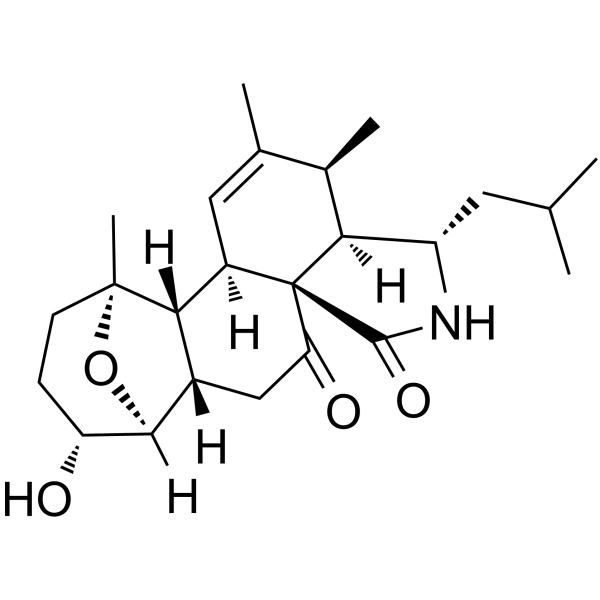 0 ImagesCat. No.: HY-126795CAS No.: 483305-08-4Aspergillin PZ is a novel isoindole-alkaloid from Aspergillus awamori. Aspergillin PZ induces conidia of P. oryzae to deform moderately.
-
6-Methoxydihydrosanguinarine hydrochloride
 0 ImagesCat. No.: HY-N3000A6-Methoxydihydrosanguinarine hydrochloride is an alkaloid with activity across multiple cancer cell types. 6-Methoxydihydrosanguinarine hydrochloride activates IRE1/JNK signaling, blocks Akt/mTOR and PI3K/AKT/mTOR pathways, reduces expression of Cdc25C, CyclinB1, Cdc2, YAP/TAZ, Survivin, GPX4, and EGFR, upregulates IRE1 and DR5, and activates JNK and caspases. 6-Methoxydihydrosanguinarine hydrochloride induces apoptosis, G2/M phase arrest, DNA damage, ROS generation, lipid peroxidation, ferroptosis, autophagy, and suppresses cancer cell growth. 6-Methoxydihydrosanguinarine hydrochloride disruptes the biofilm formation of Candida albicans (C. albicans). 6-Methoxydihydrosanguinarine hydrochloride can be used for the research of non-small cell lung cancer, hepatocellular carcinoma, melanoma, colon carcinoma, ovarian cancer and breast cancer.




