



Fungal
An antifungal agent is a drug that selectively eliminates fungal pathogens from a host with minimal toxicity to the host.
Classes: 1. Polyene Antifungal Drugs: Amphotericin, nystatin, and pimaricin interact with sterols in the cell membrane (ergosterol in fungi, cholesterol in humans) to form channels through which small molecules leak from the inside of the fungal cell to the outside. 2. Azole Antifungal Drugs: Fluconazole, itraconazole, and ketoconazole inhibit cytochrome P450-dependent enzymes (particularly C14-demethylase) involved in the biosynthesis of ergosterol, which is required for fungal cell membrane structure and function. 3. Allylamine and Morpholine Antifungal Drugs: lylamines (naftifine, terbinafine) inhibit ergosterol biosynthesis at the level of squalene epoxidase. The morpholine drug, amorolfine, inhibits the same pathway at a later step. 4. Antimetabolite Antifungal Drugs: 5-Fluorocytosine acts as an inhibitor of both DNA and RNA synthesis via the intracytoplasmic conversion of 5-fluorocytosine to 5-fluorouracil.
All Product Categories
-
Fungal Related Products (2751)
Related Products (2751)

-
Antibodies (1)
-
Related Compound Screening Libraries (1)
-
PRMT/HKMT-IN-1
 0 ImagesCat. No.: HY-114510CAS No.: 1020399-52-3PRMT/HKMT-IN-1 is an epigenetic multi-target protein arginine methyltransferases (PRMTs) and histone lysine methyltransferases (HKMTs) inhibitor. PRMT/HKMT-IN-1 inhibits Aspergillus nidulans RmtA with an IC50 of 29 μM. PRMT/HKMT-IN-1 inhibits human PRMT1, p300/CBP HAT, CARM1, SET7, SIRT1 and SIRT2. PRMT/HKMT-IN-1 inhibits methylation of histone H3K4, H4R3, and H3R17 residues. CBP/p300-IN-23 induces apoptosis, arrests cell cycle in S phase, and triggers granulocytic differentiation in leukemia cells. PRMT/HKMT-IN-1 can be used for the research of leukemia.
-
Phenothiazine-d8
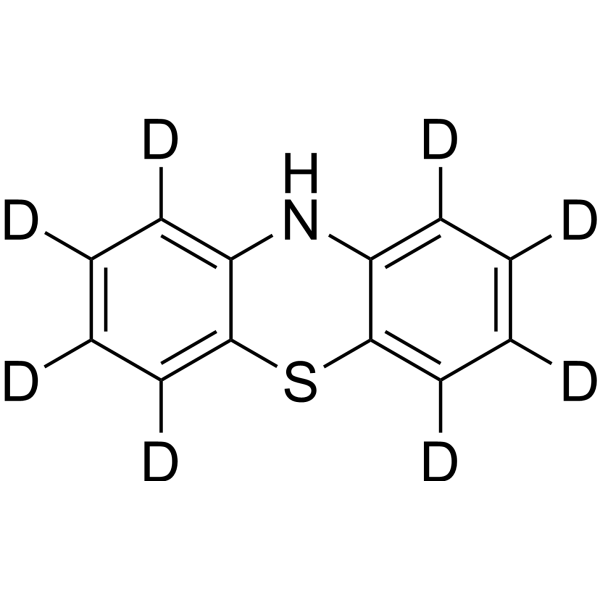 0 ImagesPhenothiazine-d8 is the deuterium labeled Phenothiazine. Phenothiazine is an antibiotic which has insecticidal, fungicidal, antibacterial and anthelmintic activities. Phenothiazine also can be used for the research of neurological diseases.
-
2,5-Dimethylhexane-3,4-diol
 0 ImagesCat. No.: HY-W970781CAS No.: 22607-11-02,5-Dimethylhexane-3,4-diol is an active ingredient that can be extracted from Mansoa hirsuta. 2,5-Dimethylhexane-3,4-diol has antifungal activity in vitro. 2,5-Dimethylhexane-3,4-diol can be used for research on fungal infections.
-
6,11,12,16-Tetrahydroxy-5,8,11,13-abitetetraen-7-one
 0 ImagesCat. No.: HY-N21530CAS No.: 1295650-67-76,11,12,16-Tetrahydroxy-5,8,11,13-abitetetraen-7-one is an abietane diterpenoid with antimicrobial and antiparasitic activities. It exhibits IC50 values of 3.0 and 4.8 μg/mL against Plasmodium falciparum strains D6 and W2, respectively, and inhibits the growth of Leishmania donovani with an IC50 of 12 μg/mL and an IC90 of 22 μg/mL. 6,11,12,16-Tetrahydroxy-5,8,11,13-abitetetraen-7-one can be used in studies related to fungal infections, staphylococcal infections, malaria and leishmaniasis.
-
Pac-525
 0 ImagesCat. No.: HY-P11907CAS No.: 678967-50-5Pac-525 is a tryptophan-rich cationic antibacterial peptide and membrane-disrupting agent. Pac-525 exhibits antimicrobial activity against Gram-positive bacteria, Gram-negative bacteria, anaerobic bacteria, *Candida albicans* and *Fusarium solani*. Pac-525 interacts strongly with negatively charged phospholipid vesicles, induces vesicle dye release and disrupts microbial membranes. Pac-525 shows cytotoxicity against macrophages. Pac-525 can be used in studies related to bacterial and fungal infections.
-
Toyocamycin (Standard)
 0 ImagesCat. No.: HY-103248RCAS No.: 606-58-6Synonyms: Vengicide (Standard)DL-Aspartic acid (Standard) is the analytical standard of DL-Aspartic acid. This product is intended for research and analytical applications. DL-Aspartic acid (DL-Asp-OH) is a kind of biological materials or organic compounds that are widely used in life science research.
-
Luotonin A
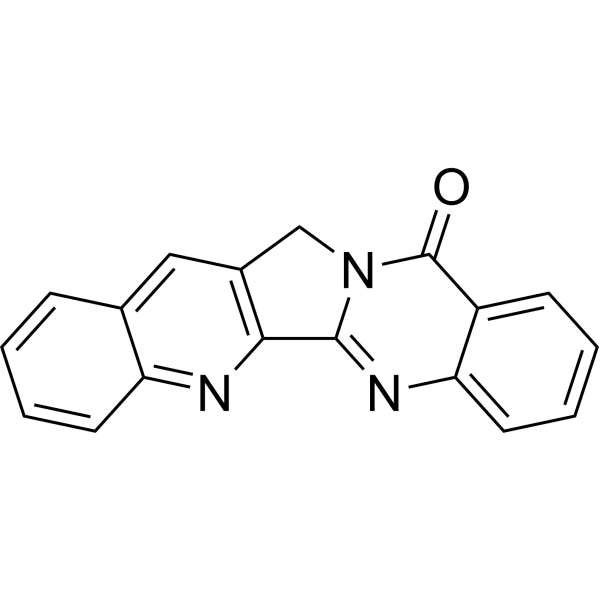 0 ImagesLuotonin A is an antiviral and antiphytopathogenic fungus agent. Luotonin A has good antiviral activity against tobacco mosaic virus (TMV). Luotonin A also has certain inhibitory activity on topoisomerase I and topoisomerase II. Luotonin A shows antitumor activity.

-
Antifungal agent 54
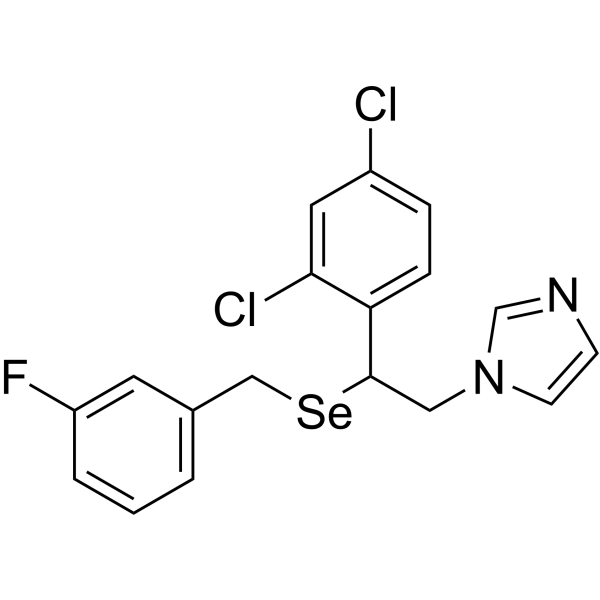 0 ImagesCat. No.: HY-153619CAS No.: 2422019-78-9Antifungal agent 54 (compound A05) is a potent antifungal agent, against Fluconazole (HY-B0101)-resistant strains. Antifungal agent 54 is more effective than Miconazole (HY-B0454). Antifungal agent 54 inhibits Candida albicans strains with MIC values of 0.25-1 μg/mL.
-
Sulfacetamide sodium monohydrate (Standard)
 0 ImagesSynonyms: Sulphacetamide sodium monohydrate (Standard)Sulfacetamide (Standard) (Sulphacetamide (Standard)) sodium monohydrate is the analytical standard of Sulfacetamide sodium monohydrate (HY-B0888). This product is intended for research and analytical applications. Sulfacetamide sodium monohydrate is a sulfonamide antibiotic that can be used for the study of ocular infections. Sulfacetamide sodium monohydrate has antifungal and antibacterial activities.
-
Antifungal agent 71
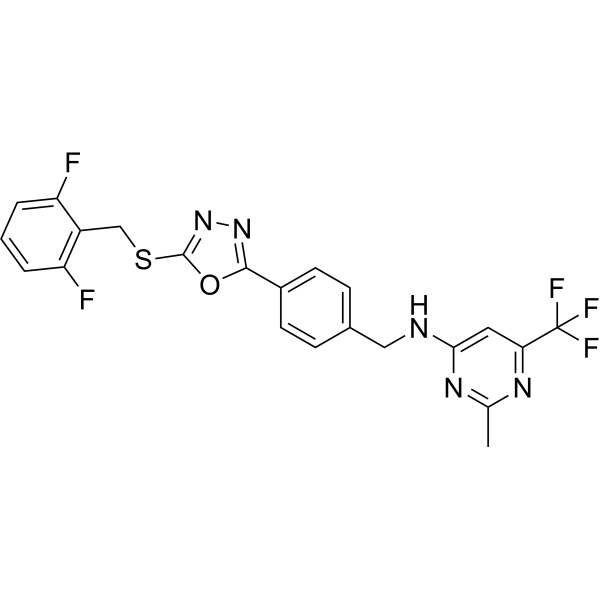 0 ImagesCat. No.: HY-155761Antifungal agent 71 (compound 6r) is a trifluoromethyl pyrimidine derivative with antifungal activity. Antifungal agent 71 exhibits good in vitro antifungal activity against F. oxysporum, with the EC50 value of 3.61 μg/mL.
-
2-Deethoxy-2-hydroxyphantomolin
 0 ImagesCat. No.: HY-N17734CAS No.: 821799-76-22-Deethoxy-2-hydroxyphantomolin, Germacranolide, is an Antifungal and Antibacterial agent. 2-Deethoxy-2-hydroxyphantomolin can be isolated from Elephantopus tomentosus Linn and E. mollis. 2-Deethoxy-2-hydroxyphantomolin is moderately active against Candida albicans (14 mm clearing zone) and slightly active against Escherichia coli (12 mm), Pseudomonas aeruginosa (12 mm), Bacillus subtilis (14 mm), and Trichophyton mentagrophytes (13 mm).
-
1233B
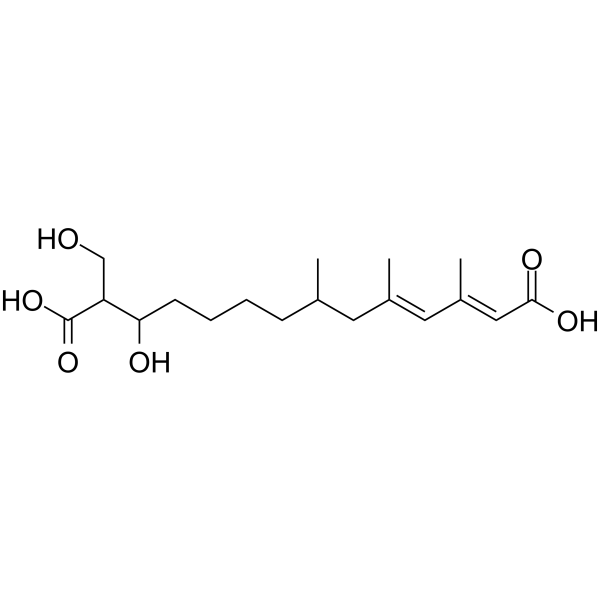 0 ImagesCat. No.: HY-125706CAS No.: 34668-61-61233B is a secondary metabolite from filamentous fungus, Fusarium sp. RK97-94.
-
Cytochalasin A (Standard)
 0 ImagesCat. No.: HY-N6773RCAS No.: 14110-64-6Ketoprofen (lysinate) (Standard) is the analytical standard of Ketoprofen (lysinate). This product is intended for research and analytical applications. Ketoprofen (RP-19583) lysinate is a non-steroidal anti-inflammatory agent. Ketoprofen lysinate can inhibit the activity of cyclooxygenase with IC50 values of 2 nM (COX-1) and 26 nM (COX-2). which is potential in the research of inflammation, immunology, and metabolic disease such as obesity.
-
Antibacterial agent 203
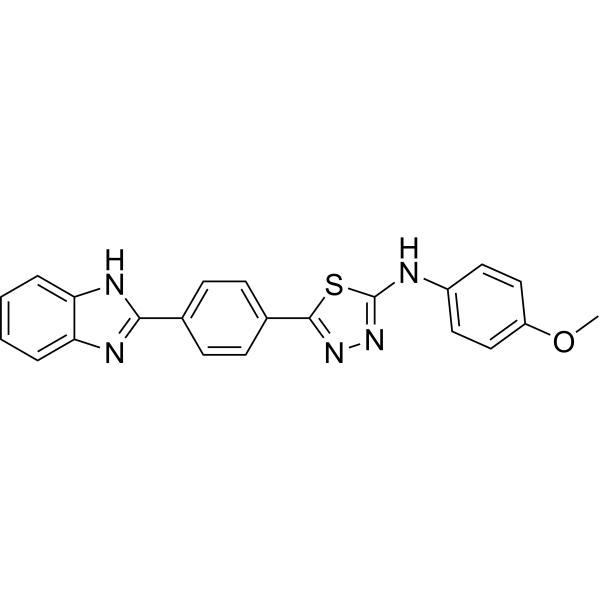 0 ImagesCat. No.: HY-162418CAS No.: 3034304-89-4Antibacterial agent 203 (Compound 5h) has antibacterial and antifungal activity. Antibacterial agent 203 has potent antifungal activity against C. albicans, with a MIC of 3.90 μg/mL. Antibacterial agent 203 has antimicrobial activity on healthy mouse fibroblast cells (L929), with an IC50 of 75.96 μM.
-
Antifungal agent 44
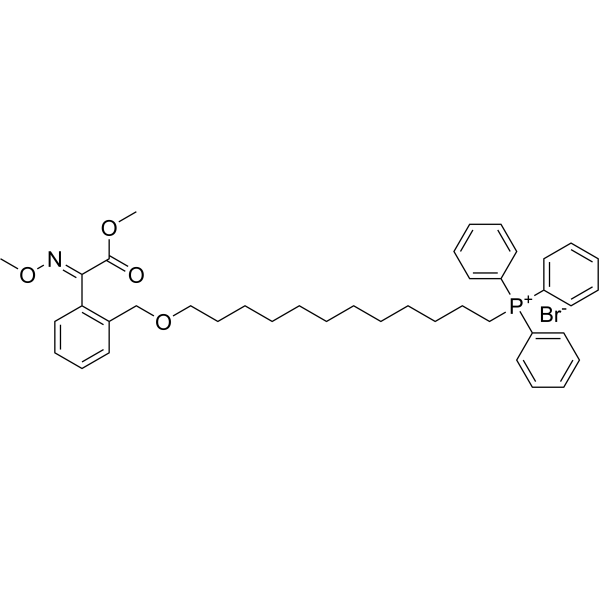 0 ImagesCat. No.: HY-151555Antifungal agent 44 (compound 2A-5) is an antifungal agent, and shows excellent fungicidal activity superior to Kresoxim-methyl (HY-125776). Antifungal agent 44 shows fungicidal activity against Phytophthora capsici most remarkably, with an EC50 value of about 5 μM.
-
Antifungal agent 40
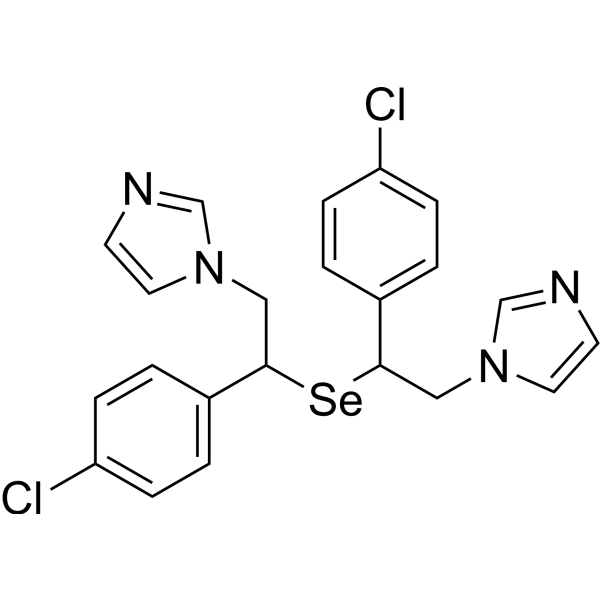 0 ImagesCat. No.: HY-151437CAS No.: 3033702-89-2Antifungal agent 40 is an antifungal agent which extends into the narrow hydrophobic pocket II of C.alb. CYP51. Antifungal agent 40 has an inhibitory effect on lanosterol 14α-demethylase (CYP51). Antifungal agent 40 inhibits biofilm formation.
-
3-Methyl-1-hexanol
 0 Images3-Methyl-1-hexanol, a volatile organic compound, is a microbial antagonist that can be isolated from Aureobasidium pullulans. 3-Methyl-1-hexanol has antifungal activities against Alternaria alternate and Botrytis cinerea. 3-Methyl-1-hexanol can be used for microbial infections research.
-
Aleurodiscal
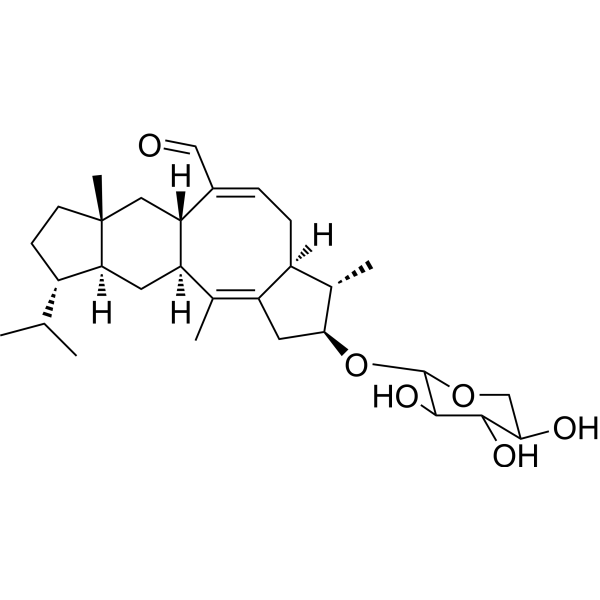 0 ImagesCat. No.: HY-121051CAS No.: 122535-46-0
-
Anidulafungin-d11
 0 ImagesCat. No.: HY-13553SCAS No.: 1123186-04-8Anidulafungin-d11 is the deuterium labeled Anidulafungin (HY-13553). Anidulafungin is a new semisynthetic echinocandin with antifungal potency.




