



HSP
Heat shock proteins
HSP (Heat shock proteins) are a group of proteins induced by heat shock, the most prominent members of this group are a class of functionally related proteins involved in the folding and unfolding of other proteins. HSP expression is increased when cells are exposed to elevated temperatures or other stress. This increase in expression is transcriptionally regulated. The dramatic upregulation of the heat shock proteins is a key part of the heat shock response and is induced primarily by heat shock factor (HSF). HSPs are found in virtually all living organisms, from bacteria to humans. Heat shock proteins appear to serve a significant cardiovascular role. Hsp90, Hsp84, Hsp70, Hsp27, Hsp20 and alpha B crystallin all have been reported as having roles in the cardiovasculature.
HSP Isoform Specific Products
All Product Categories
-
HSP Inhibitors
(312)
View all products
-
HSP Agonists
(2)
View all products
-
HSP Antagonists
(6)
View all products
-
HSP Activators
(83)
View all products
-
HSP Modulators
(6)
View all products
-
HSP Inducers
(6)
View all products
-
HSP Degraders
(8)
View all products
-
HSP Pre-designed Set
(1)
View all products
-
HSP Controls
(2)
View all products
-
HSP Ligands
(8)
View all products
-
HSP Related Products (482)
Related Products (482)

-
Antibodies (46)
-
HSP Isoform Comparison
-
Novobiocin (Standard)
 0 ImagesNovobiocin (Standard) is the analytical standard of Novobiocin. This product is intended for research and analytical applications. Novobiocin (Albamycin) is a potent and orally active antibiotic. Novobiocin also is a DNA gyrase inhibitor and a heat shock protein 90 (Hsp90) antagonist. Novobiocin has the potential for the research of highly beta-lactam-resistant pneumococcal infections. Novobiocin shows anti-orthopoxvirus activity.
-
SNX-7081
 0 ImagesCat. No.: HY-111165CAS No.: 908111-22-8SNX-7081 is an Hsp90 inhibitor with Ki and IC50 values of 26 nM and 44 nM, respectively. SNX-7081 blocks the nuclear translocation of NF-κB, inhibits the production of pro-inflammatory cytokines, attenuates the ERK/JNK and PDGF signaling pathways, and suppresses LPS (HY-D1056)-induced nitric oxide production. SNX-7081 inhibits DNA repair, induces G2/M cell cycle arrest, and triggers apoptosis via downregulation of MYC/nucleolin and activation of Fas. SNX-7081 can be used in research related to rheumatoid arthritis and cancer.

-
KUNG94
 0 ImagesCat. No.: HY-119732CAS No.: 2134571-29-0KUNG94 is a selective Grp94/HSP90B inhibitor (IC50=8 nM). By inhibiting the chaperone function of Grp94, KUNG94 reduces the maturation and cell surface trafficking of its specific client proteins. KUNG94 can be used for studies on Grp94-related biological mechanisms, as well as diseases including cancer and primary open-angle glaucoma.
-
Cemdomespib
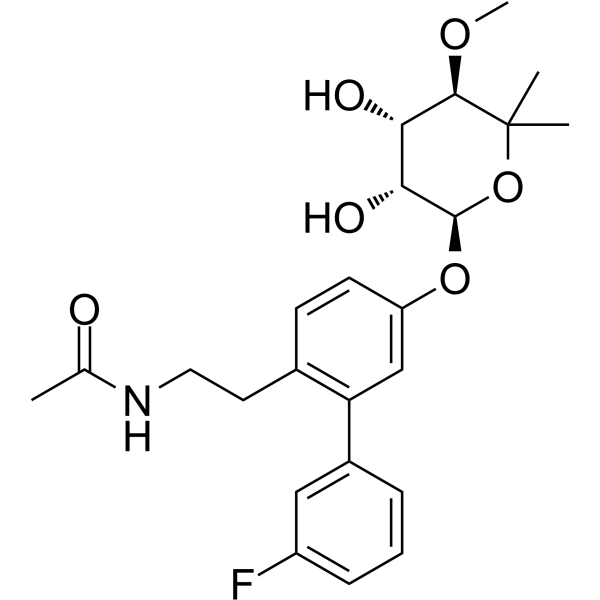 0 ImagesCat. No.: HY-145559CAS No.: 1450642-92-8Synonyms: KU-596Cemdomespib (KU-596) is a highly bioavailable second-generation Hsp90 modulator. Cemdomespib has shown efficacy in improving sensory deficits in models of diabetic peripheral neuropathy. Cemdomespib induces Hsp70 levels and manifest neuroprotective activity through induction of the heat shock response.
-
Shepherdin (79-87)
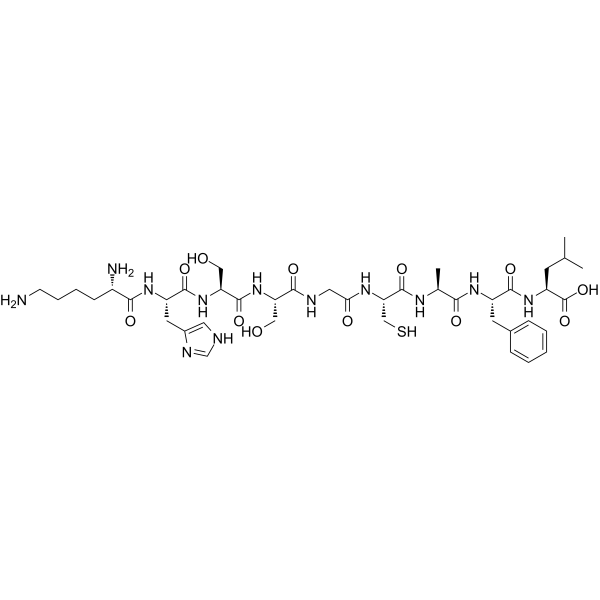 0 ImagesCat. No.: HY-P1750CAS No.: 861224-28-4Shepherdin (79-87) is amino acids 79 to 87 fragment of Shepherdin. Shepherdin is a peptidomimetic antagonist of the complex between Hsp90 and Survivin. Anticancer activity.
-
Hsp110/HDAC6-IN-1
 0 ImagesCat. No.: HY-183985Hsp110/HDAC6-IN-1 is an orally active Hsp110/HDAC6 dual inhibitor. Hsp110/HDAC6-IN-1 disrupts Hsp110-STAT3 protein-protein interaction, suppresses HDAC6 enzymatic activity, and suppresses STAT3 signaling pathway. Hsp110/HDAC6-IN-1 inhibits abnormal proliferation and migration of human pulmonary arterial endothelial cells, and suppresses pulmonary vascular remodeling in rats. Hsp110/HDAC6-IN-1 can be used for the research of pulmonary arterial hypertension.
-
Apidaecin IA
 0 ImagesCat. No.: HY-P5721CAS No.: 123081-48-1
-
1,6-Dimethoxyhexane
 0 ImagesCat. No.: HY-W275882CAS No.: 13179-98-11,6-Dimethoxyhexane is an aliphatic ether that serves as a PROTAC linker and fuel additive. 1,6-Dimethoxyhexane is an orally active testicular toxicant. It has no direct toxicity on its own, but exerts toxicity after oxidative metabolism by liver/testicular microsomes to produce 2-Methoxyacetic Acid (MAA). 1,6-Dimethoxyhexane induces apoptosis/necrosis of pachytene spermatocytes, downregulates the expression of HSP70.2, HSP60 and ERp60/PDI A3, and causes spermatogenic tubule degeneration, testicular/thymic atrophy, a sharp decline in epididymal sperm density, and other effects. 1,6-Dimethoxyhexane can be used in studies related to testicular toxicity.
-
GRP78-IN-2
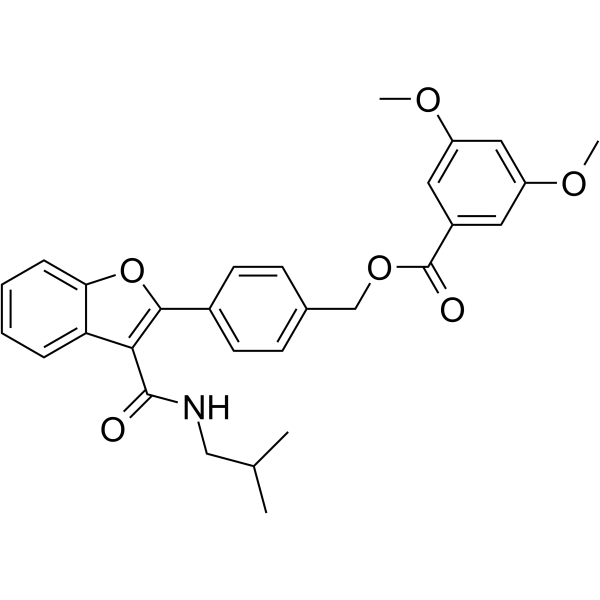 0 ImagesCat. No.: HY-146420CAS No.: 1882875-63-9GRP78-IN-2 (Compound FL5) is a GRP78 (Glucose Regulated Protein 78 kDa) inhibitor. GRP78-IN-2 preferentially targeting cell surface GRP78 and shows potent antiangiogenic and anticancer activities without affecting other normal cells.

-
NDNA4
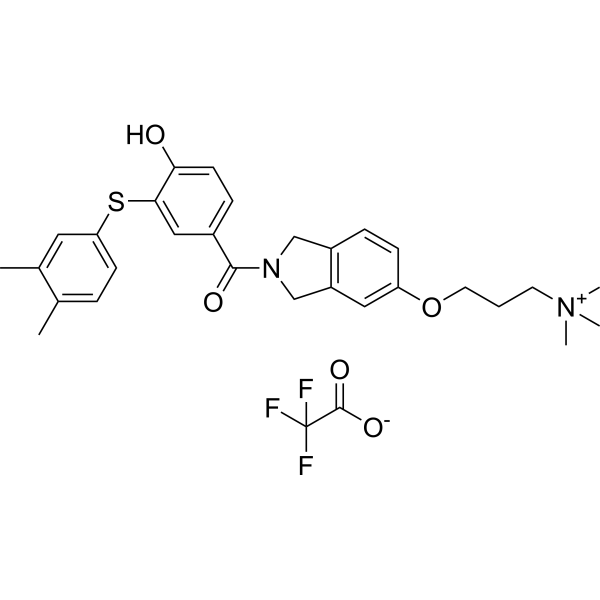 0 ImagesCat. No.: HY-149431NDNA4 (compound 17) is a selective inhibitor of Hsp90α (IC50: 0.34 μM). NDNA4 is a permanently charged analog with low membrane permeability and low cytotoxicity against Ovcar-8 and MCF-10A ((IC50 >100 μM)). NDNA4 prevents disruption of hERG channel maturation without generating a heat shock response or causing degradation of Hsp90α-dependent client proteins.
-
Teprenone Impurity 5
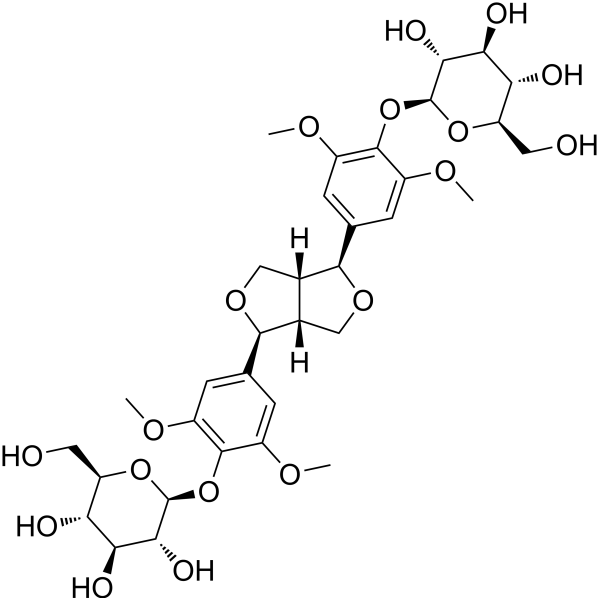
 0 ImagesTeprenone Impurity 5 (5Z-GGA) is the cis-isomer of Teprenone (HY-B0779). Teprenone Impurity 5 has inhibitory activity on the proliferation of human ovarian cancer cells Caov-3, and can block the invasion process of cancer cells. Teprenone Impurity 5 can induce the expression of heat shock protein 70 (HSP70) and thioredoxin (Trx). Teprenone Impurity 5 can be used for the research of ovarian cancer.
-
KHS101
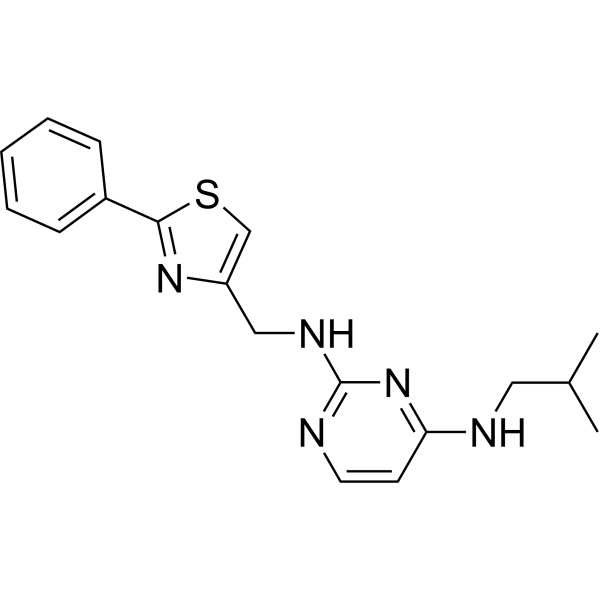 0 ImagesCat. No.: HY-10996CAS No.: 1262770-73-9KHS101 is a blood-brain barrier-penetrant anticancer agent that primarily functions by inhibiting HSPD1 (IC50 = 14.4 μM) and TACC3 across different cellular backgrounds. KHS101 promotes the aggregation of HSPD1 with client proteins, destabilizes TACC3, and reduces the levels of TACC3, Aurora A and PLK1. KHS101 induces autophagy, apoptosis, cell cycle exit and neuronal differentiation; it suppresses cancer cell growth, motility, EMT and stemness; it also impairs mitochondrial bioenergetics and glycolysis in glioblastoma cells. KHS101 can be used in research related to glioblastoma multiforme and breast cancer.
-
Withanolide D
 0 ImagesCat. No.: HY-N17756CAS No.: 30655-48-2Withanolide D (Compound 2) is a steroidal ester found in Withania somnifera (L.) Dunal, with anticancer activity. Withanolide D can activate the heat-shock factor 1 (HSF1)-dependent stress response. Withanolide D can be used for the research of cancer such as lymphoma.
-
AR/AR-V7 degrader-1
 0 ImagesCat. No.: HY-181727AR/AR-V7 degrader-1 is an orally active AR and AR-V7 degrader. AR/AR-V7 degrader-1 disrupts the interaction between AR/AR-V7 and HSP90, leading to their ubiquitination and degradation in castration-resistant prostate cancer cells. AR/AR-V7 degrader-1 regulates the expression of cell cycle-related proteins in prostate cancer cells (downregulates CDK4, CDK6, Cyclin D1, Cyclin E1; upregulates P21) and induces G0/G1 phase arrest. AR/AR-V7 degrader-1 inhibits the proliferation and migration of prostate cancer cells. AR/AR-V7 degrader-1 suppresses the growth of castration-resistant prostate cancer tumors in nude mice and induces the degradation of AR and AR-V7 in tumor tissues. AR/AR-V7 degrader-1 is applicable to the research of castration-resistant prostate cancer.
-
Palmitic acid-d2-1
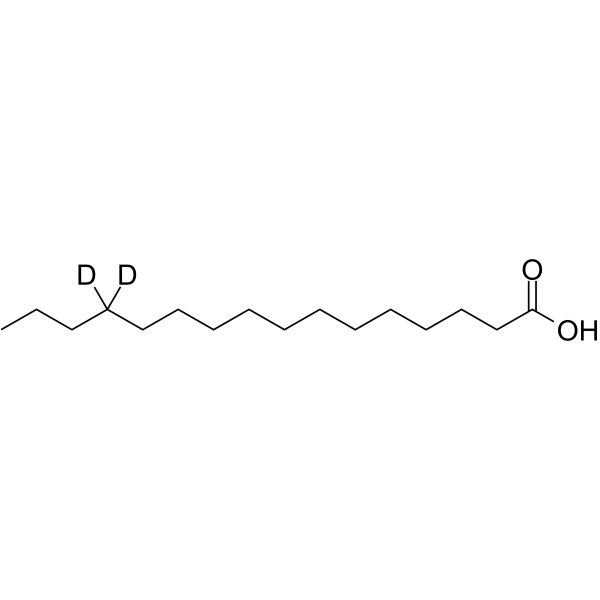 0 ImagesCat. No.: HY-N0830S11CAS No.: 62690-28-2Palmitic acid-d2-1 is the deuterium labeled Palmitic acid. Palmitic acid is a long-chain saturated fatty acid commonly found in both animals and plants. Palmitic acid can induce the expression of glucose-regulated protein 78 (GRP78) and CCAAT/enhancer binding protein homologous protein (CHOP) in in mouse granulosa cells.
-
Iroxanadine sulfate
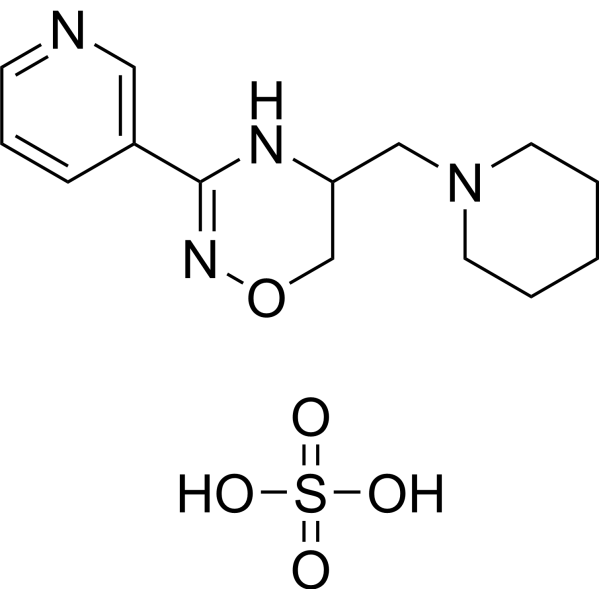 0 ImagesCat. No.: HY-19399BCAS No.: 276690-61-0Synonyms: (-)-BRX 005 sulfate; (-)-BRX 235 sulfateIroxanadine (BRX 005) sulfate is a vasculoprotector. Iroxanadine is a p38 kinase and HSP protein dual activator. Iroxanadine sulfate has the potential for atherosclerosis and vascular diseases research.
-
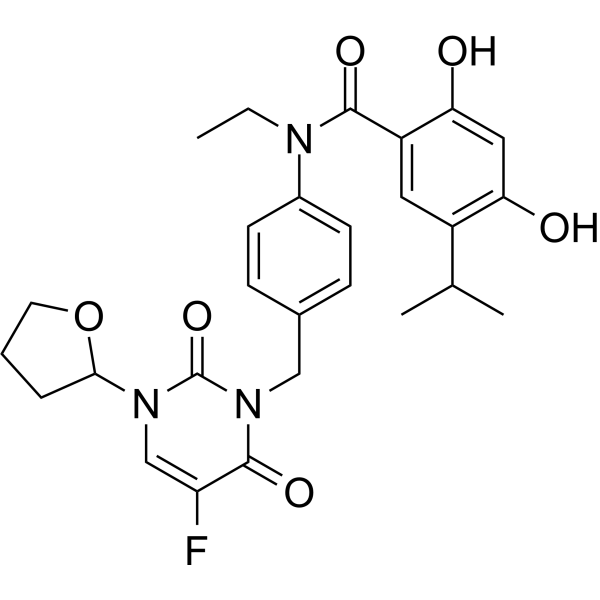
HSP90-IN-11
 0 ImagesCat. No.: HY-146325CAS No.: 2986564-20-7HSP90-IN-11 is a HSP90 inhibitor with an IC50 of 27.8 nM. HSP90-IN-11 inhibits the activity of HSP90, which in turn induces rapid degradation of EGFR and Akt proteins in non-small cell lung cancer (NSCLC) cells. HSP90-IN-11 induces accumulation of the G1 subphase cell population in NSCLC cells, activates caspase-3, caspase-8, caspase-9 and PARP, thereby triggering apoptosis. HSP90-IN-11 exhibits antiproliferative activity in colorectal cancer and NSCLC cells. HSP90-IN-11 can be used for the research of colorectal cancer and non-small cell lung cancer.




