



HSP
Heat shock proteins
HSP (Heat shock proteins) are a group of proteins induced by heat shock, the most prominent members of this group are a class of functionally related proteins involved in the folding and unfolding of other proteins. HSP expression is increased when cells are exposed to elevated temperatures or other stress. This increase in expression is transcriptionally regulated. The dramatic upregulation of the heat shock proteins is a key part of the heat shock response and is induced primarily by heat shock factor (HSF). HSPs are found in virtually all living organisms, from bacteria to humans. Heat shock proteins appear to serve a significant cardiovascular role. Hsp90, Hsp84, Hsp70, Hsp27, Hsp20 and alpha B crystallin all have been reported as having roles in the cardiovasculature.
HSP Isoform Specific Products
All Product Categories
-
HSP Inhibitors
(324)
View all products
-
HSP Agonists
(2)
View all products
-
HSP Antagonists
(5)
View all products
-
HSP Activators
(88)
View all products
-
HSP Modulators
(6)
View all products
-
HSP Inducers
(7)
View all products
-
HSP Degraders
(7)
View all products
-
HSP Pre-designed Set
(1)
View all products
-
HSP Controls
(2)
View all products
-
HSP Ligands
(11)
View all products
-
HSP Related Products (503)
Related Products (503)

-
Antibodies (46)
-
HSP Isoform Comparison
-
Iroxanadine sulfate
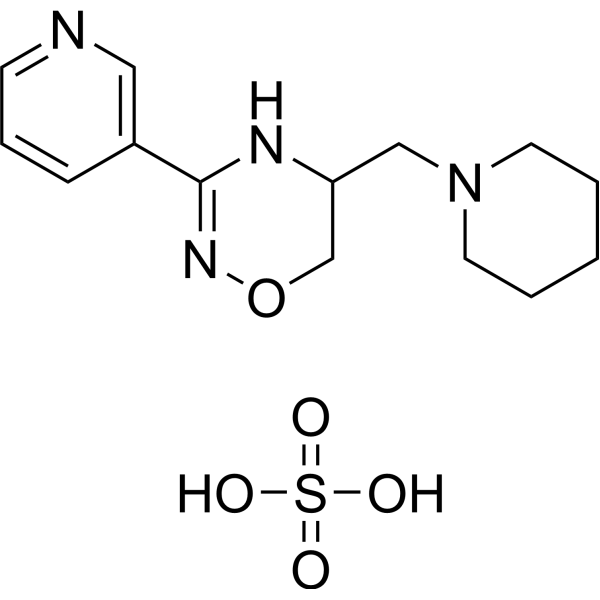 0 ImagesCat. No.: HY-19399BCAS No.: 276690-61-0Synonyms: (-)-BRX 005 sulfate; (-)-BRX 235 sulfateIroxanadine (BRX 005) sulfate is a vasculoprotector. Iroxanadine is a p38 kinase and HSP protein dual activator. Iroxanadine sulfate has the potential for atherosclerosis and vascular diseases research.
-
HSP90-IN-11
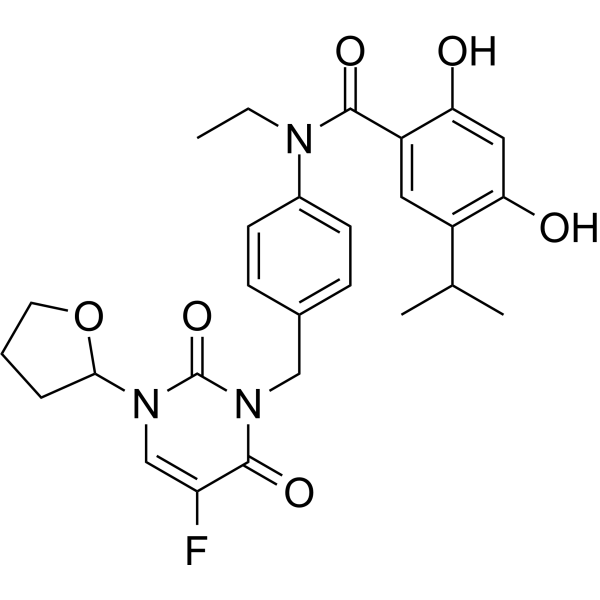 0 ImagesCat. No.: HY-146325CAS No.: 2986564-20-7HSP90-IN-11 is a HSP90 inhibitor with an IC50 of 27.8 nM. HSP90-IN-11 inhibits the activity of HSP90, which in turn induces rapid degradation of EGFR and Akt proteins in non-small cell lung cancer (NSCLC) cells. HSP90-IN-11 induces accumulation of the G1 subphase cell population in NSCLC cells, activates caspase-3, caspase-8, caspase-9 and PARP, thereby triggering apoptosis. HSP90-IN-11 exhibits antiproliferative activity in colorectal cancer and NSCLC cells. HSP90-IN-11 can be used for the research of colorectal cancer and non-small cell lung cancer.
-
PROTAC HSP70 Degrader-1
 0 ImagesCat. No.: HY-181147PROTAC HSP70 Degrader-1 (compound C4) is a cytosolic HSP70 PROTAC degrader that can engage CRBN to form a ternary complex. PROTAC HSP70 Degrader-1 mediates ubiquitination and proteasomal degradation of cytosolic HSP70. PROTAC HSP70 Degrader-1 exhibits cytotoxic activity against cancer cells, suppressing tumor cell proliferation and inducing apoptosis in combination with DTHIB. PROTAC HSP70 Degrader-1 can be used for the research of colon cancer and leukemia.
-
p5 Ligand for Dnak and DnaJ
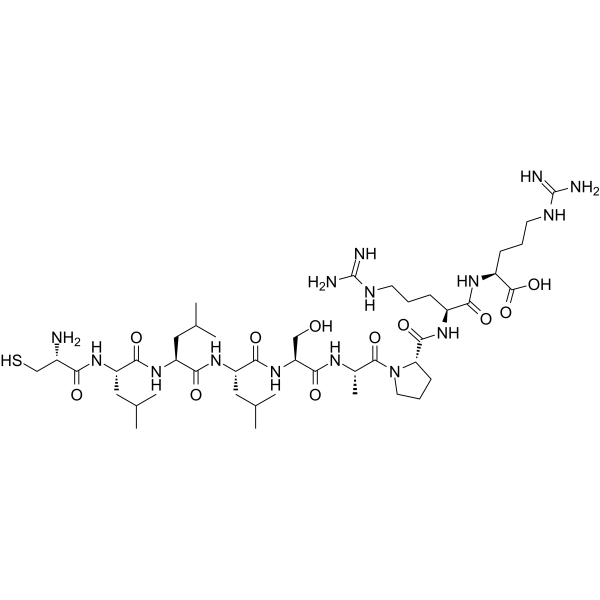 0 ImagesCat. No.: HY-P1887CAS No.: 209518-24-1p5 Ligand for Dnak and DnaJ is a nonapeptide, which corresponds to the main binding site for the 23-residue part of the presequence of mitochondrial aspartate aminotransferase. p5 Ligand for Dnak and DnaJ is a high-affinity ligand for DnaK and DnaJ.
-
PROTAC BRD4 Degrader-21
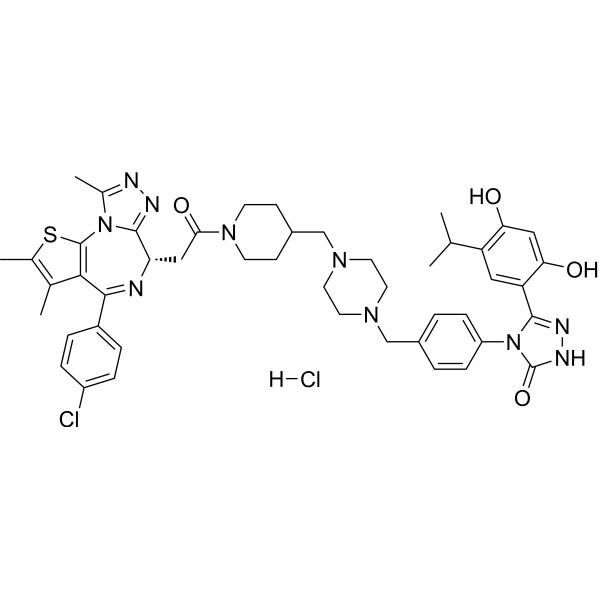 0 ImagesCat. No.: HY-156566CAS No.: 2503036-46-0PROTAC BRD4 Degrader-21 is a BRD4-targeting PROTAC degrader with an IC50 value of 59 nM. PROTAC BRD4 Degrader-21 induces ubiquitination of BRD4, leading to its degradation via the proteasome. PROTAC BRD4 Degrader-21 binds to recombinant HSP90α protein with moderate affinity, having an IC50 of 100-1000 nM. PROTAC BRD4 Degrader-21 induces cancer cell death. PROTAC BRD4 Degrader-21 inhibits tumor growth in xenograft mouse models. PROTAC BRD4 Degrader-21 can be used for the research of acute myeloid leukemia, diffuse large B-cell lymphoma.
-
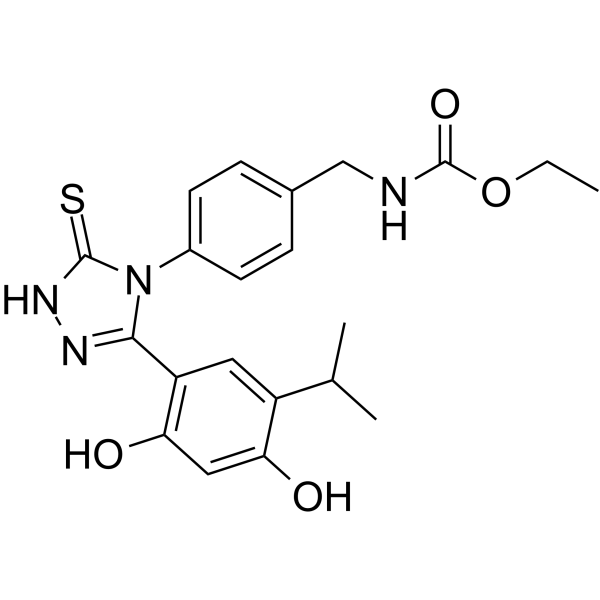
HSP90-IN-35
 0 ImagesCat. No.: HY-170326CAS No.: 1207597-54-3Hsp90-in-35 is an inhibitor of Hsp90, with an IC50 between 0.05 and 0.5 μM. HSP90-IN-35 has antitumor activity. HSP90-IN-35 can be used to synthesize KRAS G12C degrader-1 (PROTAC) (HY-153881).
-
Lw13
 0 ImagesCat. No.: HY-162589Lw13 is a Hsp90 PROTAC degrader. Lw13 induces Hsp90 degradation via the ubiquitin-proteasome system, destabilizes client proteins HER2 and AKT, and blocks the activation of the HER2/AKT/mTOR signaling pathway. Lw13 inhibits the metastasis of cervical cancer cells, induces cell cycle arrest and apoptosis (apoptosis). Lw13 exerts synergistic anti-tumor activity with Cisplatin (HY-17394). Lw13 is applicable to cervical cancer-related research.
-
Apidaecin IA acetate
 0 ImagesCat. No.: HY-P5721AApidaecin IA acetate is a basic peptide. Apidaecin IA acetate inhibits the enzymatic activity of DnaK. Apidaecin IA acetate induces bacterial cell death. Apidaecin IA acetate can be used in research related to peritonitis and bacterial infections.
-
Hsp90-Cdc37-IN-2
 0 ImagesCat. No.: HY-130624CAS No.: 2413849-81-5Hsp90-Cdc37-IN-2 (Compound 41) is an inhibitor for the interaction between heat shock protein 90 (Hsp90) and cyclin 37 (Cdc37). Hsp90-Cdc37-IN-2 inhibits the proliferation of cancer cell A549, MCF-7, HOS and HepG2 with IC50 of 0.41-0.94 μM. Hsp90-Cdc37-IN-2 decreases the mitochondrial membrane potential, induces apoptosis, and arrest cell cycle at G0/G1 phase in A549.
-
EZH2/HSP90-IN-29
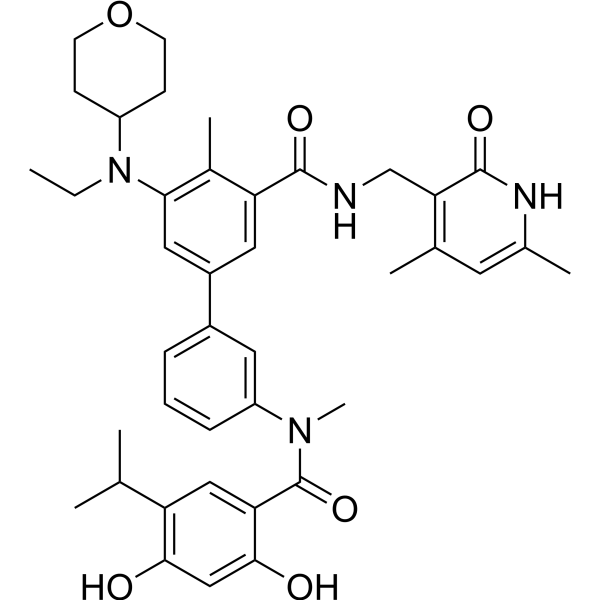 0 ImagesCat. No.: HY-163288CAS No.: 3033571-35-3EZH2/HSP90-IN-29 is a dual inhibitor for EZH2 and HSP90, with IC50s of 6.29 nM and 60.1 nM, for EZH2 and HSP90, respectively. EZH2/HSP90-IN-29 increases apoptosis/necrosis-related gene expression, induces cell cycle arrest at M phase and inhibits reactive oxygen species (ROS) catabolism pathway. EZH2/HSP90-IN-29 is able to cross the blood-brain-barrier (BBB).
-
A8 peptide
 0 ImagesCat. No.: HY-P11052CAS No.: 1140483-17-5A8 peptide is a Hsp72 antagonist. A8 peptide inhibits tumor progression and metastasis as well as enhances the cancer cells' sensitivity to apoptosis induced by chemotherapeutic agents (such as Cisplatin (HY-17394)) by blocking the Hsp72-TLR2 interaction and the subsequent activation of MDSCs. A8 peptide can be used for cancers research.
-
SM253
 0 ImagesCat. No.: HY-120227CAS No.: 1610546-52-5SM253 is an Hsp90 inhibitor that inhibits Hsp90-dependent protein folding. SM253 blocks chaperone function by binding to the N-middle linker region and the C-terminal M domain, reducing co-chaperone and client protein binding and activation. SM253 induces cancer cell apoptosis, activates caspase 3/7, causes cell cycle arrest and reduces cell proliferation, while decreasing Hsp90 client proteins such as AR, FKBP51, PSA, Cdk4, AKT, ERK, and p23, and reducing Hsp27/Hsp70 expression without inducing heat shock proteins. SM253 causes dose-dependent fibronectin loss in cells expressing LRP1. SM253 can be used for research on colon cancer, pancreatic cancer, and prostate cancer.
-
CH5164840
 0 ImagesCat. No.: HY-15990CAS No.: 1052645-73-4CH5164840 (16) shows high binding affinity for N-terminal Hsp90a (Kd = 0.52 nM) and strong anti-proliferative activity against human cancer cell lines (HCT116 IC50 = 0.15 μM, NCI-N87 IC50 = 0.066 μM). CH5164840 (16) is orally active (t1/2 = 2.64 h) with potent antitumor efficacy.
-
VWK147
 0 ImagesCat. No.: HY-181062VWK147 is a second-generation HSP90 C-terminal domain (CTD) inhibitor. VWK147 targets the CTD dimerization interface, prevents HSP90 CTD dimerization, disrupts co-chaperone PPID binding to HSP90 CTD, and inhibits HSP90 chaperone function dependent on dimerization. VWK147 reduces protein levels of HSP90 client proteins ULK1, RIPK1, and CDK4 without inducing a heat shock response. VWK147 induces cell death, including apoptosis, in Cisplatin (HY-17394)-sensitive and -resistant urothelial carcinoma cells. VWK147 induces LC3-II accumulation, inhibits autophagosome-lysosome fusion to block canonical autophagy, and induces non-canonical LC3 lipidation independent of ULK1 and PIK3C3 complexes. VWK147 can be used for the research of urothelial carcinoma.
-
HA15-Biotin
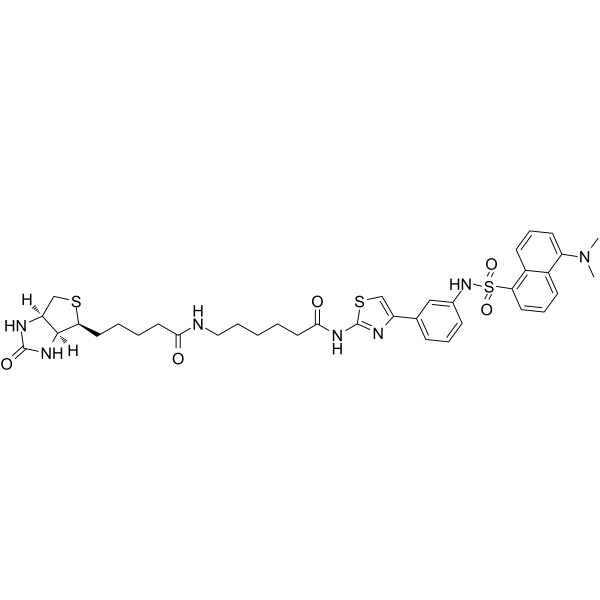 0 ImagesCat. No.: HY-139009CAS No.: 1965310-52-4HA15-Biotin is a chemical probe that consists of HA15 and biotin attached on the amide part of HA15. HA15-Biotin exhibits similar levels of activity to HA15. HA15-Biotin can be used for proteomic analysis.
-
17-Demethoxy-reblastatin
 0 ImagesCat. No.: HY-164372CAS No.: 299173-64-1Synonyms: 17-DR17-Demethoxy-reblastatin (17-DR) is an inhibitor for heat shock protein 90 (Hsp90), with an IC50 of 1.82 μM for yeast Hsp90 ATPase. 17-Demethoxy-reblastatin inhibits the proliferation of cancer cell HepG2 and SMMC7721, reduces the colony formation, and induces apoptosis through mitochondria and caspase mediated pathway.
-
HSP70 ligand 2
 0 ImagesCat. No.: HY-182979HSP70 ligand 2 is an HSP70 ligand and serves as a ligand for PROTAC target proteins. HSP70 ligand 2 can be used to synthesize Hsp70TAC BRD4 Degrader-1 (HY-182958) and Hsp70TAC PD-1 Degrader-2 (HY-182959).
-
Palmitic acid-13C8 sodium
 0 ImagesCat. No.: HY-N0830BS4CAS No.: 1173021-50-5Palmitic acid-13C8 sodium is the 13C-labeled Palmitic acid sodium (HY-N0830B). Palmitic acid sodium is a long-chain saturated fatty acid commonly found in both animals and plants. Palmitic acid sodium can induce the expression of glucose-regulated protein 78 (GRP78) and CCAAT/enhancer binding protein homologous protein (CHOP) in in mouse granulosa cells. Palmitic acid sodium is used to establish a cell steatosis model .
-
NDNA3
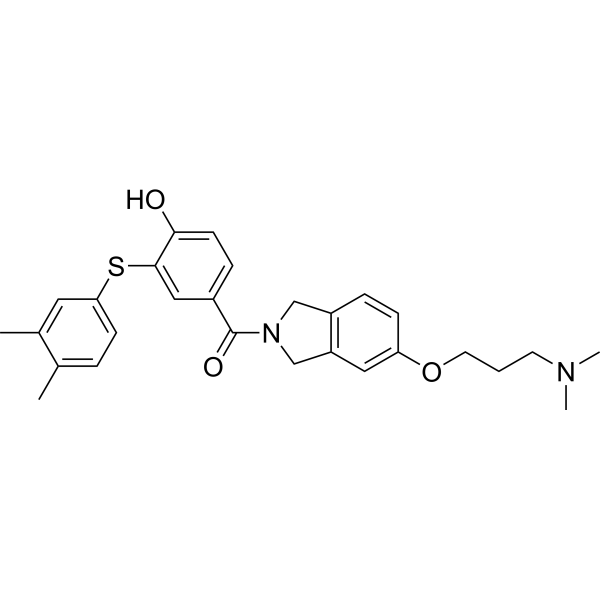 0 ImagesCat. No.: HY-149432NDNA3 (compound 14) is a selective inhibitor of Hsp90α (IC50: 0.51 μM). NDNA3 is a permanently charged analog with low membrane permeability and low toxicity to Ovcar-8 (IC50: 12.66 μM) and MCF-10A (IC50: 11.72 μM) cells. NDNA3 prevents disruption of hERG channel maturation without generating a heat shock response or causing degradation of Hsp90α-dependent client proteins.




