



LDHA
Lactate dehydrogenase A (LDHA) catalyzes the reversible conversion of pyruvate to lactate, facilitating glycolytic energy production[1][2]. Mechanistically, LDHA is upregulated under hypoxic conditions, driving aerobic glycolysis and supporting cellular proliferation in multiple cancer types[3][4]. Compared with LDHB, LDHA-dominant isoforms exhibit higher expression in tumor tissues and contribute preferentially to lactate accumulation and the Warburg effect[3][1]. LDHA has been identified as a critical modulator of tumor metabolism, influencing glucose uptake, lactate production, and mitochondrial function under energy stress conditions[5][4]. In disease models, overexpression of LDHA promotes proliferation and migration in vitro and tumor growth in vivo, while its knockdown sensitizes cells to radiation or metabolic stress[6][7][1]. Functionally distinct from LDHB, LDHA also participates in non-metabolic roles such as DNA repair via nuclear translocation in response to ionizing radiation, independent of glycolysis[1]. Agonists are less studied, but small-molecule inhibitors, including N-hydroxyindole derivatives and sodium oxamate, competitively target LDHA activity, reduce lactate production, and suppress cancer cell viability, particularly under hypoxia[2][8]. Collectively, these properties establish LDHA as both a biomarker of aggressive cancer phenotypes and a promising therapeutic target for metabolic and combination therapies[4][7].
References:
- [1]. Huang B, et al. LDHAα, a lactate dehydrogenase A isoform, promotes glycolysis and tumor progression. FEBS J. 2025 May;292(9):2223-2236. [Content Brief]
- [2]. Li J, et al. RBIO-04. Lactate dehydrogenase A (LDHA) mediates novel crosstalk between metabolic glycolysis and chromatin remodeling. Neuro Oncol. 2021;23(Suppl 6):vi192.
- [3]. Bolaños L, et al. Glycolytic enzymes lactate dehydrogenase A (LDHA) and phosphofructokinase P (PFKP) are good biomarkers of survival and potential therapeutic targets in cervical cancer. Annals of Oncology. 2018;29(Suppl 6):vi33.
- [4]. Valvona C, et al. OP53 Inhibition of lactate dehydrogenase A (LDHA) using sodium oxamate leads to metabolic changes, decreased growth and migration in medulloblastoma cell lines. Neuro Oncol. 2015;17(Suppl 8):viii10.
- [5]. Granchi C, et al. Discovery of N-hydroxyindole-based inhibitors of human lactate dehydrogenase isoform A (LDH-A) as starvation agents against cancer cells. J Med Chem. 2011 Mar 24;54(6):1599-612. [Content Brief]
- [6]. Jia C, et al. The opposite role of lactate dehydrogenase a (LDHA) in cervical cancer under energy stress conditions. Free Radic Biol Med. 2024 Mar;214:2-18. [Content Brief]
- [7]. Ali SR, et al. Nerve Density and Neuronal Biomarkers in Cancer. Cancers (Basel). 2022 Oct 1;14(19):4817. [Content Brief]
- [8]. White B, et al. FSMP-13. Hypoxic regulation of lactate dehydrogenase genes (LDHA/B) in T98 glioblastoma multiforme cells. Neuro-Oncology Advances. 2021;3:i18-i18.
All Product Categories
-
LDHA Related Products (10)
Related Products (10)

-
(R)-GNE-140
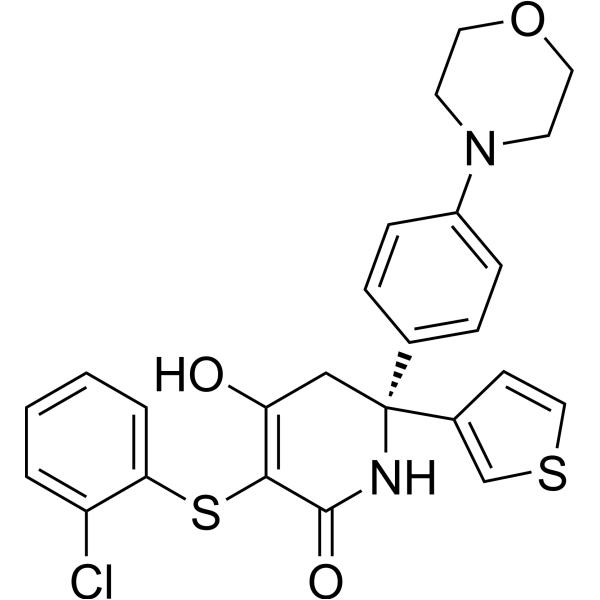 0 Images(R)-GNE-140 is a potent inhibitor of lactate dehydrogenase (LDH) A, B and C, with IC50 values of 3, 5 and 5 nM against LDHA, LDHB, LDHC, respectively. (R)-GNE-140 blocks the conversion of pyruvate to lactate, reduces lactate production and histone lysine lactylation, and inhibits glycolysis. (R)-GNE-140 attenuates cardiac hypertrophy, alleviates PM2.5-induced pulmonary inflammation and fibrosis, blocks MRSA-induced Arg1 expression. (R)-GNE-140 is applicable to research related to pathological cardiac hypertrophy, pulmonary fibrosis, MRSA infection and pancreatic cancer.
-
GNE-140 racemate
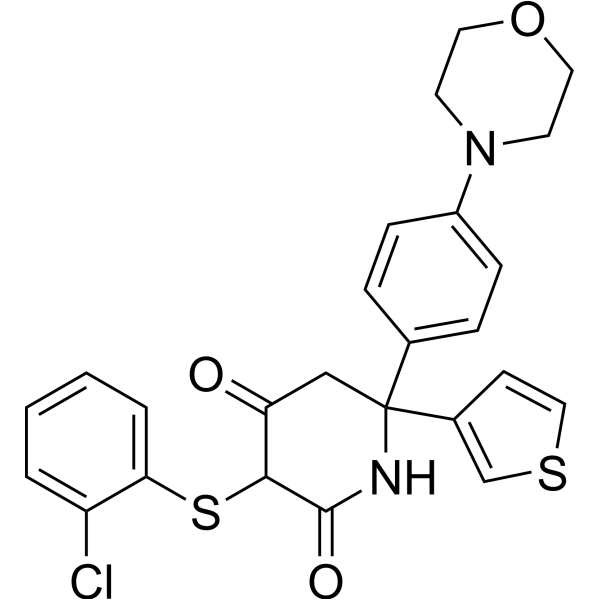 0 ImagesGNE-140 racemate is a racemic mixture of (R)-GNE-140 (HY-100742A) and (S)-GNE-140 (HY-100742B), and also a tautomer of GNE-140 (HY-118241). GNE-140 racemate is an orally active lactate dehydrogenase inhibitor, with an IC50 of 3 nM against human LDHA and an IC50 of 5 nM against LDHB. GNE-140 racemate reduces the phosphorylation level and total protein expression of p38 MAPK, and inhibits EGF-induced AKT phosphorylation. GNE-140 racemate decreases lactate production, regulates glycolysis, the pentose phosphate pathway and nucleotide biosynthesis, increases extracellular pH, inhibits cell proliferation, migration and invasion, and induces caspase-3 activation and ROS accumulation. GNE-140 racemate can be used in research related to breast cancer, cystic fibrosis and pancreatic cancer.
-
(S)-GNE-140
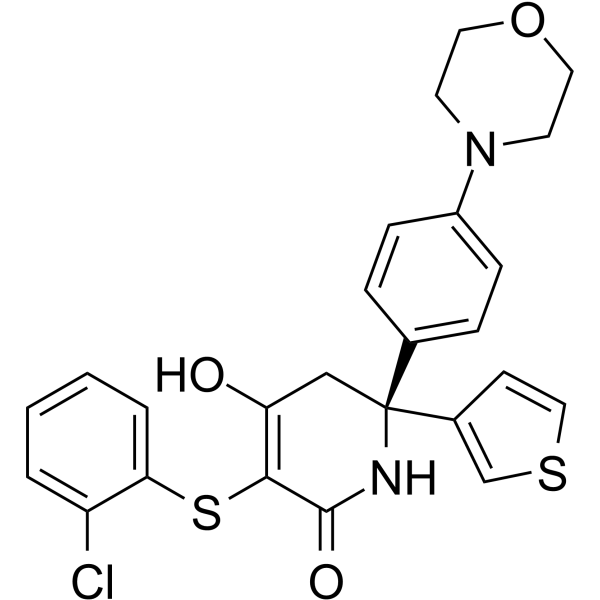 0 Images(S)-GNE-140 (Compound 30-S) is the S-enantiomer of GNE-140 (HY-118241). (S)-GNE-140 is an effective lactate dehydrogenase (LDH) inhibitor, with IC50 values of 55 nM for LDHA and 140 nM for LDHB. (S)-GNE-140 can be used in cancer research.
-
Licoflavone A
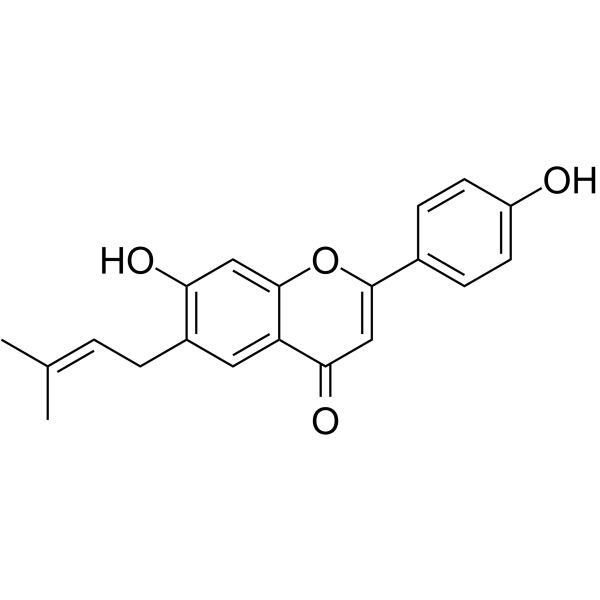 0 ImagesLicoflavone A is an orally active PTP1B/VEGFR-2 inhibitor, with an IC50 of 54.5 μM against PTP1B, an IC50 of 14.36 μM and a Kd of 142.38 nM against human VEGFR-2. Licoflavone A blocks the PI3K/AKT and MEK/ERK signaling pathways. Licoflavone A induces G1 phase cell cycle arrest, apoptosis via the intrinsic mitochondrial pathway (apoptosis), and inhibits migration, invasion and epithelial-mesenchymal transition (EMT) of gastric cancer cells. Licoflavone A inhibits the proliferation of gastric cancer cells in vitro and in xenograft models. Licoflavone A reduces the expression levels of HIF-1α, GLUT1, LDHA, PKM2 and HK2 in hypoxic gastric cancer cells, decreases glucose uptake and suppresses glycolysis. Licoflavone A can be used in research related to gastric cancer, type 2 diabetes and obesity.
-
4'-Bromo-resveratrol
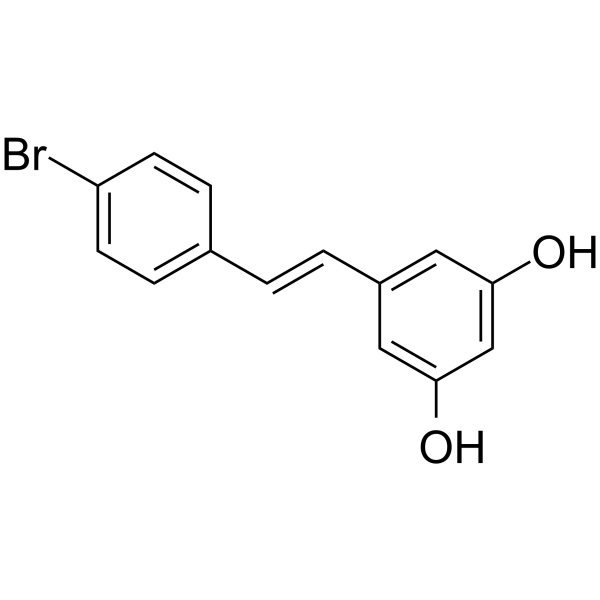 0 ImagesSynonyms: 4′‐BR4'-Bromo-resveratrol (4′‐BR) is a dual SIRT1/SIRT3 inhibitor with an IC50 of 0.2 mM for both targets. 4'-Bromo-resveratrol induces caspase-dependent apoptosis, induces G0/G1 cell cycle arrest, and inhiibits proliferation. 4'-Bromo-resveratrol reduces lactate production, glucose uptake, and NAD+/NADH ratio, and downregulates lactate dehydrogenase A and glucose transporter 1 (GLUT1). 4'-Bromo-resveratrol can be used for the research of melanoma.
-
GNE-140
 0 ImagesGNE-140 (Compound 28) is an external racemic mixture of (R)-GNE-140 (HY-100742A) and (S)-GNE-140 (HY-100742B). GNE-140 is an effective lactate dehydrogenase (LDH) inhibitor, with the IC50 values for LDHA and LDHB being 9 nM and 30 nM respectively. GNE-140 can be used in cancer research.
-
NCATS-SM1440
 0 ImagesCat. No.: HY-183858CAS No.: 1964516-59-3NCATS-SM1440 is a glycolysis inhibitor and metabolic regulator that targets LDHA and LDHB (IC50=0.06 μM and 0.03 μM, respectively). Upon binding to LDHA, NCATS-SM1440 blocks the glycolysis pathway and reduces lactate production. NCATS-SM1440 drives the shift of pyruvate metabolism toward mitochondrial metabolism, effectively disrupting the dependence of cancer cells on aerobic glycolysis. NCATS-SM1440 can be widely used in research related to cancer, Ewing's sarcoma, and other related conditions.

-
LDHA-IN-1
 0 ImagesCat. No.: HY-16964CAS No.: 1269802-68-7LDHA-IN-1 is a selective, competitive LDH-A inhibitor, with Ki values of 8.9 μM (NADH assay) and 4.7 μM (Pyruvate assay) against hLDH-A. LDHA-IN-1 inhibits cancer cell proliferation under hypoxic conditions. LDHA-IN-1 can be used in the research of ovarian cancer, colorectal cancer, mesothelioma and pancreatic cancer.
-
GNE-140 racemate (Standard)
 0 ImagesCat. No.: HY-100742RCAS No.: 1802977-61-2GNE-140 racemate (Standard) is the analytical standard of GNE-140 racemate (HY-100742). This product is intended for research and analytical applications. GNE-140 racemate is a racemic mixture of (R)-GNE-140 (HY-100742A) and (S)-GNE-140 (HY-100742B), and also a tautomer of GNE-140 (HY-118241). GNE-140 racemate is an orally active lactate dehydrogenase inhibitor, with an IC50 of 3 nM against human LDHA and an IC50 of 5 nM against LDHB. GNE-140 racemate reduces the phosphorylation level and total protein expression of p38 MAPK, and inhibits EGF-induced AKT phosphorylation. GNE-140 racemate decreases lactate production, regulates glycolysis, the pentose phosphate pathway and nucleotide biosynthesis, increases extracellular pH, inhibits cell proliferation, migration and invasion, and induces caspase-3 activation and ROS accumulation. GNE-140 racemate can be used in research related to breast cancer, cystic fibrosis and pancreatic cancer.



