



PI3K
Phosphoinositide 3-kinase
PI3K (Phosphoinositide 3-kinase), via phosphorylation of the inositol lipid phosphatidylinositol 4,5-bisphosphate (PI(4,5)P2), forms the second messenger molecule phosphatidylinositol (3,4,5)-trisphosphate (PI(3,4,5)P3) which recruits and activates pleckstrin homology domain containing proteins, leading to downstream signalling events crucial for proliferation, survival and migration. Class I PI3K enzymes consist of four distinct catalytic isoforms, PI3Kα, PI3Kβ, PI3Kδ and PI3Kγ.
There are three major classes of PI3K enzymes, being class IA widely associated to cancer. Class IA PI3K are heterodimeric lipid kinases composed of a catalytic subunit (p110α, p110β, or p110δ; encoded by PIK3CA, PIK3CB, and PIK3CD genes, respectively) and a regulatory subunit (p85).
The PI3K pathway plays an important role in many biological processes, including cell cycle progression, cell growth, survival, actin rearrangement and migration, and intracellular vesicular transport.
PI3K Isoform Specific Products
-
PI3Kα
(233)
View all products
-
PI3Kβ
(162)
View all products
-
PI3Kγ
(182)
View all products
-
PI3Kδ
(200)
View all products
-
PI3KC2α
(8)
View all products
-
PI3KC2β
(12)
View all products
-
PI3KC2γ
(4)
View all products
-
Vps34
(24)
View all products
-
PI3K
(659)
View all products
-
PI3KC3
(1)
View all products
-
p120γ
(1)
View all products
All Product Categories
-
PI3K Inhibitors
(854)
View all products
-
PI3K Agonists
(9)
View all products
-
PI3K Antagonist
(1)
View all products
-
PI3K Activators
(126)
View all products
-
PI3K Modulators
(22)
View all products
-
PI3K Inducers
(3)
View all products
-
PI3K Degraders
(6)
View all products
-
PI3K Controls
(4)
View all products
-
PI3K Substrate
(1)
View all products
-
PI3K Ligands
(9)
View all products
-
PI3K Related Products (1098)
Related Products (1098)

-
Antibodies (16)
-
PI3K Signaling Pathway
-
PI3K Isoform Comparison
-
PI3Kδ-IN-18
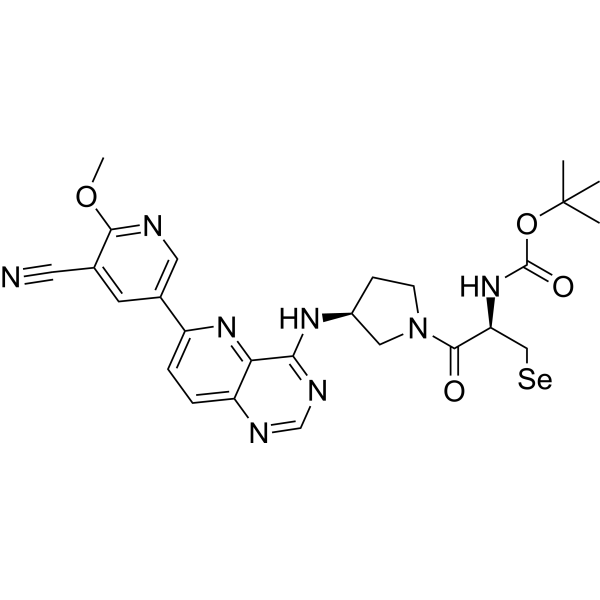 0 ImagesCat. No.: HY-157128CAS No.: 3019965-38-6Se15 is a selective inhibitor of PI3Kδ with an IC50 value less than 0.1nM. Se15 can be used in research on autoimmune.
-
M802
 0 ImagesCat. No.: HY-P992401M802 is an anti-HER2/CD3 bispecific antibody, with a Kd of 0.578 nM for human HER2 and a Kd of 71.2 nM for human CD3. M802 inhibits the PI3K/AKT and MAPK signaling pathways, suppresses tumor cell proliferation, activates caspase-3, and promotes tumor cell apoptosis (apoptosis). M802 recruits and activates CD3-positive immune cells, mediates cytotoxicity against HER2-positive tumor cells, and induces immune cells to secrete IFN-γ, TNF-α, IL-2 and IL-6. M802 exhibits anti-tumor efficacy in mice with gastric cancer xenografts. M802 can be used in research related to HER2-positive breast cancer, HER2-positive gastric cancer and other cancers. The recommended isotype control is human IgG1 kappa (HY-P99001).
-
Ginsenoside Rk1 (Standard)
 0 ImagesCat. No.: HY-N2515RCAS No.: 494753-69-4Ginsenoside Rk1 (Standard) is the analytical standard of Ginsenoside Rk1. This product is intended for research and analytical applications. Ginsenoside Rk1 is a unique component created by processing the ginseng plant (mainly Sung Ginseng, SG) at high temperatures. Ginsenoside Rk1 has anti-inflammatory effect, suppresses the activation of Jak2/Stat3 signaling pathway and NF-κB. Ginsenoside Rk1 has anti-tumor effect, antiplatelet aggregation activities, anti-insulin resistance, nephroprotective effect, antimicrobial effect, cognitive function enhancement, lipid accumulation reduction and prevents osteoporosis. Ginsenoside Rk1 induces cell apoptosis by triggering intracellular reactive oxygen species (ROS) generation and blocking PI3K/Akt pathway.
-
Dehydroxy-oridonin-vinyl ester
 0 ImagesCat. No.: HY-180192CAS No.: 3106089-54-4Dehydroxy-oridonin-vinyl ester (Compound 6k) is an anti-cancer agent. Dehydroxy-oridonin-vinyl ester exhibits extremely strong anti-proliferative activity against SU-DHL-6 cells, with its IC₅₀ value being 0.12 μM. Dehydroxy-oridonin-vinyl ester induces cell apoptosis by inhibiting the activation of the PI3K/Akt signaling pathway, without affecting the cell cycle progression. Dehydroxy-oridonin-vinyl can be used for the study of lymphoma.
-
ST-168
 0 ImagesCat. No.: HY-120281CAS No.: 2126038-25-1ST-168 is an orally active MEK/PI3K inhibitor with an IC50 of 182 nM against MEK1 and IC50 values of 69.2, 41.7, 1482 and 2293 nM against PI3Kα, PI3Kδ, PI3Kβ and PI3Kγ respectively. ST-168 completely inhibits the phosphorylation of ERK1/2 and AKT and induces cancer cell death in a 3D tumor sphere model. ST-168 demonstrates significant antitumor effects in the A375 melanoma mouse model. ST-168 improves the ocular toxicity profile of MEK inhibitors, showing lower caspase activation levels, indicating reduced apoptosis induction. ST-168 can be used in melanoma research.

-
10-Gingerol (Standard)
 0 ImagesCat. No.: HY-N0448RCAS No.: 23513-15-710-Gingerol (Standard) is the analytical standard of 10-Gingerol (HY-N0448). This product is intended for research and analytical applications. 10-Gingerol is an AMPK agonist, which is found in the ginger oleoresin from fresh rhizome with anti-inflammatory, antioxidant and anti-proliferative activities. 10-Gingerol suppresses neointimal hyperplasia and inhibits vascular smooth muscle cell proliferation. 10-Gingerol exhibits substantial scavenging activities with an IC50 value of 10.47 μM against DPPH radical, an IC50 value of 1.68 μM against superoxide radical and an IC50 value of 1.35 μM against hydroxyl radical. 10-Gingerol inhibits the proliferation of MDA-MB-231 tumor cell line with an IC50 of 12.1 μM. 10-Gingerol suppresses the proliferation, migration, invasion, and induced apoptosis through targeting the PI3K/Akt signaling pathway in MDA-MB-231/IR cells. 10-Gingerol is promising for research of ulcerative colitis.
-
PI3Kα-IN-15
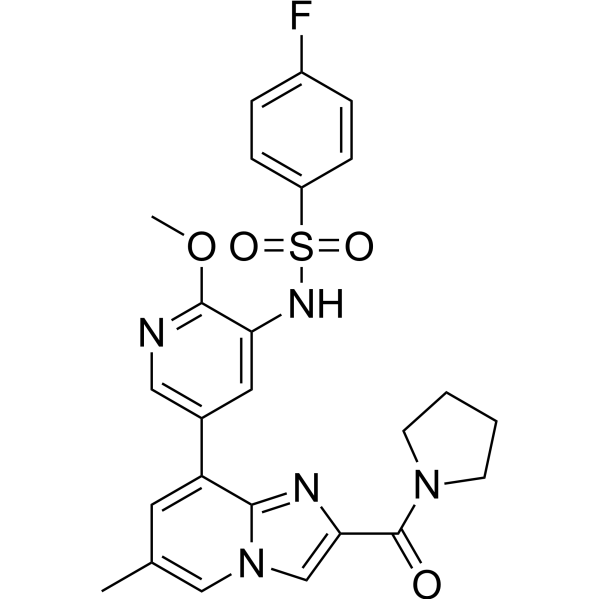 0 ImagesCat. No.: HY-157319CAS No.: 2893920-80-2PI3Kα-IN-15 is a potent PI3Kα inhibitor with an IC50 of 0.15?μM. PI3Kα-IN-15 also has acceptable anti-proliferative activity (inhibits SKOV-3, T47D, NCI-H1975, NCI-H460, and MCF-7 growth with IC50 values of 26.6?μM, 7.9?μM,? 32.1?μM,? 17.7??μM, and 9.4??μM, respectively. PI3Kα-IN-15 can be used for cancer research.
-
Bisdemethoxycurcumin
 0 ImagesCat. No.: HY-N2942CAS No.: 52328-96-8Bisdemethoxycurcumin is an orally effective curcuminoid. Bisdemethoxycurcumin downregulates pro-inflammatory cytokines in macrophages by inhibiting the phosphorylation of PI3K/Akt and p38 MAPK. Bisdemethoxycurcumin relieves autophagy inhibition and promotes lipophagy to clear vascular smooth muscle foam cells by inhibiting the PDK1/Akt/mTOR pathway. Bisdemethoxycurcumin activates the cAMP/Epac/AMPKα axis and the NRF2/HO-1 antioxidant axis, thereby indirectly inhibiting the phosphorylation of NF-κB p65 and pro-inflammatory outputs such as IL-1β/IL-6/TNF-α, so as to alleviate pulmonary oxidative stress, inflammatory infiltration and pulmonary edema. Bisdemethoxycurcumin blocks NLRP3-mediated pyroptosis and protects cartilage extracellular matrix degradation by activating NRF2/HO-1. Bisdemethoxycurcumin also exerts a synergistic effect with potassium iodide against Candida.
-
PI3Kδ-IN-24
 0 ImagesCat. No.: HY-175002CAS No.: 3051829-20-7PI3Kδ-IN-24 is a selective PI3Kδ inhibitor (IC50 = 0.1 nM). PI3Kδ-IN-24 exhibits significant antiproliferative effects against PI3Kδ-overexpressing cancer cell lines. PI3Kδ-IN-24 reduces p-AKT levels and induces cell cycle arrest and apoptosis in tumor cells. PI3Kδ-IN-24 is useful in cancer research, such as diffuse large B-cell lymphoma (DLBCL).
-
PI3K-IN-60
 0 ImagesCat. No.: HY-17651CAS No.: 2504036-13-7
-
PI3K/mTOR Inhibitor-7
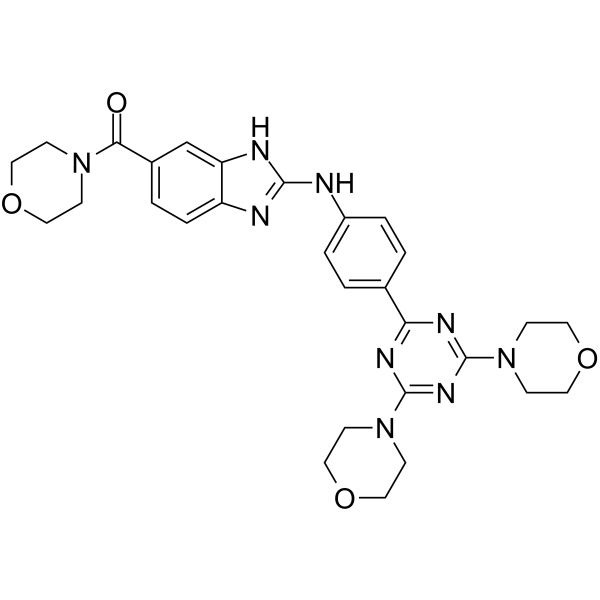 0 ImagesCat. No.: HY-147614CAS No.: 2456295-65-9PI3K/mTOR Inhibitor-7 (Compound 19i) is a potent and dual inhibitor of PI3K/mTOR. PI3K/mTOR Inhibitor-7 shows 4.7-fold higher potency than the positive control gedatolisib (0.3 vs. 1.4 μM, IC50 values). PI3K/mTOR Inhibitor-7 significantly suppresses the PI3K/Akt/mTOR signaling pathway at 10 μM. PI3K/mTOR Inhibitor-7 has the potential for the research of cancer diseases.
-
Leupeptin hemisulfate (Standard)
 0 ImagesLeupeptin hemisulfate (Standard) is the analytical standard of Leupeptin hemisulfate (HY-18234A). This product is intended for research and analytical applications. Leupeptin hemisulfate is a broad-spectrum protease inhibitor. Leupeptin hemisulfate inhibits serine, cysteine and threonine proteases, and regulates autophagy. Leupeptin hemisulfate reduces the expression levels of LC3B, iNOS, Cox-2, Beclin-1 and the level of endopeptidases; increases the levels of p62, Arg 1, Msr 1 and Mrc−1; and blocks the upregulation of p-PTEN, p-NF-κB, p-PI3K, p-Akt, p-p38 and ERK1/2. Leupeptin hemisulfate inhibits NO, ROS, proinflammatory cytokines, the IFN-γ/IL-10 ratio, phagolysosome fusion, mammalian lysosomal hydrolase activity and SARS-CoV-2 replication; and reverses impaired autophagic flux. Leupeptin hemisulfate is applicable to research related to chronic inflammatory diseases, edema, skin tumorigenesis, COVID-19 and respiratory infections.
-
Beauvericin (Standard)
 0 ImagesCat. No.: HY-N6739RCAS No.: 26048-05-5Doxycycline (monohydrate) (Standard) is the analytical standard of Doxycycline (monohydrate). This product is intended for research and analytical applications. Doxycycline monohydrate is an antibiotic and broad-spectrum metalloproteinase (MMP) inhibitor.
-
PI3K/Akt/mTOR-IN-6
 0 ImagesCat. No.: HY-180853PI3K/Akt/mTOR-IN-6 (Compound JW4) is an orally active PI3K/Akt/mTOR pathway inhibitor. PI3K/Akt/mTOR-IN-6 induces Apoptosis in cells via the mitochondrial pathway. PI3K/Akt/mTOR-IN-6 shows potent anti-NSCLC activity.
-
Topo I/II-IN-2
 0 ImagesCat. No.: HY-170912Topo I/II-IN-2 (Compound 3g) is an inhibitor of Topo I and Topo II. Topo I/II-IN-2 inhibits NCI-H446 cells and NCI-H1048 cells with IC50s of 1.30 μM and 1.42 μM, respectively. Topo I/II-IN-2 induces mitochondrial Apoptosis, mitochondrial dysfunction and activity generation. Topo I/II-IN-2 inhibits the PI3K/Akt/mTOR pathway. Topo I/II-IN-2 prevents SCLC (small cell lung cancer) cell proliferation, invasion, and migration in vitro. .
-
LC-MG-5
 0 ImagesCat. No.: HY-184321LC-MG-5 is a selective molecular glue degrader targeting FGFR2, with a DC50 of 231.7 nM in KATO III cells. LC-MG-5 induces proteasomal degradation of FGFR2 in a DCAF16-dependent manner via a covalent molecular glue mechanism. LC-MG-5 inhibits cancer cell proliferation. LC-MG-5 suppresses PI3K/AKT and MAPK/ERK signaling pathways mediated by FGFR2. LC-MG-5 can be used in the research of gastric cancer.
-
Mytoxin B
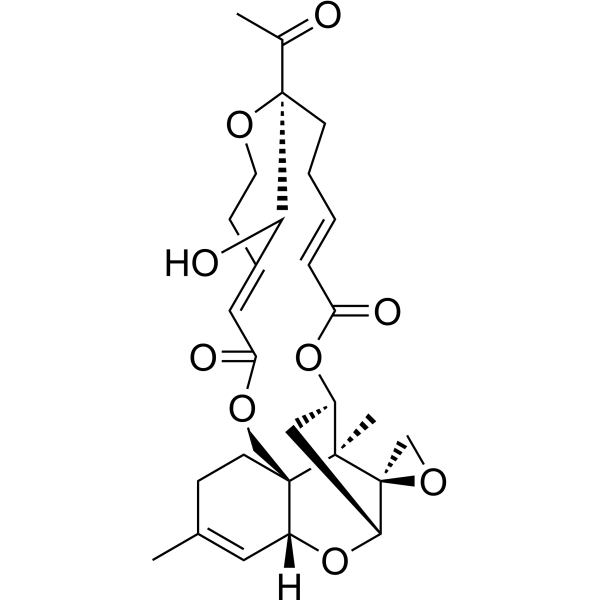 0 ImagesCat. No.: HY-131055CAS No.: 105049-15-8Mytoxin B is an ADC cytotoxin. Mytoxin B is a satratoxin-type trichothecene macrolide and is similar to the effect of LY294002 (HY-10108). Mytoxin B induces cell apoptosis via PI3K/Akt pathway.
-
PI3Kα-IN-14
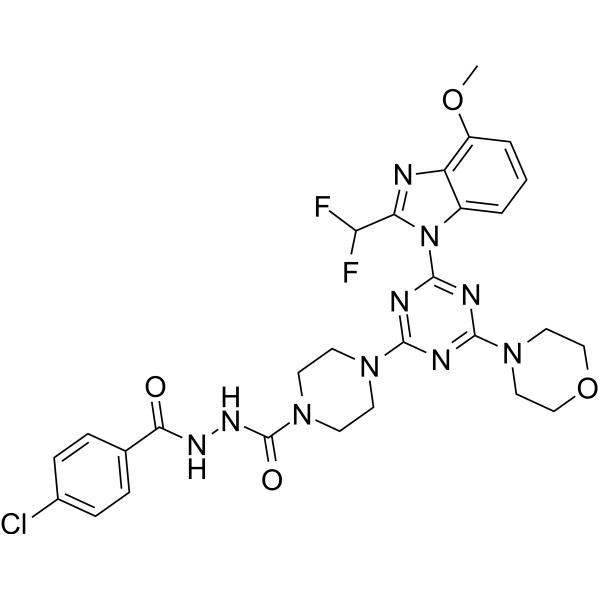 0 ImagesCat. No.: HY-157125CAS No.: 3026856-46-9PI3Kα-IN-14 (compound F8) is a selective PI3Kα inhibitor with an IC50 of 0.14 nM. PI3Kα-IN-14 induces a great decrease in mitochondrial membrane which caused cell cycle arrest at G1 phase and apoptosis in U87-MG cells. PI3Kα-IN-14 shows significant anti-proliferative activities against three tumor-derived cell lines (PC-3: IC50 of 0.28 μM; HCT-116: IC50 of 0.57 μM; and U87-MG: IC50 of 1.37 μM).
-
20-5,14-HEDE-d2-1
 0 ImagesCat. No.: HY-160099S1Synonyms: WIT003-d2-120-5,14-HEDE-d2-1 (WIT003-d2-1) is the deuterated-labeled 20-5,14-HEDE (HY-160099). 20-5,14-HEDE (WIT003) is an analog of 20-HETE. 20-5,14-HEDE activates PI3K/Akt signaling pathway, thereby exhibiting anti-apoptotic and cell survival promoting effects. 20-5,14-HEDE is the agonist for 20-HETE that increases intracellular Ca2+ concentrations, thereby enhancing vasoconstriction.




