



PPAR
Peroxisome proliferator-activated receptors
PPARs (Peroxisome proliferator-activated receptors) are ligand-activated transcription factors of nuclear hormone receptor superfamily comprising of the following three subtypes: PPARα, PPARγ, and PPARβ/δ. PPARs play essential roles in the regulation of cellular differentiation, development, and metabolism (carbohydrate, lipid, protein), and tumorigenesis of higher organisms. All PPARs heterodimerize with the retinoid X receptor (RXR) and bind to specific regions on the DNA of target genes. Activation of PPAR-α reduces triglyceride level and is involved in regulation of energy homeostasis. Activation of PPAR-γ enhances glucose metabolism, whereas activation of PPAR-β/δ enhances fatty acids metabolism.
PPAR Isoform Specific Products
All Product Categories
-
PPAR Inhibitors
(100)
View all products
-
PPAR Agonists
(336)
View all products
-
PPAR Antagonists
(30)
View all products
-
PPAR Activators
(166)
View all products
-
PPAR Modulators
(38)
View all products
-
PPAR Inducers
(6)
View all products
-
PPAR Controls
(3)
View all products
-
PPAR Ligands
(4)
View all products
-
Peroxisome Proliferator-activated Receptor Proteins
(11)
View all products
-
PPAR alpha Proteins
(2)
View all products
-
PPAR gamma Proteins
(7)
View all products
-
PPAR-delta Proteins
(2)
View all products
-
PPAR Related Products (727)
Related Products (727)

-
Recombinant Proteins (11)
-
Antibodies (4)
-
PPAR Isoform Comparison
-
BM 170249
 0 ImagesCat. No.: HY-19227CAS No.: 153655-35-7BM 170249 is a peroxisome proliferator, particularly in the perivenous region of the central acini in the liver. BM 170249 significantly reduces serum triglyceride and cholesterol levels in rats. BM 170249 strongly induces the activity of key enzymes in the peroxisome fatty acid β-oxidation system (such as acyl-CoA oxidase AOX, multifunctional enzyme PH, and thiolase PT), but leads to decreased activity of catalase and uricase in peroxisome components. BM 170249 could be used in lipid-lowering studies.
-
PPARα agonist 5
 0 ImagesCat. No.: HY-173217PPARα agonist 5 is an orally available, selective partial agonist of PPARα (EC50: 3 nM). PPARα agonist 5 reduces lipid accumulation and upregulates key PPARα target genes, exerting anti-fatty liver effects. PPARα agonist 5 also exhibits significant hypolipidemic and hypoglycemic effects through partial PPARγ agonist activity and mild inhibition of protein tyrosine phosphatase 1B (PTP1B) (IC50: 79.1 μM). PPARα agonist 5 has a good safety profile and can be used in the study of type 2 diabetes with dyslipidemia.
-
KRP-105
 0 ImagesCat. No.: HY-19852CAS No.: 876145-69-6KRP-105 is a potent, highly selective, and orally effective PPAR alpha (EC50 = 8 nM) agonist. KRP-105 can significantly reduce serum triglyceride, total cholesterol, and non high density lipoprotein cholesterol levels. KRP-105 can be used for research on metabolic diseases such as dyslipidemia.
-
Ppara Rat Pre-designed siRNA Set A
 0 ImagesCat. No.: HY-RS10921
Ppara Rat Pre-designed siRNA Set A contains three designed siRNAs for Ppara gene (Rat), as well as a negative control, a positive control, and a FAM-labeled negative control.
-
S-Petasin
 0 ImagesCat. No.: HY-N17617CAS No.: 70238-51-6S-Petasin is a phosphodiesterase (PDE) inhibitor with IC50 values of 25.5 μM and 17.5 μM for PDE3 and PDE4, respectively. S-Petasin inhibits cholesterol side-chain cleavage enzyme, 11β-hydroxylase, PPAR-γ, and iNOS induction at RNA and protein levels. S-Petasin induces apoptosis, activates caspases, cleaves PARP, modulates mitochondrial membrane permeability, and regulates BCL2/BAX, p53, Bcl-XL, MMP-2, MMP-9, p21, CDK4, and cyclin D1 expression. S-Petasin reduces inflammatory cell accumulation, cytokine and IgE levels, and enhances serum IgG2a levels. S-Petasin relaxes isolated sensitized guinea pig trachealis and exhibits gastrointestinal anti-spasmodic activity. S-Petasin reduces tonsillitis severity and asthmatic attack frequency. S-Petasin can be used for the research of prostate cancer, obesity, melanoma, allergic asthma, asthma, and peritonitis.
-
SR2595
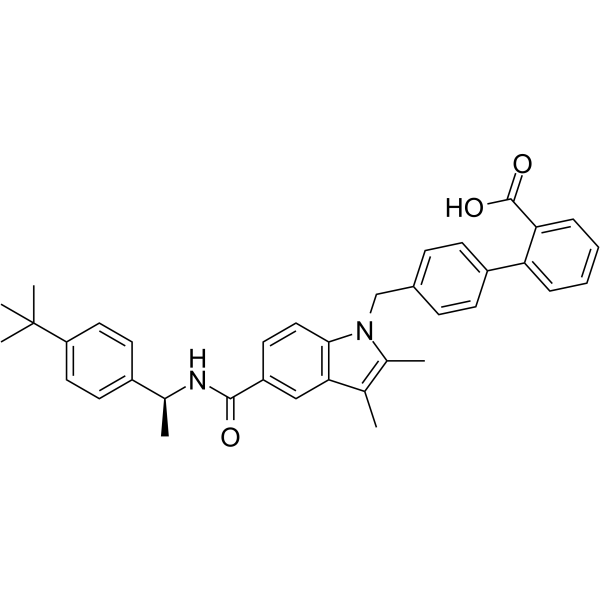 0 ImagesCat. No.: HY-116521CAS No.: 1415252-61-7SR2595 is an inverse agonist of PPARγ with an IC50 of 30 nM.
-
dual FXR/PPARδ agonist-2
 0 ImagesCat. No.: HY-175516dual FXR/PPARδ agonist-2 is a FXR/PPARδ dual agonist through hybridation of FXR agonist GW-4064 and PPARδ agonist GW-0742.dual FXR/PPARδ agonist-2 displays potent dual-target activities with a FXR agonistic EC50 of 12.28 nM and 69 % PPARδ activation at 100 nM. dual FXR/PPARδ agonist-2 shows anti-fibrotic effects in pulmonary fibrosis mouse model.
-
SR 1824
 0 ImagesCat. No.: HY-120542CAS No.: 1338259-06-5SR 1824 is a non-agonist PPARγ ligand that blocks Cdk5-mediated phosphorylation. SR 1824 has anti-diabetic effects.
-
Zaltoprofen sulfoxide
 0 ImagesCat. No.: HY-180952CAS No.: 134085-79-3Zaltoprofen sulfoxide (Compound M2) is the main metabolite of Zaltoprofen (HY-B0619). Zaltoprofen sulfoxide is an efficient and selective COX-2 inhibitor (IC50 = 45.38 nM) and a PPAR-γ activator. Zaltoprofen sulfoxide effectively inhibits NF-κB and MAPK inflammatory signaling pathways and alleviates acute lung injury induced by LPS (HY-D1056B3). Zaltoprofen sulfoxide can be used for the study of acute lung injury.
-
LTD4 antagonist 3
 0 ImagesCat. No.: HY-19178CAS No.: 149437-51-4Synonyms: FK011 hydrochlorideLTD4 antagonist 3 (FK011 hydrochloride) is a LTD4 antagonist. LTD4 antagonist 3 has agonistic activity for PPAR-γ, with a fold-increase of 1.50 at 1 μM and 2.35 at 10 μM. LTD4 antagonist 3 can be used of development of non-steroidal anti-inflammatory drugs (NSAIDs).
-
Rosiglitazone-d4-1
 0 ImagesCat. No.: HY-17386S2CAS No.: 1132641-20-3Synonyms: BRL 49653-d4-1
-
D-arabinose-13C-2
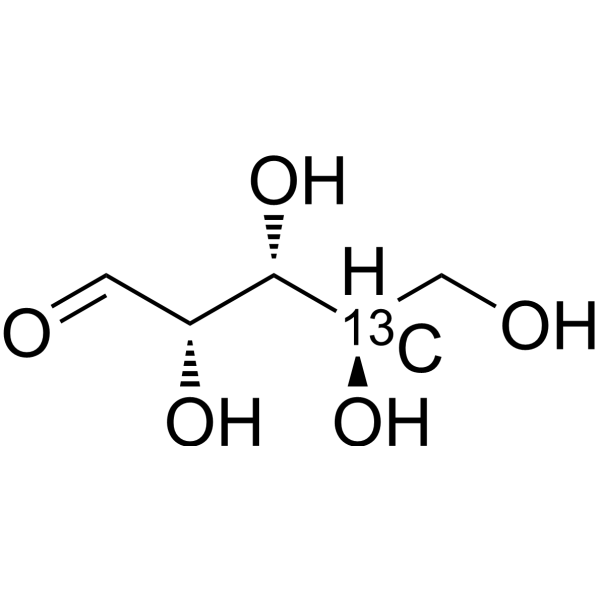 0 ImagesCat. No.: HY-N0059S2D-Arabinose-13C-2 is the 13C labeled D-Arabinose (HY-N0059). D-Arabinose is is an orally active antidepressant and a growth inhibitor of C. elegans (IC50 is 7.5 mM). D-Arabinose can penetrate the blood-brain barrier, selectively interfere with the metabolism of D-ribose and D-fructose, and inhibit the growth of nematodes. D-Arabinose can also inhibit the synthesis of cell biofilm and exert antibacterial activity. D-Arabinose activates the ACSS2-PPARγ/TFEB-CRTC1 axis through the lysosomal AXIN-LKB1-AMPK pathway, inducing CRTC1 transcription, exerts antidepressant-like activity. D-Arabinose is the ring-opened form of the aldopentose D-?Arabinose (HY-N7082).
-
C333H
 0 ImagesCat. No.: HY-126969CAS No.: 870095-15-1C333H is a selective PPARγ modulator with insulin-sensitizing and hypoglycemic activities. C333H exhibits similar insulin-sensitizing effects to thiazolidinediones (TZDs) in diabetic mouse models without significantly increasing body weight or adipose tissue weight. C333H increases circulating high molecular weight adiponectin isoform levels in diabetic db/db mice, reduces serine phosphorylation of PPARγ 273 in brown adipose tissue, and selectively modulates the expression of specific PPARγ target genes in adipose tissue. Express. C333H exhibits weak recruitment of co-activators and weak dissociation of co-repressors in vitro. These properties suggest that C333H may be a potential inhibitor of type 2 diabetes.
-
PPARδ agonist 10
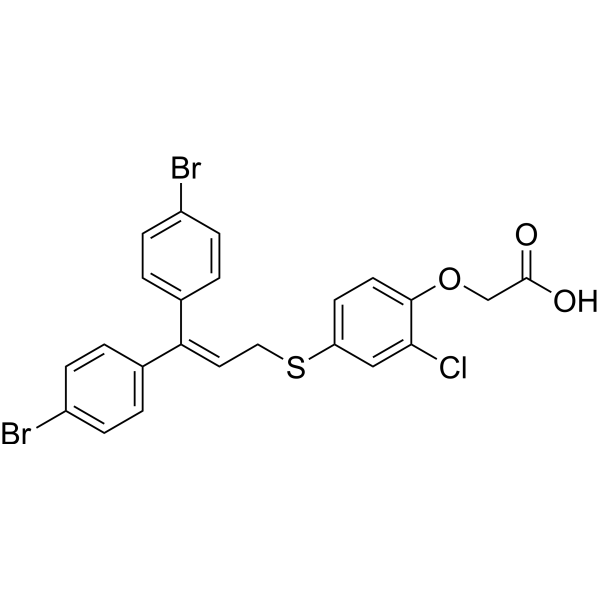 0 ImagesCat. No.: HY-121542CAS No.: 685139-10-0PPARδ agonist 10 (compound 7) is an orally active, selective, and partial agonist of PPARδ, with EC50 values of 0.053 μM and 0.30 µM for hPPARδ(LBD)-GAL4 and mPPARδ, respectively. PPARδ agonist 10 is a partial PPARδ agonist in transactivation assay but a full agonist on free fatty acids (FFA) oxidation in muscle cells both in vitro and in vivo. PPARδ agonist 10 can be used for dyslipidemia research.
-
Raspberry ketone-d5
 0 ImagesCat. No.: HY-W740498CAS No.: 182219-43-8Synonyms: Frambione-d5; 4-(4-Hydroxyphenyl)-2-butanone-d5Raspberry ketone-d5 (Frambione-d5; 4-(4-Hydroxyphenyl)-2-butanone-d5) is the deuterium labeled Raspberry ketone (HY-N1426). Raspberry ketone is a major aromatic compound of red raspberry, widely used as a fragrance in cosmetics and as a flavoring agent in foodstuff; also shows PPAR-α agonistic activity.
-
PPARγ modulator-1
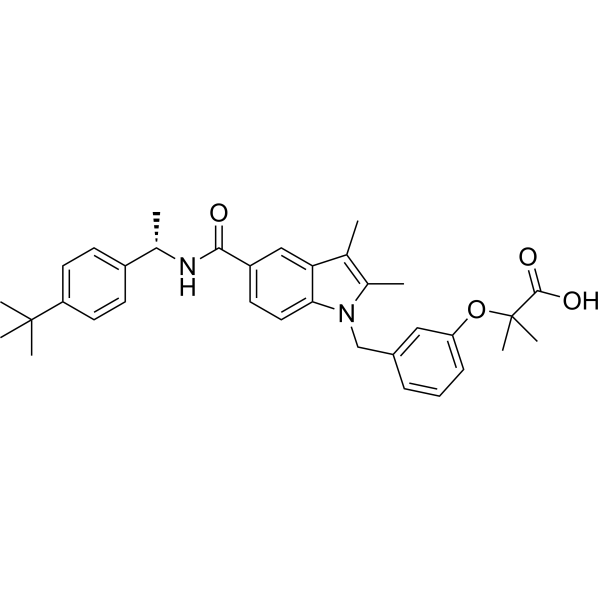 0 ImagesCat. No.: HY-160159CAS No.: 1415321-54-8Anticancer agent 183 (example 48) is a non-agonistic PPARG modulator. Anticancer agent 183 has a high affinity to PPARG (PPARγ). Anticancer agent 183 inhibits kinase-mediated phosphorylation of PPARG. Anticancer agent 183 can used for research on metabolic diseases to avoid side effects.
-
L-783483
 0 ImagesCat. No.: HY-116597CAS No.: 194608-77-0Synonyms: F3MethylAAL-783483 (F3MethylAA) is an agonist for PPARδ. L-783483 ameliorates Carrageenan (HY-125474)-induced paw edema in mice.
-
DN203316
 0 ImagesCat. No.: HY-162963CAS No.: 2982696-04-6Synonyms: PPARδ agonist 11DN203316 (PPARδ agonist 11) is a potent, selective, orally active PPARδ agonist (EC50 = 20 nM) with high selectivity over PPARα and PPARγ. DN203316 suppresses NF-κB-mediated inflammatory signaling, inhibits ferroptosis by upregulating xCT and GPX4, and attenuates STING-TBK1-IRF3-driven fibrogenic responses. DN203316 is useful for research on inflammatory disorders, metabolic dysfunction-associated steatohepatitis (MASH), and liver fibrosis.
-
MHY908
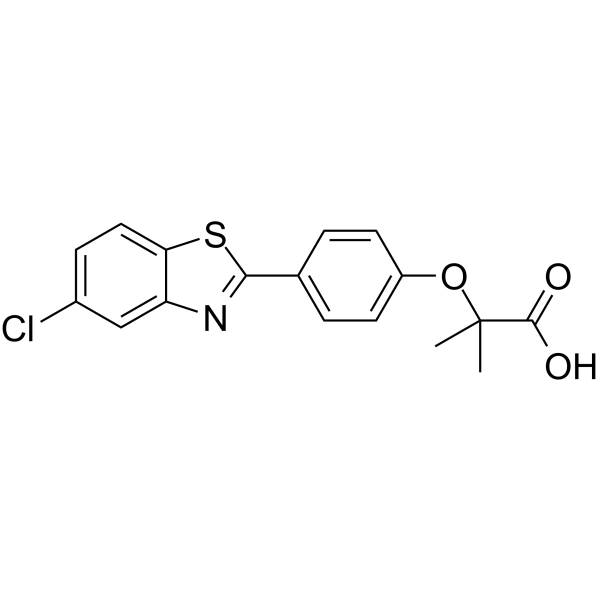 0 ImagesCat. No.: HY-117761CAS No.: 1393371-39-5MHY908 is a potent dual agonist of PPARα and PPARγ. MHY908 also inhibits melanogenesis through inhibition of mushroom tyrosinase activity.
-
Perfluoroenanthic acid-13C4
 0 ImagesCat. No.: HY-21197SCAS No.: 2328024-55-9Synonyms: Perfluoroheptanoic acid-13C4; Tridecafluoroheptanoic acid-13C4; PFHpA-13C4Perfluoroenanthic acid-13C4 (Perfluoroheptanoic acid-13C4) is the 13C-labeled Perfluoroenanthic acid (HY-21197). Perfluoroenanthic acid (Perfluoroheptanoic acid) is a kind of perfluoroalkyl carboxylic acid organic pollutant. Perfluoroenanthic acid has environmental persistence and bioaccumulation, and exposure can occur via oral, dermal and other routes. Perfluoroenanthic acid exhibits reproductive toxicity, neurotoxicity, hepatotoxicity, immunotoxicity and endocrine-disrupting effects. Perfluoroenanthic acid exerts definite adverse effects on development, spermatogenesis, neuronal activity and liver tissue.




