



PPAR
Peroxisome proliferator-activated receptors
PPARs (Peroxisome proliferator-activated receptors) are ligand-activated transcription factors of nuclear hormone receptor superfamily comprising of the following three subtypes: PPARα, PPARγ, and PPARβ/δ. PPARs play essential roles in the regulation of cellular differentiation, development, and metabolism (carbohydrate, lipid, protein), and tumorigenesis of higher organisms. All PPARs heterodimerize with the retinoid X receptor (RXR) and bind to specific regions on the DNA of target genes. Activation of PPAR-α reduces triglyceride level and is involved in regulation of energy homeostasis. Activation of PPAR-γ enhances glucose metabolism, whereas activation of PPAR-β/δ enhances fatty acids metabolism.
PPAR Isoform Specific Products
All Product Categories
-
PPAR Inhibitors
(100)
View all products
-
PPAR Agonists
(335)
View all products
-
PPAR Antagonists
(30)
View all products
-
PPAR Activators
(166)
View all products
-
PPAR Modulators
(38)
View all products
-
PPAR Inducers
(6)
View all products
-
PPAR Controls
(3)
View all products
-
PPAR Ligands
(4)
View all products
-
Peroxisome Proliferator-activated Receptor Proteins
(11)
View all products
-
PPAR alpha Proteins
(2)
View all products
-
PPAR gamma Proteins
(7)
View all products
-
PPAR-delta Proteins
(2)
View all products
-
PPAR Related Products (726)
Related Products (726)

-
Recombinant Proteins (11)
-
Antibodies (4)
-
PPAR Isoform Comparison
-
PPARγ agonist 19
 0 ImagesCat. No.: HY-176214PPARγ agonist 19 (Compound 5e) is a PPARγ agonist. PPARγ agonist 19 has an IC50 of 11.27 μM against COX-1 and an IC50 of 0.05 μM against COX-1. PPARγ agonist 19 increases glucose uptake in rat hemidiaphragm assay and is superior to pioglitazone (HY-13956). PPARγ agonist 19 alleviates hyperglycemia and insulin resistance in an in vivo model of type 2 diabetes in rats and protects against renal and lipidemia damage caused by metabolic dysfunction.
-
CRX000227
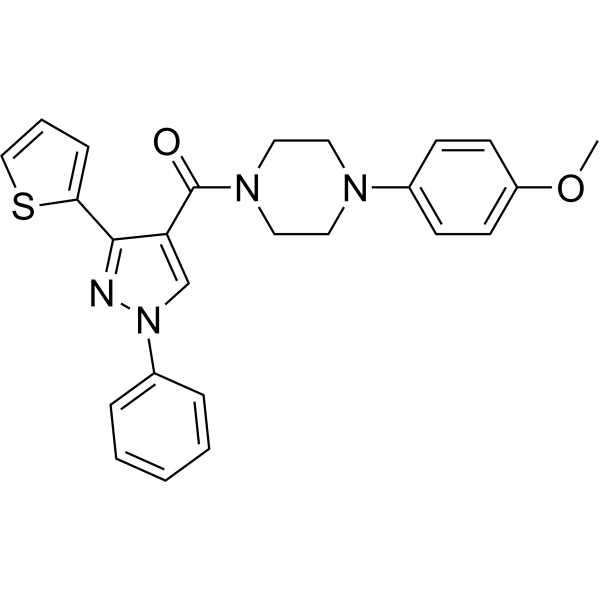 0 ImagesCat. No.: HY-153759CAS No.: 686769-92-6CRX000227 is a PPAR modulator. CRX000227 can be used for research of metabolic or cell proliferative disorders.
-
D-Arabinose-d6
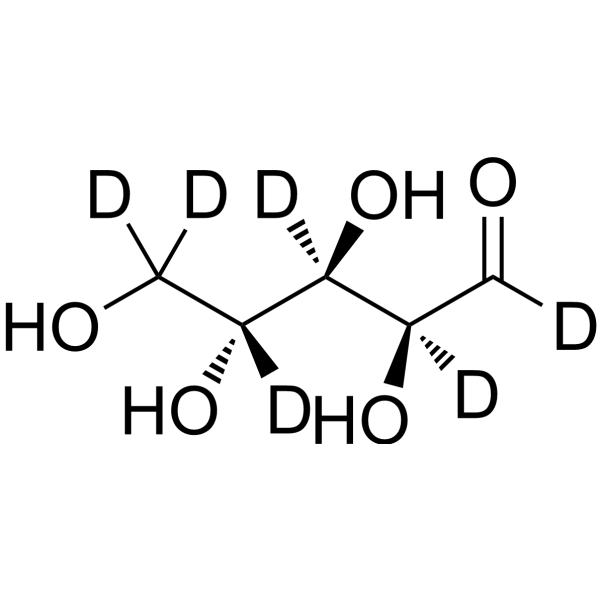 0 ImagesCat. No.: HY-N0059S6D-Arabinose-d6 is the deuterium labeled D-Arabinose (HY-N0059). D-Arabinose is is an orally active antidepressant and a growth inhibitor of C. elegans (IC50 is 7.5 mM). D-Arabinose can penetrate the blood-brain barrier, selectively interfere with the metabolism of D-ribose and D-fructose, and inhibit the growth of nematodes. D-Arabinose can also inhibit the synthesis of cell biofilm and exert antibacterial activity. D-Arabinose activates the ACSS2-PPARγ/TFEB-CRTC1 axis through the lysosomal AXIN-LKB1-AMPK pathway, inducing CRTC1 transcription, exerts antidepressant-like activity. D-Arabinose is the ring-opened form of the aldopentose D-?Arabinose (HY-N7082).
-
PPARγ agonist 2
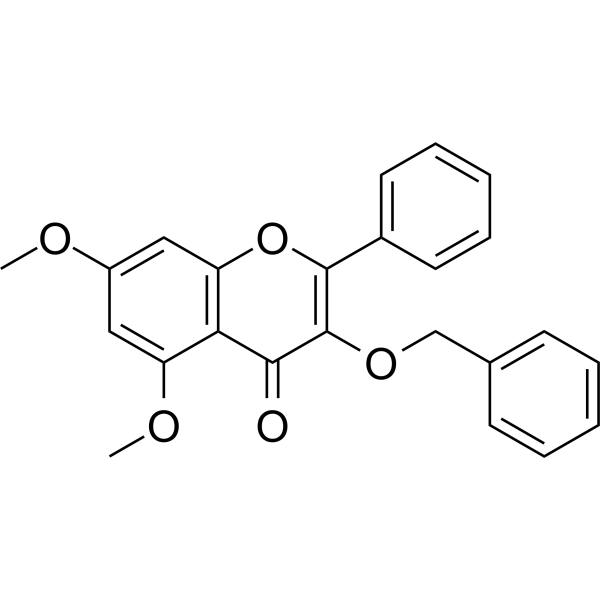 0 ImagesCat. No.: HY-146742CAS No.: 3024531-27-6
-
Dehydroabietic acid (Standard)
 0 ImagesDehydroabietic acid (Standard) is the analytical standard of Dehydroabietic acid. This product is intended for research and analytical applications. Dehydroabietic acid is a diterpene resin acid that can be isolated from Pinus and Picea. Dehydroabietic acid has anti-bacterial, anti-fungal, anti-inflammatory, and anticancer activities. Dehydroabietic acid is a dual PPAR-α/γ agonist and PPAR-γ partial agonist, which can attenuate insulin resistance (IR) and hepatic steatosis induced by HFD-consumption in mice.
-
(E/Z)-ABP/PPAR modulator 1
 0 ImagesCat. No.: HY-172883A(E/Z)-ABP/PPAR modulator 1 is a mixture of the E and Z isomers of ABP/PPAR modulator 1 (HY-172883). ABP/PPAR modulator 1 is an orally active FABP and PPAR multiple modulator (IC50s of 0.65 μM and 1.08 μM for FABP1 and FABP4, EC50 s of 9.19 μM, 2.20 μM and 1.58 μM for PPARα, PPARγ and PPARδ). ABP/PPAR modulator 1 has potent anti-metabolic dysfunction-associated steatohepatitis (MASH) activity. ABP/PPAR modulator 1 dose-dependently ameliorates multiple pathological characteristics of fatty liver in WD + Carbon tetrachloride-induced MASH mice model.
-
Sodium propionate (Standard)
 0 ImagesSodium propionate (Standard) is the analytical standard of Sodium propionate. This product is intended for research and analytical applications. Sodium propionate is an orally active short-chain fatty acid. Sodium propionate can be produced by intestinal bacteria from the metabolism of dietary fiber. Sodium propionate increases PPAR-γ, inhibits NF-κB activation, and reduces COX-2 expression and NO production. Sodium propionate also induces Apoptosis and Autophagy. Sodium propionate reduces HSV-1-induced keratitis. Sodium propionate has anticancer effects against glioblastoma. Sodium propionate exhibits neuroprotective, antioxidant, and anti-inflammatory activities. Sodium propionate can be used in the research of spinal cord injury and Alzheimer's disease.
-
PPARα/δ agonist 3
 0 ImagesCat. No.: HY-168485CAS No.: 3050611-33-8
-
Soyasaponin Aa (Standard)
 0 ImagesCat. No.: HY-N3027RCAS No.: 117230-33-8Soyasaponin Aa (Standard) is the analytical standard of Soyasaponin Aa (HY-N3027). Soyasaponin Aa is a soyasaponin that can be found in soy. Soyasaponin Aa suppresses PPARγ transcriptional activity, reduces PPARγ and C/EBPα expression, inhibits adipocyte differentiation and lipid accumulation, and reduces adipogenic marker gene expression. Soyasaponin Aa reduces hydrogen peroxide-induced reactive oxygen species (ROS) production and malondialdehyde levels. Soyasaponin Aa exhibits cellular antioxidant activity. Soyasaponin Aa can be used for the research of obesity.

-
RB394
 0 ImagesCat. No.: HY-118397CAS No.: 1830320-32-5RB394 is a potent dual sEH/PPARγ modulator isoform that promotes adipocyte browning and exhibits cardioprotective activity, and can be used to suppress metabolic syndrome.
-
17-Oxo-4(Z),7(Z),10(Z),13(Z),15(E),19(Z)-docosahexaenoic acid
 0 ImagesCat. No.: HY-139408CAS No.: 1233715-28-0Synonyms: 17-Oxo-DHA; 17-Oxo-4(Z),7(Z),10(Z),13(Z),15(E),19(Z)-DHA17-Oxo-4(Z),7(Z),10(Z),13(Z),15(E),19(Z)-docosahexaenoic acid (17-Oxo-DHA) is a metabolite of lipoxygenase-mediated oxidation of DHA. 17-Oxo-4(Z),7(Z),10(Z),13(Z),15(E),19(Z)-docosahexaenoic acid is a PPARγ agonist and activates a Nrf2 dependent antioxidant reaction.
-
PIISVYWK
 0 ImagesCat. No.: HY-P11589CAS No.: 2016043-80-2PIISVYWK is an orally active PPARγ Inhibitor, heme oxygenase-1 Activator, and Nrf2 Activator. PIISVYWK mediates activity via the HO-1/Nrf2 pathway, ameliorates oxidative stress, reduces inflammation, and mediates anti-obesity activity. PIISVYWK can be used for the research of obesity.
-
D-Arabinose (Standard)
 0 ImagesD-Arabinose (Standard) is the analytical standard of D-Arabinose. This product is intended for research and analytical applications. D-Arabinose is is an orally active antidepressant and a growth inhibitor of C. elegans (IC50 is 7.5 mM). D-Arabinose can penetrate the blood-brain barrier, selectively interfere with the metabolism of D-ribose and D-fructose, and inhibit the growth of nematodes. D-Arabinose can also inhibit the synthesis of cell biofilm and exert antibacterial activity. D-Arabinose activates the ACSS2-PPARγ/TFEB-CRTC1 axis through the lysosomal AXIN-LKB1-AMPK pathway, inducing CRTC1 transcription, exerts antidepressant-like activity. D-Arabinose is the ring-opened form of the aldopentose D-?Arabinose (HY-N7082).
-
PPARα agonist 3
 0 ImagesCat. No.: HY-163862PPARα agonist 3 (Compound A229) is a PPARα agonist (EC50: 590 nM). PPARα agonist 3 inhibits TBHP or 4-HNE (HY-113466)-induced production of ROS.
-
LS2265
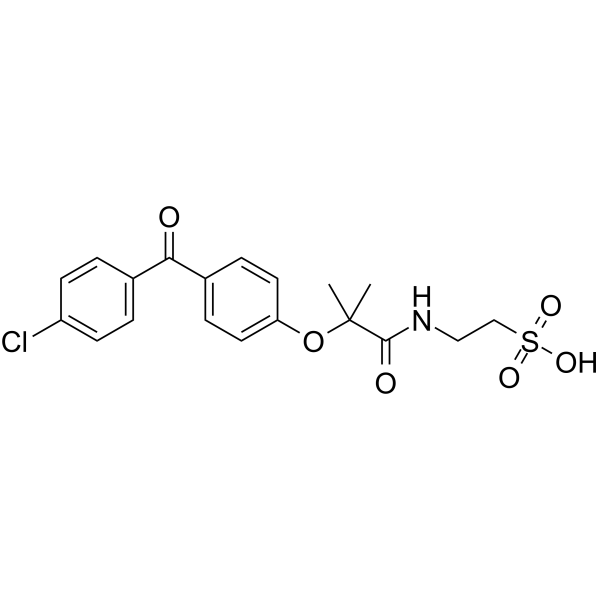 0 ImagesCat. No.: HY-100189CAS No.: 72678-30-9LS2265 is a taurine derivative of fenofibrate and can induce proliferation of peroxisomes in liver cells of rats.
-
CAY10410
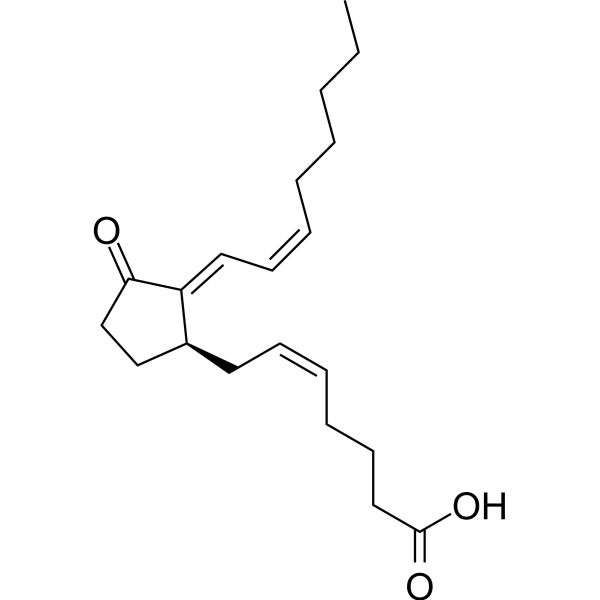 0 ImagesCat. No.: HY-117422CAS No.: 596104-94-8Synonyms: 11-Oxo-prosta-5Z,12E,14Z-trien-1-oic acid
-
15-Keto-prostaglandin E2-d9
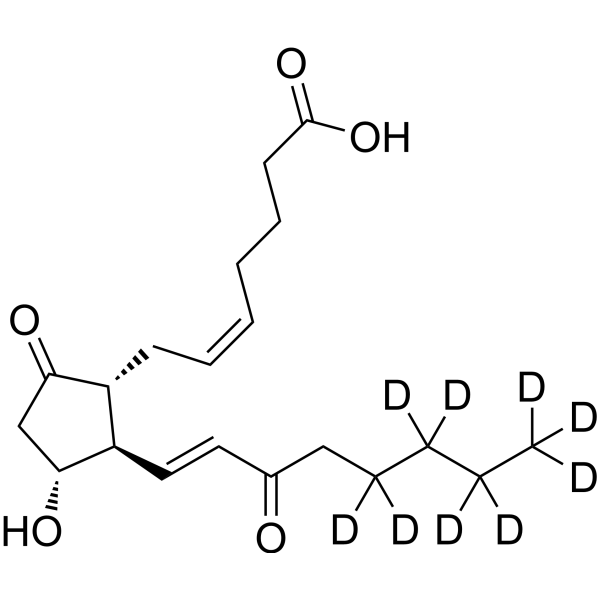 0 ImagesCat. No.: HY-113205SCAS No.: 2738376-66-215-Keto-prostaglandin E2-d9 is the d9 labeled 15-keto-Prostaglandin E2 (HY-113205). 15-keto-Prostaglandin E2 (15-keto-PGE2) is an endogenous PGE2 metabolite. 15-keto-Prostaglandin E2 inhibits STAT3 activation by binding to the Cys259 residue of STAT3. 15-keto-Prostaglandin E2 binds to and stabilizes EP2 and EP4 receptors. 15-keto-Prostaglandin E2 inhibits the growth and progression of breast cancer cells. 15-keto-Prostaglandin E2 activates PPAR-γ and promotes fungal growth. 15-keto-Prostaglandin E2 disrupts glomerular vascularization during zebrafish development and reduces the surface area of the glomerular filtration barrier.
-
LCI765
 0 ImagesCat. No.: HY-10843CAS No.: 870194-96-0LCI765 is an orally active and selective PPARδ agonist, with an EC50 of 0.07 nM. LCI765 can be used for the research of diseases related to energy homeostasis such as metabolic syndrome.
-
Hydrangeic acid
 0 ImagesHydrangeic acid is an orally effective stilbene-type glycolipid metabolism regulator that lowers blood glucose and lipids. It can be isolated from processed leaves of Hydrangea macrophylla var. thunbergii. Hydrangeic acid is associated with glycolipid metabolism and insulin sensitivity regulation. Hydrangeic acid does not directly activate PPARγ or PPARα, but instead upregulates the mRNA expression of adiponectin, PPARγ2, GLUT4, and fatty acid-binding protein aP2, and downregulates TNF-α mRNA expression, promoting adipogenesis, glucose uptake, and GLUT4 translocation in 3T3-L1 cells. Simultaneously, Hydrangeic acid inhibits inflammatory factor-induced NO production, exerting activity in improving insulin resistance. Hydrangeic acid can be used in research related to type 2 diabetes and does not cause liver weight gain as a side effect.




