



SARS-CoV
SARS coronavirus
SARS-CoV is the coronavirus (CoV) that causes severe acute respiratory syndrome (SARS). CoVs are enveloped viruses with a positive-sense, single-stranded RNA and can cause health-threatening outbreaks by targeting human respiratory system, including not only SARS, but also Middle East respiratory syndrome (MERS) and SARS-CoV-2 (the cause of COVID-19).
CoVs have four main structural proteins: spike(S), membrane (M), envelope (E), and nucleocapsid (N) proteins. An S protein mediates the CoV entry into host cells by attaching to a cellular receptor (ACE2 for SARS-CoV and SARS-CoV-2, DPP4 for MERS-CoV), followed by fusion between virus and host cell membranes. Genome replication and subgenomic RNA transcription after entry carry on with the participation of many nonstructural proteins such as Mpro (main protease or 3CLpro), PLpro (papain-like protease) and RdRp (RNA-dependent RNA polymerase). Then the structural proteins are translated, assembled into mature virions, and released via vesicles by exocytosis. It is worth mentioning that a protease called TMPRSS2 (transmembrane protease, serine 2) play important roles throughout the whole life of CoVs (such as attachment, assembling and release) by cleaving S protein. All the proteins and subcellular structures participated in the life cycle of CoVs are promising targets for treatment of disease caused by CoVs.
All Product Categories
-
SARS-CoV Related Products (1195)
Related Products (1195)

-
Recombinant Proteins (196)
-
FOY 251-d4
 0 ImagesCat. No.: HY-W707562CAS No.: 2733723-91-4
-
MR1-114
 0 ImagesCat. No.: HY-182894MR1-114 is an orally active SARS-CoV-2 papain-like protease (PLpro) inhibitor with an IC50 of 0.037 μM. As a broad-spectrum inhibitor, MR1-114 maintains submicromolar activity against SARS-CoV-2 Delta, Omicron B.1.1.529 and Omicron BA.5 variants, with EC50 values of 0.18 μM, 0.39 μM and 0.20 μM, respectively. MR1-114 can be used for the research of coronavirus disease 2019 (SARS-CoV-2 infection).
-
SARS-CoV-2 3CLpro-IN-6
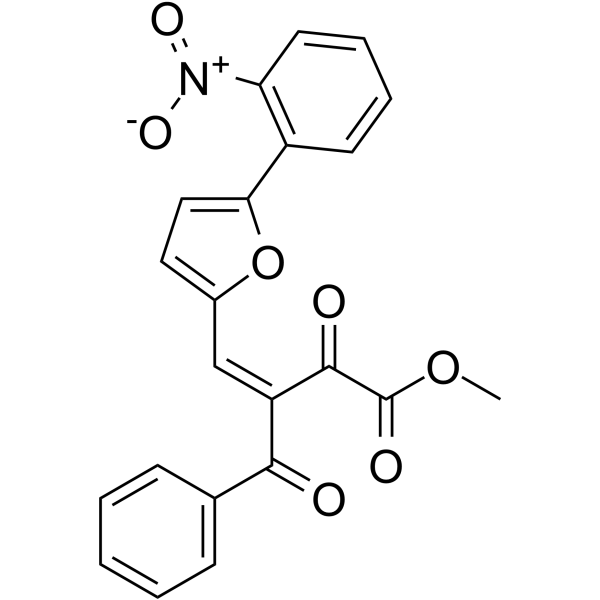 0 ImagesCat. No.: HY-152005CAS No.: 302821-53-0SARS-CoV-2 3CLpro-IN-6 is a reversible covalent inhibitor of SARS-CoV-2 3CL protease. SARS-CoV-2 3CLpro-IN-6 has potent inhibitory activity for SARS-CoV-2 3CLpro with an IC50 value of 4.9 μM. SARS-CoV-2 3CLpro-IN-6 can be used for the research of coronavirus disease 2019 (COVID-19).
-
Cephaeline hydrochloride
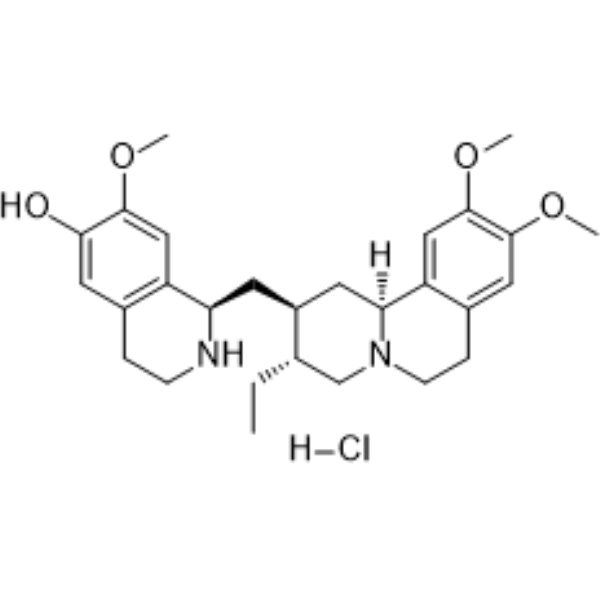 0 ImagesSynonyms: (-)-Cephaeline hydrochloride; NSC 32944 monohydrochlorideCephaeline hydrochloride ((-)-Cephaeline (hydrochloride); NSC 32944 (monohydrochloride)) is a ferroptosis inducer, with broad-spectrum anticancer and antiviral activities. Cephaeline hydrochloride induces Ferroptosis by upregulating p53, inhibiting NRF2, activating ULK3, downregulating the expressions of SLC7A11 and GPX4 in a p53-dependent manner, reducing GSH and mitochondrial membrane potential, and increasing lipid peroxidation and iron accumulation. Cephaeline hydrochloride inhibits cancer cell proliferation, migration and tumor growth. Cephaeline hydrochloride inhibits Ebola virus (EBOV) VLP entry and infection, with IC50 values of 3.27 μM and 22.18 μM respectively; it also inhibits Zika virus (ZIKV) NS5 RdRp activity (IC50 = 976 nM), and binds to severe acute respiratory syndrome coronavirus 2 (SARS-CoV-2) RdRp and N protein, with Kd values of 8.9 μM and 53.8 μM respectively. Cephaeline hydrochloride can be used in studies related to breast cancer, lung cancer, COVID-19, EBOV and ZIKV infections.
-
Demexiptiline
 0 ImagesCat. No.: HY-B2074CAS No.: 24701-51-7Demexiptiline is a tricyclic antidepressant. Demexiptiline is a norepinephrine reuptake inhibitor. Demexiptiline has a binding affinity with SARS-CoV-2 3CL protease of 8.14 kcal/mol. Demexiptiline can also be studied in research on melancholic states.
-
PB28
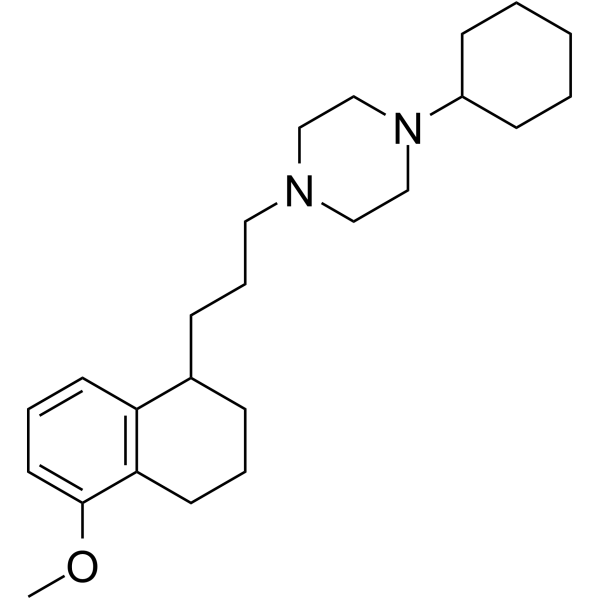 0 ImagesCat. No.: HY-108511ACAS No.: 172906-90-0PB28 is a cyclohexylpiperazine derivative and a high affinity and selective sigma 2 (σ2) receptor agonist with a Ki of 0.68 nM. PB28 is also a σ1 antagonist with a Ki of 0.38 nM. PB28 is less affinity for other receptors. PB28 inhibits electrically evoked twitch in guinea pig bladder and ileum with EC50 values of 2.62 μM and 3.96 μM, respectively. PB28 can modulate SARS-CoV-2-human protein-protein interaction. PB28 induces caspase-independent apoptosis and has antitumor activity.
-
SBP1 peptide
 0 ImagesCat. No.: HY-P5827CAS No.: 2416761-69-6SBP1 peptide is a chemically synthesized 23-mer peptide fragment of the ACE2 PD α1 helix. SBP1 peptide associates with micromolar affinity to insect-derived SARS-CoV-2-RBD protein .
-
SARS-CoV-2 3CLpro-IN-19
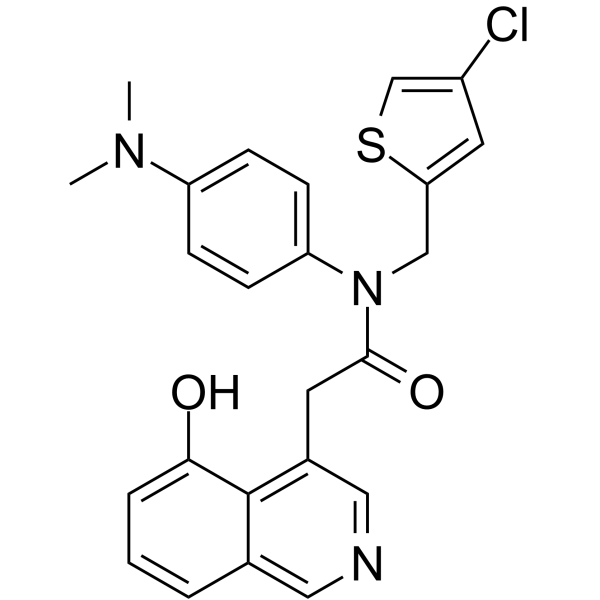 0 ImagesCat. No.: HY-155186SARS-CoV-2 3CLpro-IN-19 (Compound C5a) is a non-covalent, non-peptide SARS-CoV-2 3CLpro inhibitor (IC50s: 0.7 μM). SARS-CoV-2 3CLpro-IN-19 has broad-spectrum activity against Omicron subvariants (BA.5, BQ.1.1, and XBB.1.5) infection in human cells, with EC50 values between 30-69 nM.
-
SARS-CoV-2-IN-81
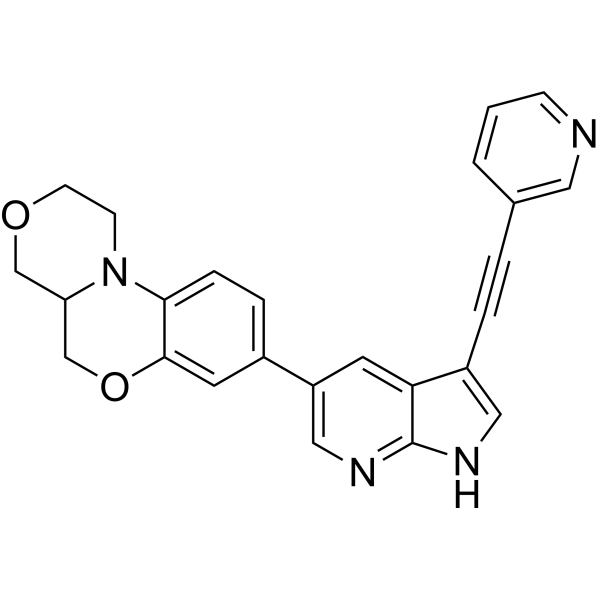 0 ImagesCat. No.: HY-161261SARS-CoV-2-IN-81 (compound 12e) is a potent AAK1 inhibitor with an IC50 value of 9.38 nM. SARS-CoV-2-IN-81 shows anti-viral property against SARS-CoV-2. SARS-CoV-2-IN-81 attenuates AAK1-induced phosphorylation of AP2M1 threonine 156 and disrupts the direct interaction between AP2M1 and ACE2, ultimately inhibiting SARS-CoV-2 infection.
-
SARS-CoV-2-IN-122
 0 ImagesCat. No.: HY-182913SARS-CoV-2-IN-122 is a SARS-CoV-2 inhibitor by targeting the S2 subunit of the spike protein. SARS-CoV-2-IN-122 interacts with residues linked to membrane fusion-associated conformational rearrangements, interfering with viral entry events. SARS-CoV-2-IN-122 inhibits SARS-CoV-2 replication, lacks direct virucidal activity, and does not impair viral-host cell attachment. SARS-CoV-2-IN-122 exhibits activity against SARS-CoV-2 variants including B.1 and Omicron (BA.2.86.1). SARS-CoV-2-IN-122 can be used for the research of coronavirus disease 2019 (COVID-19).
-
TDI-014925
 0 ImagesCat. No.: HY-178025CAS No.: 3052313-53-5TDI-014925 (Compound 58) is a SARS-CoV-2 methyltransferase nonstructural protein 14 (NSP14) inhibitor with an IC50 of 0.2 nM. TDI-014925 has an antiviral activity with significant microsomal stability and no CYP inhibitory activity. TDI-014925 can be used for COVID-19 research.
-
BACE-1/Mpro-IN-1
 0 ImagesCat. No.: HY-178374BACE-1/Mpro-IN-1 is a high brain-penetrant BACE-1 (IC50 = 0.26 μM) and SARS-CoV-2 Mpro (IC50 = 0.91 μM) dual inhibitor. BACE-1/Mpro-IN-1 binds to the aspartyl protease and cysteine protease as a mixed-type inhibitor. BACE-1/Mpro-IN-1 exhibits the most favorable docking score and a strong interaction profile. BACE-1/Mpro-IN-1 can be used for the study of COVID-19 exacerbated Neuroinflammation and Alzheimer’s disease.
-
NK007
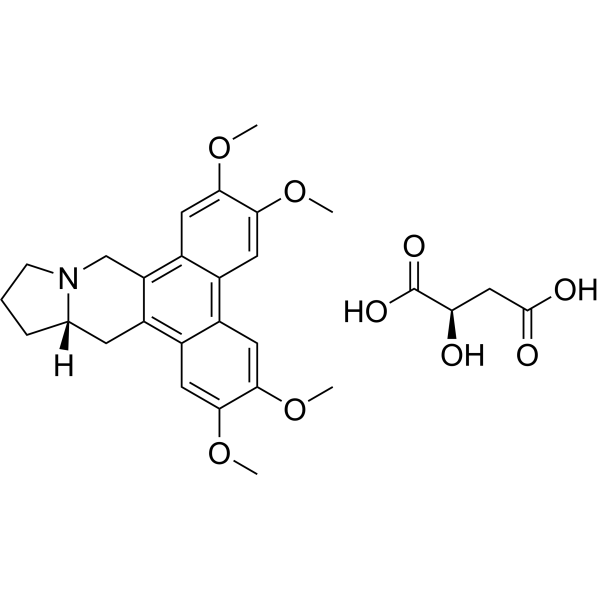 0 ImagesCat. No.: HY-N10118CAS No.: 2488661-53-4NK007 is a novel anti-SARS-CoV-2 agent with an EC50 value of 30 nM.
-
TLP-3
 0 ImagesCat. No.: HY-P11579TLP-3, Temporin L (HY-P2523) analogue, is a SARS-CoV-2 main protease (Mpro) inhibitor with an IC50 of 7.0 μM. TLP-3 inhibits protease activity through stabilizing hydrogen bonding and hydrophobic interactions with key enzyme residues. TLP-3 can be used for the research of ARS-CoV‑2 infection.
-
SARS-CoV-2-IN-32
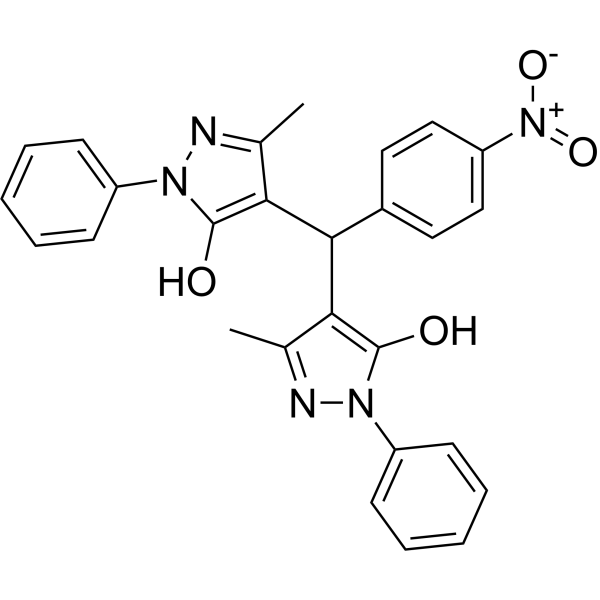 0 ImagesSARS-CoV-2-IN-32 (compound 3g) is a COVID-19 inhibitor. SARS-CoV-2-IN-32 shows anti-proliferative activity against cancer cells. SARS-CoV-2-IN-32 exhibits comparatively high binding affinity (-8.8 Kcal/mole) to COVID-19 main protease (Mpro) (PDB ID: 6LU7). SARS-CoV-2-IN-32 can be used in studies of cancer and COVID-19.
-
Imiquimod dihydrochloride
 0 ImagesCat. No.: HY-B0180CCAS No.: 2995277-02-4Synonyms: R 837 dihydrochloride
-
Leupeptin Ac-LL
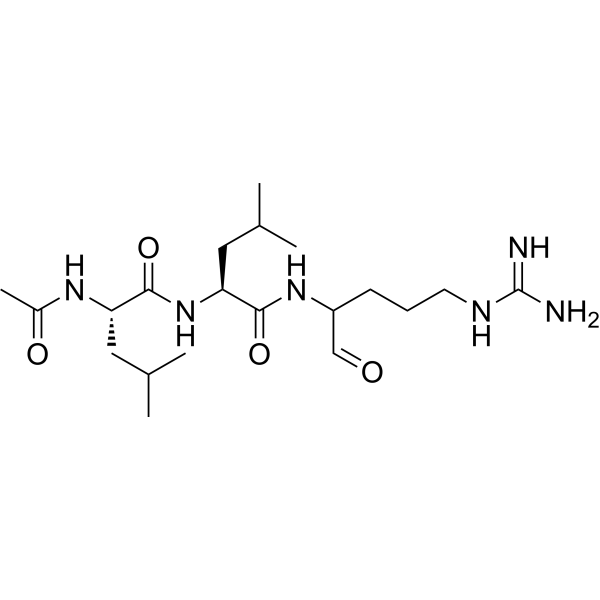 0 ImagesCat. No.: HY-18234BCAS No.: 24365-47-7Leupeptin Ac-LL is a broad-spectrum protease inhibitor. Leupeptin Ac-LL inhibits serine, cysteine and threonine proteases, and regulates autophagy. Leupeptin Ac-LL reduces the expression levels of LC3B, iNOS, Cox-2, Beclin-1 and the level of endopeptidases; increases the levels of p62, Arg 1, Msr 1 and Mrc−1; and blocks the upregulation of p-PTEN, p-NF-κB, p-PI3K, p-Akt, p-p38 and ERK1/2. Leupeptin Ac-LL inhibits NO, ROS, proinflammatory cytokines, the IFN-γ/IL-10 ratio, phagolysosome fusion, mammalian lysosomal hydrolase activity and SARS-CoV-2 replication; and reverses impaired autophagic flux. Leupeptin Ac-LL is applicable to research related to chronic inflammatory diseases, edema, skin tumorigenesis, COVID-19 and respiratory infections.
-
HNC-1664
 0 ImagesCat. No.: HY-170799CAS No.: 2127358-36-3HNC-1664 is the orally active inhibitor for RNA-dependent RNA polymerase (RdRP). HNC-1664 exhibits broad-spectrum antiviral activity against coronavirus (SARS-CoV-2 wildtype and its mutants XBB.1.18, HK.3.1, BF.7.14, BA.1HCoV-229E, HCoV-OC43) and arenavirus. HNC-1664 exhibits anti-infectious activity in SARS-CoV-2 Delta infected mouse models.
-
UAWJ-247
 0 ImagesCat. No.: HY-180405CAS No.: 1802664-84-1UAWJ-247 is a potent and reversible SARS-CoV-2 main protease (Mpro) inhibitor with an IC50 of 0.042 μM and a Ki of 0.035 μM. UAWJ-247 can be used for the research of covid-19.




