SARS-CoV
SARS coronavirus
SARS-CoV is the coronavirus (CoV) that causes severe acute respiratory syndrome (SARS). CoVs are enveloped viruses with a positive-sense, single-stranded RNA and can cause health-threatening outbreaks by targeting human respiratory system, including not only SARS, but also Middle East respiratory syndrome (MERS) and SARS-CoV-2 (the cause of COVID-19).
CoVs have four main structural proteins: spike(S), membrane (M), envelope (E), and nucleocapsid (N) proteins. An S protein mediates the CoV entry into host cells by attaching to a cellular receptor (ACE2 for SARS-CoV and SARS-CoV-2, DPP4 for MERS-CoV), followed by fusion between virus and host cell membranes. Genome replication and subgenomic RNA transcription after entry carry on with the participation of many nonstructural proteins such as Mpro (main protease or 3CLpro), PLpro (papain-like protease) and RdRp (RNA-dependent RNA polymerase). Then the structural proteins are translated, assembled into mature virions, and released via vesicles by exocytosis. It is worth mentioning that a protease called TMPRSS2 (transmembrane protease, serine 2) play important roles throughout the whole life of CoVs (such as attachment, assembling and release) by cleaving S protein. All the proteins and subcellular structures participated in the life cycle of CoVs are promising targets for treatment of disease caused by CoVs.
All Product Categories
-
SARS-CoV Related Products (1196)
Related Products (1196)

-
Recombinant Proteins (196)
-
Olgotrelvir sodium
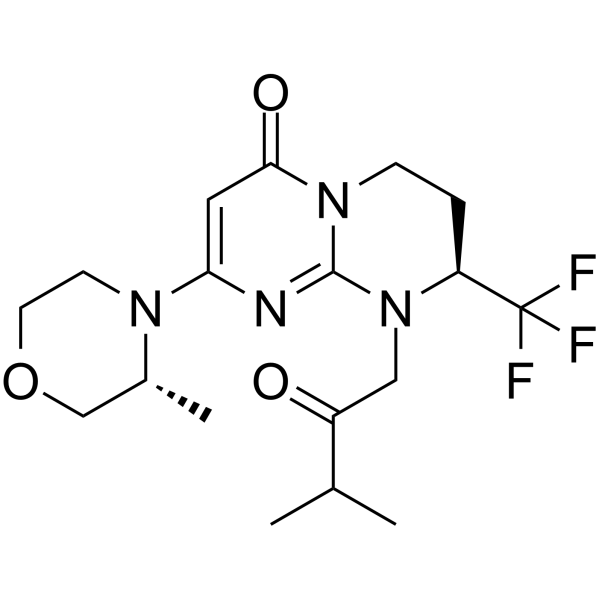
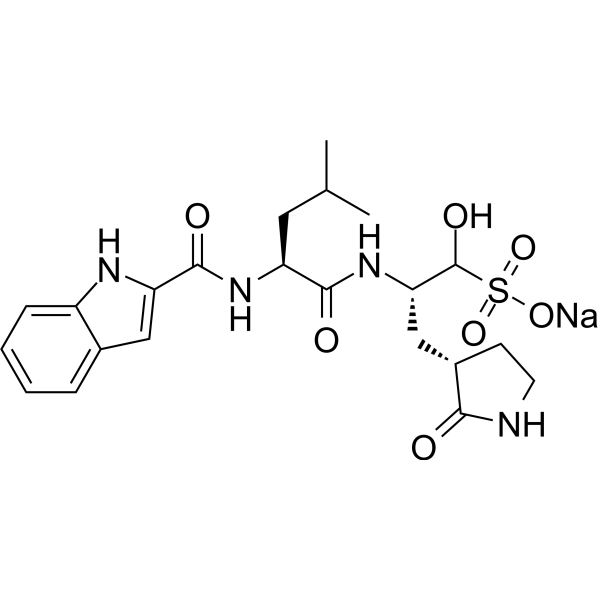 0 ImagesCat. No.: HY-156655ACAS No.: 2763596-72-9Synonyms: STI-1558 sodiumOlgotrelvir (STI-1558) sodium is an orally active dual inhibitor of coronavirus main protease (Mpro) and human cell cathepsin (Cathepsin L). Olgotrelvir sodium is readily converted to its active form, AC1115, in full blood and/or plasma. Olgotrelvir sodium can effectively inhibit both SARS-CoV-2 replication and entry into host cells.
-
Cilgavimab
 0 ImagesCat. No.: HY-P99604CAS No.: 2420563-99-9Synonyms: AZD-1061; COV2-2130Cilgavimab (AZD-1061; COV2-2130) is a human SARS-CoV-2-neutralizing monoclonal antibody, can compose monoclonal-antibody combination AZD7442 with Tixagevimab (HY-P99556). Cilgavimab shows protective action on mouse models of SARS-CoV-2 infection.
-
Clazakizumab
 0 ImagesClazakizumab is a monoclonal antibody with high affinity and specificity for the IL-6 (interleukin-6) cytokine. Clazakizumab may be helpful in inhibiting the cytokine response to SARS-CoV-2 in COVID-19. Clazakizumab can be used for the research of psoriatic arthritis (PsA) and renal antibody-mediated rejection.
-
Imdevimab
 0 ImagesCat. No.: HY-P99342CAS No.: 2415933-40-1Synonyms: REGN10987Imdevimab (REGN10987) is a human monoclonal antibody that targets SARS-CoV-2 virus. Imdevimab can be used in combination with Casirivimab (HY-P99341) to reduce viral load and transiently increases anti-receptor-binding domain IgG titers. Imdevimab maintains most of its neutralization activity against viruses with B.1.1.7, B.1.351 and mink cluster 5 spike proteins.
-
Arteannuin B
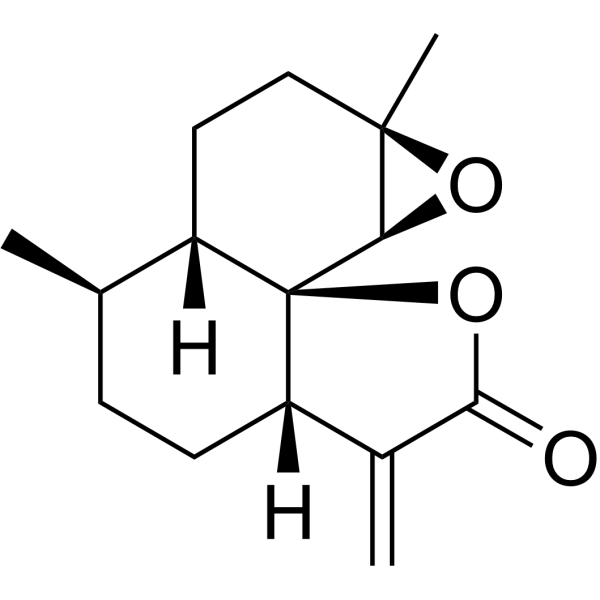 0 ImagesArteannuin B, No. 2000 can be jointly submitted with the blue material. Arteannuin B had anti-SARS-CoV-2 activity, EC50=10.28 μM.
-
1-Phenylpropane-1,2-dione
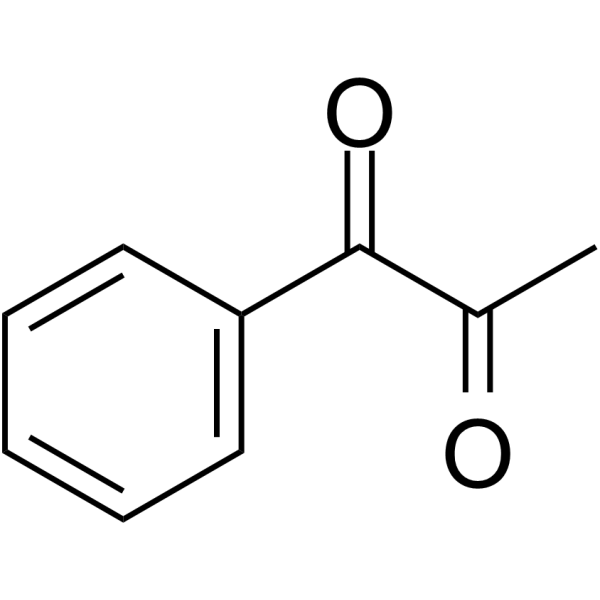 0 Images1-Phenylpropane-1,2-dione is a SARS-CoV-2 helicase binder. 1-Phenylpropane-1,2-dione can be isolated from the young stems of Ephedra sinica. 1-Phenylpropane-1,2-dione is commonly used as an edible flavoring and a basic raw material in synthetic chemistry. 1-Phenylpropane-1,2-dione can be applied to research related to COVID-19.
-
Tubeimoside II
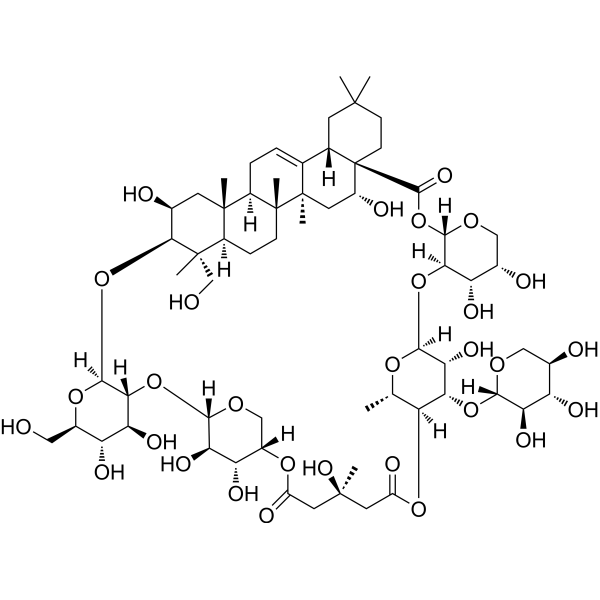 0 ImagesSynonyms: Tubeimoside-BTubeimoside II is an orally active triterpenoid saponin and antiviral agent that binds to PACT/PRKRA with Kd values of 5.37 μM and 133.1 μM, respectively. Tubeimoside II inhibits oxidase-dependent EGFR activation and reduces TGF-β1-induced oxidative stress. Tubeimoside II activates the RIG-I signaling pathway and increases IFN-β secretion. Tubeimoside II suppresses TPA-induced ear edema, mouse sarcoma 180 growth, and TPA-induced skin tumor formation. Tubeimoside II exerts broad-spectrum antiviral activity against SARS-CoV-2, HCoV-OC43, and IAV-H1N1/FM1. Tubeimoside II can be used in research related to retinoblastoma, respiratory viral infections, skin tumors, and sarcoma 180.
-
Hydroxychloroquine sulfate (Standard)
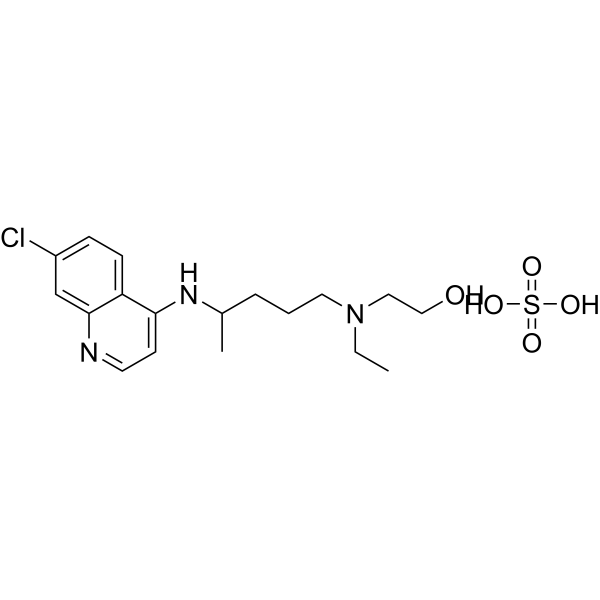 0 ImagesHydroxychloroquine (sulfate) (Standard) is the analytical standard of Hydroxychloroquine (sulfate). This product is intended for research and analytical applications. Hydroxychloroquine sulfate (HCQ sulfate) is a synthetic antimalarial agent which can also inhibit Toll-like receptor 7/9 (TLR7/9) signaling. Hydroxychloroquine sulfate is efficiently inhibits SARS-CoV-2 infection in vitro.
-
Tirilazad
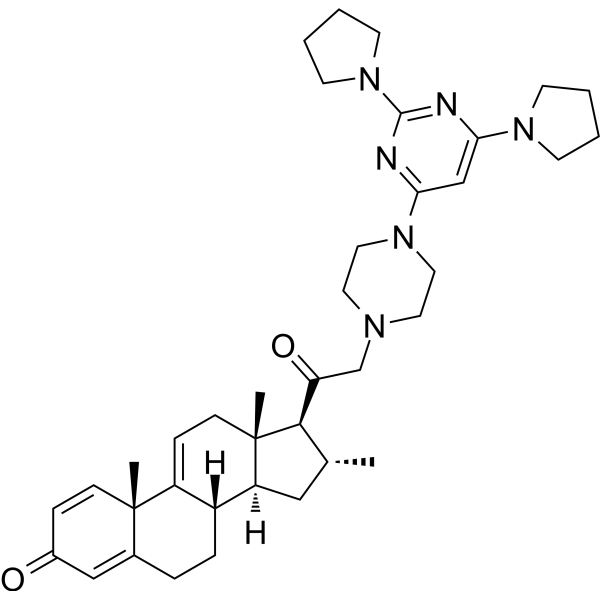 0 ImagesCat. No.: HY-132280CAS No.: 110101-66-1Synonyms: U 74006F free baseTirilazad (U 74006F free base) is a neuroprotective agent. Tirilazad can also bind tightly to the main protease of the COVID-19 virus and exert anti-SARS-CoV-2 activity. Tirilazad scavenges hydroxyl and lipid peroxyl free radicals and maintains the levels of endogenous antioxidants. Tirilazad reduces cerebral infarct volume and improves neurobehavioral scores in animal models of focal ischemia. Tirilazad can be used in research related to ischemic stroke and subarachnoid hemorrhage.
-
Bebtelovimab
 0 ImagesCat. No.: HY-P99103CAS No.: 2578319-11-4Synonyms: LY-3853113; LY-COV1404Bebtelovimab a human IgG1-λ2 antibody targeting to SARS-CoV-2, especially COVID-19 ((the IC50 value for SARS-CoV-2/MT020880.1 virus is 9-22.1 ng/mL)). Bebtelovimab potently neutralizes SARS-CoV-2 variants, and inhibits COVID-19 with mild-to-moderate efficacy.
-
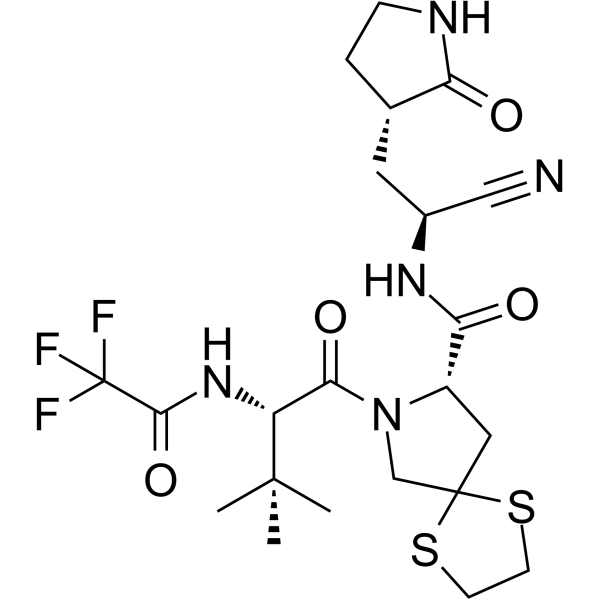
Secutrelvir
 0 ImagesSynonyms: S-892216Secutrelvir is an oral SARS-CoV-2 3C-like protease (3CLpro) inhibitor and antiviral agent, with IC50 values of 0.655 nM and 0.697 nM against SARS-CoV-2 3CLpro, respectively. Secutrelvir forms a reversible covalent bond with the catalytic cysteine C145 of SARS-CoV-2 3CLpro, thereby inhibiting viral replication. Secutrelvir exhibits activity against multiple SARS-CoV-2 variants and can be used in research related to coronavirus disease 2019 (COVID-19).
-
Walrycin B
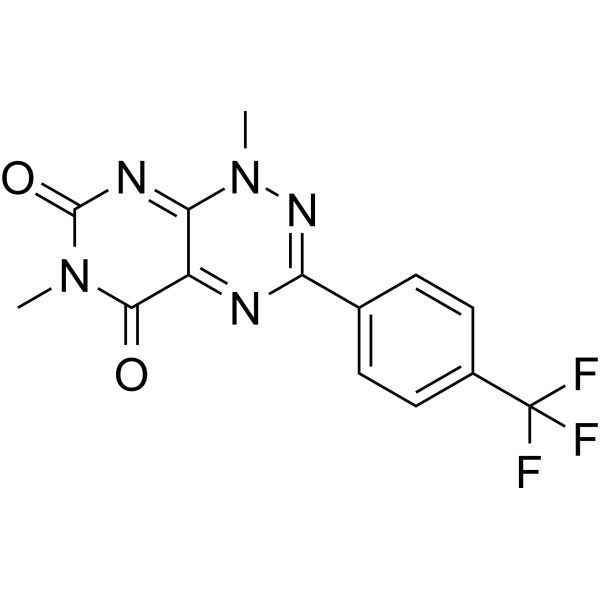 0 ImagesWalrycin B, an analogue of toxoflavin, is a potent SARS-CoV-2 3CLpro inhibitor with an IC50 of 0.26 μM. Walrycin B is a WalR response regulator inhibitor. Walrycin B has potent activity of inhibiting bacteria growth.
-
MI-1851
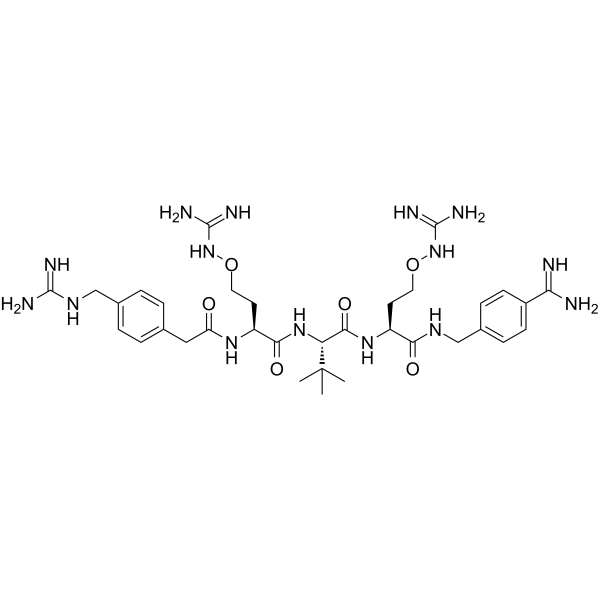 0 ImagesCat. No.: HY-150737CAS No.: 2417283-44-2
-
Merafloxacin
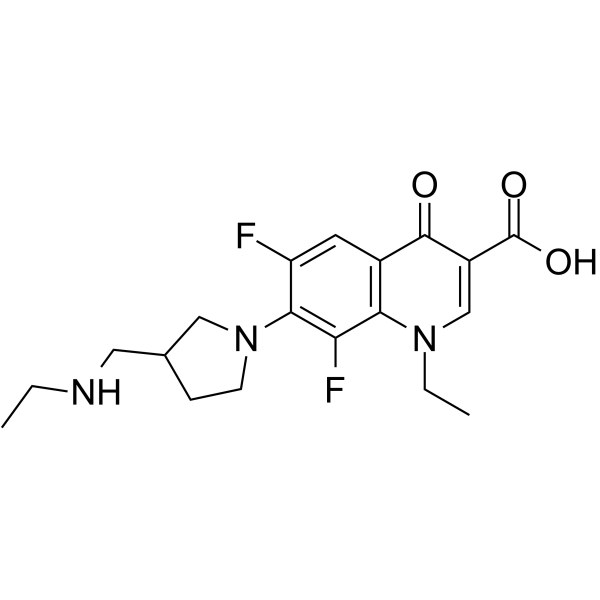 0 ImagesSynonyms: CI-934Merafloxacin (CI-934), a fluoroquinolone antibacterial agent, is a selective programmed -1 ribosomal frameshifting (-1 PRF) inhibitor of beta coronaviruses. Merafloxacin exhibits in vitro activity against gram-positive and gram-negative bacteria.
-
Narlaprevir
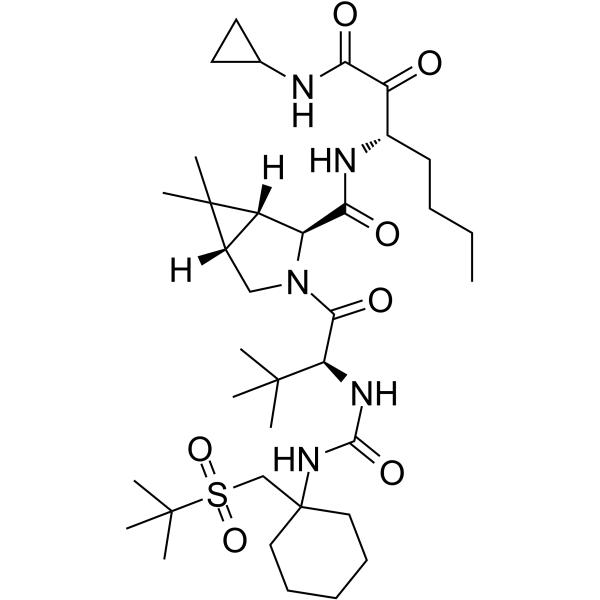 0 ImagesCat. No.: HY-10300CAS No.: 865466-24-6Synonyms: SCH 900518
-
Bromhexine hydrochloride
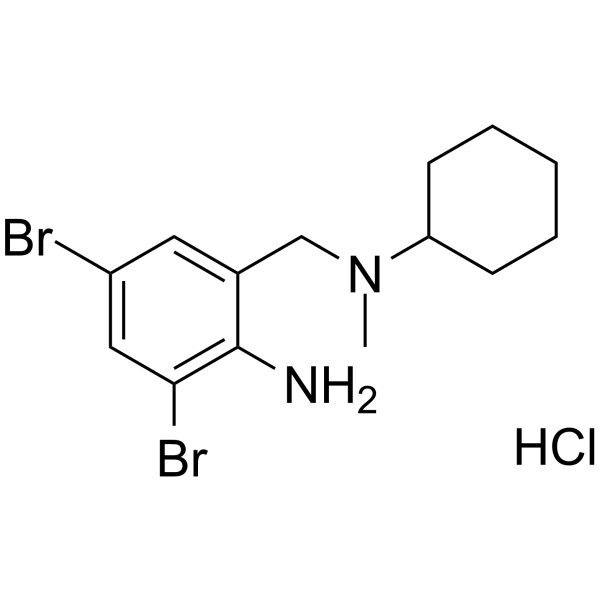 0 ImagesBromhexine hydrochloride is a potent and specific TMPRSS2 protease inhibitor with an IC50 of 0.75 μM. Bromhexine hydrochloride can prevent and manage SARS-CoV-2 infection. Bromhexine hydrochloride is an autophagy agonist. Bromhexine hydrochloride is a mucolytic cough suppressant and has the potential for a range of respiratory conditions.
-
Quipazine
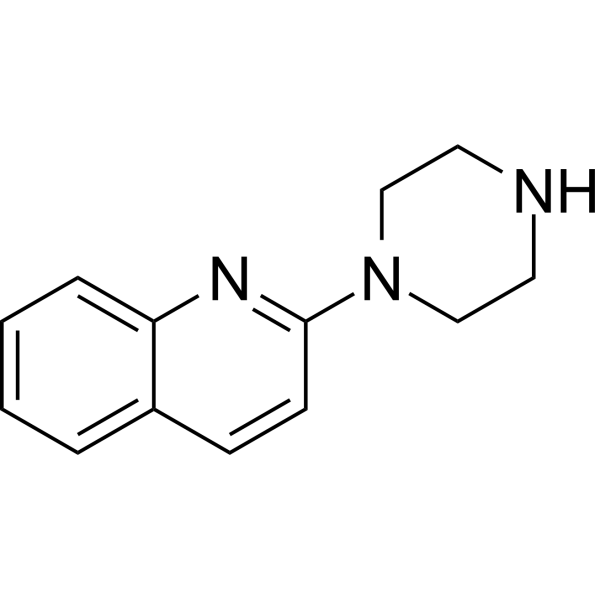 0 ImagesCat. No.: HY-W028142CAS No.: 4774-24-7Quipazine is a 5-HT agonist with a Ki value of 1.4 nM for displaces [3H]GR65630 from 5-HT3R in rat. Quipazine shows antiviral activity against SARS-CoV-2 with an EC50 of 31.64 μM. Quipazine behaves as a 5-HT3R agonist in peripheral models. Quipazine can be used for neurological disease research.