Syk
Spleen tyrosine kinase
Syk (Spleen tyrosine kinase) is a cytosolic non-receptor protein tyrosine kinase (PTK) that is expressed at high levels, both in hematopoietic cells (such as mast cells, B lymphocytes, T lymphocytes, neutrophils, dendritic cells, and macrophages) and in non-hematopoietic cells.
Syk mediates key signal transduction pathways following the activation of immune cell receptors. Syk associates with different receptors on the surface of various cells such as B cells, mast cells, monocytes, macrophages, and neutrophils, and even osteoclasts and breast cancer cells. Following the engagement of these receptors with their ligands, SYK is activated and orchestrates diverse cellular responses, including cytokine production (in T cells and monocytes) and phagocytosis (in macrophages).
All Product Categories
-
Syk Related Products (101)
Related Products (101)

-
BAY 61-3606 hydrochloride
 0 ImagesBAY 61-3606 hydrochloride is an orally available, ATP-competitive, reversible and highly selective Syk inhibitor with a Ki of 7.5 nM and an IC50 of 10 nM . BAY 61-3606 hydrochloride reduces ERK1/2 and Akt phosphorylation in neuroblastoma cell. BAY 61-3606 hydrochloride induces a large decrease of Syk phosphorylation in K-rn cell lysates. BAY 61-3606 hydrochloride sensitizes TRAIL-induced apoptosis by downregulating Mcl-1 in breast cancer cells.
-
TREM2 agonist-3
 0 ImagesCat. No.: HY-174369Purity: 99.39%TREM2 agonist-3 (Compound 4i) is a TREM2 agonist with a KD value of 19.0 µM. The KD value of TREM2 agonist-3 for TREM1 is 39.8 µM. TREM2 agonist-3 induces an increase in phosphorylated SYK levels. TREM2 agonist-3 can be used in the research of neurodegenerative diseases and other diseases associated with TREM2 dysfunction.
-
Fostamatinib Disodium
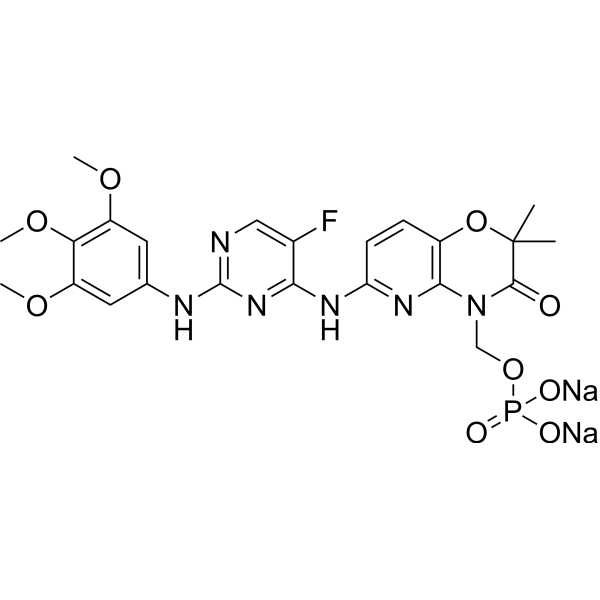 0 ImagesSynonyms: R788Disodium
-
GSK143 dihydrochloride
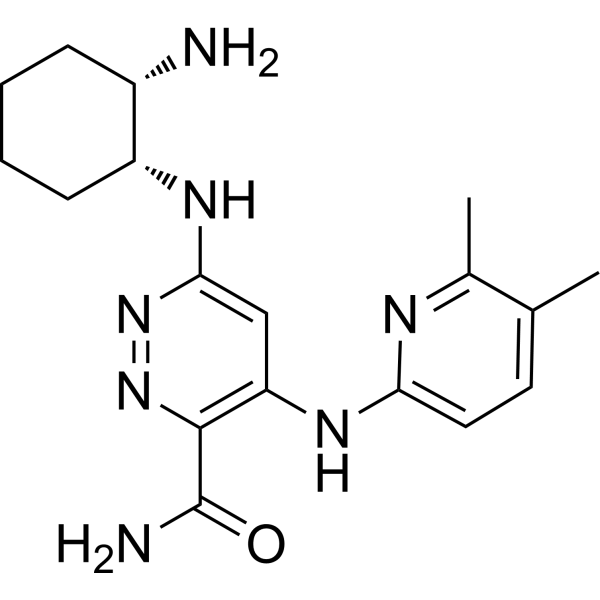
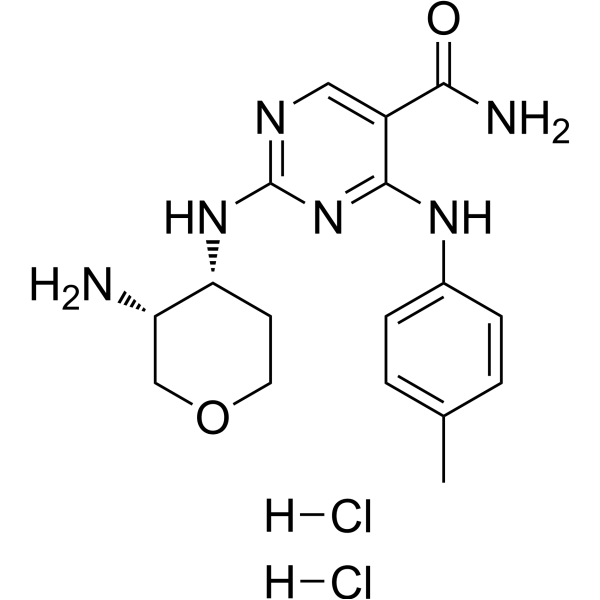 0 ImagesGSK143 dihydrochloride is an orally active and highly selective spleen tyrosine kinase (SYK) inhibitor with a pIC50 of 7.5. GSK143 dihydrochloride inhibits phosphorylated Erk (pErk: pIC50=7.1). GSK143 dihydrochloride reduces inflammation and prevents recruitment of immune cells in the intestinal muscularis in mice.
-
Fostamatinib disodium hexahydrate
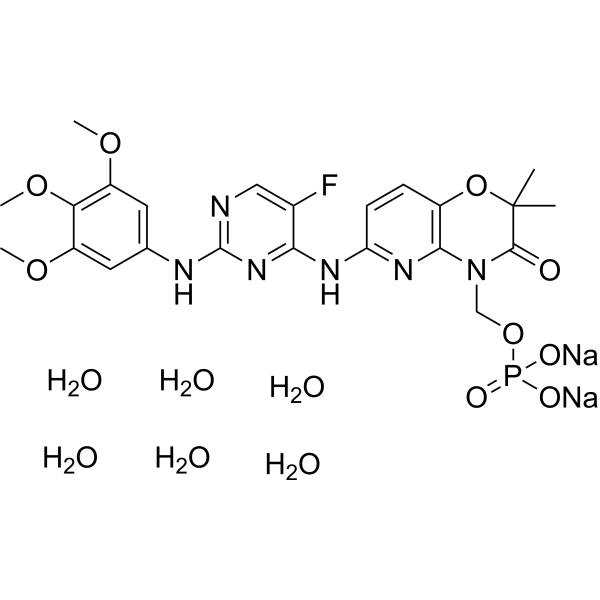 0 ImagesSynonyms: R788 disodium hexahydrate
-
VHB937
 0 ImagesCat. No.: HY-P991734Purity: 99.65%VHB937 is a potent and selective TREM2 agonist, a human monoclonal antibody, with sub-nanomolar affinity. VHB937 enhances TREM2 surface expression and downstream signaling, such as Syk phosphorylation and calcium mobilization. VHB937 exhibits robust neuroprotective effects in vivo, significantly reducing pathology and pro-inflammatory markers across a broad range of animal models of neuroinflammation and neurodegeneration. VHB937 can be used for neurodegenerative diseases research.
-
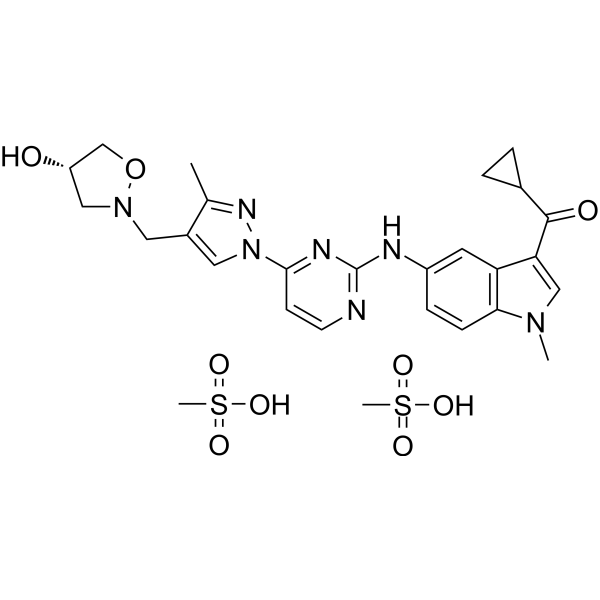
Cevidoplenib
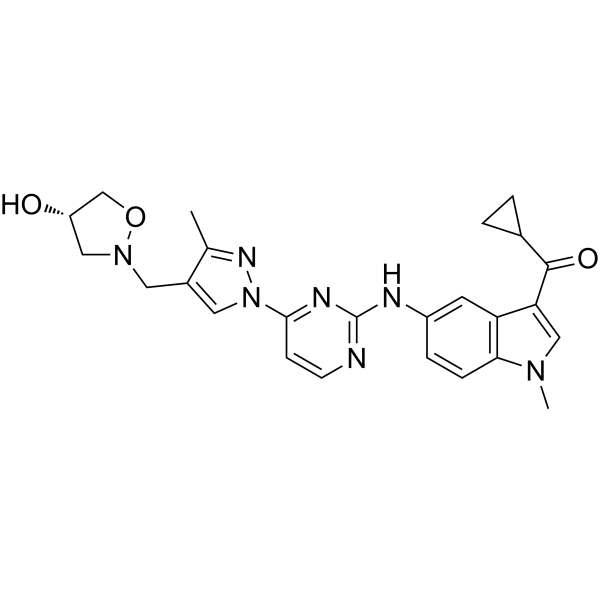 0 ImagesSynonyms: SKI-O-703Cevidoplenib (SKI-O-703) is an orally available inhibitor of spleen tyrosine kinase (Syk), with potential anti-inflammatory and immunomodulating activities. Cevidoplenib is also the mesylate form of SKI-O-592. Cevidoplenib and SKI-O-592 inhibits BCR-mediated survival, proliferation, and differentiation of B cells. And SKI-O-592 potently inhibits multiple kinases with IC50s of 6.2 nM (Syk), 1.859 μM (Jak2), 5.807 μM (Jak3), 0.412 μM (RET), 0.687 μM (KOR), 1.783 μM (FLT3), 16.96 μM (FGFR1), 5.662 μM (FGFR3), and 0.709 μM (Pyk2), respectively.
-
Chemerin15
 0 ImagesChemerin15 is an anti-inflammatory peptide derived from Chemerin. Chemerin15 binds to ChemR23. Chemerin15 inhibits TNFα-induced activation of Syk, ERK and Src kinases. Chemerin15 increases the expression of p-p38 mRNA and protein. Chemerin15 mediates phagocytosis, resolution of inflammation, CD62L shedding and downregulation of PSGL-1 expression in macrophages and microglia. Chemerin15 inhibits neutrophil-mediated vascular inflammation and myocardial ischemia-reperfusion injury via ChemR23. Chemerin15 enhances microglial phagocytosis, thereby alleviating cerebral ischemia-reperfusion injury.
-
Cerdulatinib hydrochloride
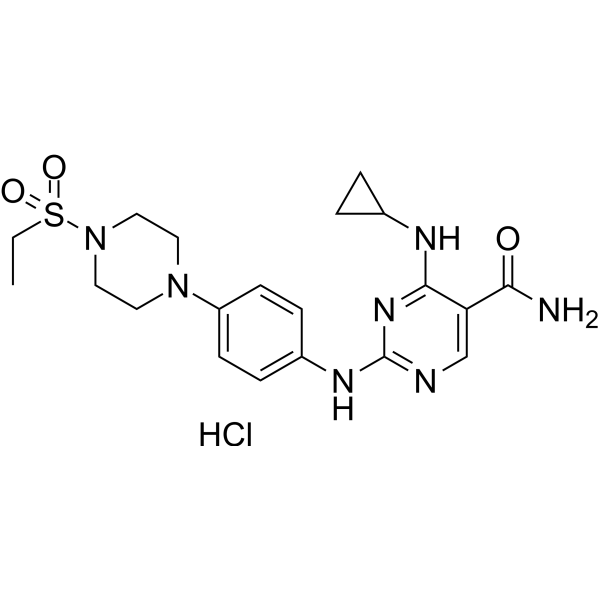 0 ImagesSynonyms: PRT062070 hydrochloride; PRT2070 hydrochlorideCerdulatinib hydrochloride (PRT062070) is a selective, oral active and reversible ATP-competitive inhibitor of dual SYK and JAK, with IC50s of 32 nM, 0.5 nM, 12 nM, 6 nM and 8 nM for SYK and Tyk2, JAK1, 2, 3, respectively. Cerdulatinib hydrochloride could be used to research autoimmune disease and B-cell malignancies.
-
Lanraplenib succinate
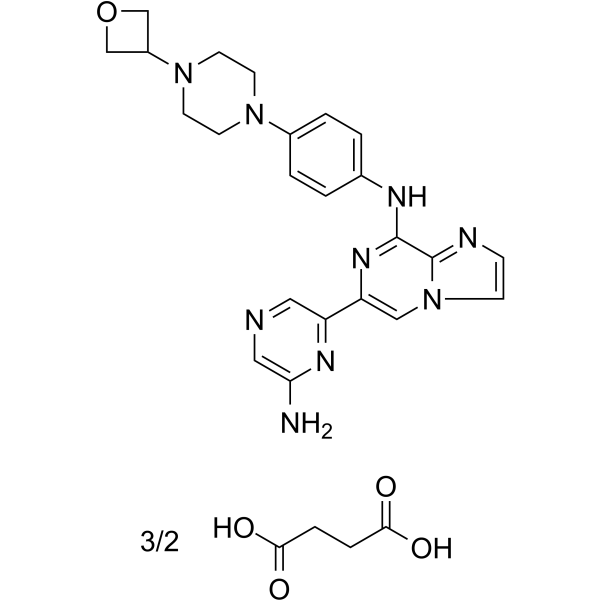 0 ImagesSynonyms: GS-9876 succinateLanraplenib succinate (GS-9876 succinate) is a highly selective and orally active SYK inhibitor (IC50=9.5 nM) in development for the treatment of inflammatory diseases. Lanraplenib succinate (GS-9876 succinate) inhibits SYK activity in platelets via the glycoprotein VI (GPVI) receptor without prolonging bleeding time (BT) in monkeys or humans.
-
PRT062607 acetate
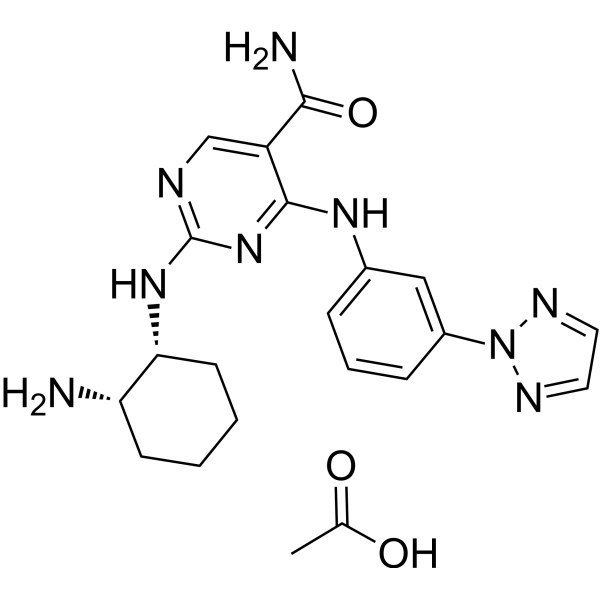 0 ImagesSynonyms: P505-15 acetate; PRT-2607 acetate; BIIB-057 acetate
-
UBX-382
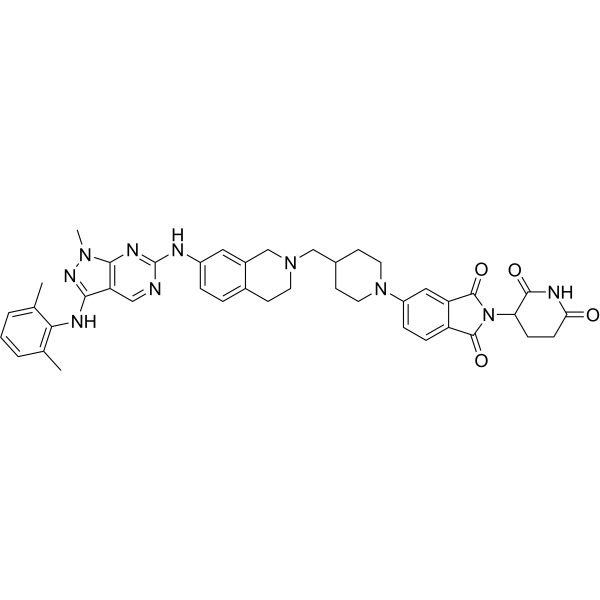 0 ImagesCat. No.: HY-160142CAS No.: 2884554-45-2UBX-382 is an orally active BTK PROTAC degrader with a DC50 of 4.56 nM. UBX-382 inhibits B-cell receptor signaling by targeting BTK. UBX-382 shows superior degradation activity for wild-type and mutant BTK proteins. UBX-382 inhibits tumor growth in murine xenograft models harboring wild-type or C481S mutant BTK-expressing TMD-8 cells. UBX-382 can be used for the study of B-cell-related blood cancers.
-
GSK2646264
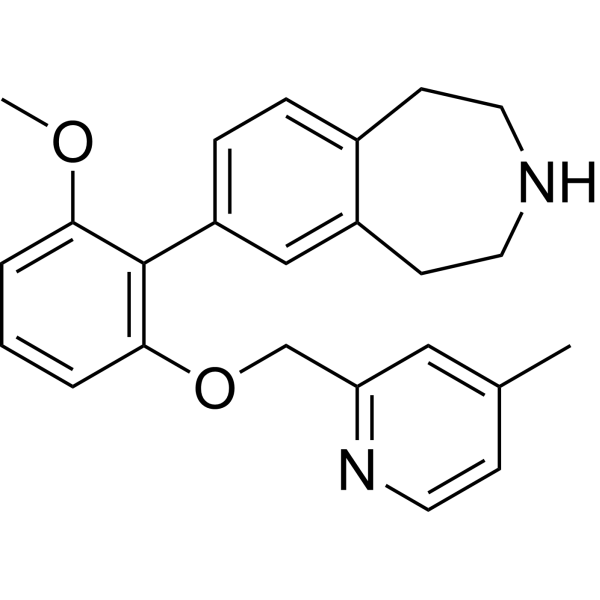 0 ImagesGSK2646264 (Compound 44) is a potent and selective spleen tyrosine kinase (SYK) inhibitor with a pIC50 of 7.1. GSK2646264 also inhibits other kinases with pIC50 values of 5.4, 5.4, 5.3, 5, 4.5, <4.6 and <4.3 against LCK, LRRK2, GSK3β, JAK2, VEGFR2, Aurora B and Aurora A, respectively. GSK2646264 is penetrable into the epidermis and dermis of the skin.