



TNF Receptor Agonist
- 1
- 2
-
Conatumumab
 0 ImagesSynonyms: AMG 655; TRAIL-R2 mAb; Human Anti-TNFRSF10B Recombinant Antibody
Conatumumab (AMG 655) is a human monoclonal agonist antibody against human death receptor 5 (DR5, TRAILR2) (Kd: 1 nM for the long form of DR5, 0.8 nM for the short form of DR5). Conatumumab induces apoptosis via caspase activation. Conatumumab can be used in the research of cancers. .

-
Dordaviprone
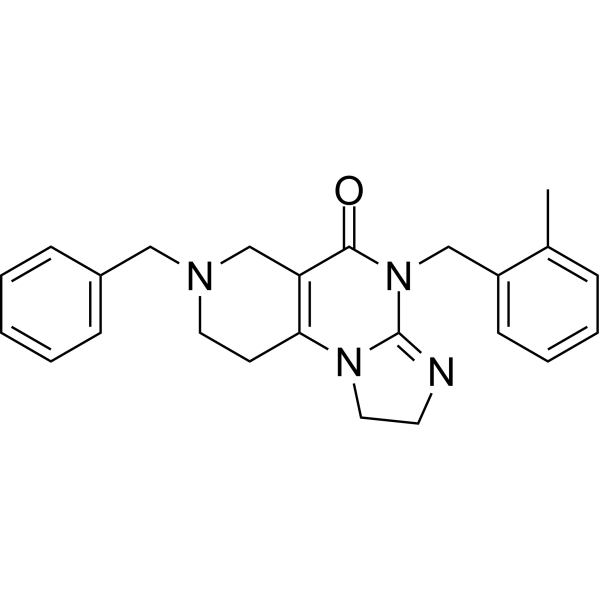 0 ImagesSynonyms: TIC10; ONC-201
-
Sotigalimab
 0 ImagesSynonyms: APX005M; APX005M; EPI-0050
Sotigalimab, a CD40 agonistic monoclonal antibody. Sotigalimab binds CD40 with high affinity and activates antigen-presenting cells, thereby stimulating cancer-specific T cell responses. Sotigalimab is mainly used in the study of metastatic pancreatic cancer and metastatic melanoma.
-
JNU-0921
 0 Images
JNU-0921 is a potent and orally active CD137 agonist. JNU-0921 increases the mRNA expression of IFN-γ and GZMB. JNU-0921 induces luciferase activity with an EC50 value of 64.07 nM.JNU-0921 enhances effector and memory function of cytotoxic CD8+ T cells (CTLs) and alleviates their exhaustion. JNU-0921 also skews polarization of helper T cells toward T helper 1 type and enhances their activity to boost CTL function. JNU-0921 shows anticancer activity.
-
TBPH
 0 ImagesCat. No.: HY-W018587CAS No.: 26040-51-7
TBPH is a brominated flame retardant. TBPH enhances hepatic steatosis, inflammation, and fibrosis in mice with nonalcoholic steatohepatitis (NASH). TBPH induces dysregulation of phospholipid metabolism, reducing cardiolipin (CL) and phosphatidylserine (PS) levels. TBPH leads to impaired endoplasmic reticulum-mitochondria (ER-Mito) contacts, subsequently causing mitochondrial dysfunction. TBPH induces lung injury through an inflammatory response mediated by mitochondria-derived ds-DNA. TBPH can be used to study the role of MFN2-mediated ER-mitochondria contacts in lipid metabolism homeostasis.
-
Benufutamab
 0 ImagesSynonyms: GEN1029
Benufutamab (GEN1029) is a death receptor 5 (DR5)-specific agonistic antibody. Benufutamab is a mixture of 2 noncompeting DR5-specific IgG1 antibodies, each with an E430G mutation in the Fc domain. Benufutamab has antitumor effects.
-
STING agonist-45
 0 Images
STING agonist-45 is a selective STING agonist (EC50 = 0.28 μM). STING agonist-45 activates the innate immune response through the cGAS-STING pathway, upregulating key markers such as p-TBK1 and IRF3. STING agonist-45 exhibits robust STING activation in human peripheral blood mononuclear cells (PBMCs), inducing the production of type I interferons (such as IFN-β) and downstream cytokines (such as TNF-α and IL-6). STING agonist-45 enhances anti-tumor immunity, inhibits tumor growth, and increases CD8+ T cell infiltration in mouse models. STING agonist-45 is promising for the study of STING-related diseases.
-
MK-4166
 0 ImagesCat. No.: HY-P991179Purity: 98.20%
MK-4166 is a humanized IgG1 agonist monoclonal antibody targeting GITR. MK-4166 enhances the proliferation of both naïve and tumor-infiltrating T lymphocytes.
-
BMS-986156
 0 ImagesCat. No.: HY-P991178
BMS-986156 is a fully humanized IgG1 agonist monoclonal antibody agonist corticosteroid-induced tumor necrosis factor receptor-related protein (GITR). BMS-986156 binds to GITR and promotes activation of T effector cells and inactivates T regulatory cells. BMS-986156 is indicated for use in advanced solid tumor studies.
-
PTX-35
 0 ImagesCat. No.: HY-P991455Purity: 98.95%
PTX-35 is a costimulatory agonist antibody targeting TNFRSF25 as well as an immune activator that selectively regulates activated CD8+ T cells. PTX-35 enhances the expansion, survival and effector functions of T cells, while reducing the inhibitory activity of regulatory T cells and impairing their stability. PTX-35 exhibits anti-tumor activity, effectively delaying tumor progression and prolonging survival. PTX-35 has a synergistic effect with anti-OX40 agonist antibodies. PTX-35 can be widely used in research on related diseases such as colon cancer and melanoma.
-
TRX-518
 0 ImagesCat. No.: HY-P991180Purity: 98.58%
TRX-518 is a humanized agylcosyl IgG1 anti-GITR mAb, , and is a GITR agonist. TRX-518 binds to the extracellular domain of human GITR, abrogates Treg-mediated suppression. TRX-518 increases effector T cell activation and pro-inflammatory cytokine production, reduces circulating and intratumor Treg frequencies. TRX-518 destabilizes Treg phenotype via Foxp3 downregulation and T-bet upregulation. TRX-518 can be used for the research of solid tumors[1][2][3].
-
Anti-Mouse GITR (D265A) Antibody (DTA-1)
 0 ImagesCat. No.: HY-P990241
Anti-Mouse GITR (D265A) Antibody (DTA-1) is an anti-mouse GITR IgG1 monoclonal antibody. Anti-Mouse GITR (D265A) Antibody (DTA-1) is a chimeric antibody of the original DTA-1 antibody (HY-P990124). Anti-Mouse GITR (D265A) Antibody (DTA-1) contains the D265A mutation region. Anti-Mouse GITR (D265A) Antibody (DTA-1) can be used for research on cancer and allergic conditions. The recommed isotype control of Anti-Mouse GITR (D265A) Antibody (DTA-1) is Mouse IgG1 kappa, Isotype Control (HY-P99977).
-
LBL-019
 0 ImagesCat. No.: HY-P992399
LBL-019 is a humanized IgG1 monoclonal antibody targeting TNFR2. LBL-019 costimulates TNFR2 and activates the NF-κB signaling pathway in an Fc crosslinking-dependent manner. LBL-019 can be used for the research of advanced malignant tumors, including hepatocellular carcinoma and melanoma. The recommended isotype control is human IgG1 kappa (HY-P99001).
-
CTB006
 0 ImagesCat. No.: HY-P992340
CTB006 is a monoclonal antibody targeting a humanized chimeric recombinant anti-DR5. CTB006 specifically binds to and activates DR5, thereby inducing tumor cell apoptosis, inhibiting tumor growth and reducing tumor drug resistance. 177Lu-radiolabeled CTB006 can deliver targeted radiotherapy to tumor cells; while 89Zr- or 177Lu-labeled CTB006 can serve as a PET/CT imaging agent for detecting DR5 expression levels in preclinical tumor models and screening cancers with DR5 overexpression. CTB006 can be applied to research related to gastrointestinal cancer, colorectal cancer and other solid tumors.
-
AGEN-2373
 0 ImagesCat. No.: HY-P991529
AGEN-2373 is a conditionally active agonist antibody targeting the co-stimulatory receptor CD137. GEN-2373 binds to CD137 without disruption of ligand binding. AGEN-2373 stimulates CD137 under receptor clustering conditions. AGEN-2373 can enhance T cell activity when combined with other checkpoint modulators (e.g. PD-1 antagonist and OX40 agonist). AGEN-2373 can be studied in research for human malignancies.
-
Sym029
 0 ImagesCat. No.: HY-P991460
Sym029 is a human IgG monoclonal antibody (mAb) targeting TNFRSF5/CD40. Sym029 can be used in cancer research. Recommended isotype control: Human IgG1 kappa, Isotype Control (HY-P99001).
-
TAS266
 0 ImagesCat. No.: HY-P992473
TAS266 is a tetrameric nanobody agonist targeting DR5. TAS266 selectively induces cancer cell death. TAS266 triggers sustained tumor regression in xenograft models and also elicits immunogenic responses including antibody binding. TAS266 exhibits superior anti-tumor efficacy compared with traditional DR5-targeting strategies. TAS266 can be used in research related to pancreatic cancer and advanced solid tumors.
-
ADG-106
 0 ImagesCat. No.: HY-P991070
ADG-106 is a fully human agonistic monoclonal IgG4 antibody against CD137 (4-1BB). ADG-106 has the mechanism to activate CD137 via strong FcγRIIB-mediated crosslinking while antagonizing CD137 ligands. The isotype control for ADG-106 can refer to Human IgG4 (S228P) kappa, Isotype Control (HY-P99003).
-
ASP1951
 0 ImagesCat. No.: HY-P992315Synonyms: PTZ-522
ASP1951 (PTZ-522) is a monoclonal antibody that targets GITR and is a GITR agonist. ASP1951 can be used for the research of advanced solid tumours.
- 1
- 2



