



Drug Derivative
Drug derivative
Drug derivatives are derived from parent compounds. They replace or add atoms and groups through chemical reactions to optimize the various properties of the parent compound and reduce side effects. The application of drug derivatives provides a diverse compound library for drug research and development and accelerates the discovery of new drugs. For example, urea derivatives Glibenclamide can prolong the blood sugar-lowering effect of anti-diabetic drugs.
References:
- [1]. Vardanyan RS, et al. Fentanyl-related compounds and derivatives: current status and future prospects for pharmaceutical applications. Future Med Chem. 2014 Mar;6(4):385-412.x
- [2]. Ghosh AK, et al. Urea Derivatives in Modern Drug Discovery and Medicinal Chemistry. J Med Chem. 2020 Mar 26;63(6):2751-2788.x
All Product Categories
-
Drug Derivative Inhibitors
(12)
View all products
-
Drug Derivative Agonist
(1)
View all products
-
Drug Derivative Activator
(1)
View all products
-
Drug Derivative Chemical
(1)
View all products
-
Drug Derivative Inducer
(1)
View all products
-
Drug Derivative Controls
(38)
View all products
-
Drug Derivative Substrate
(1)
View all products
-
Drug Derivative Related Products (4032)
Related Products (4032)

-
A60586
 0 ImagesCat. No.: HY-118095CAS No.: 146667-75-6A60586 is an active compound.
-
Nikkomycin J
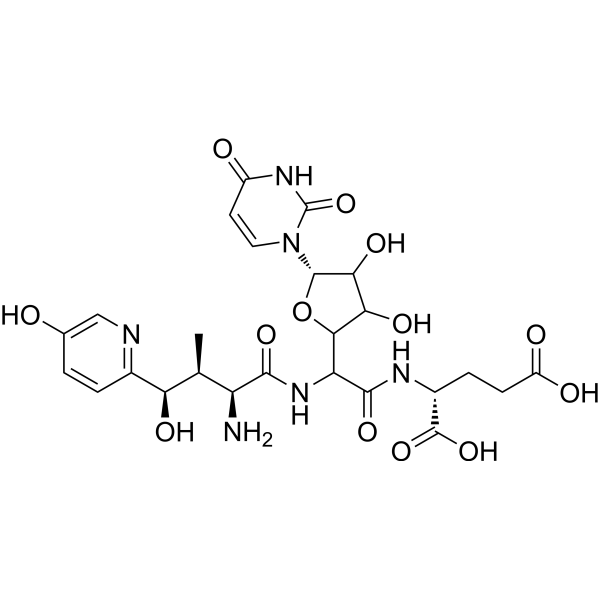 0 ImagesCat. No.: HY-126873CAS No.: 77368-59-3Nikkomycin J is an active compound. Nikkomycin J can be used for various researches.
-
ACAT Inhibitor 1
 0 ImagesCat. No.: HY-123040CAS No.: 142642-31-7ACAT Inhibitor 1 is an active compound.
-
Furanofukinin
 0 ImagesCat. No.: HY-N16674CAS No.: 34335-93-8Furanofukinin is a natural sesquiterpene.
-
3,4-Methylenedioxy PV9 hydrochloride
 0 Images3,4-Methylenedioxy PV9 hydrochloride is a drug derivative. 3,4-Methylenedioxy PV9 hydrochloride shows toxicity against BEAS-2B, human aortic endothelia, HASM, SK-N-SH, A172, HepG2, MKN45, and DLD1cells (LC50=12.8-67.5 μM).
-
β-Hydroxy-2',4',5'-trimethoxychalcone
 0 ImagesCat. No.: HY-N16912CAS No.: 861074-67-1β-Hydroxy-2',4',5'-trimethoxychalcone is a natural chalcone.
-
Ro 23-7637
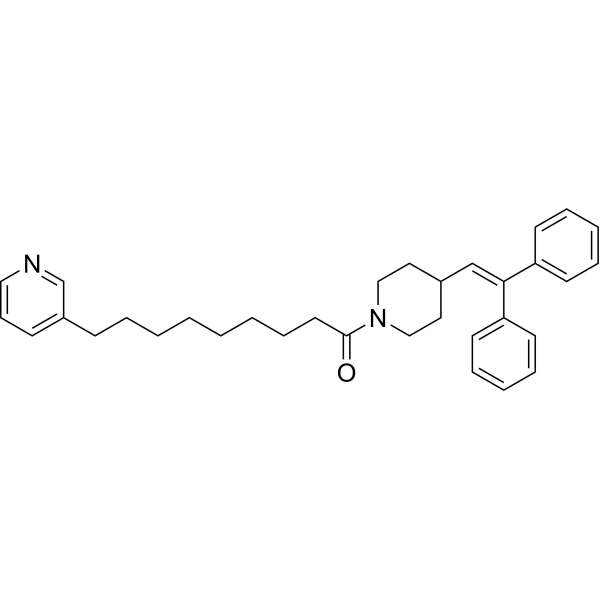 0 ImagesCat. No.: HY-118709CAS No.: 107071-66-9Ro 23-7637 is an orally active, efficacious antiobesity agent.
-
12-O-Ethyl-nimbolinin B
 0 ImagesCat. No.: HY-N18322CAS No.: 1383604-86-112-O-Ethyl-nimbolinin B is a limonoid that can be found in the fruits of Melia toosendan.
-
Glabralide A
 0 ImagesCat. No.: HY-N7469CAS No.: 1969289-10-8Glabralide A is a natural chalcone.
-
ReN 1869
 0 ImagesCat. No.: HY-124423CAS No.: 170149-99-2ReN 1869 is an active compound.
-
Noueloside D
 0 ImagesCat. No.: HY-N17216CAS No.: 2088336-76-7Noueloside D is a natural diterpene.
-
(R)-(-)-Curcumene
 0 ImagesCat. No.: HY-W751460CAS No.: 4176-17-4(R)-(-)-Curcumene is a 7-epizingiberene derivative and repellent. (R)-(-)-Curcumene can be derived from Tomato. (R)-(-)-Curcumene repells B. tabaci.

-
PD 099560
 0 ImagesCat. No.: HY-123170CAS No.: 155758-74-0PD 099560 is an active compound.
-
Turmeronol B
 0 ImagesCat. No.: HY-N16786CAS No.: 131651-38-2Turmeronol B is a natural sesquiterpene.
-
PD-224378
 0 ImagesCat. No.: HY-171456CAS No.: 466678-44-4PD-224378 is the lactam form of glycosylamine (β-anomer) formed by the Maillard reaction between pregabalin and lactose.
-
Balazipone
 0 ImagesCat. No.: HY-105671CAS No.: 137109-71-8Balazipone is a phenylmethylene-2,4-pentanedione compound with anti-inflammation activity. Balazipone can be used for digestive system diseases research, such as Crohn's disease.
-
12-Hydroxy-6-epi-albrassitriol
 0 ImagesCat. No.: HY-N9080CAS No.: 178330-78-412-Hydroxy-6-epi-albrassitriol is a natural sesquiterpene.
-
Derrisaponin A
 0 ImagesCat. No.: HY-N19794CAS No.: 1965272-21-2Derrisaponin A is an oleanane-type triterpenoid saponin and sweetener found in the stems of Derris eriocarpa, with sweetness intensity approximately 80 times that of Sucrose (HY-B1779) at 1% concentration. Derrisaponin A shows no acute toxic activity. Derrisaponin A can be used for research on hypertension, hyperglycemia, and obesity.
-
AMP-404
 0 ImagesCat. No.: HY-W319584CAS No.: 55275-64-4AMP-404 is an Imexon (HY-15385)-derived antitumor agent with dual functions as a cytotoxin and growth inhibitor. AMP-404 exerts significant cytotoxic effects against various sensitive, drug-resistant and primary human tumor cells, including myeloma, breast cancer, melanoma, ovarian cancer and sarcoma cells. AMP-404 effectively inhibits the growth of rat PIE 2-3 sarcoma in vivo and exhibits remarkable in vivo efficacy.



