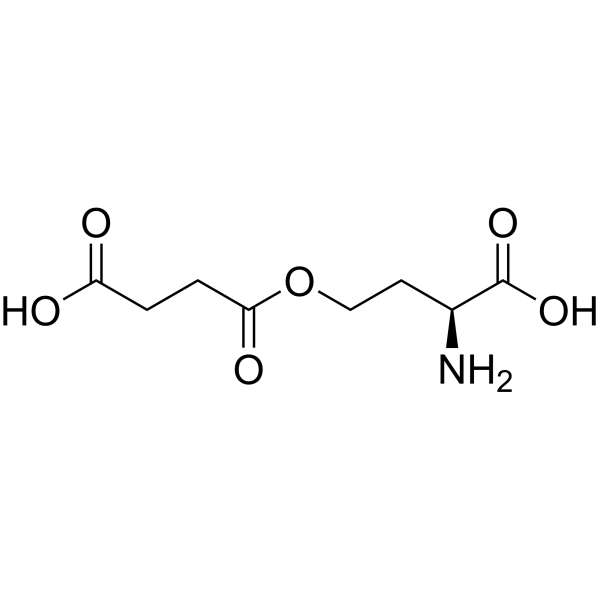
Drug Intermediate
Drug Iintermediate
Drug intermediates are used as raw materials for the production of bulk drugs, or they can refer to a material produced during synthesis of an API that must undergo further molecular change or processing before it becomes an API. Drug intermediates are hygienically formulated using high grade raw materials and they are used in the pharmaceutical and cosmetic industry[1][2].
References:
- [1]. Ma HC, et al. Homochiral Covalent Organic Framework for Catalytic Asymmetric Synthesis of a Drug Intermediate. J Am Chem Soc. 2020 Jul 22;142(29):12574-12578. [Content Brief]
- [2]. Ramachary D B, et al. Development of pharmaceutical drugs, drug intermediates and ingredients by using direct organo‐click reactions[J]. 2008.
All Product Categories
-
Drug Intermediate Related Products (4714)
Related Products (4714)

-
6-Oxohexyl 2-hexyldecanoate, 80% (ELSD)
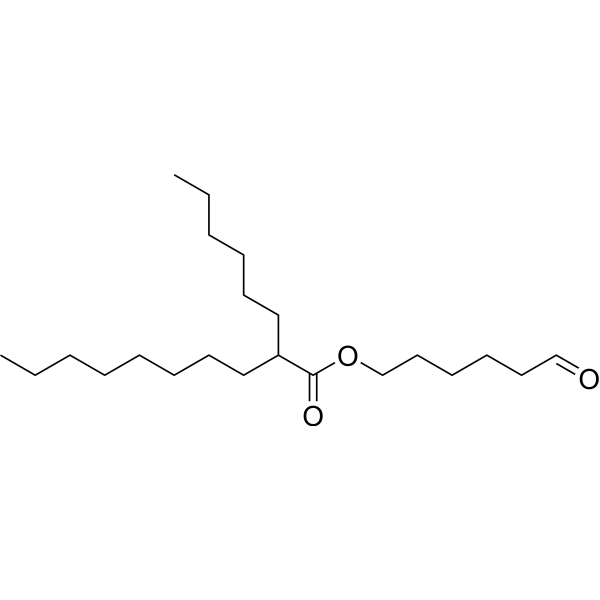 0 Images6-Oxohexyl 2-hexyldecanoate, 80% (ELSD) is an intermediate in the synthesis of ALC-0315. 6-Oxohexyl 2-hexyldecanoate, 80% (ELSD) can be used in research on drug delivery, such as mRNA delivery.
-
Cyclohexane-1,3-dione
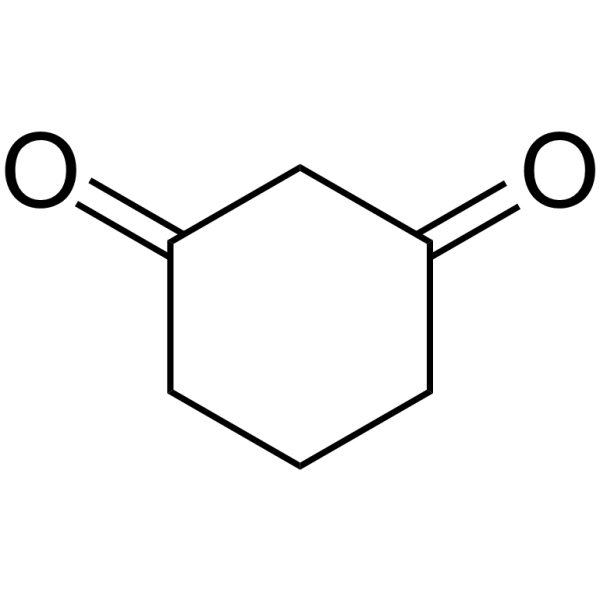 0 ImagesCyclohexane-1,3-dione is a drug intermediate, and its derivatives can exhibit significant tyrosine kinase inhibitory activity and anti-tumor activity.
-
6-Methylsalicylic acid
 0 Images6-Methylsalicylic acid is the secondary metabolite that could be isolated from some fungi. 6-Methylsalicylic acid can be used as building blocks for synthesis of antibacterial and anti-inflammatory agents.
-
2,2-Dihydroxyacetic acid
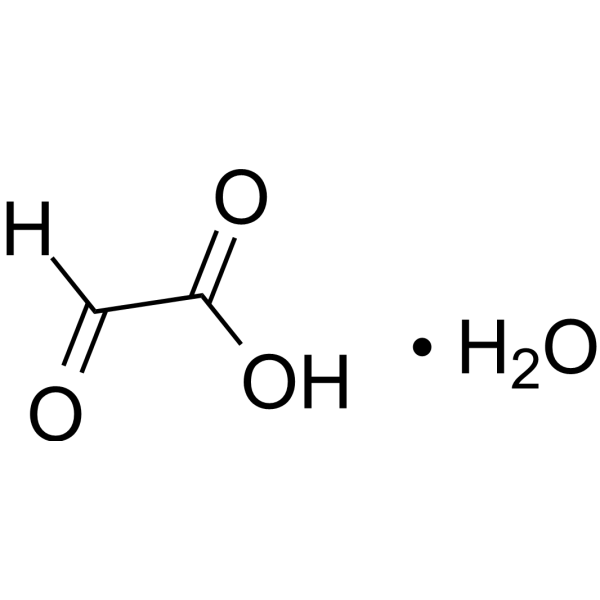 0 Images2,2-Dihydroxyacetic acid is an endogenous metabolite, which is the monohydrate of Glyoxylic Acid. 2,2-Dihydroxyacetic acid may participate in the microbial glyoxylate cycle, induce an increase in reactive oxygen species, promote cell differentiation, and modify proteins to form advanced glycation end products (AGEs) (HY-NP165). 2,2-Dihydroxyacetic acid is associated with metabolic diseases such as primary hyperoxaluria.
-
Allyltrimethylsilane
 0 ImagesSynonyms: Trimethyl-prop-2-enylsilaneAllyltrimethylsilane (Trimethyl-prop-2-enylsilane) is an organosilicon compound. Allyltrimethylsilane undergoes photochemical thiol-ene reactions with thiolated soybean oil. Allyltrimethylsilane participates in carbon-carbon bond formation via allylation reactions with acetals, ketals, aldehydes and ketones, forms cyclopropane through reaction with aldehydes, and reacts with iodine to produce trimethylsilyl iodide. Allyltrimethylsilane is applicable to research related to organic synthesis.
-
((2-Fluoro-6-(methoxymethoxy)-8-(4,4,5,5-tetramethyl-1,3,2-dioxaborolan-2-yl)naphthalen-1-yl)ethynyl)triisopropylsilane
 0 Images((2-Fluoro-6-(methoxymethoxy)-8-(4,4,5,5-tetramethyl-1,3,2-dioxaborolan-2-yl)naphthalen-1-yl)ethynyl)triisopropylsilane is a drug intermediate for synthesis of various active compounds.
-
Sodium selenide
 0 ImagesSodium selenide is a valuable selenating reagent in organic synthesis; it facilitates the introduction of selenium groups into organic substrates and plays a crucial role in synthesizing organoselenium compounds that are useful in a wide range of organic reactions.
-
tert-Butyl 3-ethynylazetidine-1-carboxylate
 0 Imagestert-Butyl 3-ethynylazetidine-1-carboxylate is a drug intermediate for synthesis of various active compounds.
-
tert-Butyl (4-(4,4,5,5-tetramethyl-1,3,2-dioxaborolan-2-yl)-5-((triisopropylsilyl)ethynyl)naphthalen-2-yl)carbamate
 0 Imagestert-Butyl (4-(4,4,5,5-tetramethyl-1,3,2-dioxaborolan-2-yl)-5-((triisopropylsilyl)ethynyl)naphthalen-2-yl)carbamate is a drug intermediate for synthesis of various active compounds.
-
Ethyl 5-piperazin-1-ylbenzofuran-2-carboxylate
 0 ImagesEthyl 5-piperazin-1-ylbenzofuran-2-carboxylate is a drug intermediate for synthesis of various active compounds.
-
1-(3-Methyl-1-phenyl-5-pyrazolyl)Piperazine
 0 Images1-(3-Methyl-1-phenyl-5-pyrazolyl)Piperazine is a drug intermediate for synthesis of various active compounds.
-
DL-Cystathionine
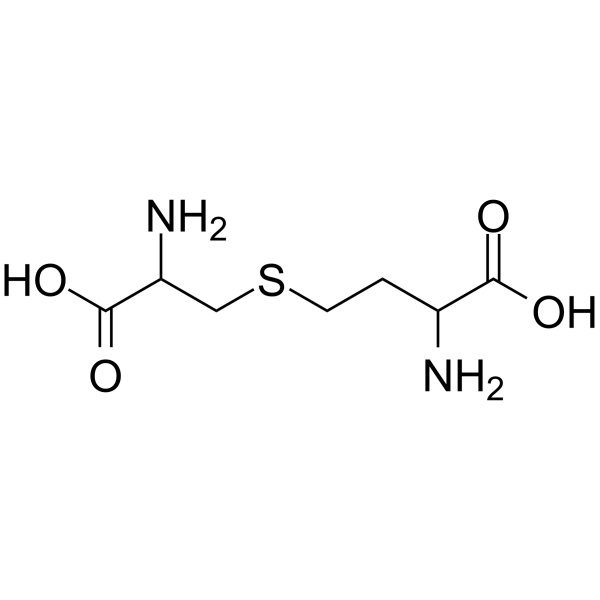 0 ImagesCat. No.: HY-W009749ACAS No.: 535-34-2DL-Cystathionine is a mixture of 4 isomers of cystathionine and allocystathionine. DL-Cystathionine also is an intermediate in the biosynthesis of amino acid cysteine. DL-Cystathionine serves as a standard for quantifying tissue cystathionine.

-
(1S,2R)-Bedaquiline
 0 ImagesSynonyms: (1S,2R)-TMC207; (1S,2R)-R207910(1S,2R)-Bedaquiline ((1S,2R)-TMC207) is a drug intermediate for synthesis of various active compounds.
-
Dimethyl [2,2'-bipyridine]-4,4'-dicarboxylate
![Dimethyl [2,2'-bipyridine]-4,4'-dicarboxylate](https://file.medchemexpress.com/product_pic/hy-w004589.gif "Click to View Dimethyl [2,2'-bipyridine]-4,4'-dicarboxylate Product Detail") 0 ImagesSynonyms: 4,4'-Dimethoxycarbonyl-2,2'-bipyridineDimethyl [2,2'-bipyridine]-4,4'-dicarboxylate (4,4'-Dimethoxycarbonyl-2,2'-bipyridine) is a symmetric bipyridine derivative and metal-organic framework (MOF) ligand, which is applicable to research related to organic synthesis. Dimethyl [2,2'-bipyridine]-4,4'-dicarboxylate serves as a precursor for the preparation of metal complex linkers for oligonucleotide backbone intercalation.
0 ImagesSynonyms: 4,4'-Dimethoxycarbonyl-2,2'-bipyridineDimethyl [2,2'-bipyridine]-4,4'-dicarboxylate (4,4'-Dimethoxycarbonyl-2,2'-bipyridine) is a symmetric bipyridine derivative and metal-organic framework (MOF) ligand, which is applicable to research related to organic synthesis. Dimethyl [2,2'-bipyridine]-4,4'-dicarboxylate serves as a precursor for the preparation of metal complex linkers for oligonucleotide backbone intercalation.
-
(R)-(-)-N-Boc-3-pyrrolidinol
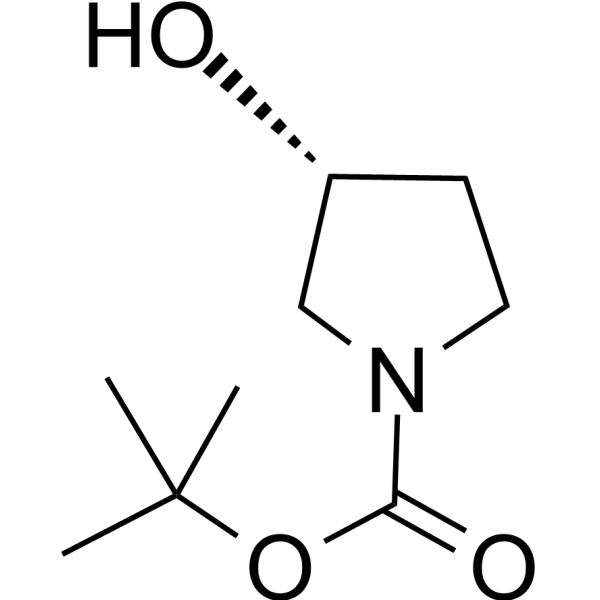 0 Images(R)-(-)-N-Boc-3-pyrrolidinol is a chiral pyrrolidine derivative. After undergoing configuration inversion via the Mitsunobu reaction, (R)-(-)-N-Boc-3-pyrrolidinol can serve as a precursor for the (3S)-aryloxypyrrolidine fragment, which is used to construct key intermediates of FXa inhibitors (such as DX-9065a (HY-10722)) and various chiral drugs. (R)-(-)-N-Boc-3-pyrrolidinol can be applied in studies related to arrhythmia.
-
Ginsenoside Ra1
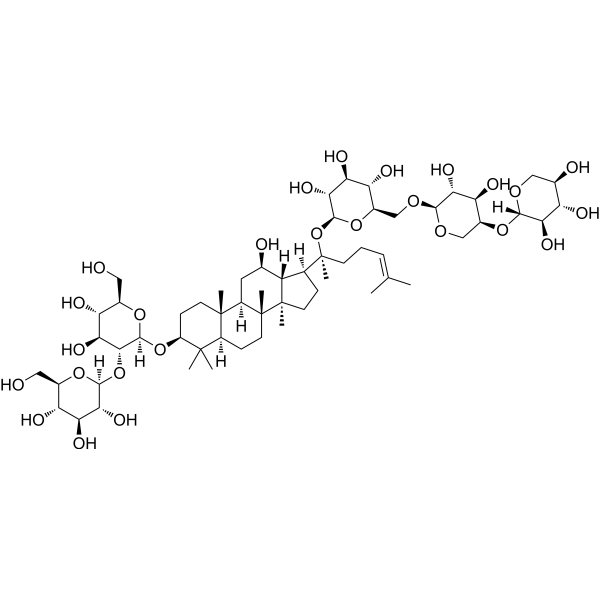 0 ImagesGinsenoside Ra1 is a dammarane-type bisdesmosidic saponin present in the roots of Panax ginseng. Ginsenoside Ra1 is hydrolyzed by gut-derived β-D-xylosidase to Ginsenoside Rb2 (HY-N0040). Ginsenoside Ra1 inhibits hypoxia/reoxygenation-induced activation of protein tyrosine kinase (PTK).
-
Konjac glucomannan (Viscosity≥15000mPa.s)
 0 ImagesCat. No.: HY-W250120CAS No.: 37220-17-0Konjac glucomannan (Viscosity≥15000mPa.s) is an orally active acetylated (1-4)-β-D-glucomannan with multiple biological activities including anti-diabetic, anti-obesity, anti-inflammatory effects, as well as film-forming and gelling properties. Konjac glucomannan (Viscosity≥15000mPa.s) forms a defensive coating on the intestinal surface, reducing levels of blood glucose, cholesterol, triglycerides and blood pressure; it is specifically degraded by colonic β-mannanase produced by human colonic bacteria. Konjac glucomannan (Viscosity≥15000mPa.s) can be used as a food additive, dietary supplement and excipient for oral colon-targeted drug delivery systems. Konjac glucomannan (Viscosity≥15000mPa.s) is applicable to research related to various diseases such as type 2 diabetes, obesity, atopic dermatitis and metabolic syndrome, as well as research in fields including biotechnology, pharmaceuticals and tissue engineering.