GLP Receptor
GLP Receptor
The GLP receptors contain two family members, GLP-1 receptor (GLP1R, or GLP-1R) and GLP-2 receptor (GLP2R or GLP-1R), activated by the glucagon-like peptides (GLPs). GLPs are s secreted by intestinal cells; causes insulin release; inhibits glucagon secretion, appetite, and energy intake; and delays gastric emptying because GLP receptors are located on the gut, pancreas, brainstem, hypothalamus, and vagal-afferent nerves. GLP-1 has only one known receptor, GLP1R, and regulates gut motility, appetite, islet function, and glucose homeostasis, whereas GLP-2, the agonist of GLP2R, enhances intestinal nutrient absorption. GLP-1R agonists are used to treat diabetes and obesity, and a GLP-2R agonist is approved to treat short bowel syndrome. An investigation of the actions of GLP receptor activation on gallbladder motility has demonstrated that GLP-2 receptor activation increases gallbladder volume in vivo and decreases spontaneous activity in GBSM bundles ex vivo. Like the inhibitory transmitters, which elicit their actions via an adenylate cyclase-protein kinase A-KATP channel pathway, the GLP-2 receptor signals through this same pathway.
All Product Categories
-
GLP Receptor Inhibitors
(17)
View all products
-
GLP Receptor Agonists
(149)
View all products
-
GLP Receptor Antagonists
(9)
View all products
-
GLP Receptor Activators
(14)
View all products
-
GLP Receptor Modulators
(8)
View all products
-
GLP Receptor Inducer
(1)
View all products
-
GLP Receptor Degrader
(1)
View all products
-
GLP Receptor Controls
(2)
View all products
-
GLP Receptor Ligands
(2)
View all products
-
GLP Receptor Related Products (231)
Related Products (231)

-
Antibodies (1)
-
GIP/GLP-1 dual receptor agonist-1 sodium
 0 ImagesCat. No.: HY-153476APurity: 98.33%GIP/GLP-1 dual receptor agonist-1 sodium is a GIP/GLP-1 dual receptor agonist. GIP/GLP-1 dual receptor agonist-1 sodium is used in the research of metabolic disorders and fatty liver diseases, including non-alcoholic steatohepatitis (NASH) and non-alcoholic fatty liver disease (NAFLD).
-
(R)-V-0219 hydrochloride
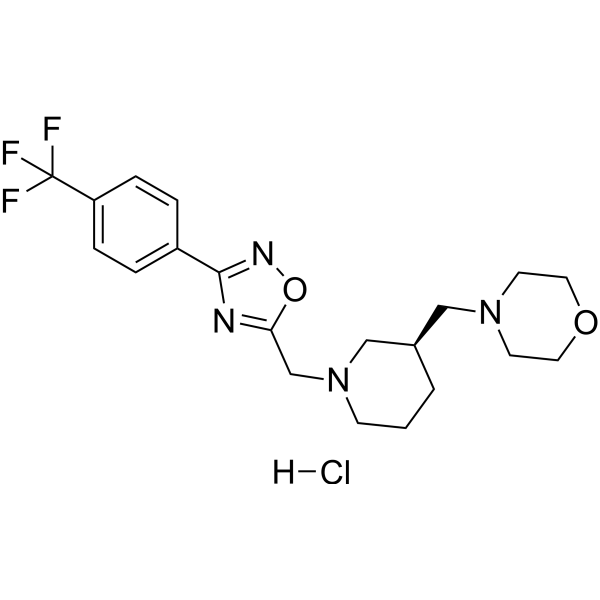 0 ImagesCat. No.: HY-143312DPurity: 98.92%(R)-V-0219 hydrochloride is an enantiomer of V-0219 (HY-143312). V-0219 is an orally active and positive allosteric modulator (PAM) of the GLP Receptor-1 (GLP-1R). (R)-V-0219 hydrochloride activates calcium fluxes in HEK cells stably expressing hGLP-1R.
-
Albiglutide
 0 ImagesSynonyms: GSK-716155Albiglutide is a long acting GLP-1 receptor agonist. Albiglutide is a recombinant fusion protein consisting of two copies of a 30-amino-acid sequence of modified human GLP-1 (fragment 7-36), modified with a glycine substituted for the naturally occurring alanine at position 8 in order to augment resistance to DPP-4. Albiglutide can be used for research of Type 2 diabetes.
-
(1R)-GLP-1 receptor agonist 12
 0 ImagesCat. No.: HY-153816ACAS No.: 2775376-51-5(1R)-GLP-1 receptor agonist 12 is the isomer of GLP-1 receptor agonist 12 (HY-153816).

-
GLP-1R agonist 12
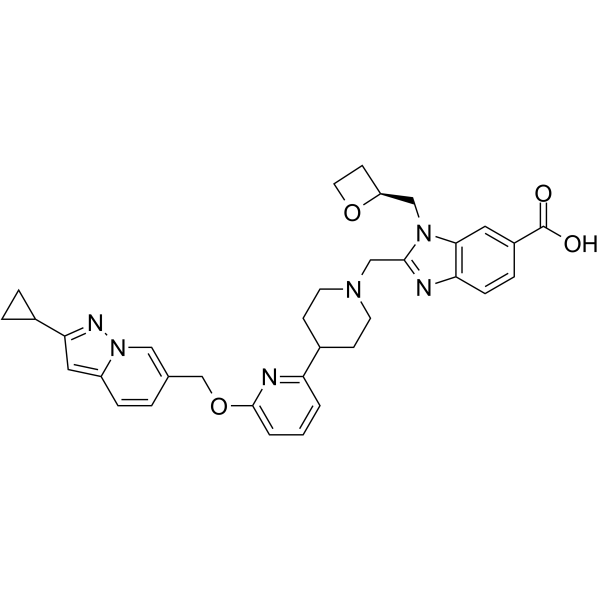 0 ImagesCat. No.: HY-147625CAS No.: 2765595-19-3GLP-1R agonist 12 (Compound 123) is an agonist of glucagon-like peptide-1 receptors (GLP-1R). GLP-1R agonist 12 can be used for diabetes research.
-
Retatrutide acetate
 0 ImagesCat. No.: HY-P3506BPurity: 99.69%Synonyms: LY3437943 acetateRetatrutide (LY3437943) acetate is a triple agonist peptide of the glucagon receptor (GCGR), glucosedependent insulinotropic polypeptide receptor (GIPR), and glucagon-like peptide-1 receptor (GLP-1R). Retatrutide acetate inhibits human GCGR, GIPR, and GLP-1R with EC50 values of 5.79, 0.0643 and 0.775 nM, respectively. Retatrutide acetate can be used for the research of obesity.
-
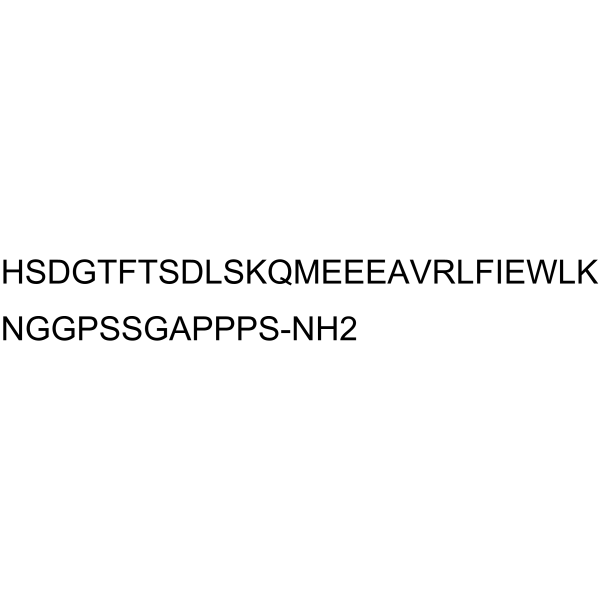
Poterepatide
 0 ImagesSynonyms: HDM1005Poterepatide (HDM1005) is a long-acting GLP-1R/GIPR peptide dual agonist. Poterepatide exhibits potent activity on both GLP-1 and GIP receptors. Poterepatide can be used for the study of obesity and type 2 diabetes.
-
GLP-1 receptor agonist 12
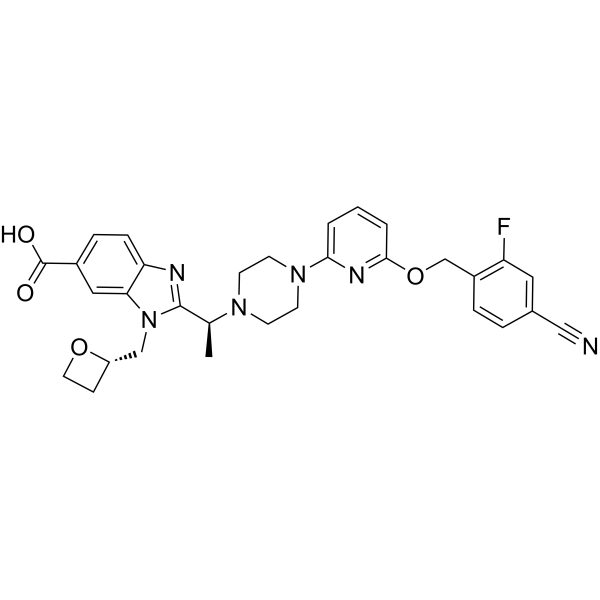 0 ImagesCat. No.: HY-153816CAS No.: 2775376-50-4GLP-1 receptor agonist 12 (compound 20A) is an agonist of GLP Receptor. GLP-1 receptor agonist 12 can be used in the study of diseases such as diabetes.
-
AGFAGDDAPR
 0 ImagesCat. No.: HY-P60234ACAS No.: 330204-04-1AGFAGDDAPR is a bioactive peptide that is a competitive and orally effective inhibitor of dipeptidyl peptidase-IV (DPP-IV). AGFAGDDAPR can enhance the level of GLP-1 in the body by inhibiting DPP-IV, thereby stimulating insulin secretion, improving β-cell function, and inhibiting abnormal proliferation of α-cells, exerting anti-diabetic effects. AGFAGDDAPR can be used for research on type 2 diabetes.
-
Survodutide sodium
 0 ImagesCat. No.: HY-P4146BPurity: 99.10%Synonyms: BI 456906 sodiumSurvodutide (BI 456906) sodium is a potent, selective glucagon receptor/GLP-1 receptor (GCGR/GLP-1R) dual agonist with EC50s of 0.52 nM and 0.33 nM in CHO-K1 cells, respectively. Survodutide sodium, a 29-amino-acid peptide, is a potent acylated peptide containing a C18 fatty acid. Survodutide sodium has robust anti-obesity efficacy achieved by increasing energy expenditure and decreasing food intake.
-
Pal-Glu(OSu)-OH
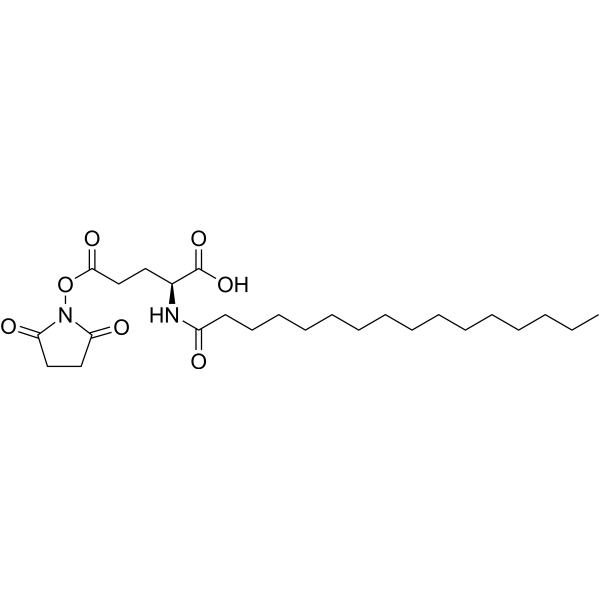 0 ImagesPal-Glu(OSu)-OH is a side chain of Liraglutide. Liraglutide is a glucagon-like peptide-1 (GLP-1) receptor agonist that can be used for type 2 diabetes mellitus research.
-
PROTAC G9a/GLP degrader 1
 0 ImagesCat. No.: HY-178065Purity: 98.22%PROTAC G9a/GLP degrader 1 is a PROTAC degrader targeting G9a/GLP histone methyltransferases, with DC50 values of 336 nM and 988 nM against G9a and GLP, respectively. PROTAC G9a/GLP degrader 1 reduces H3K9me2 levels, inhibits breast cancer cell migration, and has no effect on cell viability. PROTAC G9a/GLP degrader 1 can be used in breast cancer-related research.
-
GLP-1 receptor agonist 13
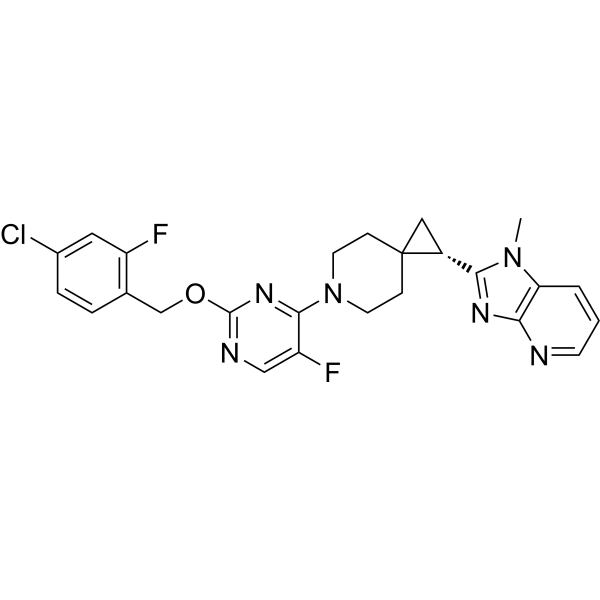 0 ImagesCat. No.: HY-155147CAS No.: 3053993-37-3GLP-1 receptor agonist 13 (compound (S)-9) is a glucagon GLP-1 receptor agonist with EC50 of 76 nM.
-
Sitagliptin phosphate (Standard)
 0 ImagesSynonyms: MK-0431 phosphate (Standard)Sitagliptin (MK-0431) phosphate (Standard) is the analytical standard of Sitagliptin phosphate (HY-13749A). This product is intended for research and analytical applications. Sitagliptin phosphate is an orally active and highly selective DPP4 inhibitor with an IC50 value of 19 nM. Sitagliptin phosphate blocks the degradation of glucagon-like peptide-1 (GLP-1) and glucose-dependent insulinotropic peptide (GIP) by competing inhibition mechanism (Kᵢ = 1 nM), thereby increasing the level of active incretin. Sitagliptin phosphate can also directly stimulate the secretion of GLP-1 by intestinal L cells by activating the cAMP/PKA and ERK1/2 pathways, and this effect is independent of DPP-4. Sitagliptin phosphate shows protective effects on pancreatic islet grafts in 1-type diabetes models. Sitagliptin phosphate can be used for the study of 1-type and 2-type diabetes.
-
Efmedaglutide alfa
 0 ImagesCat. No.: HY-P990989CAS No.: 2919801-97-9HY-P990989 is an GLP-1 receptor-targeting Fusion Protein.

-
HAEGT
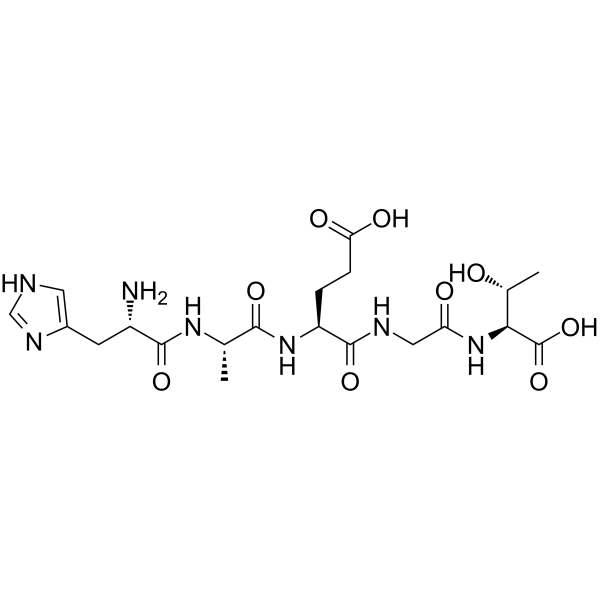 0 ImagesHAEGT is the first N-terminal 1-5 residues of glucagon like peptide-1 (GLP-1) peptide, and the sequence is His-Ala-Glu-Gly-Thr. HAEGT acts as a competitive substrate for probing prime substrate binding sites of human dipeptidyl peptidase-IV (DPP-IV) 1, in which the N-terminal His-Ala is catalyzed cleavage by DPP-IV. HAEGT can be used in the research of diabetes, obesity.