



GLP Receptor
GLP Receptor
The GLP receptors contain two family members, GLP-1 receptor (GLP1R, or GLP-1R) and GLP-2 receptor (GLP2R or GLP-1R), activated by the glucagon-like peptides (GLPs). GLPs are s secreted by intestinal cells; causes insulin release; inhibits glucagon secretion, appetite, and energy intake; and delays gastric emptying because GLP receptors are located on the gut, pancreas, brainstem, hypothalamus, and vagal-afferent nerves. GLP-1 has only one known receptor, GLP1R, and regulates gut motility, appetite, islet function, and glucose homeostasis, whereas GLP-2, the agonist of GLP2R, enhances intestinal nutrient absorption. GLP-1R agonists are used to treat diabetes and obesity, and a GLP-2R agonist is approved to treat short bowel syndrome. An investigation of the actions of GLP receptor activation on gallbladder motility has demonstrated that GLP-2 receptor activation increases gallbladder volume in vivo and decreases spontaneous activity in GBSM bundles ex vivo. Like the inhibitory transmitters, which elicit their actions via an adenylate cyclase-protein kinase A-KATP channel pathway, the GLP-2 receptor signals through this same pathway.
All Product Categories
-
GLP Receptor Inhibitors
(17)
View all products
-
GLP Receptor Agonists
(148)
View all products
-
GLP Receptor Antagonists
(9)
View all products
-
GLP Receptor Activators
(14)
View all products
-
GLP Receptor Modulators
(8)
View all products
-
GLP Receptor Inducer
(1)
View all products
-
GLP Receptor Degrader
(1)
View all products
-
GLP Receptor Controls
(2)
View all products
-
GLP Receptor Ligands
(2)
View all products
-
GLP Receptor Related Products (232)
Related Products (232)

-
Antibodies (1)
-
2-Oleoylglycerol
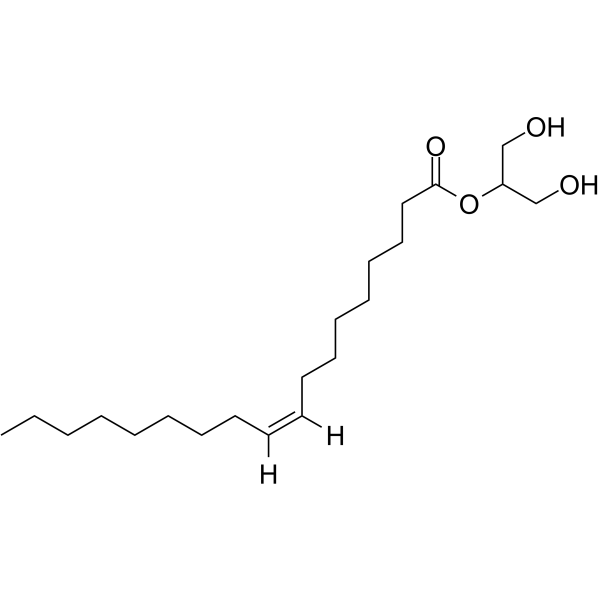 0 ImagesSynonyms: 2-OG2-Oleoylglycerol (2-OG) is a lipid found in the diet. It is a GPR119 agonist, with an EC50 value of 2.5 μM in activating hGPR119 in transiently transfected COS-7 cells. 2-Oleoylglycerol enhances the inflammatory response of macrophages and promotes fibrosis by activating the GPR119/TAK1/NF-κB/TGF-β1 signaling pathway. It also stimulates glucagon-like peptide 1 (GLP-1) secretion in vivo. 2-Oleoylglycerol is expected to be used in the research of non-alcoholic steatohepatitis (NASH) .
-
Sitagliptin phosphate monohydrate
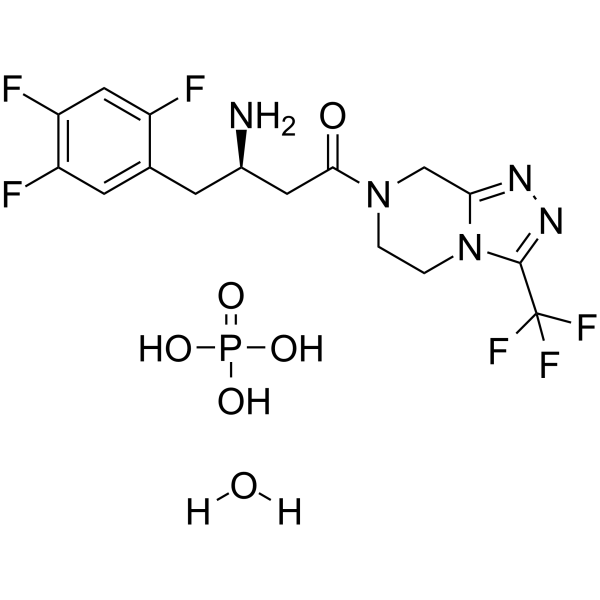 0 ImagesSynonyms: MK-0431 phosphate monohydrateSitagliptin (MK-0431) phosphate monohydrate is an orally active and highly selective DPP4 inhibitor with an IC50 value of 19 nM. Sitagliptin phosphate monohydrate blocks the degradation of glucagon-like peptide-1 (GLP-1) and glucose-dependent insulinotropic peptide (GIP) by competing inhibition mechanism (Kᵢ = 1 nM), thereby increasing the level of active incretin. Sitagliptin phosphate monohydrate can also directly stimulate the secretion of GLP-1 by intestinal L cells by activating the cAMP/PKA and ERK1/2 pathways, and this effect is independent of DPP-4. Sitagliptin phosphate monohydrate shows protective effects on pancreatic islet grafts in 1-type diabetes models. Sitagliptin phosphate monohydrate can be used for the study of 1-type and 2-type diabetes.
-
Aleniglipron
 0 ImagesSynonyms: GSBR-1290Aleniglipron (GSBR-1290) is an orally active glucagon-like peptide-1 receptor (GLP-1R) agonist, with an EC50 value of less than 0.1 nM in HDB cell lines in cAMP stimulation assays. Aleniglipron selectively activates the Gαs-cAMP signaling pathway of GLP-1R without β-arrestin recruitment. Aleniglipron induces insulin release, promotes glucose clearance, reduces food intake and decreases body weight. Aleniglipron is applicable to research related to type 2 diabetes and obesity.
-
Tryptophan-cholic acid
 0 ImagesSynonyms: Trp-CATryptophan-cholic acid (Trp-CA) is a microbial amino acid-conjugated bile acid that acts as an endogenous ligand and agonist (EC50=9.6 μM) for the orphan G protein-coupled receptor (GPCR) MRGPRE (Mas-related G protein-coupled receptor family member E). Tryptophan-cholic acid is orally effective but has poor oral absorption and does not cross the blood-brain barrier. Tryptophan-cholic acid promotes the secretion of glucagon-like peptide GLP-1, thereby improving glucose tolerance in diabetic mice. Tryptophan-cholic acid improves glucose tolerance, promotes insulin secretion, and alleviates high-fat diet-induced hepatic steatosis without causing pruritus side effects. Tryptophan-cholic acid is primarily used in research on type 2 diabetes (T2D).
-
tBuO-Ste-Glu(AEEA-AEEA-OH)-OtBu
 0 ImagesSynonyms: Semaglutide side chaintBuO-Ste-Glu(AEEA-AEEA-OH)-OtBu is an intermediate in the synthesis of the glucagon-like peptide 1 receptor (GLP-1R) agonist Semaglutide (HY-114118). tBuO-Ste-Glu(AEEA-AEEA-OH)-OtBu exhibits a strong binding affinity to albumin and can be used to modify SN38 prodrugs to improve tumor distribution.
-
Semaglutide-13C6,15N TFA
 0 ImagesCat. No.: HY-114118S3Semaglutide-13C6,15N TFA is the 13C- and 15N-labeled Semaglutide TFA (HY-114118A). Semaglutide TFA is a long-acting, selective, competitive GLP-1R agonist that can penetrate the blood-brain barrier. After activating GLP-1R, Semaglutide TFA promotes insulin secretion, inhibits gastric emptying and appetite, and at the same time enhances autophagy, inhibits oxidative stress and apoptosis. Semaglutide TFA also regulates mitochondrial function and lipid metabolism (such as reducing de novo lipogenesis in the liver). Semaglutide TFA has activities such as lowering blood sugar, reducing weight, neuroprotection (such as improving motor function in Parkinson's disease models, reducing α-synuclein aggregation) and improving hepatic steatosis. Semaglutide TFA can be used for the study of neurodegenerative diseases and liver diseases such as type 2 diabetes, obesity, Parkinson's disease, metabolic associated fatty liver disease (MASLD), and cancer.
-
CT-996
 0 ImagesSynonyms: RO7795081; RG6652CT-996 is an orally active GLP-1RA agonist with an EC50 of 0.49 nM. CT-996 reduces the recruitment of β-arrestin and the internalization of GLP-1R. CT-996 suppresses postprandial blood glucose in mice expressing human GLP-1 receptors and enhances glucose-stimulated insulin secretion (GSIS) in obese monkeys during intravenous glucose challenge. CT-996 can be used for the research of type 2 diabetes (T2D) and obesity.
-
GLP-1 (7-36), amide, biotin labeled
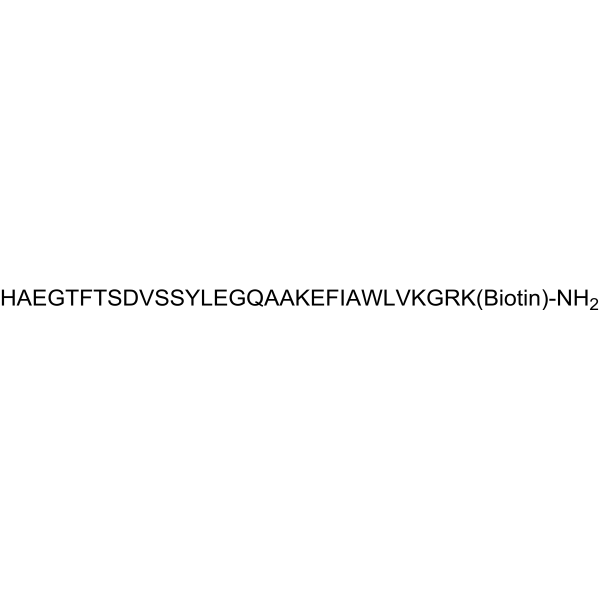 0 ImagesSynonyms: GLP-1 (7-36)-Lys(biotin)-amide
-
Semaglutide (crude)
 0 ImagesCat. No.: HY-114118CPCAS No.: 910463-68-2Semaglutide (crude) is the crude form of Semaglutide (HY-114118). Semaglutide is a long-acting, selective, competitive GLP-1R agonist that can penetrate the blood-brain barrier. After activating GLP-1R, Semaglutide promotes insulin secretion, inhibits gastric emptying and appetite, and at the same time enhances Autophagy, inhibits oxidative stress and Apoptosis. Semaglutide also regulates mitochondrial function and lipid metabolism (such as reducing de novo lipogenesis in the liver). Semaglutide has activities such as lowering blood sugar, reducing weight, neuroprotection (such as improving motor function in Parkinson's disease models, reducing α-synuclein aggregation) and improving hepatic steatosis. Semaglutide can be used for the study of neurodegenerative diseases and liver diseases such as type 2 diabetes, obesity, Parkinson's disease, metabolic associated fatty liver disease (MASLD), and cancer.
-
V-0219
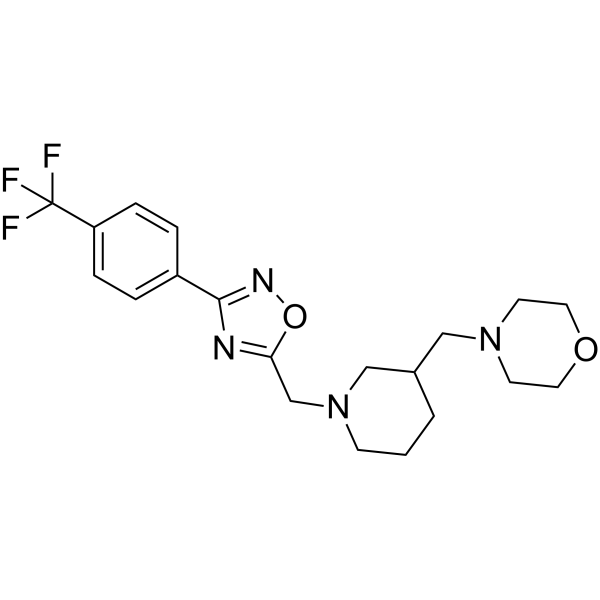 0 ImagesV-0219 is an orally active glucagon-like peptide-1 receptor (GLP-1R) positive allosteric modulator. V-0219 potentiates GLP-1R stimulation, and enhances GLP-1-induced cAMP production and insulin secretion. V-0219 potentiates glucose-dependent insulin secretion. V-0219 improves glucose handling in normal and diabetic rodents. V-0219 can be used for the research of obesity-associated diabetes.
-
GLP-1R/GIPR agonist-1 (soduim)
 0 ImagesCat. No.: HY-P10302APurity: 98.24%GLP-1R/GIPR agonist-1 sodium is a dual GLP-1/GIP receptor agonist, with an EC50 of 0.57 nM for GLP-1R and an EC50 of 0.75 nM for GIPR. GLP-1R/GIPR agonist-1 sodium reduces food intake, inhibits weight gain, repairs islet damage, improves glucose tolerance, regulates serum lipid and liver enzyme levels, ameliorates hepatic vacuolization, reduces hepatic fat accumulation, delays the progression of hepatic fibrosis, and exhibits long-lasting hypoglycemic activity. GLP-1R/GIPR agonist-1 sodium can be used in research related to type 2 diabetes, obesity, and non-alcoholic steatohepatitis.
-
Liraglutide-13C5,15N tetraTFA
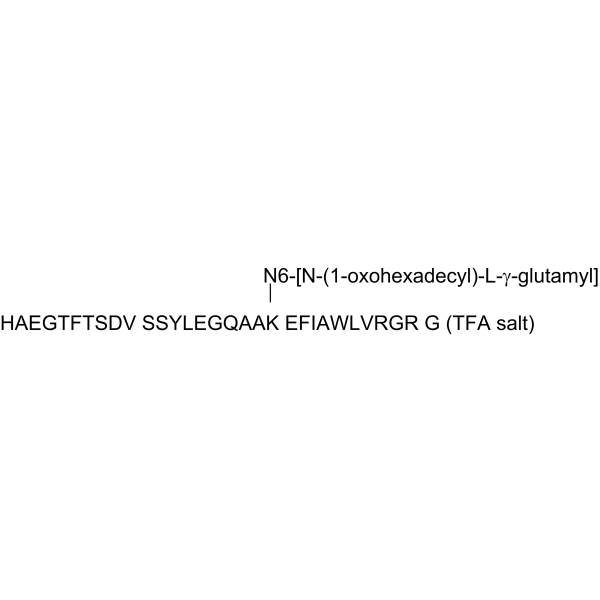 0 ImagesCat. No.: HY-P0014S1Liraglutide-13C6,15 tetraTFA is the 13C and 15N labeled Liraglutide (HY-P0014). Liraglutide is a glucagon-like peptide-1 (GLP-1) receptor agonist used for the study of type 2 diabetes mellitus.
-
IUB0271 hydrochloride
 0 ImagesCat. No.: HY-P11321APurity: 98.67%Synonyms: acyl-GIP hydrochlorideIUB0271 hydrochloride (acyl-GIP hydrochloride) is a glucose-dependent insulinotropic polypeptide receptor (GIPR) agonist with blood-brain barrier permeability. IUB0271 hydrochloride activates the GIPR signaling pathway, inhibits food intake and weight gain, and induces cFos neuron activation in the area postrema. IUB0271 hydrochloride enhances lipid clearance and induces systemic fatty acid oxidation. IUB0271 hydrochloride improves dyslipidemia, reduces atherosclerotic plaque formation and decreases adipocyte volume. IUB0271 hydrochloride can be used in studies related to obesity, dyslipidemia and atherosclerosis.
-
RG7697
 0 ImagesCat. No.: HY-P10271Purity: 99.90%Synonyms: NNC0090-2746; MAR709; RO6811135RG7697 is a dual agonist for glucagon-like peptide receptor (GLP Receptor) and glucosedependent insulinotropic polypeptide receptor (GIPR), with EC50 of 5 and 3 pM, respectively. RG7697 exhibits antihyperglycemic property.
-
GLP-1 moiety from Dulaglutide
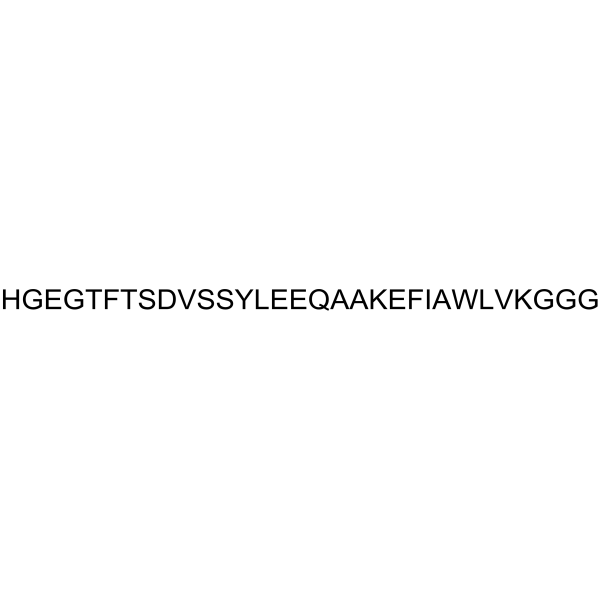 0 ImagesSynonyms: [Gly8,36,Glu22]-GLP-1 (7-37)GLP-1 moiety from Dulaglutide ([Gly8,36,Glu22]-GLP-1 (7-37)) is a 31-amino acid fragment derived from Dulaglutide (HY-P0120). GLP-1 moiety from Dulaglutide is a DPP-4-modified GLP-1 analog carrying the [Gly8,36,Glu22] sequence mutation, which acts as a GLP-1 receptor agonist. GLP-1 moiety from Dulaglutide covalently links to the human IgG4 Fc fragment and constitutes a part of the dulaglutide recombinant fusion protein. GLP-1 moiety from Dulaglutide exhibits glucose-dependent insulinotropic activity. GLP-1 moiety from Dulaglutide can be used in research related to type 2 diabetes.
-
Naperiglipron
 0 ImagesSynonyms: LY3549492Naperiglipron (LY3549492) is an orally active Glucagon-like peptide 1 receptor (GLP-1R) agonist with an EC50 of 1.14 nM for hGLP-1R. Naperiglipron significantly decreases the level of blood glucose in GLP-1R knock-in mouse models. Naperiglipron inhibits PDE10A1 enzyme activity (IC50: 7.43 μM) with a weak hERG inhibitory activity. Naperiglipron can be used for type II diabetes mellitus (T2DM) and obesity research.
-
Colesevelam hydrochloride
 0 ImagesCat. No.: HY-106539CAS No.: 182815-44-7Colesevelam hydrochloride is an orally active bile acid sequestrant, lipid-lowering agent, and glycemic control agent. Colesevelam hydrochloride binds bile acids in the gastrointestinal tract to form nonabsorbable complexes, interrupts enterohepatic recirculation and increases fecal bile acid elimination. Colesevelam hydrochloride modulates FXR, TGR5, and Cyp7a1 activity and triggers cAMP signaling and GLP-1 release. Colesevelam hydrochloride alters hepatic lipid and glucose metabolism, suppresses hepatic glycogenolysis, reduces hepatic triglyceride and cholesterol levels, and increases LDL-C (low-density lipoprotein cholesterol) clearance. Colesevelam hydrochloride can be used for the research of type 2 diabetes mellitus, hypercholesterolemia, and alcohol-related liver disease.
-
Cinnamtannin A2
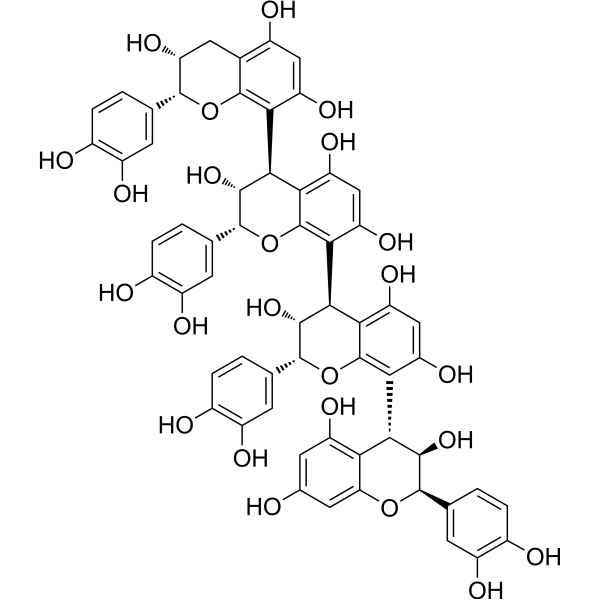 0 ImagesCat. No.: HY-N9536CAS No.: 86631-38-1
-
Delphinidin 3-rutinoside chloride
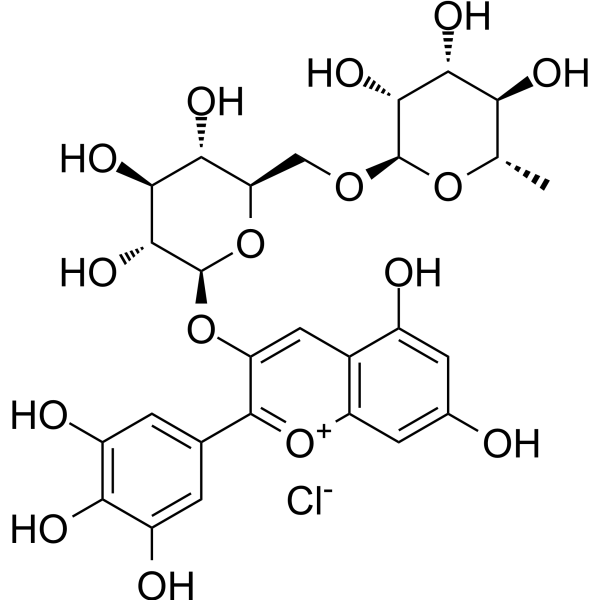 0 ImagesSynonyms: Delphinidin 3-O-rutinoside chlorideDelphinidin 3-rutinoside chloride is an anthocyanin component. Delphinidin 3-rutinoside chloride is isolable from the fruits of blackcurrant Ribes nigrum L. Delphinidin 3-rutinoside chloride activates the ETB receptor and stimulates the NO/cGMP pathway. Delphinidin 3-rutinoside chloride increases cyclic guanosine monophosphate production and reduces the phosphorylation level of Myosin regulatory light chain. Delphinidin 3-rutinoside chloride stimulates GLP-1 secretion. It significantly induces relaxation of bovine ciliary muscle strips contracted by ET-1 and inhibits ET-1-induced contraction of bovine ciliary muscle strips. Delphinidin 3-rutinoside chloride is applicable to research related to type 2 diabetes.
-
(4S)-GLP-1 receptor agonist 14
 0 Images(4S)-GLP-1 receptor agonist 14 is a potent and orally active GLP-1 receptor agonist with an EC50 ≤ 20 nM. (4S)-GLP-1 receptor agonist 14 can be used for research on diabetes, obesity, metabolic diseases, cardiovascular diseases, liver diseases, nonalcoholic steatohepatitis (NASH), and other diseases associated with GLP-1 receptor.




