mAChR
Muscarinic acetylcholine receptor
mAChRs (muscarinic acetylcholine receptors) are acetylcholine receptors that form G protein-receptor complexes in the cell membranes of certainneurons and other cells. They play several roles, including acting as the main end-receptor stimulated by acetylcholine released from postganglionic fibersin the parasympathetic nervous system. mAChRs are named as such because they are more sensitive to muscarine than to nicotine. Their counterparts are nicotinic acetylcholine receptors (nAChRs), receptor ion channels that are also important in the autonomic nervous system. Many drugs and other substances (for example pilocarpineand scopolamine) manipulate these two distinct receptors by acting as selective agonists or antagonists. Acetylcholine (ACh) is a neurotransmitter found extensively in the brain and the autonomic ganglia.
mAChR Isoform Specific Products
All Product Categories
-
mAChR Inhibitors
(114)
View all products
-
mAChR Agonists
(146)
View all products
-
mAChR Antagonists
(320)
View all products
-
mAChR Activators
(20)
View all products
-
mAChR Modulators
(48)
View all products
-
mAChR Inducer
(1)
View all products
-
mAChR Controls
(9)
View all products
-
mAChR Ligands
(8)
View all products
-
mAChR Related Products (719)
Related Products (719)

-
Antibodies (2)
-
mAChR Isoform Comparison
-
Tazomeline
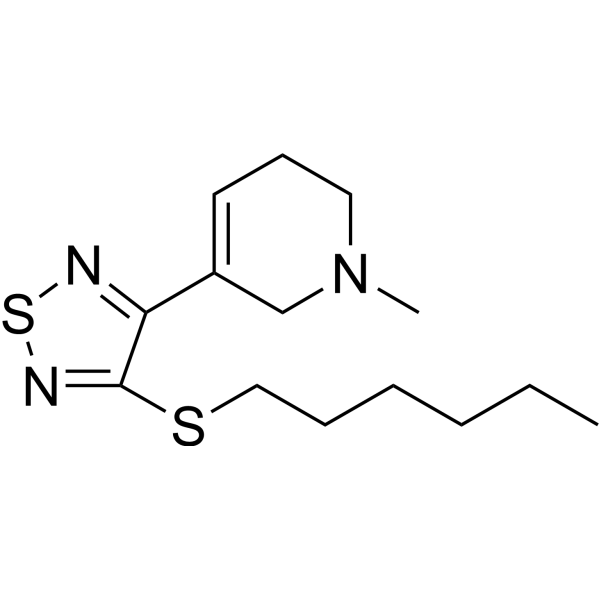 0 ImagesTazomeline is a selective M1 muscarinic receptor agonist. Tazomeline inhibits twitch height in rabbit vas deferens(IC50= 0.001 nM). Tazomeline can be used for research of neuropsychiatric disorders.

-
(Rac)-AF710B
 0 ImagesCat. No.: HY-116586ACAS No.: 1235733-73-9
-
VU6009453
 0 ImagesCat. No.: HY-119363CAS No.: 2148929-11-5VU6009453 (compound 15q) is a brain-penetrant M4 mAChR positive allosteric modulator (PAM) with an EC50 of 383 nM. VU6009453 can be used for research on neurological diseases.
-
Methacholine iodide
 0 ImagesMethacholine iodide is a potent muscarinic-3 (M3) agonist. Methacholine iodide acts directly on acetylcholine receptors on smooth muscle causing bronchoconstriction and airway narrowing. Methacholine iodide shows a high sensitivity to identify bronchial hyperresponsiveness (BHR). Methacholine iodide can be used to measure airway hyperresponsiveness (AHR) as a diagnostic aid in the assessment of individuals with asthma-like symptoms and normal resting expiratory flow rates.
-
M1/M2/M4 muscarinic agonist 3
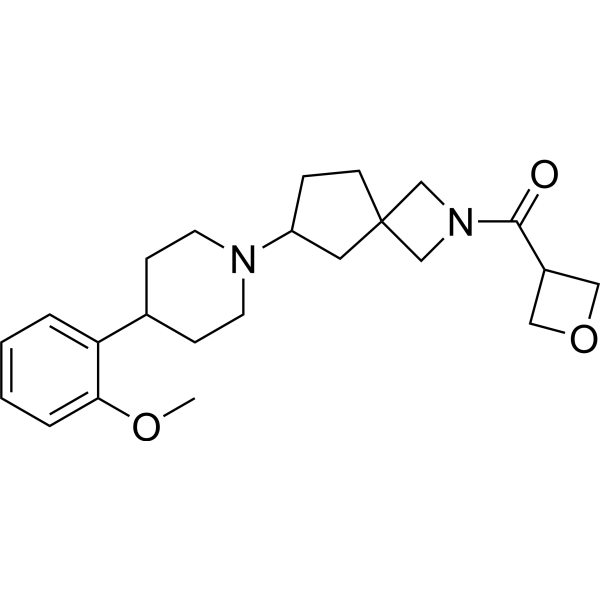
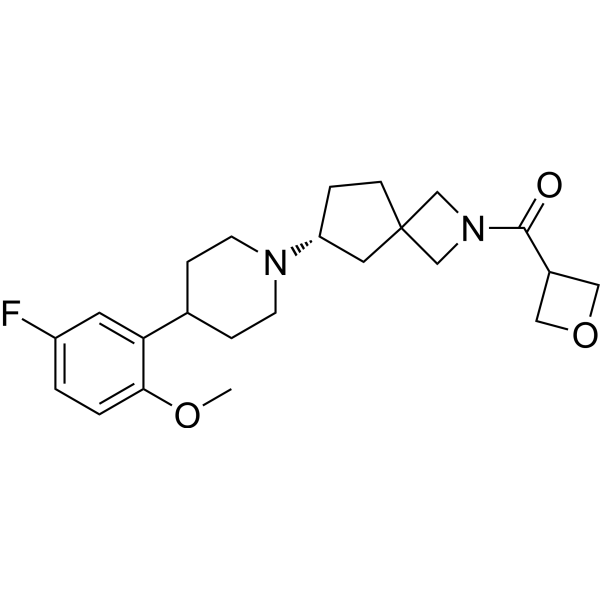 0 ImagesCat. No.: HY-149733CAS No.: 2640109-28-8M1/M2/M4 muscarinic agonist 3 (compound 45) is a muscarinic mAChR M1/M2/M4 agonist with EC50s of 3.2 nM, 32 nM and 1.7 nM, respectively.
-
GSK1034702 hydrochloride
 0 ImagesCat. No.: HY-107111ACAS No.: 932373-86-9GSK1034702 hydrochloride is an orally active and allosteric agonist of M1 mAChR (pEC50=8.1) that can cross the blood-brain barrier. GSK1034702 hydrochloride activates the Gq/11 protein-mediated signaling pathway, enhancing neuronal firing and long-term potentiation (LTP) in the CA1 region of the hippocampus. GSK1034702 hydrochloride can modulate hippocampal function, improve memory encoding in the nicotine withdrawal cognitive dysfunction model, and show pro-cognitive effects in rodents. GSK1034702 hydrochloride can be used for the study of the mechanisms of cognitive impairment diseases such as Alzheimer's disease, and has certain peripheral M receptor activation-related side effects (such as gastrointestinal reactions).
-
VU0364572
 0 ImagesCat. No.: HY-113616CAS No.: 1240514-87-7VU0364572 is a selective allosteric agonist of the M1 muscarinic receptor with an EC50 of 0.11 μM. VU0364572 has neuroprotective potential for preventing memory impairments and reducing neuropathology in Alzheimer’s Disease. VU0364572 is orally active and is CNS penetrant.
-
β2AR/M3-receptor agonist-1
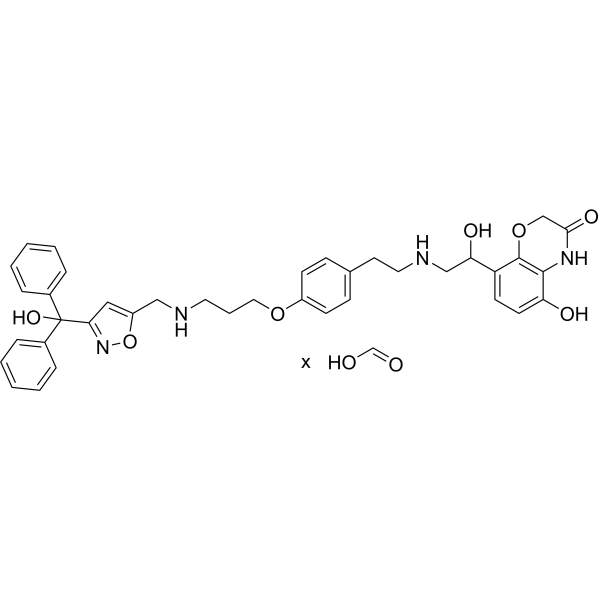 0 ImagesCat. No.: HY-148526CAS No.: 1206887-00-4β2AR/M3-receptor agonist-1 (example 9) is a potent β2AR and M3 receptor agonist. β2AR/M3-receptor agonist-1 shows M3 receptor affinity with a pIC50 value of 9.3. β2AR/M3-receptor agonist-1 has the potential for the research of respiratory tract disorders.
-
Milameline
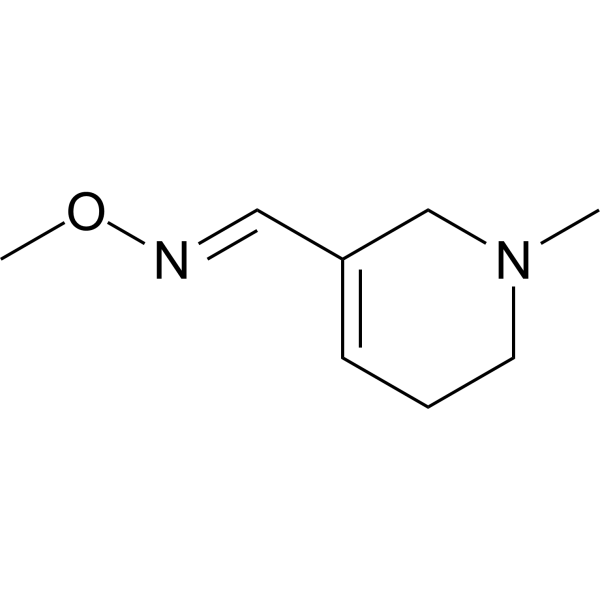 0 ImagesCat. No.: HY-135460CAS No.: 139886-32-1Synonyms: CI-979; RU35926Milameline (CI-979; RU35926) is a nonselective, partical and orally active muscarinic receptor agonist that improves cognition. Milameline has equal affinity for different subtypes of human muscarinic receptors with IC50 of 1.3 µM for M1-, 1.1 µM for M2-, 1.5 µM for M3-, and 1.9 µM for M4-muscarinic receptors. Milameline has a higher affinity for sites [3H]CMD (IC50 = 20 nM), than [3H]QNB, (IC50 = 3059 nM). Milameline produces both central and peripheral cholinergic effects and reverses the cognitive deficits induced by Scopolamine (HY-N0296). Milameline can be used for the study of Alzheimer’s Disease.
-
Xanomeline-d11
 0 ImagesCat. No.: HY-105182SCAS No.: 2475185-31-8Synonyms: LY-246708-d11Xanomeline-d11 (LY-246708-d11) is the deuterium labeled Xanomeline (HY-105182). Xanomeline, as an effective and selective muscarinic type 1 and type 4 (M1/M4) receptor agonist, increases neuronal excitability. Xanomeline can be used for the research of neurological disorders, such as schizophrenia.
-
Nebracetam
 0 ImagesCat. No.: HY-113970CAS No.: 97205-34-0Synonyms: WEB 1881 FUNebracetam (WEB 1881 FU) is an orally active M1 muscarinic receptor agonist. Nebracetam can induce an increase in intracellular Ca2+ concentration, with an EC50 value of 1.59 mM. Nebracetam exhibits neuroprotective activity and the ability to improve cognitive impairment. Nebracetam can be used in the research of neurological diseases such as Alzheimer's disease.
-
LU-25-077
 0 ImagesCat. No.: HY-169814CAS No.: 221549-70-8Lu 25-077 is a brain-penetrant and pharmacologically active N-demethyl metabolite of Lu 25-109 (HY-101586), a partial M1 agonist and M2/M3 antagonist. Lu 25-077 can be utilized in neurological research.
-
AC-42
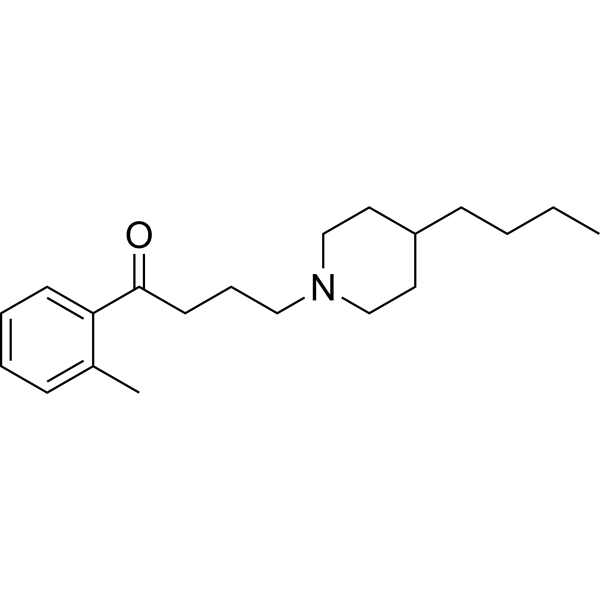 0 ImagesCat. No.: HY-118806CAS No.: 244291-63-2AC-42 is a poent M1 muscarinic selective allosteric agonist with EC50s of 805 nM and 220 nM for human wild-type and Y381A mutated M1 receptors, respectively. AC-42 stimulates the IP-accumulation and calcium mobilization in CHO cells.
-
N-Desmethylclozapine (Standard)
 0 ImagesSynonyms: Norclozapine (Standard); Desmethylclozapine (Standard); Normethylclozapine (Standard)N-Desmethylclozapine (Standard) is the analytical standard of N-Desmethylclozapine. This product is intended for research and analytical applications. N-Desmethylclozapine is a major active metabolite of the atypical antipsychotic agent Clozapine. N-Desmethylclozapine is a potent, allosteric and partial M1 receptors agonist (EC50=115 nM) and is able to potentiate hippocampal N-methyl-d-aspartate (NMDA) receptor currents through M1 receptor activation. N-Desmethylclozapine is also a δ-opioid agonist.
-
Bethanechol-d6 chloride
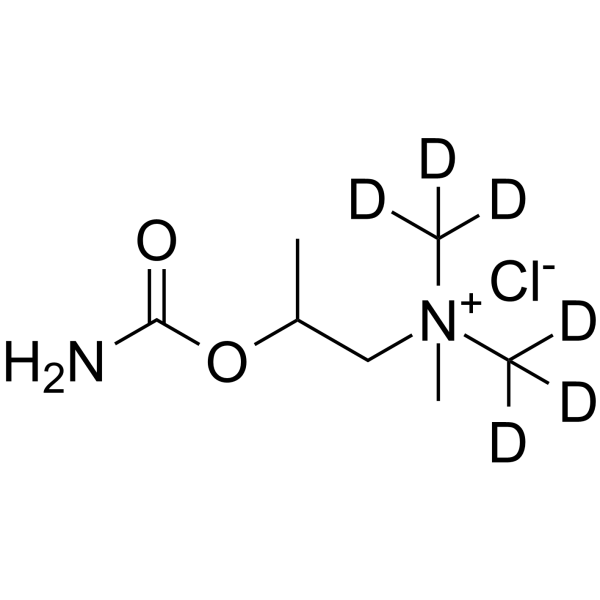 0 ImagesCat. No.: HY-B0406ASSynonyms: Carbamyl-β-methylcholine-d6 chlorideBethanechol-d6 (chloride) is the deuterium labeled Bethanechol chloride. Bethanechol chloride (Carbamyl-β-methylcholine chloride), a parasympathomimetic agent, is a mAChR agonist that exerts its effects via directly stimulating the mAChR (M1, M2, M3, M4, and M5) of the parasympathetic nervous system.
-
L-687306
 0 ImagesCat. No.: HY-120418CAS No.: 133444-98-1L-687306 is a high affinity muscarinic M1 receptor partial agonist with activity as a partial agonist of M1 receptors in rat ganglia and as a high affinity competitive antagonist at guinea pig cardiac M2 and ileal M3 muscarinic receptors, useful for studying the receptor reserve of muscarinic receptors.
-
SR-46559A
 0 ImagesCat. No.: HY-19142CAS No.: 137733-33-6SR-46559A is a muscarinic agonist. SR-46559A can be used in the research of social olfactory recognition.
-
RS-86
 0 ImagesRS-86 is a potent, central acting, and selective muscarinic acetylcholine receptor agonist. RS-86 exhibits typical cholinergic excitatory effects, such as inducing smooth muscle contraction, ganglion depolarization, central hypothermia, etc. RS-86 can be used for research on Alzheimer's disease.