



mTOR
Mammalian target of Rapamycin
mTOR (mammalian target of Rapamycin) is a protein that in humans is encoded by the mTOR gene. mTOR is a serine/threonine protein kinase that regulates cell growth, cell proliferation, cell motility, cell survival, protein synthesis, and transcription. mTOR belongs to the phosphatidylinositol 3-kinase-related kinase protein family. mTOR integrates the input from upstream pathways, including growth factors and amino acids. mTOR also senses cellular nutrient, oxygen, and energy levels. The mTOR pathway is dysregulated in human diseases, such as diabetes, obesity, depression, and certain cancers. Rapamycin inhibits mTOR by associating with its intracellular receptor FKBP12. The FKBP12-rapamycin complex binds directly to the FKBP12-Rapamycin Binding (FRB) domain of mTOR, inhibiting its activity.
mTOR Isoform Specific Products
All Product Categories
-
mTOR Inhibitors
(516)
View all products
-
mTOR Agonists
(8)
View all products
-
mTOR Antagonist
(1)
View all products
-
mTOR Activators
(73)
View all products
-
mTOR Modulators
(16)
View all products
-
mTOR p53 Inhibitor
(1)
View all products
-
mTOR Degraders
(2)
View all products
-
mTOR Control
(1)
View all products
-
mTOR Substrate
(1)
View all products
-
mTOR Ligands
(2)
View all products
-
mTOR Related Products (660)
Related Products (660)

-
Antibodies (14)
-
mTOR Signaling Pathway
-
mTOR Isoform Comparison
-
T133
 0 ImagesCat. No.: HY-181650CAS No.: 3101627-06-6T133 is an orally active ATP-competitive mTOR inhibitor with an IC50 of 0.34 nM and a Ki of 0.17 nM. T133 suppresses phosphorylation of AKT, S6K1, and 4EBP1. T133 inhibits cancer cell proliferation and migration, induces apoptosis, cell cycle arrest, and autophagy. T133 exhibits dose-dependent antitumor efficacy in xenograft mouse models. T133 can be used for the research of cancer, such as gastric cancer and lung cancer.

-
PD-1/PD-L1-IN-62
 0 ImagesCat. No.: HY-182048PD-1/PD-L1-IN-62 is a PD-L1 inhibitor and mTOR modulator. PD-1/PD-L1-IN-62 inhibits PD-L1 with an IC50 of 6.9 nM and abrogates immune suppression mediated by the PD-1/PD-L1 pathway. By inhibiting mTOR phosphorylation and downregulating the downstream target SREBP1, PD-1/PD-L1-IN-62 significantly reduces cholesterol and triglyceride levels to decrease lipid accumulation. PD-1/PD-L1-IN-62 promotes the infiltration of CD3+CD8+ T cells into tumor tissues, thereby effectively inhibiting tumor growth. PD-1/PD-L1-IN-62 can be used for the research of hepatocellular carcinoma.
-
Phenformin-d5 hydrochloride
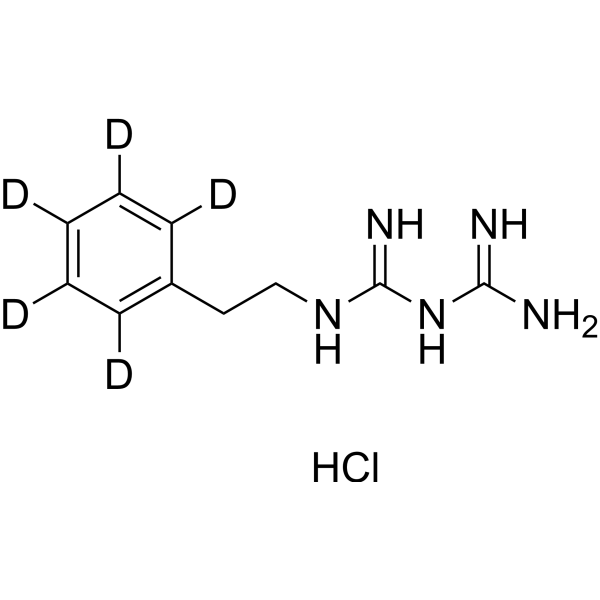 0 ImagesCat. No.: HY-16397ASSynonyms: Phenethylbiguanide-d5 hydrochloridePhenformin-d5 (Phenethylbiguanide-d5) hydrochloride is the deuterium labeled Phenformin hydrochloride. Phenformin hydrochloride is an orally active biguanide hypoglycemic agent. Phenformin hydrochloride inhibits mitochondrial respiratory chain complex I, leading to an increased AMP/ATP ratio, activation of AMPK, and subsequent inhibition of the mTOR pathway, thereby suppressing cell proliferation, inducing apoptosis and autophagy. Phenformin hydrochloride inhibits cancer stem cells (CSCs) and possesses potent antitumor potential.
-
CAII-IN-12
 0 ImagesCat. No.: HY-180056CAII-IN-12 (compound 6c) is a potent and selective carbonic anhydrase (CA) II and VII inhibitor (hCA II Ki = 47.8 nM, hCA VII Ki = 3.6 nM) with anti-epilepitic activity. CAII-IN-12 displays selectivity over hCA I (Ki = 370 nM). CAII-IN-12 exhibits potent anticonvulsant activity in both Pentylenetetrazol- and Pilocarpine (HY-B0726A)-induced seizure mouse models. CAII-IN-12 increases expression of KCC2 in the hippocampus, maintains neuronal integrity, and reduces mTOR activity. CAII-IN-12 can be used for epilepsy research.
-
Usenamine A
 0 ImagesCat. No.: HY-N20711CAS No.: 1428417-60-0Usenamine A is an orally active natural dibenzofuran compound with multiple biological activities such as anti-inflammatory and anticancer effects. Usenamine A inhibits the AKT/mTOR/STAT3/ID1 signaling axis and induces ubiquitin-proteasome degradation of ID1. Usenamine A targets the TNF-TNFR2 complex, inhibits RGS2, and interferes with Myosin-9/actin cytoskeleton remodeling. Usenamine A induces apoptosis, autophagy and ROS-mediated endoplasmic reticulum stress in cancer cells, inhibits cancer cell proliferation and invasion, and reduces the production of pro-inflammatory cytokines. Usenamine A alleviates arthritis-related symptoms. Usenamine A can be used in studies related to liver cancer, non-small cell lung cancer, rheumatoid arthritis and ankylosing spondylitis.
-
MT-44
 0 ImagesCat. No.: HY-178431CAS No.: 2966790-70-3MT-44 is a highly selective and potent mTOR inhibitor with an IC50 of 49.4 nM. MT-44 can inhibit cancer cells proliferation, migration and invasion. MT-44 can induce cells apoptosis and ROS production and cause G2/M phase arrest. MT-44 can activate the cGAS/STING pathway. MT-44 can be used for the research of cancer, such as triple-negative breast cancer.
-
PI3K/mTOR Inhibitor-5
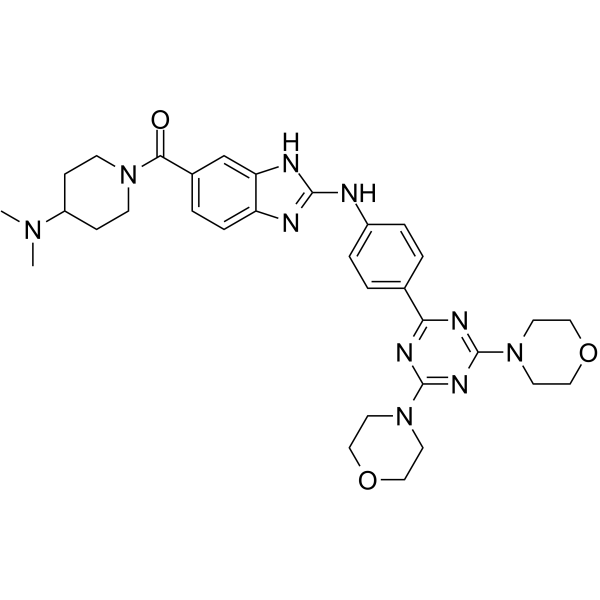 0 ImagesCat. No.: HY-146016CAS No.: 2456295-60-4
-
Anti-Mouse E-Cadherin/CD324 Antibody (DECMA-1)
 0 ImagesCat. No.: HY-P990248Anti-Mouse E-Cadherin/CD324 Antibody (DECMA-1) is an anti-mouse E-Cadherin/CD324 IgG1 monoclonal antibody. Anti-Mouse E-Cadherin/CD324 Antibody (DECMA-1) can downregulate the HER signaling axis and PI3K/Akt/mTOR signaling pathway. Anti-Mouse E-Cadherin/CD324 Antibody (DECMA-1) can inhibit the proliferation of tumor cells and induce their apoptosis. Anti-Mouse E-Cadherin/CD324 Antibody (DECMA-1) can be used for researches on cancer and inflammation conditions such as breast cancer, chronic compression injury (CCI) and asthma.
-
C-VGB3
 0 ImagesCat. No.: HY-P10833C-VGB3 is a selective vascular endothelial growth factor receptor 2 (VEGFR2) antagonist, which inhibits VEGFR2-mediated PI3K/AKT/mTOR and PLCγ/ERK1/2 signaling pathways. C-VGB3 binds to the extracellular domain of VEGFR2, blocking ligand-receptor interaction and inducing apoptosis in endothelial and tumor cells through both intrinsic (involving Bcl2 family and caspases) and extrinsic (death receptor-mediated) pathways. C-VGB3 is promising for research of angiogenesis-related cancers, such as breast cancer.
-
EGFR-IN-192
 0 ImagesCat. No.: HY-181097EGFR-IN-192 is an anticancer agent. EGFR-IN-192 inhibits EGFR (IC50: 0.12 μM), downregulates the HIF-VEGF and PI3K/AKT/mTOR pathways, upregulates the tumor suppressor gene PTEN, and induces cell cycle arrest and apoptosis in tumor cells. EGFR-IN-192 exhibits antitumor activity and can be used in tumor research.
-
Levomilnacipran
 0 ImagesCat. No.: HY-14794ACAS No.: 96847-54-0Synonyms: (1S,2R)-Milnacipran; F2695Levomilnacipran ((1S,2R)-Milnacipran) is the enantiomer of Milnacipran (HY-B0168) and a strong substrate of P-gp that can cross the blood-brain barrier. Levomilnacipran is a serotonin and norepinephrine reuptake inhibitor, with IC50 values of 10.5 nM and 19.0 nM, and Ki values of 92.2 nM and 1.2 nM for human norepinephrine transporter (NET) and serotonin transporter (SERT), respectively. Levomilnacipran has antidepressant and anxiolytic activities. Levomilnacipran hydrochloride can be used for the research of depression.

-
PF-05139962
 0 ImagesCat. No.: HY-108338CAS No.: 1393712-18-9
-
22-(4′-py)-JA
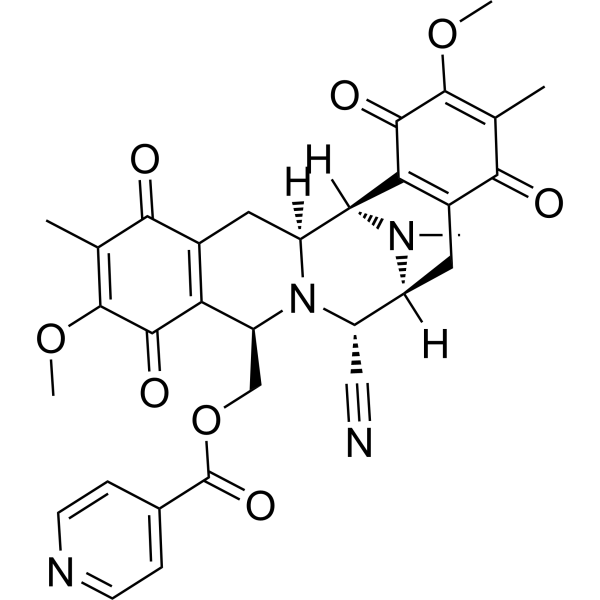 0 ImagesCat. No.: HY-155721CAS No.: 1178895-15-2Synonyms: 22-4′-Pyridinecarbonyl jorunnamycin A22-(4′-py)-JA is a semisynthetic derivative of junamycin A (JA) that can be isolated from the Thai blue sponge (Xestospongia sp.). 22-(4′-py)-JA has antimetastatic activity and can inhibit AKT/mTOR/p70S6K signaling. 22-(4′-py)-JA inhibits tumor cell invasion and tube formation in human umbilical vein endothelial cells (HUVEC), downregulates metalloproteinases (MMP-2 and MMP-9), hypoxia-inducible factor 1α (HIF-1α) and vascular endothelial growth factor (VEGF). 22-(4′-py)-JA has potent anticancer activity against non-small cell lung cancer (NSCLC).
-
DHW-221
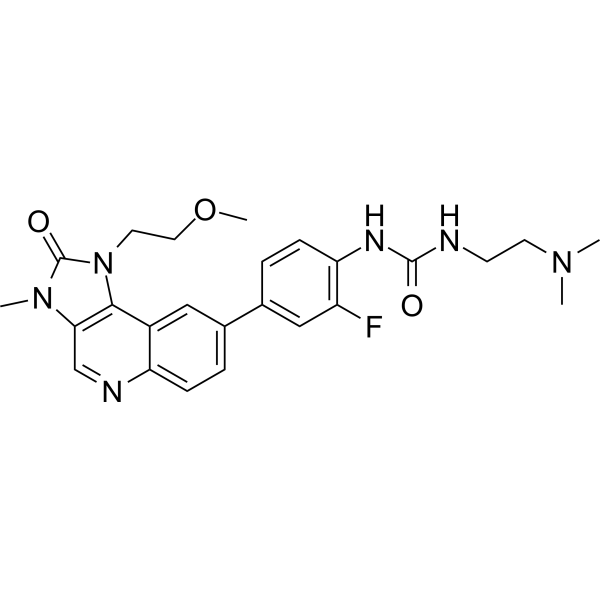
 0 ImagesCat. No.: HY-130133CAS No.: 2378831-21-9DHW-221 is a potent orally active dual PI3K/mTOR inhibitor, exhibiting low nanomolar potency against all four Class I PI3K isoforms and mTOR (PI3Kα, IC50 = 0.50 nM; PI3Kβ, IC50 = 1.9 nM; PI3Kγ, IC50 = 1.8 nM; PI3Kδ, IC50 = 0.74 nM; mTOR, IC50 = 3.9 nM). DHW-221 exerts antitumor effects by blocking the PI3K/Akt/mTOR pathway and inducing mitochondrial apoptosis and paraptosis (via Endoplasmic Reticulum (ER) stress and MAPK signaling) and arrests cell cycle, thereby inhibiting cell migration, invasion and angiogenesis. DHW-221 inhibits tumor growth in both the A549/Taxol (HY-B0015) and the HCC827 xenograft mouse models. DHW-221 can be used for non-small cell lung cancer (NSCLC), colon and breast cancer research.
-
RMC-4529
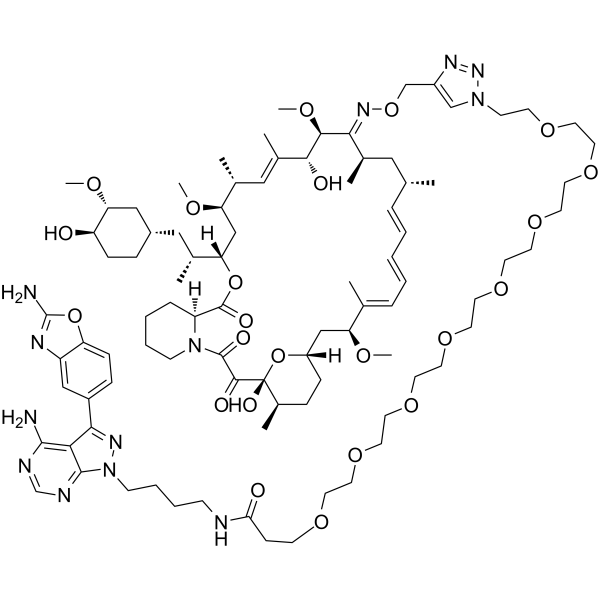 0 ImagesCat. No.: HY-115869CAS No.: 2250059-27-7RMC-4529 has an IC50 value of 1.0 nM against p-4E-BP1-(T37/46) in mTOR kinase cellular assay.




