



Phytohormone
Phytohormone
Phytohormones, also known as plant endogenous hormones or plant natural hormones, are a class of organic compounds synthesized by specific tissues within plants that regulate plant physiological activities in minute quantities. These hormones modulate various physiological processes in plants by either promoting or inhibiting them, thereby controlling plant growth, development, environmental adaptation, and different stages of the plant lifecycle. The major classes of known phytohormones include six categories: auxins, gibberellins, cytokinins, abscisic acid, and ethylene. Although these phytohormones are generally small, structurally simple molecules, their physiological effects are highly complex and diverse, influencing basic processes such as cell division, elongation, and differentiation. They also play a broad role in regulating important physiological phenomena such as germination, root formation, flowering, fruiting, sex determination, dormancy, and abscission[1].
Phytohormone Isoform Specific Products
All Product Categories
-
Phytohormone Related Products (71)
Related Products (71)

-
Phytohormone Isoform Comparison

-
AtPep1
 0 ImagesCat. No.: HY-P10400CAS No.: 902781-11-7AtPep1 is an endogenous inducer of innate immune responses. AtPep1 can be isolated from Arabidopsis thaliana leaves. AtPep1 activates the transcription of defensin (PDF1.2), the expression of PROPEP1, the synthesis of hydrogen peroxide (H2O2) near leaf veins, and the alkalization of Arabidopsis suspension cell culture medium. AtPep1 induces the expression of genes encoding defensins and PR-1. AtPep1 is applicable to studies related to Pythium irregulare infection and pathogen infection.
-
α-(2-Carboxycyclopropyl)glycine
 0 ImagesCat. No.: HY-114921CAS No.: 22255-17-0α-(2-Carboxycyclopropyl)glycine is a male sterilant. α-(2-Carboxycyclopropyl)glycine does not affect IAA (HY-18569B)-induced ethylene formation, does not induce ethylene biosynthesis, and resists conversion to ethylene in vitro or in wheat coleoptile segments.
-
Rhizonin A
 0 ImagesCat. No.: HY-129613CAS No.: 85803-92-5Rhizonin A is a cyclic heptapeptide that can be isolated from Rhizopus micro-sporus van Tieghem and can promote plant growth.
-
Raphanatin
 0 ImagesCat. No.: HY-123128CAS No.: 38165-56-9Raphanatin is a metabolite of radish seed and is active as a cytokinin.
-
GA3-AM (Standard)
 0 ImagesCat. No.: HY-126558RCAS No.: 1373154-68-7GA3-AM (Standard) is the analytical standard of GA3-AM. This product is intended for research and analytical applications. GA3-AM is a cell permeable analog of the plant hormone gibberellic acid that acts as a chemical dimerizer or chemical inducer of dimerization.
-
2-Pentylfuran (Standard)
 0 Images2-Pentylfuran (Standard) is the analytical standard of 2-Pentylfuran (HY-N7398). This product is intended for research and analytical applications. 2-Pentylfuran is the compound isolated from steam volatile oils obtained from potatoes at atmospheric pressure. 2-Pentylfuran is a phytohormone.
-
2-Pentylfuran-13C2
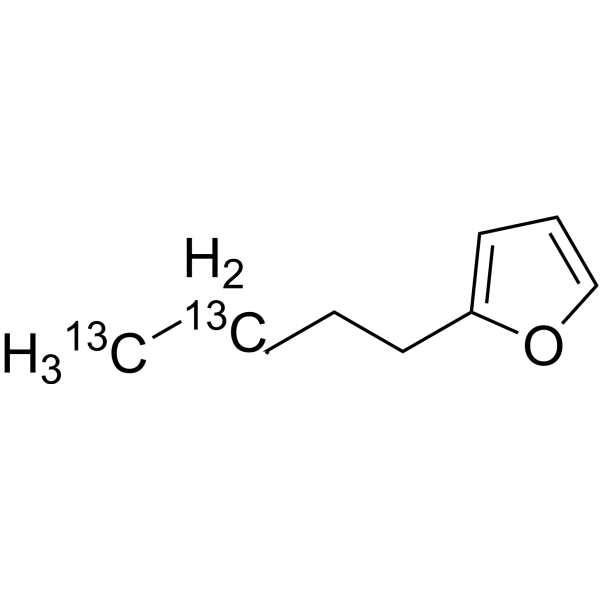 0 ImagesCat. No.: HY-N7398S2-Pentylfuran-13C2 is the 13C2 labeled 2-Pentylfuran (HY-N7398). 2-Pentylfuran is the compound isolated from steam volatile oils obtained from potatoes at atmospheric pressure. 2-Pentylfuran is a phytohormone.
-
Cyanamide-15N2
 0 ImagesCat. No.: HY-W720629CAS No.: 21420-37-1Cyanamide-15N2 is the 15N-labeled Cyanamide (HY-Y0070). Cyanamide is a cell division and plant growth inhibitor, as well as an allelochemical derived from Vicia villosa. Cyanamide inhibits root growth and biomass accumulation in a dose-dependent manner by disrupting the formation of mitotic spindles and phragmoplast complexes, reducing the number of mitotic cells and blocking the cell cycle. The effects of Cyanamide are partially reversible after removal from low-concentration environments. Cyanamide is also a specific inhibitor of aldehyde dehydrogenase (ALDH). Although Cyanamide has no direct effect on tumor growth, it can significantly enhance the anti-tumor efficacy of Cyclophosphamide (HY-17420) at non-toxic doses by inhibiting the inactivation of Cyclophosphamide. Cyanamide enables Cyclophosphamide to exert equivalent therapeutic effects at lower doses, effectively inhibiting the growth of primary and metastatic tumors and prolonging the lifespan of tumor-bearing mice. Cyanamide is commonly used in studies related to ha-1 hepatoma and rls lymphosarcoma.
-
3-O-Debenzoylzeylenone
 0 ImagesCat. No.: HY-N13800CAS No.: 1800008-77-83-O-Debenzoylzeylenone is a polyoxygenated cyclohexene plant growth hormone that exists in the leaves of Uvaria purpurea and the aerial parts of Uvaria grandiflora. 3-O-Debenzoylzeylenone is an auxin analog that inhibits root growth and promotes shoot growth of Lactuca sativa seedlings. 3-O-Debenzoylzeylenone exhibits cytotoxicity against various cancer cells and can be used in studies related to lung cancer, melanoma, epidermoid carcinoma, liver cancer, gastric cancer, colon adenocarcinoma, acute leukemia, breast cancer, and prostate cancer.
-
Ethychlozate
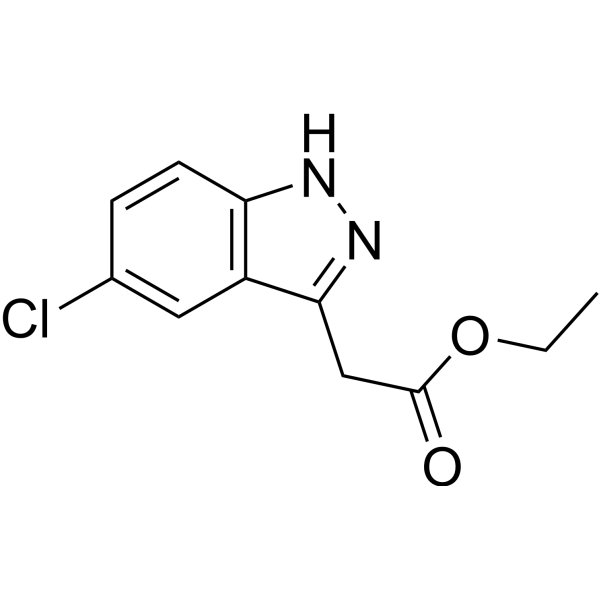 0 ImagesCat. No.: HY-W008769CAS No.: 27512-72-7Ethychlozate is a plant growth regulator on the promotion of flowering in citrus.
-
BH-IAA
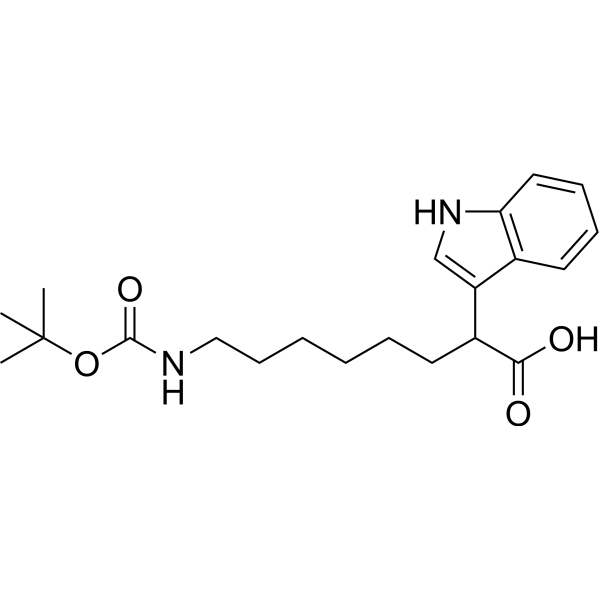 0 ImagesCat. No.: HY-113851CAS No.: 1020201-82-4
-
Herbicide safener-1
 0 ImagesCat. No.: HY-153727CAS No.: 1254310-00-3
-
SL agonist 1
 0 ImagesCat. No.: HY-169020CAS No.: 2375196-54-4SL agonist 1 is a Strigolactone (SL) agonist. SL agonist 1 can be recognized by the SL receptors OmKAI2d3 and OmKAI2d4, promoting the germination of Arabidopsis seeds.
-
Gibberellenic acid
 0 ImagesGibberellenic acid is an intermediate gibberellin compound with a tetracyclic diterpenoid skeleton, and can be generated by thermal decomposition of Gibberellic acid (GA3, HY-N1964) in aqueous solution. Gibberellenic acid is thermally unstable in water and can further convert into allogibberic acid (approximately 80%) and 9-epiallogibberic acid (approximately 10%). It plays an important role in the degradation pathway and structural elucidation of Gibberellins.
-
AAL1
 0 ImagesCat. No.: HY-187762CAS No.: 868215-90-1Synonyms: F1800-0169AAL1 is a synthetic auxin analog with weak auxin activity, which acts through the auxin receptor TIR1. AAL1 inhibits root and hypocotyl growth of dark-grown Arabidopsis thaliana seedlings, with growth inhibition IC50 values of approximately 20 μM and 50 μM, respectively. AAL1 activates the auxin signaling pathway, promotes DII-VENUS degradation and auxin-responsive gene expression, and its biological effects depend on the auxin influx and efflux transport systems. AAL1 can be used to study weak genetic interactions in the auxin signaling pathway and the regulation of auxin function by amino acids.
-
Chlorocholine chloride (Standard)
 0 ImagesChlorocholine (chloride) (Standard) is the analytical standard of Chlorocholine (chloride). This product is intended for research and analytical applications. Chlorocholine chloride is an effective plant growth regulator. Chlorocholine chloride can inhibit gibberellin (GA) biosynthesis. Chlorocholine chloride can be used for the research of the mechanisms and effects of GA on plant cell growth and differentiation.

-
(+)-Sorgomol
 0 ImagesCat. No.: HY-N15245CAS No.: 1011730-11-2
-
3-Pentanol (Standard)
 0 Images3-Pentanol (Standard) is an analytical reference standard of 3-Pentanol. 3-Pentanol is an active organic compound produced by plants and is a component of insect-released pheromones. 3-Pentanol can trigger plant immunity against microbial pathogens and pests in crops by activating the SA and JA signaling pathways.



