



Phytohormone
Phytohormone
Phytohormones, also known as plant endogenous hormones or plant natural hormones, are a class of organic compounds synthesized by specific tissues within plants that regulate plant physiological activities in minute quantities. These hormones modulate various physiological processes in plants by either promoting or inhibiting them, thereby controlling plant growth, development, environmental adaptation, and different stages of the plant lifecycle. The major classes of known phytohormones include six categories: auxins, gibberellins, cytokinins, abscisic acid, and ethylene. Although these phytohormones are generally small, structurally simple molecules, their physiological effects are highly complex and diverse, influencing basic processes such as cell division, elongation, and differentiation. They also play a broad role in regulating important physiological phenomena such as germination, root formation, flowering, fruiting, sex determination, dormancy, and abscission[1].
Phytohormone Isoform Specific Products
All Product Categories
-
Phytohormone Related Products (71)
Related Products (71)

-
Phytohormone Isoform Comparison
-
(±)-Jasmonic-L-isoleucine
 0 ImagesCat. No.: HY-142006APurity: 98.11%Synonyms: (±)-JA-L-Ile(±)-Jasmonic-L-isoleucine ((±)-JA-L-Ile) is a mixture of (±)-Jasmonic acid (HY-122464) and isoleucine isomers. (±)-Jasmonic-L-isoleucine is a phytohormone that participates in the jasmonic acid signaling pathway. (±)-Jasmonic-L-isoleucine regulates biological processes in plants, including defense responses, growth and development, and stress tolerance.
-
Glucobrassicin potassium
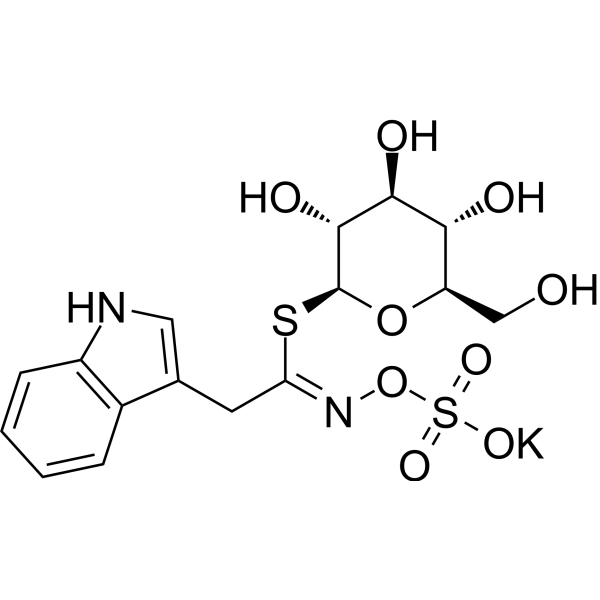 0 ImagesCat. No.: HY-N7659ACAS No.: 143231-38-3Glucobrassicin potassium is an indole-based anticancer agent and plant growth-regulating hormone. Glucobrassicin potassium exerts its biological activity by disrupting the integrity of microtubule networks in both plant and mammalian cells. At high concentrations, Glucobrassicin potassium inhibits seed germination and root growth; it can also specifically induce apoptosis in mammalian cancer cells and interfere with the intercellular transmission of viruses that rely on microtubules. In plants, Glucobrassicin potassium can be catalyzed by myrosinase to release growth-regulating substances, exhibiting a concentration-dependent growth-regulating effect.
-
Gibberellin A9
 0 ImagesGibberellin A9 is a plant hormone that targets gibberellin receptor GID1. Gibberellin A9 binds to GID1 to form a GA-GID1-DELLA protein complex, which promotes the degradation of DELLA proteins. This relieves the inhibitory effect of DELLA proteins on plant growth, thereby promoting plant cell elongation and division, and increasing seed germination rate. Gibberellin A9 is promising for use in studies on plant growth and development, such as stem elongation and flowering induction.
-
(rac)-Methyl jasmonate (Standard)
 0 Images(rac)-Methyl jasmonate (Standard) is the analytical standard of Methyl jasmonate. This product is intended for research and analytical applications. (rac)-Methyl jasmonate is the racemate of Methyl jasmonate (HY-135663). Methyl jasmonate is a phytohormone that regulates the defense response of plants under biotic and biotic stress through jasmonate signaling pathway. Methyl jasmonate inhibits the activation of NF-κB signaling pathway. Methyl jasmonate can promote the mitochondrial ROS production, but also scavenges free radicals and reduces the oxidative stress. Methyl jasmonate exhibits anti-inflammatory, antitumor, anticonvulsant, antinociceptive and sedative activities.
-
(-)-Jasmonoyl-L-isoleucine
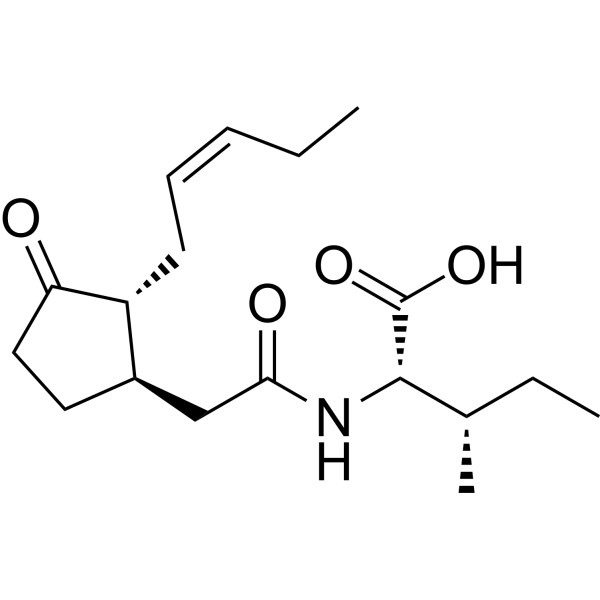 0 ImagesSynonyms: (-)-JA-L-Ile(-)-Jasmonoyl-L-isoleucine ((-)-JA-L-Ile) is an inactive hormone and jasmonic acid-amino acid conjugate, as well as a stereoisomer of (+)-7-iso-JA-L-Ile. (-)-Jasmonoyl-L-isoleucine fails to promote the formation of the COI1-JAZ protein complex. (-)-Jasmonoyl-L-isoleucine does not induce jasmonic acid-dependent phenotypic responses in Arabidopsis seedlings, including root growth inhibition and anthocyanin accumulation.
-
RALF1 peptide
 0 ImagesCat. No.: HY-P10229Purity: 99.33%RALF1 peptide, a polypeptide found in plant kingdom (as well as in fungi and bacteria), is a FERONIA (FER) modulator. RALF1 peptide mediates rapid net H+ influx across the plasma membrane, apoplast alkalinization, rapid reversible root growth inhibition, and non-transcriptional regulation.RALF1 peptide up-regulates auxin biosynthesis genes, activates canonical TIR1/AFB auxin signaling, and mediates sustained root growth inhibition. RALF1 peptide can be used for research on the regulation of plant growth and development.
-
JA-ACC
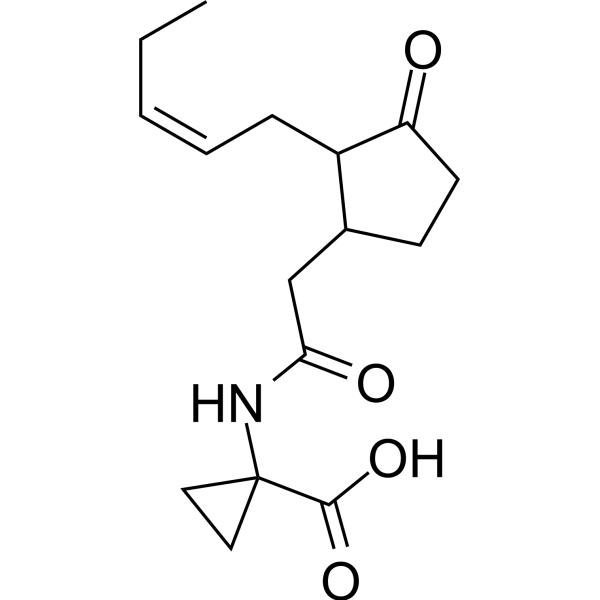 0 ImagesCat. No.: HY-151931CAS No.: 371778-55-1Synonyms: Jasmonyl-ACCJA-ACC (Jasmonyl-ACC) is a derivative of 1-aminocyclopropane-1-carboxylic acid (ACC). ACC is the direct precursor of the plant hormone ethylene. JA-ACC inhibits root growth in Arabidopsis and the inhibition is independent of jasmonic acid (JA) signaling.
-
TSPC
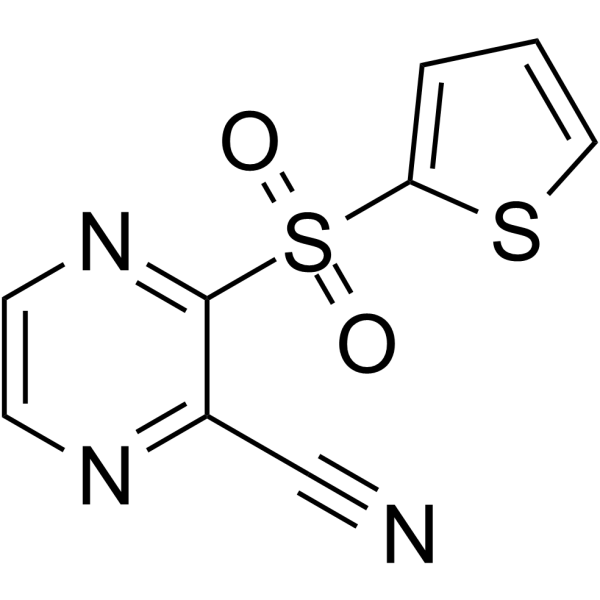 0 ImagesTSPC is a phytohormone gibberellin (GA) perception inhibitor with an IC50 value of 10 μM in vitro.
-
7-Methyl-1-naphthyl acetic acid
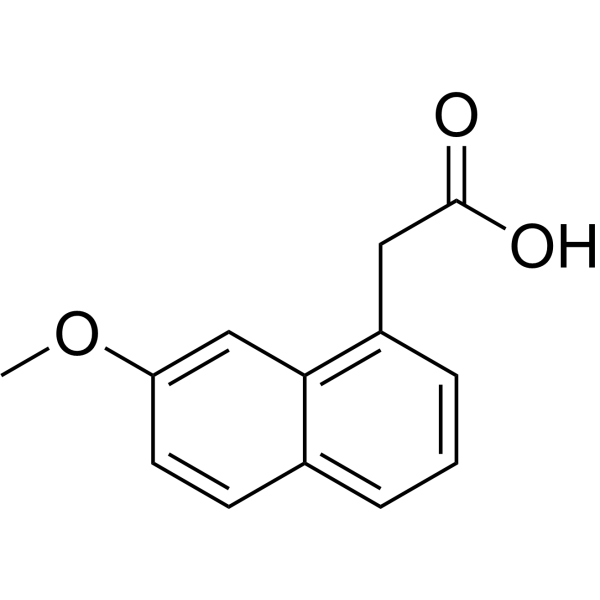 0 ImagesSynonyms: 7-Methoxy-NAA
-
(±)-Tuberonic Acid
 0 ImagesCat. No.: HY-W746984CAS No.: 221682-86-6(±)-Tuberonic acid is a derivative of the plant growth regulator jasmonic acid that has been found in M. oleifera.
-
Cyanamide
 0 ImagesCyanamide is a cell division and plant growth inhibitor, as well as an allelochemical derived from Vicia villosa. Cyanamide inhibits root growth and biomass accumulation in a dose-dependent manner by disrupting the formation of mitotic spindles and phragmoplast complexes, reducing the number of mitotic cells and blocking the cell cycle. The effects of Cyanamide are partially reversible after removal from low-concentration environments. Cyanamide is also a specific inhibitor of aldehyde dehydrogenase (ALDH). Although Cyanamide has no direct effect on tumor growth, it can significantly enhance the anti-tumor efficacy of Cyclophosphamide (HY-17420) at non-toxic doses by inhibiting the inactivation of Cyclophosphamide. Cyanamide enables Cyclophosphamide to exert equivalent therapeutic effects at lower doses, effectively inhibiting the growth of primary and metastatic tumors and prolonging the lifespan of tumor-bearing mice. Cyanamide is commonly used in studies related to ha-1 hepatoma and rls lymphosarcoma.

-
(E)-Nerolidol acetate
 0 Images(E)-Nerolidol acetate can be isolated from the oil of Biebersteinia multifida.
-
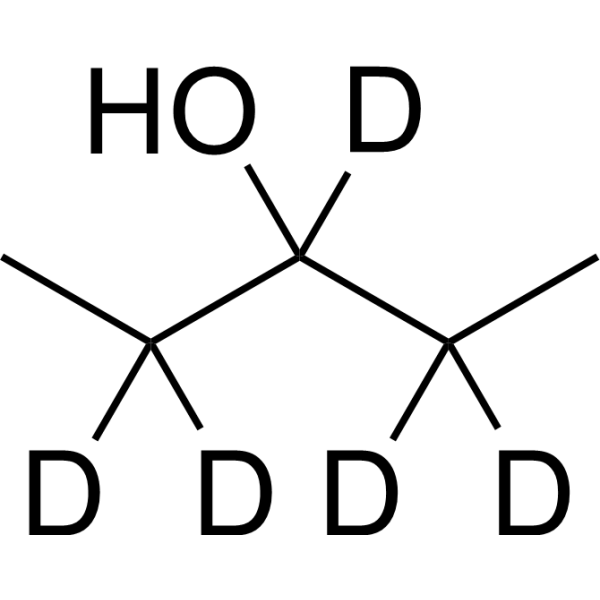
Naxillin
 0 ImagesCat. No.: HY-18573CAS No.: 301176-96-5
-
KeIKK5
 0 ImagesCat. No.: HY-176729KeIKK5 is a strigolactone (SL) biosynthesis inhibitor. KeIKK5 significantly reduces the level of 4-deoxystrigolactone (4-DO) in rice by inhibiting the activity of CYP711A enzyme. KeIKK5 can effectively inhibit the germination of root parasitic weeds. KeIKK5 can be used in the research of plant hormone regulation and new agricultural herbicides.
-
Gibberellin A5 (Standard)
 0 ImagesTrimipramine (Standard) is the analytical standard of Trimipramine. This product is intended for research and analytical applications. Trimipramine is a 5-HT receptor antagonist, with pKi binding values of 6.39, 8.10, 4.66 for 5-HT1C, 5-HT2 and 5-HT1A, respectively. Trimipramine is also a potent and selective inhibitor targeting human noradrenaline (hNAT), serotonin (hSERT) and organic cation transporters (hOCT1, hOCT2) with IC50 values of 4.99 μM, 2.11 μM, 3.72 μM, 8.00 μM, respectively. Trimipramine has vascular activity and anxiolytic efficacy.
-
Fujenal
 0 ImagesFujenal is a kaurene-type diterpenoid found in Gibberella fujikuroi. Fujenal shows moderate inhibition against HeLa tumor cells and acts as a gibberellin biosynthesis inhibitor. Fujenal is promising for research of plant growth regulators and antitumor agents.
-
(2R,3S)-Brassinazole
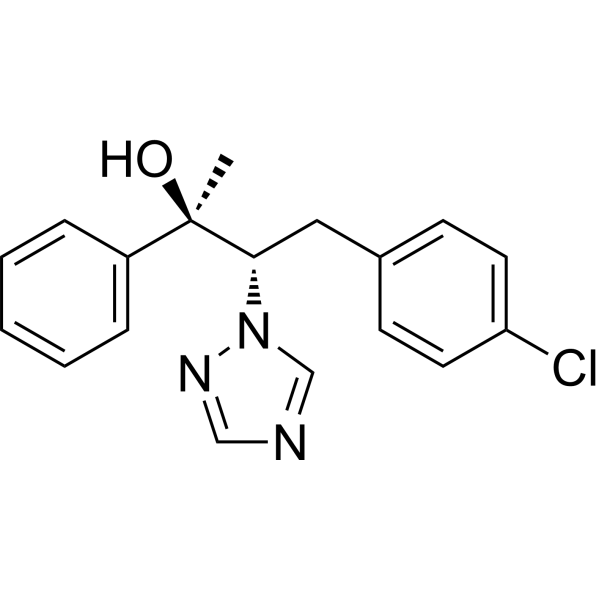 0 ImagesBrassinazole (0.5, 1, 5 μM) causes markedly deformed seedlings, whose morphology is similar to that of BR-deficient mutants. Brassinazole causes cress dwarfism, altering leaf morphology such as the typical downward curl and dark green appearance of Arabidopsis BR-deficient mutants. However, administration of 10 nM BR reversed dwarfism.



