



Succinate Dehydrogenase Inhibitor
-
Fluopyram
 0 Images
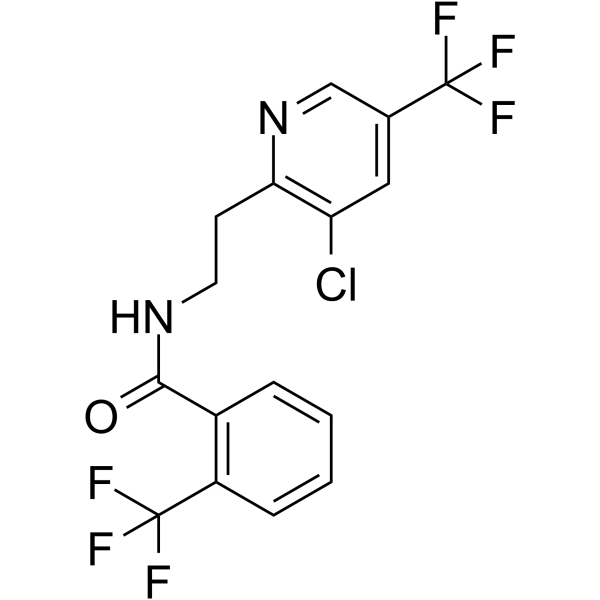
Fluopyram is an orally active succinate dehydrogenase inhibitor, antifungal and nematicide. Fluopyram inhibits succinate dehydrogenase activity, activates CAR/PXR nuclear receptors, and increases caspase-3, TNF-α and NF-κB. Fluopyram inhibits the growth of F. virguliforme, Botrytis cinerea and Alternaria solani with EC50 values of 3.35, 5.389 and 0.244 µg/mL, respectively. Fluopyram induces liver and thyroid tumor formation. Fluopyram is nephrotoxic and embryotoxic.
-
Boscalid
 0 Images
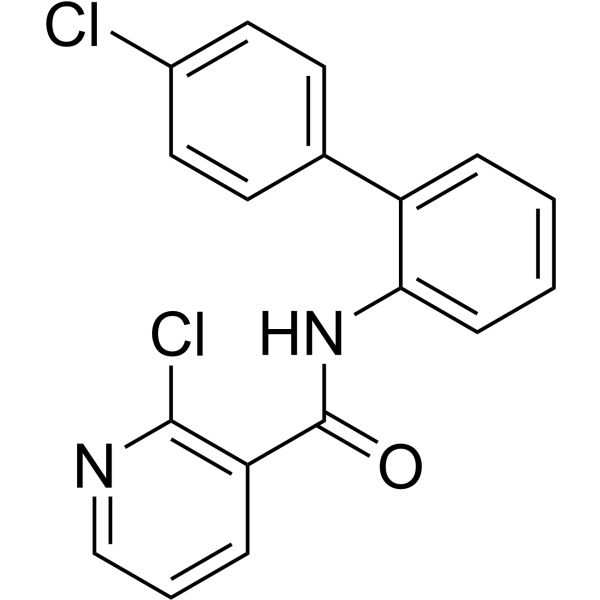
Boscalid is a succinate dehydrogenase (SDHI) inhibitor with antifungal activity. Boscalid binds to the ubiquinone-binding site of fungal mitochondrial complex II, blocks ATP production and aerobic respiration, exhibits good control efficacy against a variety of plant fungal diseases including gray mold, sclerotinia rot and powdery mildew, and is widely used for disease control in agriculture. Boscalid induces apoptosis, altered lipid metabolism, mitochondrial dysfunction, respiratory impairment, oxidative stress, ROS accumulation and neurodevelopmental disorders in zebrafish. Boscalid reduces foraging ability, shortens median death time and causes chronic toxicity in exposed honeybees. Boscalid also possesses genotoxicity, cytotoxicity, elevated mitochondrial superoxide levels and early-stage apoptosis.
-
Fluxapyroxad
 0 Images
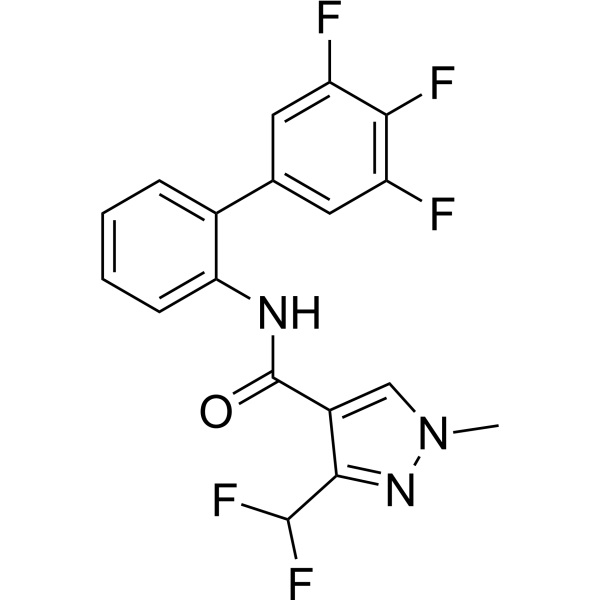
Fluxapyroxad is a synthetic broad-spectrum fungicide for the control of fungal diseases. Fluxapyroxad inhibits succinate dehydrogenase in complex II of the mitochondrial respiratory chain, resulting in inhibition of spore germination, germ tubes and mycelia growth within the fungus target species.
-
Flutolanil
 0 Images
Flutolanil is a succinate dehydrogenase complex inhibitor and fungicide. Flutolanil blocks electron transfer between the redox center of succinate dehydrogenase and coenzyme Q, inhibits mycelial oxygen consumption, and suppresses mycelial growth. Flutolanil induces acute and sublethal toxicity in zebrafish at different life stages. Flutolanil can be used in studies on plant disease control.
-
SDH-IN-47
 0 ImagesCat. No.: HY-187993
SDH-IN-47 is a succinate dehydrogenase (SDH) inhibitor, with an IC50 value of 1.80 μM against SDH from Botrytis cinerea. SDH-IN-47 binds to the active site of SDH, interferes with fungal growth, disrupts mycelial morphology and cell membrane integrity, and induces depolarization of mitochondrial membrane potential. SDH-IN-47 exhibits in vitro and in vivo antifungal activities against a variety of plant pathogenic fungi, including Botrytis cinerea, Phytophthora capsici, and Valsa mali, and can be used for studies on related fungal infections.
-
Succinate dehydrogenase-IN-12
 0 ImagesCat. No.: HY-182534CAS No.: 2110408-47-2
Succinate dehydrogenase-IN-12 is a selective inhibitor of mitochondrial complex II (succinate dehydrogenase), with an IC50 value of 3.3 nM. Succinate dehydrogenase-IN-12 can be used for tumor research.
-
Flubeneteram
 0 ImagesCat. No.: HY-182278CAS No.: 1676101-39-5
Flubeneteram is a succinate dehydrogenase inhibitor with an IC50 of 0.0484 μM. Flubeneteram disrupts succinate dehydrogenase activity. Flubeneteram demonstrates protective effects against Rhizoctonia solani and Sphaerotheca fuliginea in preclinical models. Flubeneteram can be used for research related to fungal infections.
-
Diethyl butylmalonate
 0 Images
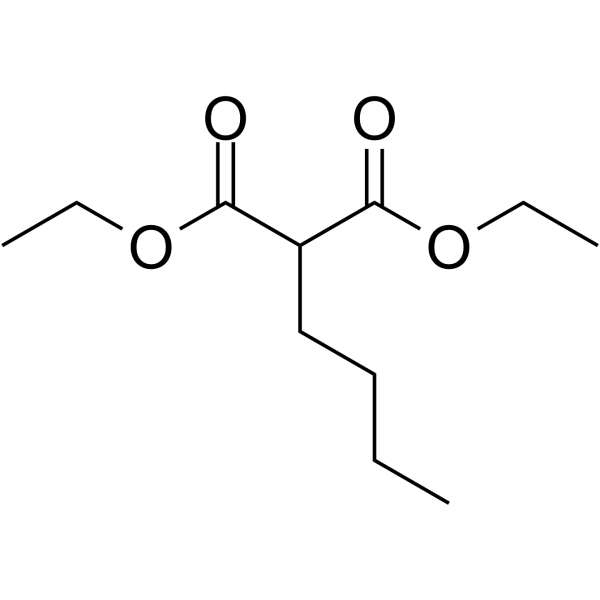
Diethyl butylmalonate is a competitive inhibitor of succinate dehydrogenase. Diethyl butylmalonate exerts anti-inflammatory effects by inhibiting ROS production. Diethyl butylmalonate also has neuroprotective activity. In addition, Diethyl butylmalonate shows toxicity to T. pyriformis, with its log(IGC50-1) being 0.557. Diethyl butylmalonate can be used in the research of diseases such as Alzheimer's disease.
-
BB2-50F
 0 Images
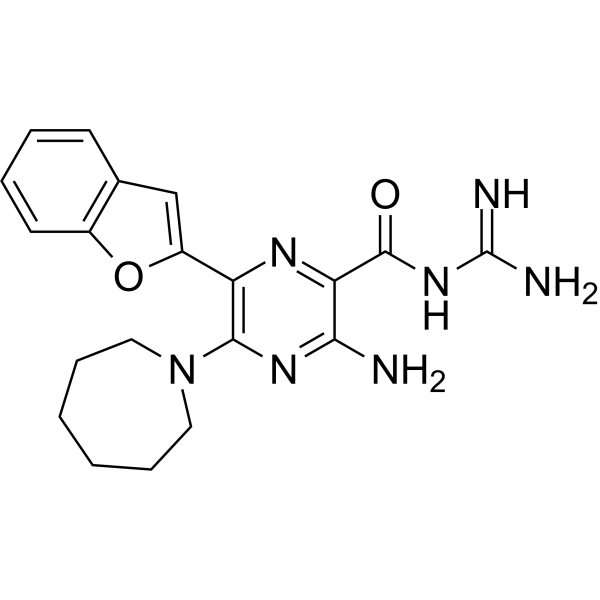
BB2-50F is an antimicrobial agent and succinate dehydrogenase and F1Fo-ATP synthase inhibitor. BB2-50F induces ROS. BB2-50F inhibits succinate oxidation and reduces tricarboxylic acid (TCA) cycle activity. BB2-50F inhibits the growth of Mycobacterium tuberculosis H37Rv and its auxotrophic, attenuated derivative mc2 6230 (ΔRD1, ΔpanCD) with an MIC of 8 μM.
-
Fluindapyr
 0 Images
Fluindapyr is a broad-spectrum pyrazolamide chiral fungicide of succinate dehydrogenase inhibitor (SDHIs) with broad bactericidal spectrum and good efficacy. Fluopimomide is effective against M. incognita in vitro and application of fuopimomide shows some growth promotion effect in cucumber.
-
3-Carene
 0 ImagesCat. No.: HY-N6663CAS No.: 13466-78-9
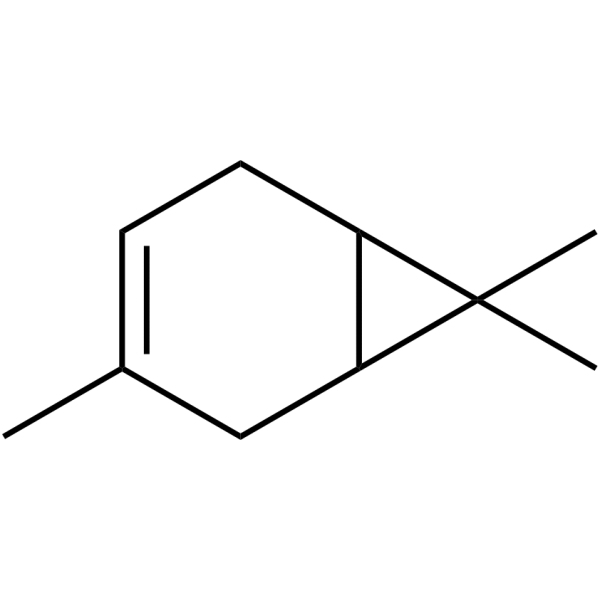
3-Carene is an orally active TCA cycle enzyme inhibitor. 3-Carene inhibits succinate dehydrogenase and malate dehydrogenase as well as pyruvate kinase, disrupting energy metabolism. 3-Carene disrupts cell wall and cell membrane integrity, leading to potassium ion leakage, protein leakage, membrane depolarization, ATP depletion, morphological disruption, and cell lysis. 3-Carene interferes with amino acid metabolism, pantothenate and CoA biosynthesis, purine and pyrimidine metabolism, and aminoacyl-tRNA biosynthesis. 3-Carene enhances GABA receptor-mediated synaptic responses. 3-Carene can be used in research on bacterial infections, inflammation, anxiety, and sleep disorders.
-
Isofetamid
 0 ImagesSynonyms: IKF-5411
Isofetamid (IKF-5411) is a succinate dehydrogenase inhibitor and a fungicide. Isofetamid exhibits good control effects against various fungal diseases such as gray mold, white mold, and powdery mildew. Isofetamid is promising for research of plant fungal diseases.
-
Boscalid-d4
 0 ImagesCat. No.: HY-119976SCAS No.: 2468796-76-9
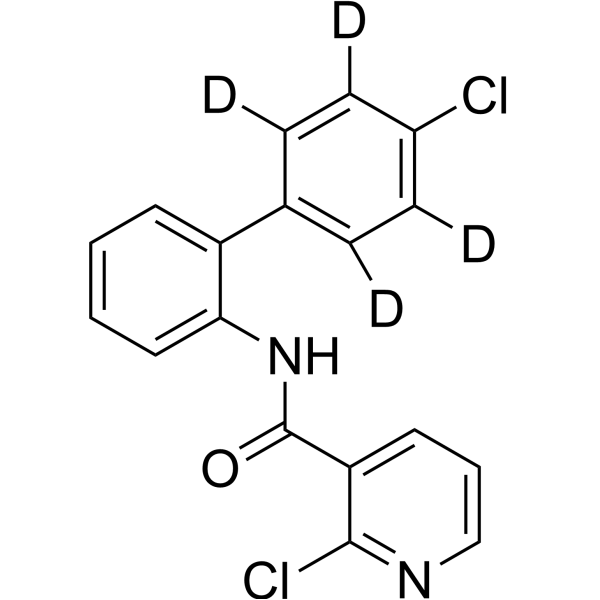
Boscalid-d4 is the deuterium labeled Boscalid. Boscalid is a succinate dehydrogenase (SDHI) inhibitor with antifungal activity. Boscalid binds to the ubiquinone-binding site of fungal mitochondrial complex II, blocks ATP production and aerobic respiration, exhibits good control efficacy against a variety of plant fungal diseases including gray mold, sclerotinia rot and powdery mildew, and is widely used for disease control in agriculture. Boscalid induces apoptosis, altered lipid metabolism, mitochondrial dysfunction, respiratory impairment, oxidative stress, ROS accumulation and neurodevelopmental disorders in zebrafish. Boscalid reduces foraging ability, shortens median death time and causes chronic toxicity in exposed honeybees. Boscalid also possesses genotoxicity, cytotoxicity, elevated mitochondrial superoxide levels and early-stage apoptosis.
-
Succinate dehydrogenase-IN-5
 0 Images
Succinate dehydrogenase-IN-5 (Compound M8) is the inhibitor for succinate dehydrogenase. Succinate dehydrogenase-IN-5 interfers with the energy metabolism and growth of fungi, inhibits Rhizoctonia solani, Sclerotinia sclerotiorum, Botrytis cinerea and Fusarium graminearum with EC50 < 0.3 μg/mL.
-
Boscalid (Standard)
 0 Images
Boscalid (Standard) is the analytical standard of Boscalid. This product is intended for research and analytical applications. Boscalid is a succinate dehydrogenase (SDHI) inhibitor with antifungal activity. Boscalid binds to the ubiquinone-binding site of fungal mitochondrial complex II, blocks ATP production and aerobic respiration, exhibits good control efficacy against a variety of plant fungal diseases including gray mold, sclerotinia rot and powdery mildew, and is widely used for disease control in agriculture. Boscalid induces apoptosis, altered lipid metabolism, mitochondrial dysfunction, respiratory impairment, oxidative stress, ROS accumulation and neurodevelopmental disorders in zebrafish. Boscalid reduces foraging ability, shortens median death time and causes chronic toxicity in exposed honeybees. Boscalid also possesses genotoxicity, cytotoxicity, elevated mitochondrial superoxide levels and early-stage apoptosis.
-
Fluopyram (Standard)
 0 Images
Fluopyram (Standard) is the analytical standard of Fluopyram (HY-119459). This product is intended for research and analytical applications. Fluopyram is an orally active succinate dehydrogenase inhibitor, antifungal and nematicide. Fluopyram inhibits succinate dehydrogenase activity, activates CAR/PXR nuclear receptors, and increases caspase-3, TNF-α and NF-κB. Fluopyram inhibits the growth of F. virguliforme, Botrytis cinerea and Alternaria solani with EC50 values of 3.35, 5.389 and 0.244 µg/mL, respectively. Fluopyram induces liver and thyroid tumor formation. Fluopyram is nephrotoxic and embryotoxic.
-
Succinate dehydrogenase-IN-2
 0 ImagesCat. No.: HY-163890CAS No.: 3023681-83-3
Succinate dehydrogenase-IN-2 (Compound 12x) is an inhibitor for succinate dehydrogenase (SDH) with an IC50 of 1.22 mg/L. Succinate dehydrogenase-IN-2 exhibits antifungal activity, that inhibits S. sclerotiorum, V. mali, G. graminis, R. solani and B. cinerea with EC50 of 0.52-3.42 mg/L.
-
SDH-IN-12
 0 ImagesCat. No.: HY-163284CAS No.: 3027210-28-9
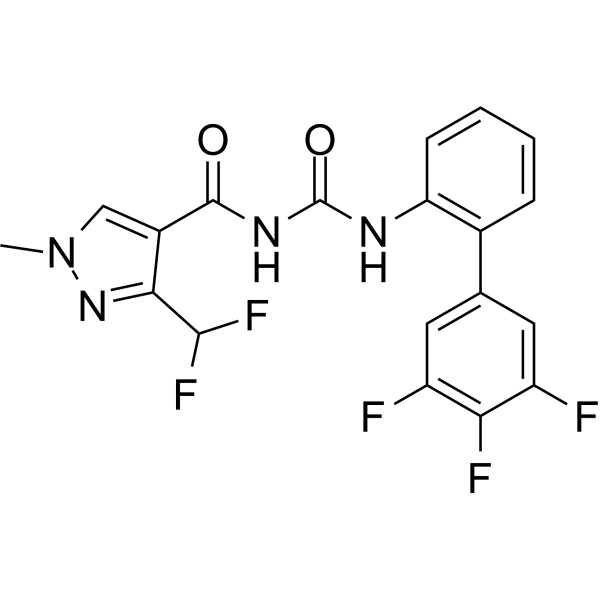
SDH-IN-12 (compound 9b) is a succinate dehydrogenase inhibitor, which exhibits activity against S. sclerotiorum and C. arachidicola, with EC50s of 0.97 and 2.07 μM, respectively. SDH-IN-12 reveals no significant herbicidal activity against monocotyledonous and dicotyledonous plants.
-
SDH-IN-26
 0 ImagesCat. No.: HY-172804
SDH-IN-26 (Compound C3) is a succinate dehydrogenase (SDH) inhibitor. SDH-IN-26 exhibits significant inhibitory activity against multiple phytopathogenic fungi, such as Rhizoctonia solani and Botrytis cinerea, with an EC50 value of 0.270 μg/mL against Rhizoctonia solani. SDH-IN-26 damages the integrity of the fungal cell membrane, increases membrane permeability, disrupts cell structure, and reduces the number of mitochondria, thus affecting the normal growth of mycelia. SDH-IN-26 leads to a decrease in mitochondrial membrane potential, and induces cell apoptosis. SDH-IN-26 is promising for research of plant diseases caused by fungi.
-
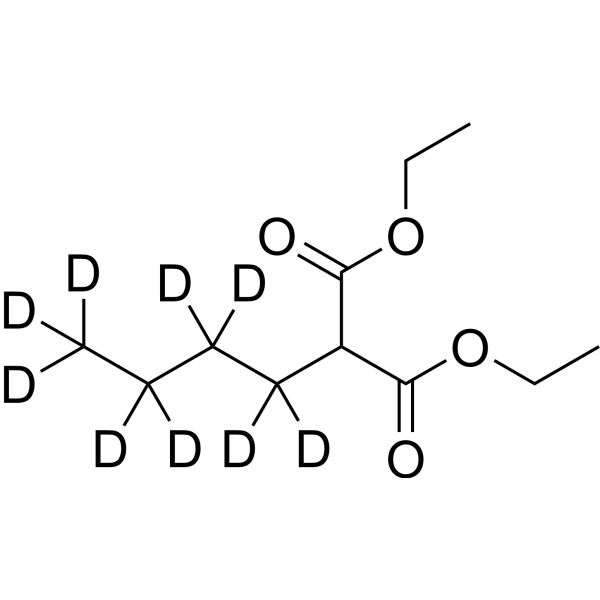
Diethyl butylmalonate-d9
 0 Images
Diethyl butylmalonate-d9 is the deuterium labeled Diethyl butylmalonate (HY-44178). Diethyl butylmalonate is a competitive inhibitor of succinate dehydrogenase. Diethyl butylmalonate exerts anti-inflammatory effects by inhibiting ROS production. Diethyl butylmalonate also has neuroprotective activity. In addition, Diethyl butylmalonate shows toxicity to T. pyriformis, with its log(IGC50-1) being 0.557. Diethyl butylmalonate can be used in the research of diseases such as Alzheimer's disease.



