



AAPH
Based on 3 publication(s) in Google Scholar
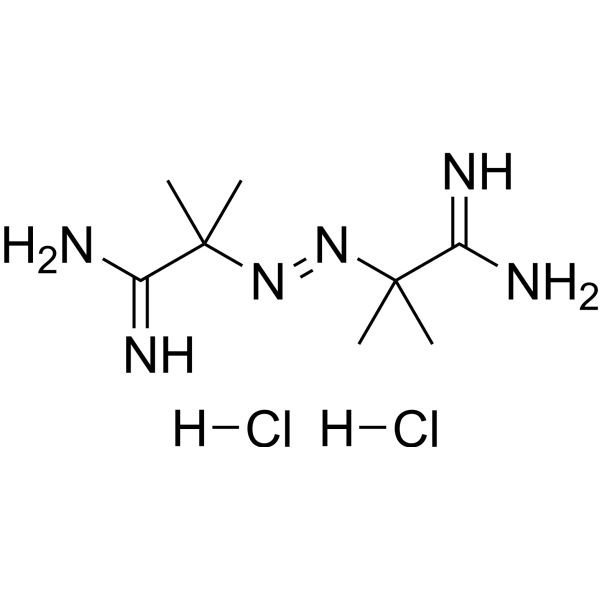
AAPH (2,2'-Azodiisobutyramidine dihydrochloride) has an effect of radical generation. AAPH induces oxidative stress and erythrocyte hemolysis. AAPH decomposes at 37°C to generate an alkyl radical, is used as an initiator. In the presence of oxygen, these alkyl radicals will be converted to peroxyl radicals that can cause lipid peroxidation and loss of erythrocyte membrane integrity, which could ultimately lead to hemolysis.
For research use only. We do not sell to patients.
- Purity : 98.0%
- CAS No.: 2997-92-4
- Formula: C8H20Cl2N6
- Molecular Weight:271.19
-
Storage:
4°C, sealed storage, away from moisture
* In solvent : -80°C, 6 months; -20°C, 1 month (sealed storage, away from moisture)

To place orders, for customer services and technical support, please contact: MedChemExpress USA
Tel: 609-228-6898 E-mail: [email protected] [email protected]


-
 Biological Activity
-
Chemical Information
-
Solvent & Solubility
- Protocols
- Purity & Documentation
- References
-
 Help & FAQs


-
HY-D0940
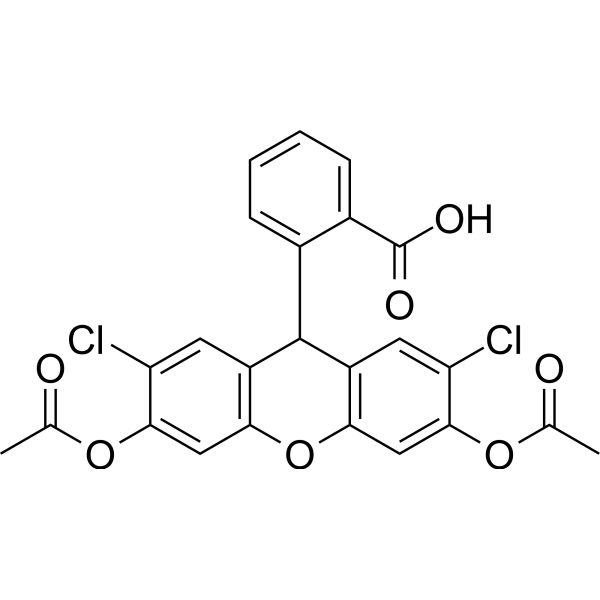
H2DCFDAROS-Sensitive Probe -
HY-101445
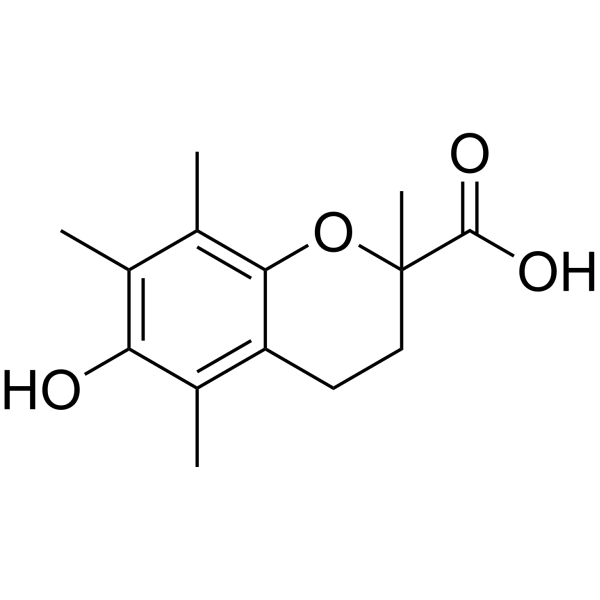
TroloxAntioxidant -
HY-D0208
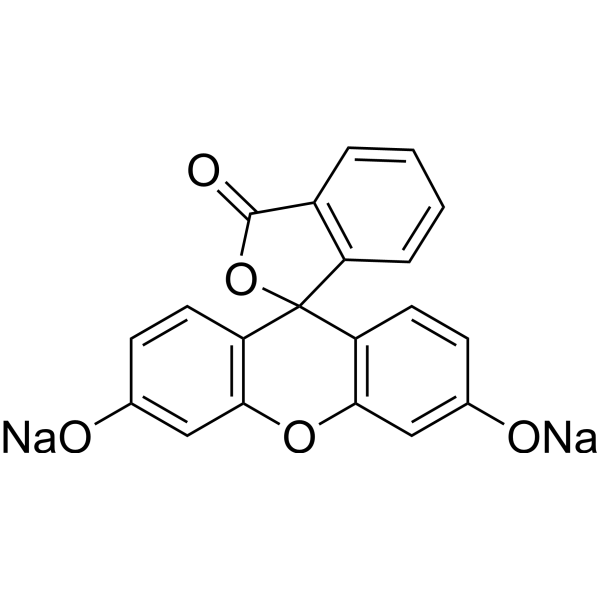
Fluorescein sodiumFluorescent Tracer -
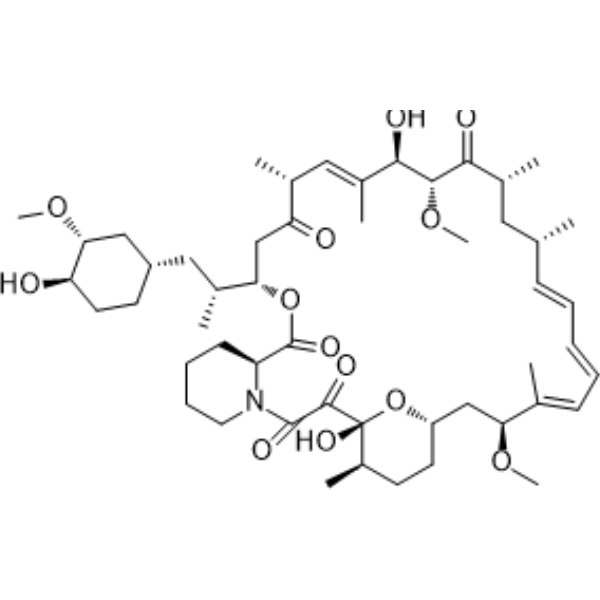
HY-10219
RapamycinmTOR Inhibitor -
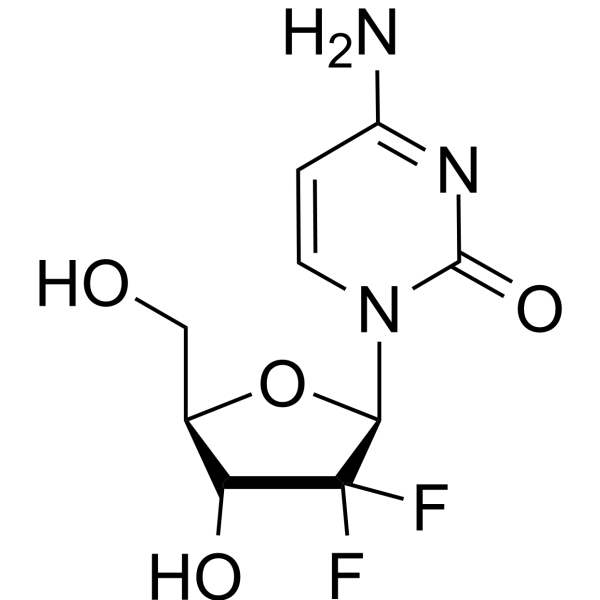
HY-17026
GemcitabineDNA Synthesis Inhibitor -
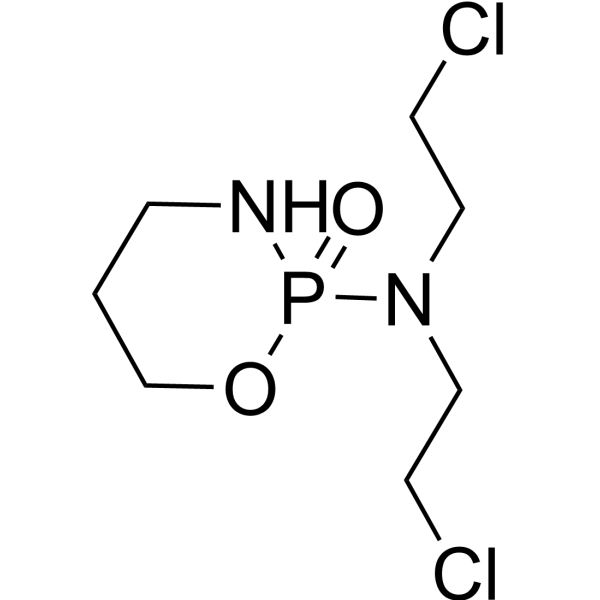
HY-17420
CyclophosphamideAlkylating Agent -
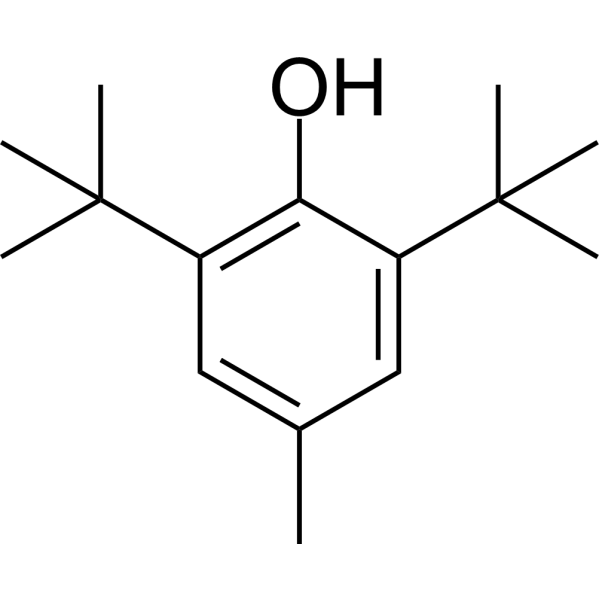
HY-Y0172
Butylated hydroxytoluene -
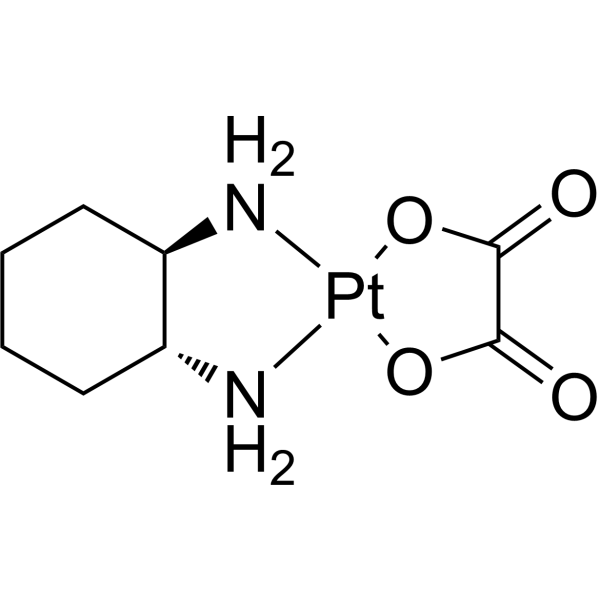
HY-17371
OxaliplatinDNA Synthesis Inhibitor -
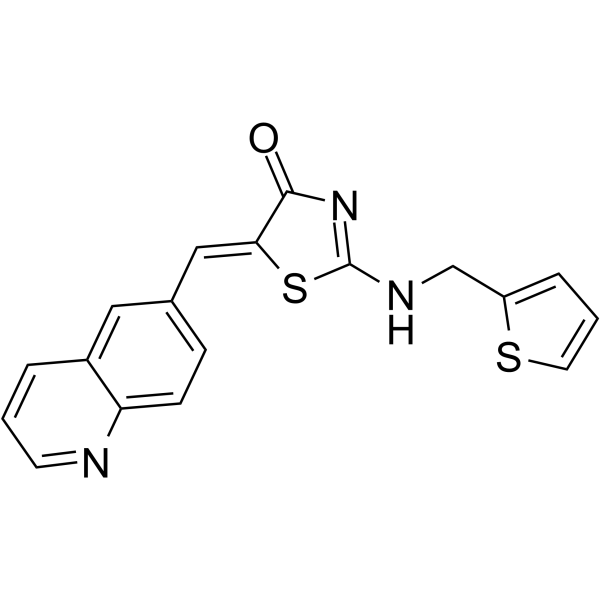
HY-12529
Ro-3306CDK1 Inhibitor -
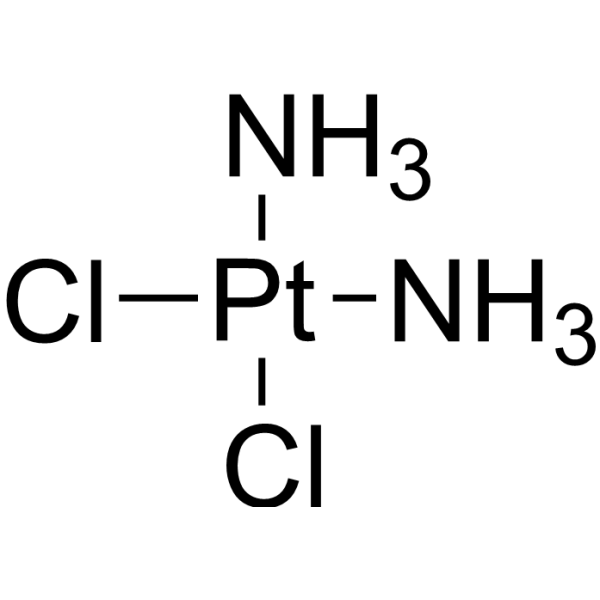
HY-17394
CisplatinDNA Alkylator -
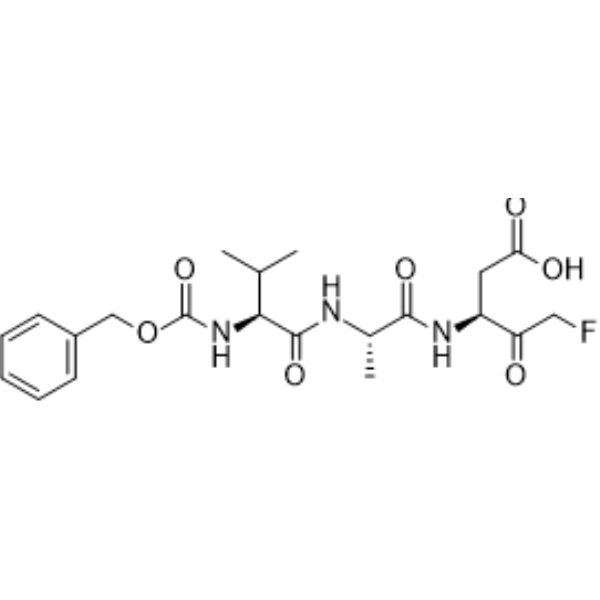
HY-16658B
Z-VAD-FMKPan-Caspase Inhibitor -
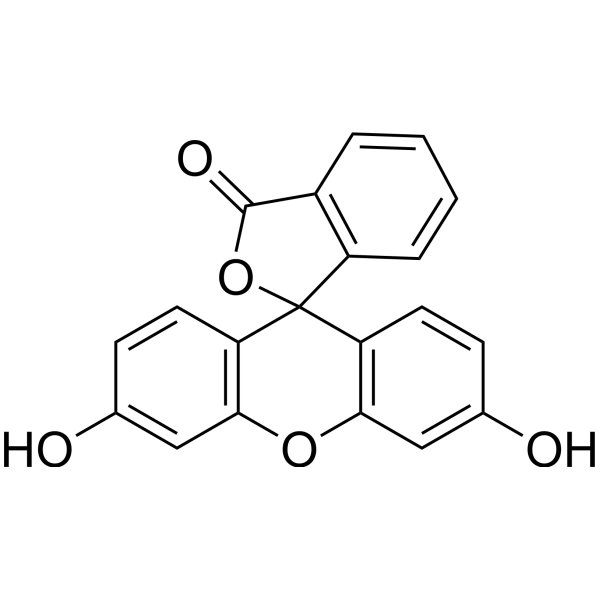
HY-D0251
FluoresceinFluorescent Tracer
Publications Citing Use of MedChemExpress (MCE) AAPH
More Customer Validation & Images

-
Cell Proliferation/Viability Assay

-
Cell Imaging/Staining

-
Others
-
Cell Proliferation/Viability Assay


Biological Activity
Description
In Vitro
AAPH (600 μM, 0-1 h) oxidates DCFH to form a fluorescent substance, DCF, which the level of fluorescence was proportional to the degree of oxidation in HepG2 cells[2].
AAPH (200 mM, 2 h) induces the erythrocyte losting normal profile, shows a spiny configuration on the surface due to the severe damage of the cell membrane and produces a large amount of ROS in in human erythrocytes[2].
MedChemExpress (MCE) has not independently confirmed the accuracy of these methods. They are for reference only. Further protocols information, click here.


Chemical Information
-
CAS No. 2997-92-4
-
Appearance Solid
-
Molecular Weight 271.19
-
Formula C8H20Cl2N6
-
Color White to off-white
-
SMILES
CC(/N=N/C(C)(C)C(N)=N)(C)C(N)=N.[H]Cl.[H]Cl
-
Synonyms
2,2'-Azodiisobutyramidine dihydrochloride
-
Shipping
Room temperature in continental US; may vary elsewhere.
-
Storage
4°C, sealed storage, away from moisture
* In solvent : -80°C, 6 months; -20°C, 1 month (sealed storage, away from moisture)


Publications (3)
-
Journal Impact Factor
-
Most Recent
-
Food Chem
Optimization of multi-enzyme coupled debittering process: Effect on bitterness and bioactive components of Shatianyu (Citrus grandis L. Osbeck) whole fruit powder. [Abstract]2026 Jun 30:515:149066. PMID: 41990492 -
Int J Biol Macromol
Structural characterizations and anti-aging activities of a homogeneous polysaccharide derived from Coix seed-lactic acid bacteria fermentation. [Abstract]2025 Sep 25;330(Pt 1):147879. PMID: 41005408
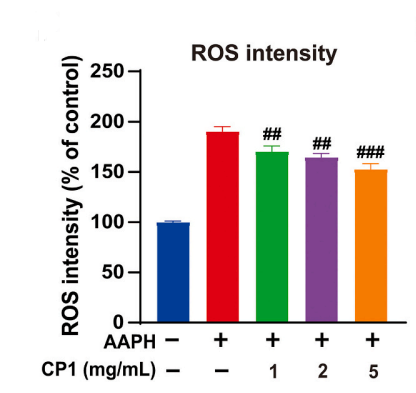
AAPH purchased from MedChemExpress. Usage Cited in: Int J Biol Macromol. 2025 Sep 25;330(Pt 1):147879. [Abstract]
Relative fluorescence intensity of ROS in nematodes. Compared with the group induced by AAPH (0.5 mM) alone.
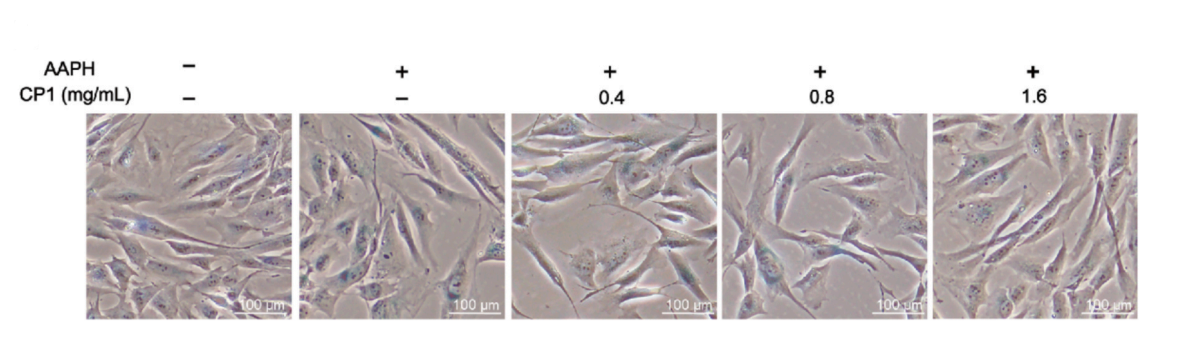
AAPH purchased from MedChemExpress. Usage Cited in: Int J Biol Macromol. 2025 Sep 25;330(Pt 1):147879. [Abstract]
AAPH (0.5 mM) significantly increased SA-β-gal activity in HSF cells, whereas CP1 significantly inhibited this activity.
-
Antioxidants (Basel)
Development of an AAPH-Induced Oxidative Stress Model in Bovine Mammary Epithelial Cells and Investigation of Its Molecular Mechanisms. [Abstract]2026 Apr 8;15(4):460. PMID: 42072102
AAPH purchased from MedChemExpress. Usage Cited in: Antioxidants (Basel). 2026 Apr 8;15(4):460. [Abstract]
Cell viability inhibition rate of BMECs treated with various concentrations of AAPH for 24 h, as determined by the CCK-8 assay.
AAPH purchased from MedChemExpress. Usage Cited in: Antioxidants (Basel). 2026 Apr 8;15(4):460. [Abstract]
AAPH: Cells treated with 1000 μmol/L AAPH for 6 hours. Representative fluorescence images showing intracellular ROS levels detected using the DCFH-DA probe. Green fluorescence intensity reflects the relative levels of reactive oxygen species.


Solvent & Solubility
In Vitro:
H2O : 100 mg/mL (368.75 mM; Need ultrasonic)
Please refer to the solubility information to select the appropriate solvent. Once prepared, please aliquot and store the solution to prevent product inactivation from repeated freeze-thaw cycles.
Storage method and period of stock solution: -80°C, 6 months; -20°C, 1 month (sealed storage, away from moisture). When stored at -80°C, please use it within 6 months. When stored at -20°C, please use it within 1 month.
* Note: If you choose water as the stock solution, please dilute it to the working solution, then filter and sterilize it with a 0.22 μm filter before use.
Please refer to the solubility information to select the appropriate solvent. Once prepared, please aliquot and store the solution to prevent product inactivation from repeated freeze-thaw cycles.
Storage method and period of stock solution: -80°C, 6 months; -20°C, 1 month (sealed storage, away from moisture). When stored at -80°C, please use it within 6 months. When stored at -20°C, please use it within 1 month.
* Note: If you choose water as the stock solution, please dilute it to the working solution, then filter and sterilize it with a 0.22 μm filter before use.
Concentration (start) × Volume (start) = Concentration (final) × Volume (final)

Protocols
-
ROS/oxidative-stress fluorescent staining
ROS/oxidative-stress fluorescent staining uses cell-permeant fluorogenic probes that become fluorescent after oxidation inside cells or tissues; commonly used examples include DCFH-DA/DCFDA for broad cellular oxidant detection, DHE for superoxide-related signal detection, MitoSOX for mitochondrial superoxide-related signal detection, and CellROX probes for oxidative-stress-associated fluorescence readouts. The assay detects probe oxidation rather than a single ROS species unless the probe and analysis method have been chemically validated for that species. DCFH-DA enters cells, is deacetylated by intracellular esterases to DCFH, and produces fluorescent DCF after oxidation, so the readout is used as an operational measure of total cellular oxidative stress rather than a species-specific ROS measurement. DHE and MitoSOX can report superoxide-related oxidation, but red fluorescence alone can include non-specific ethidium-like oxidation products; HPLC or optimized spectral approaches are
-
Ferroptosis Solutions
Ferroptosis is an iron-dependent, non-apoptotic form of regulated cell death characterized by lethal lipid peroxidation and sensitivity to suppression by iron chelators or lipophilic radical-trapping antioxidants. The core pathway links cystine uptake through system Xc−, glutathione availability, GPX4-dependent detoxification of phospholipid hydroperoxides, iron-dependent oxidative reactions, and polyunsaturated-phospholipid metabolism into a cell-death program that is biochemically and morphologically distinct from apoptosis, necrosis, and autophagy. The ferroptosis pathway is experimentally linked to phenotype through chemical and genetic perturbation. Erastin induces ferroptosis by inhibiting cystine uptake through system Xc− and weakening antioxidant defenses, while GPX4 inhibition or depletion causes lipid peroxide accumulation and ferroptotic cancer-cell death. ACSL4 and oxidizable arachidonoyl- or adrenoyl-containing phosphatidylethanolamines shape ferroptosis sensitivity by con


Purity & Documentation
-
Data Sheet (274 KB)
-
SDS (749 KB)
- English - EN (749 KB)
- Français - FR (749 KB)
- Deutsch - DE (749 KB)
- Norwegian - NO (749 KB)
- Español - ES (749 KB)
- Swedish - SV (749 KB)
- Italian - IT (749 KB)
- Korean - KR (749 KB)
- Portuguese - PT (749 KB)
-
Handling Instructions (2659 KB)
References
[2]. Liao W, et al. Intracellular antioxidant detoxifying effects of diosmetin on 2,2-azobis(2-amidinopropane) dihydrochloride (AAPH)-induced oxidative stress through inhibition of reactive oxygen species generation. J Agric Food Chem. 2014 Aug 27;62(34):8648-54. [Content Brief]
[4]. Hosseinian FS, et al. AAPH-mediated antioxidant reactions of secoisolariciresinol and SDG. Org Biomol Chem. 2007 Feb 21;5(4):644-54. [Content Brief]


Complete Stock Solution Preparation Table
Please refer to the solubility information to select the appropriate solvent. Once prepared, please aliquot and store the solution to prevent product inactivation from repeated freeze-thaw cycles.
Storage method and period of stock solution: -80°C, 6 months; -20°C, 1 month (sealed storage, away from moisture). When stored at -80°C, please use it within 6 months. When stored at -20°C, please use it within 1 month.
| Optional Solvent | Concentration Solvent Mass | 1 mg | 5 mg | 10 mg | 25 mg |
|---|---|---|---|---|---|
| H2O | 1 mM | 3.6875 mL | 18.4373 mL | 36.8745 mL | 92.1863 mL |
| 5 mM | 0.7375 mL | 3.6875 mL | 7.3749 mL | 18.4373 mL | |
| 10 mM | 0.3687 mL | 1.8437 mL | 3.6875 mL | 9.2186 mL | |
| 15 mM | 0.2458 mL | 1.2292 mL | 2.4583 mL | 6.1458 mL | |
| 20 mM | 0.1844 mL | 0.9219 mL | 1.8437 mL | 4.6093 mL | |
| 25 mM | 0.1475 mL | 0.7375 mL | 1.4750 mL | 3.6875 mL | |
| 30 mM | 0.1229 mL | 0.6146 mL | 1.2292 mL | 3.0729 mL | |
| 40 mM | 0.0922 mL | 0.4609 mL | 0.9219 mL | 2.3047 mL | |
| 50 mM | 0.0737 mL | 0.3687 mL | 0.7375 mL | 1.8437 mL | |
| 60 mM | 0.0615 mL | 0.3073 mL | 0.6146 mL | 1.5364 mL | |
| 80 mM | 0.0461 mL | 0.2305 mL | 0.4609 mL | 1.1523 mL | |
| 100 mM | 0.0369 mL | 0.1844 mL | 0.3687 mL | 0.9219 mL |
* Note: If you choose water as the stock solution, please dilute it to the working solution, then filter and sterilize it with a 0.22 μm filter before use.


AAPH Related Classifications
HY-Y0525 Related Classifications
 Powered by Bioz