



Acetyl tetrapeptide-3

Based on 1 Customer Validation
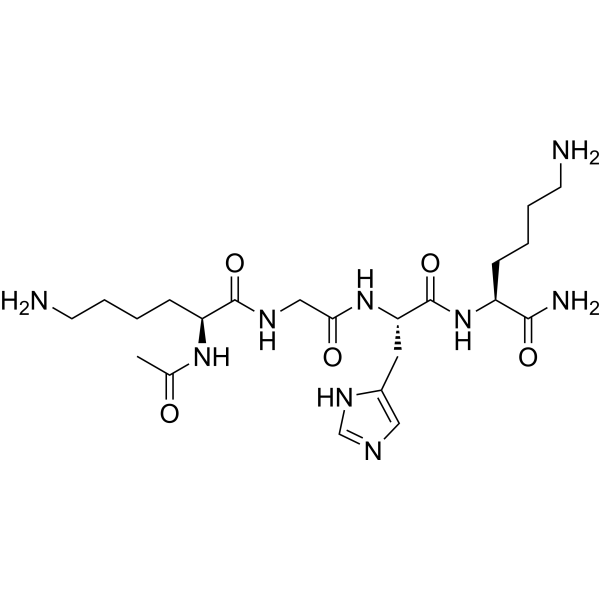
Acetyl tetrapeptide-3 is a synthetic peptide. Acetyl tetrapeptide-3 enhances the adhesion of hair follicles to the scalp but also promotes the development of new hair follicles. Acetyl tetrapeptide-3 stimulates the synthesis of collagen III in hair follicles. Acetyl tetrapeptide-3 combined with Biochanin A (HY-14595) and ginseng extracts, can stimulate dermal papilla extracellular matrix (ECM) proteins by increasing hydroxyproline, Collagen Type 3, and laminin, yielding a significant improvement in hair follicle size and hair anchoring.
For research use only. We do not sell to patients.
- Purity : 99.27%
- CAS No.: 827306-88-7
- Formula: C22H39N9O5
- Molecular Weight:509.60
-
Storage:
Sealed storage, away from moisture.
Powder -80°C, 2 years , -20°C, 1 year* In solvent : -80°C, 6 months; -20°C, 1 month (sealed storage, away from moisture)

To place orders, for customer services and technical support, please contact: MedChemExpress USA
Tel: 609-228-6898 E-mail: [email protected] [email protected]


-
 Biological Activity
-
Chemical Information
-
Solvent & Solubility
- Protocols
- Purity & Documentation
- References
-
 Help & FAQs


-
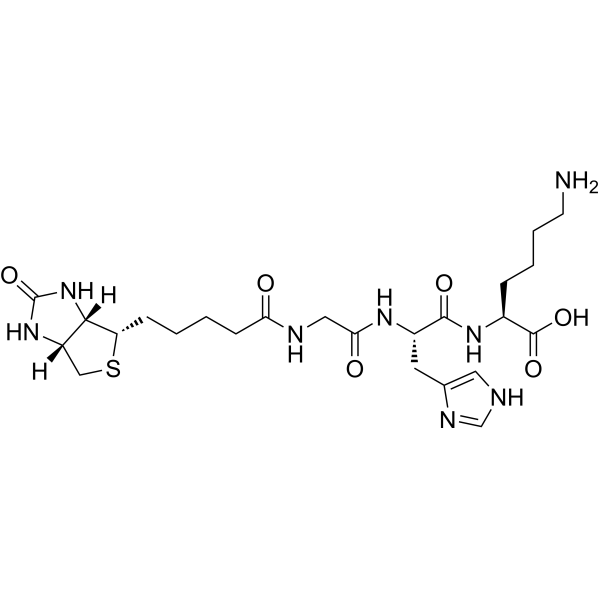
HY-125616
Biotinoyl tripeptide-1Peptide -
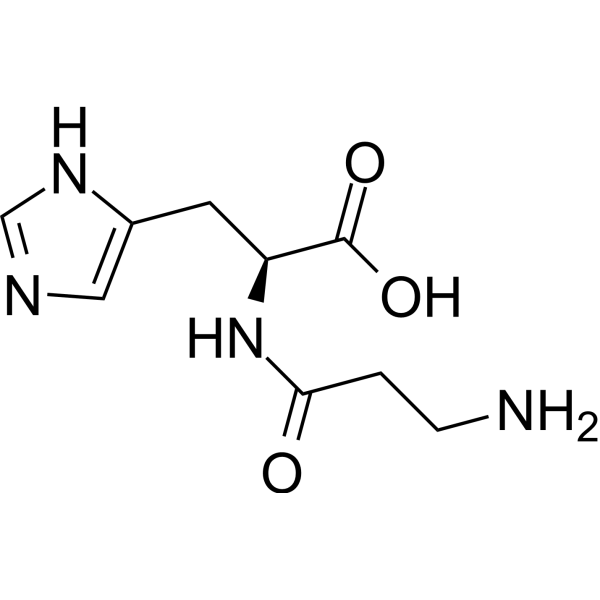
HY-W013494
L-CarnosineFree Radical Scavenger -
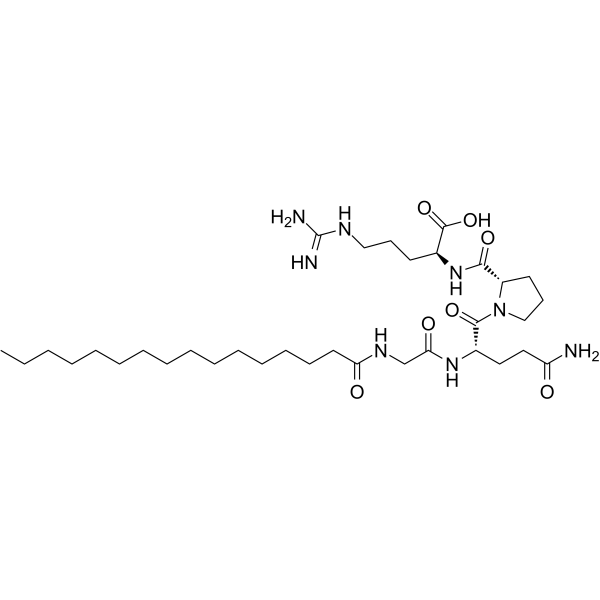
HY-P0064
Palmitoyl Tetrapeptide-3IL-6 Inhibitor -

HY-W013494R
L-Carnosine (Standard) -
HY-P0047
Palmitoyl Tripeptide-1Polypeptide -
HY-66015
Palmitoyl hexapeptide-12Anti-aging Peptide -
HY-118060
Dipeptide 2ACE Inhibitor -
HY-P0065
Acetyl octapeptide-1SNAP-25 Inhibitor -

HY-66018
Palmitoyl tripeptide-5 diTFAAnti-aging Peptide -
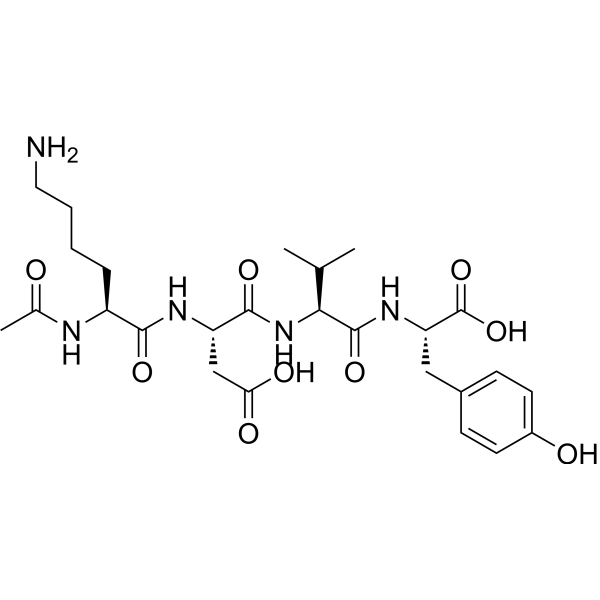
HY-P2663
Acetyl tetrapeptide-2Anti-aging Peptide -
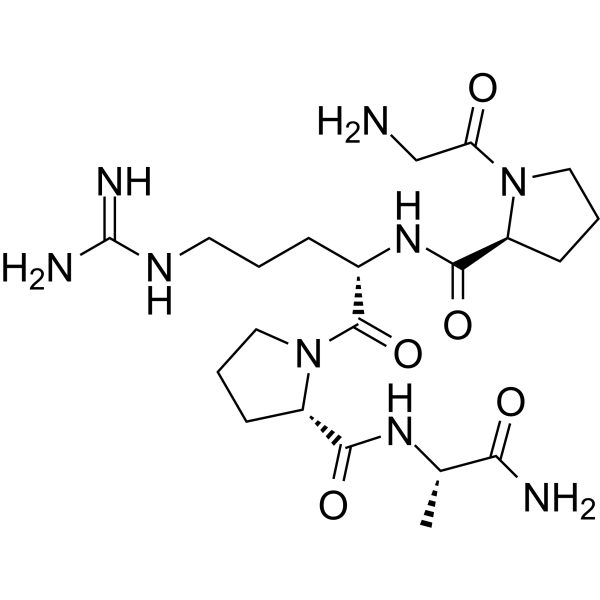
HY-P0099
Pentapeptide-3Acetylcholine Receptor Antagonist -
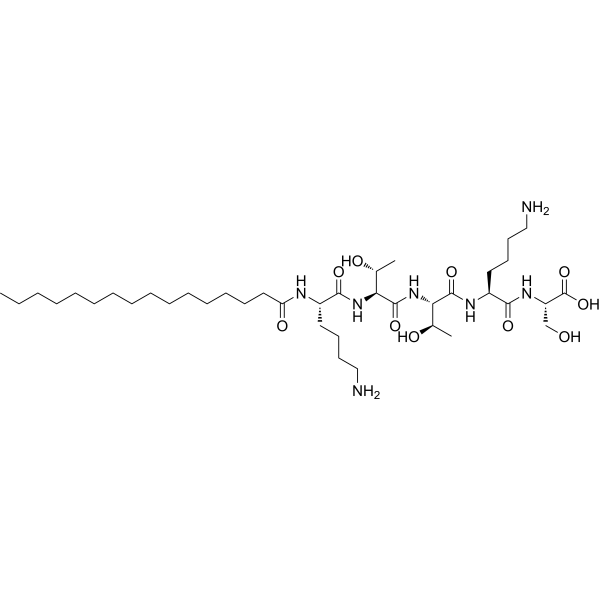
HY-P0045
Palmitoyl pentapeptide 4Anti-aging Peptide


Biological Activity
Description
In Vitro


Chemical Information
-
CAS No. 827306-88-7
-
Appearance Solid
-
Molecular Weight 509.60
-
Formula C22H39N9O5
-
Color Off-white to light yellow
-
Sequence
Ac-Lys-Gly-His-Lys-NH2
-
Sequence Shortening
Ac-KGHK-NH2
-
Shipping
Room temperature in continental US; may vary elsewhere.
-
Storage
Sealed storage, away from moisture
Powder -80°C 2 years -20°C 1 year * In solvent : -80°C, 6 months; -20°C, 1 month (sealed storage, away from moisture)


Solvent & Solubility
In Vitro:
H2O : 116.67 mg/mL (228.94 mM; Need ultrasonic)
Please refer to the solubility information to select the appropriate solvent. Once prepared, please aliquot and store the solution to prevent product inactivation from repeated freeze-thaw cycles.
Storage method and period of stock solution: -80°C, 6 months; -20°C, 1 month (sealed storage, away from moisture). When stored at -80°C, please use it within 6 months. When stored at -20°C, please use it within 1 month.
* Note: If you choose water as the stock solution, please dilute it to the working solution, then filter and sterilize it with a 0.22 μm filter before use.
Please refer to the solubility information to select the appropriate solvent. Once prepared, please aliquot and store the solution to prevent product inactivation from repeated freeze-thaw cycles.
Storage method and period of stock solution: -80°C, 6 months; -20°C, 1 month (sealed storage, away from moisture). When stored at -80°C, please use it within 6 months. When stored at -20°C, please use it within 1 month.
* Note: If you choose water as the stock solution, please dilute it to the working solution, then filter and sterilize it with a 0.22 μm filter before use.
Concentration (start) × Volume (start) = Concentration (final) × Volume (final)

Protocols
-
Fibrosis/Collagen Morphometry
Fibrosis and collagen morphometry is based on the quantitative visualization of fibrillar collagen deposition in tissue sections using histochemical stains such as Sirius Red (Picrosirius Red) or Masson's trichrome, followed by image-based or polarization-enhanced analysis to estimate collagen proportional area as a surrogate of extracellular matrix accumulation during fibrotic remodeling. Sirius Red combined with polarized light microscopy enhances detection of collagen fibers due to birefringence properties, enabling more specific visualization of collagen type I and III fibrils compared to conventional bright-field histology, while whole-section or region-restricted digital morphometry reduces field-selection bias in fibrosis assessment. Alternative quantitative approaches include second harmonic generation (SHG) and two-photon excited fluorescence microscopy, which enable label-free detection of fibrillar collagen and have been validated against histological staining and biochemica
-
Collagen: Sirius Red Staining
Sirius Red or picrosirius red staining is a histochemical method for visualizing collagen-rich extracellular matrix in tissue sections, and collagen fibers are detected as red-stained structures under bright-field microscopy with enhanced birefringence under polarized light. Picrosirius red is useful for assessing total collagen organization, distribution, and fibrosis burden, but polarized color should not be interpreted as a definitive collagen type I versus type III readout because color is affected by fiber orientation, thickness, and packing.
-
ECM-Embedded Organoid (Matrigel/Dome) Culture
ECM-embedded organoid dome culture embeds epithelial stem cells, crypts, organoid fragments, or tumor-derived epithelial cells in a basement-membrane-like hydrogel such as Matrigel, allowing 3D growth, self-organization, lumen formation, budding or cystic morphogenesis, and lineage maintenance under defined niche-factor-containing medium. The primary readouts are organoid establishment efficiency, growth, morphology, passaging capacity, lineage-marker expression, and, when fluorescently labeled lines are used, microscopy- or flow-cytometry-based quantification of population behavior in 3D culture.
-
Matrigel/ECM Transwell Invasion Assay
The Matrigel/ECM Transwell invasion assay measures the ability of cells to move toward a chemoattractant while crossing an extracellular-matrix barrier placed on a porous membrane; therefore, the readout reflects both chemotactic motility and matrix invasion rather than migration alone. Matrigel is a basement-membrane-rich matrix derived from Engelbreth-Holm-Swarm mouse sarcoma and has been used as a reconstituted basement membrane barrier in chemoinvasion assays. The assay readout is generated by quantifying cells that reach the underside of the insert membrane or lower compartment after incubation, commonly by staining and counting invaded cells or by fluorescence-based quantification.
-
Matrigel Transwell/Boyden Chamber Invasion Assay
Matrigel Transwell/Boyden chamber invasion assay measures the ability of cells to degrade or traverse an extracellular matrix-coated porous membrane and move from an upper chamber toward a chemoattractant in a lower chamber. Invasion is distinguished from migration by coating the membrane with Matrigel or basement membrane matrix; uncoated inserts measure migration, while coated inserts require cells to cross an ECM barrier before reaching the underside of the membrane.


Purity & Documentation
-
Data Sheet (272 KB)
-
SDS (394 KB)
- English - EN (394 KB)
- Français - FR (394 KB)
- Deutsch - DE (394 KB)
- Norwegian - NO (394 KB)
- Español - ES (394 KB)
- Swedish - SV (394 KB)
- Italian - IT (394 KB)
- Korean - KR (394 KB)
- Portuguese - PT (394 KB)
-
Handling Instructions (2659 KB)
References
[1]. Suparuj Lueangarun, et al. An Herbal Extract Combination (Biochanin A, Acetyl tetrapeptide-3, and Ginseng Extracts) versus 3% Minoxidil Solution for the Treatment of Androgenetic Alopecia: A 24-week, Prospective, Randomized, Triple-blind, Controlled Trial. J Clin Aesthet Dermatol. 2020 Oct;13(10):32-37. [Content Brief]


Complete Stock Solution Preparation Table
Please refer to the solubility information to select the appropriate solvent. Once prepared, please aliquot and store the solution to prevent product inactivation from repeated freeze-thaw cycles.
Storage method and period of stock solution: -80°C, 6 months; -20°C, 1 month (sealed storage, away from moisture). When stored at -80°C, please use it within 6 months. When stored at -20°C, please use it within 1 month.
| Optional Solvent | Concentration Solvent Mass | 1 mg | 5 mg | 10 mg | 25 mg |
|---|---|---|---|---|---|
| H2O | 1 mM | 1.9623 mL | 9.8116 mL | 19.6232 mL | 49.0581 mL |
| 5 mM | 0.3925 mL | 1.9623 mL | 3.9246 mL | 9.8116 mL | |
| 10 mM | 0.1962 mL | 0.9812 mL | 1.9623 mL | 4.9058 mL | |
| 15 mM | 0.1308 mL | 0.6541 mL | 1.3082 mL | 3.2705 mL | |
| 20 mM | 0.0981 mL | 0.4906 mL | 0.9812 mL | 2.4529 mL | |
| 25 mM | 0.0785 mL | 0.3925 mL | 0.7849 mL | 1.9623 mL | |
| 30 mM | 0.0654 mL | 0.3271 mL | 0.6541 mL | 1.6353 mL | |
| 40 mM | 0.0491 mL | 0.2453 mL | 0.4906 mL | 1.2265 mL | |
| 50 mM | 0.0392 mL | 0.1962 mL | 0.3925 mL | 0.9812 mL | |
| 60 mM | 0.0327 mL | 0.1635 mL | 0.3271 mL | 0.8176 mL | |
| 80 mM | 0.0245 mL | 0.1226 mL | 0.2453 mL | 0.6132 mL | |
| 100 mM | 0.0196 mL | 0.0981 mL | 0.1962 mL | 0.4906 mL |
* Note: If you choose water as the stock solution, please dilute it to the working solution, then filter and sterilize it with a 0.22 μm filter before use.


Acetyl tetrapeptide-3 Related Classifications
HY-W129161 Related Classifications
 Powered by Bioz