



D-Arginine
Based on 2 publication(s) in Google Scholar
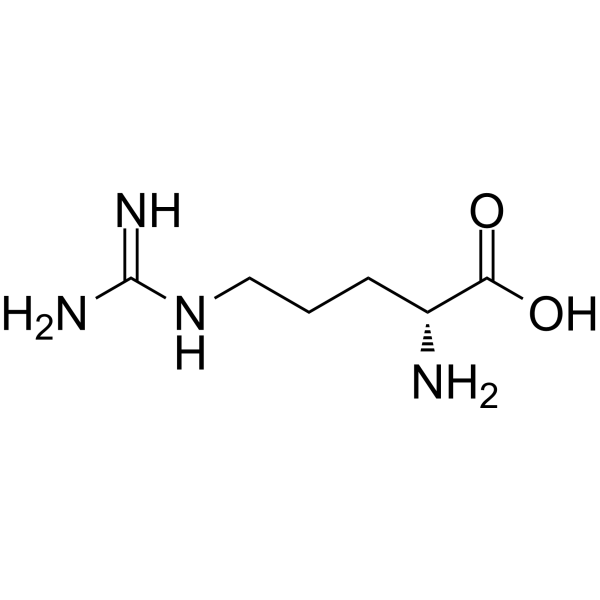
D-arginine (H-D-Arg-OH) is the D-isomer of arginine. Arginine is an α-amino acid that is used in the biosynthesis of proteins. D-Arginine is an inactive form of L-arginine. D-arginine can be used in myeloma and neurological disease research..
Nur für Forschungszwecke. Wir verkaufen nicht an Patienten.
- Reinheit: 98.0%
- CAS. Nr.: 157-06-2
- Formel: C6H14N4O2
- Molecular Weight:174.20
-
Speicherung:
4°C, sealed storage, away from moisture and light
* In solvent : -80°C, 6 months; -20°C, 1 month (sealed storage, away from moisture and light)

To place orders, for customer services and technical support, please contact: MedChemExpress USA
Tel: 609-228-6898 E-mail: [email protected] [email protected]


-
 Biologische Aktivität
-
Chemical Information
-
Lösungsmittel & Löslichkeit
- Reinheit & Dokumentation
- Verweise
-
 Help & FAQs


-
HY-N0455
L-Arginine -
HY-100808
D-Serine -
HY-N0455A
L-Arginine hydrochloride -
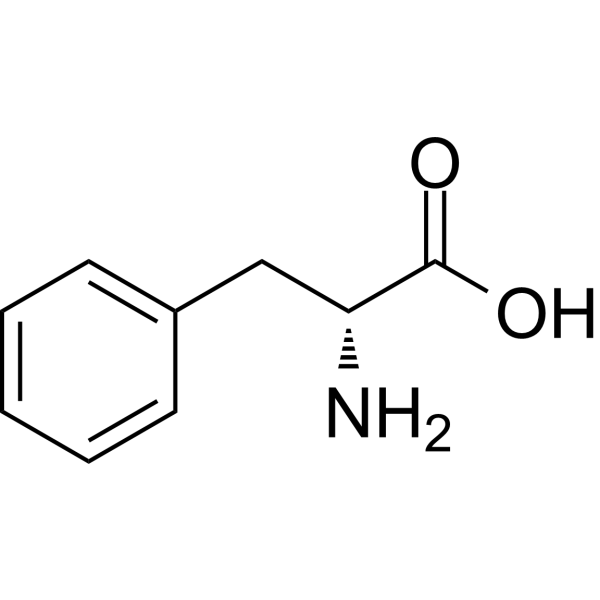
HY-Y0079
D-Phenylalanine -

HY-W016781R
D-Arginine (Standard) -

HY-N0455AR
L-Arginine hydrochloride (Standard) -
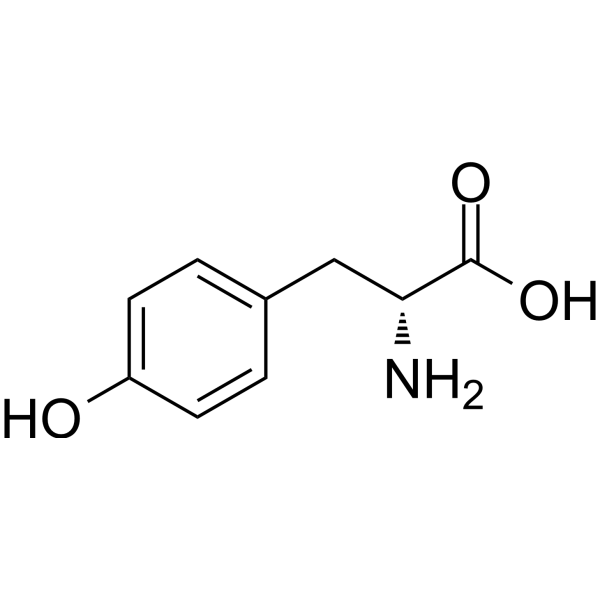
HY-Y0444
D-Tyrosine -
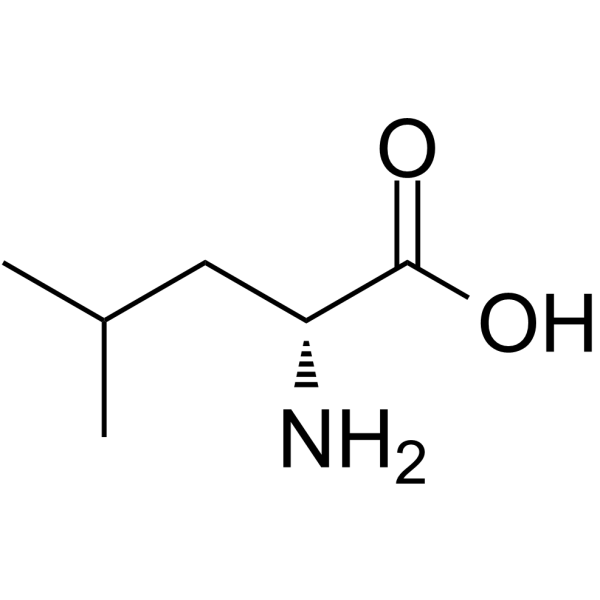
HY-Y0378
D-Leucine -
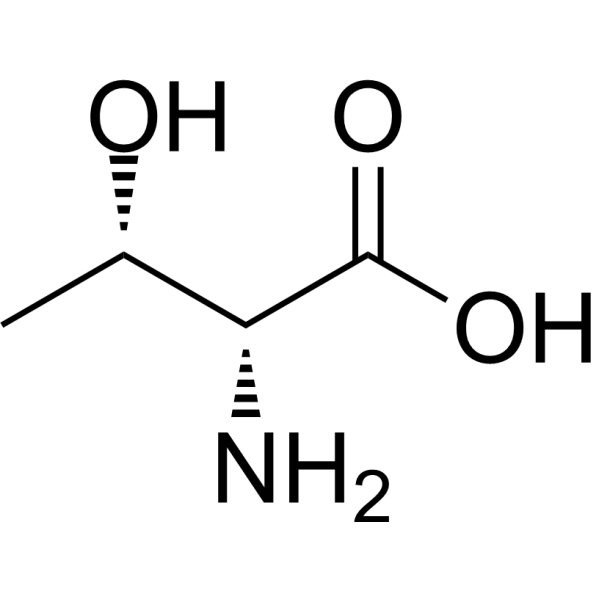
HY-W012874
D-Threonine -
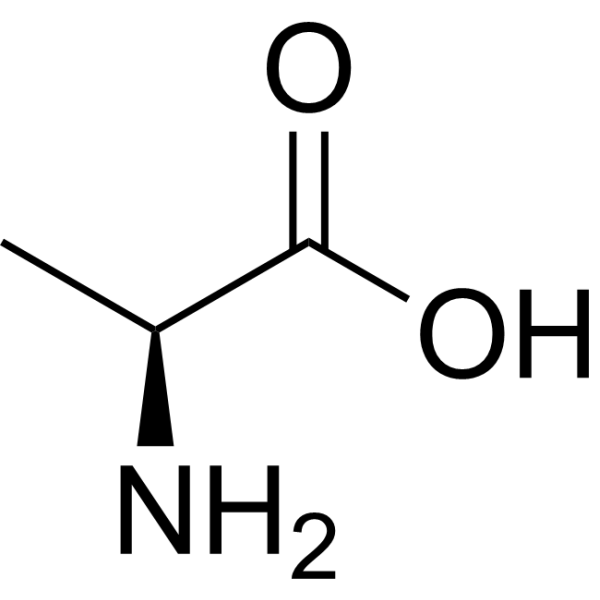
HY-N0229
L-Alanine -

HY-N0455R
L-Arginine (Standard) -
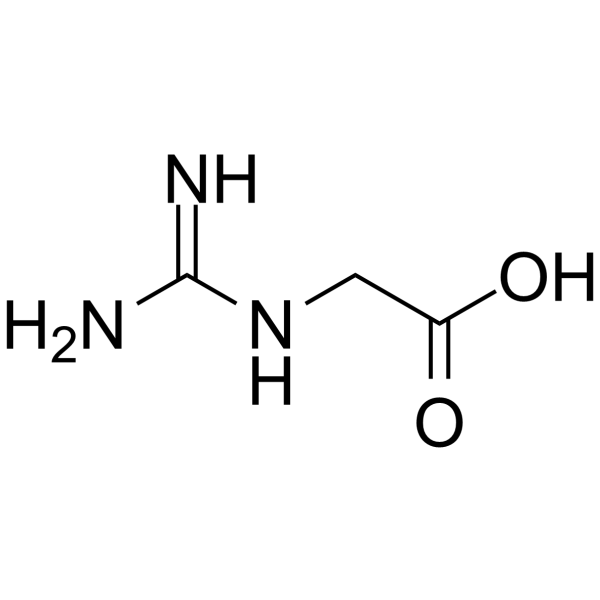
HY-W021448
Glycocyamine
Publications Citing Use of MedChemExpress (MCE) D-Arginine
MoreAlle Endogenous Metabolite Isoform-spezifische Produkte anzeigen
More

Biologische Aktivität
Beschreibung
IC50 & Target
|
Human Endogenous Metabolite |
In Vitro
D-arginine (10 μM) significantly antagonizes responses to norepinephrine in subcutaneous arteries isolated from healthy humans[2].
MedChemExpress (MCE) has not independently confirmed the accuracy of these methods. They are for reference only.
In Vivo
The number of D-arginine residues in cell-penetrating peptides (i.v.) significantly affects their cellular uptake behavior and systemic toxicity in mice[4].
D-Arginine (700 mg/kg, i.p.) displays central stimulant properties and increases spontaneous motor activity in mice[5].
D-arginine (i.p.) shows a light toxicity order (LD50: 2800 mg/kg) in mice[5].
D-arginine (1400 mg/kg, i.p.) protects against Pentylenetetrazole-induced convulsions in mice[5].
D-arginine (1000 mg/kg, p.o., 16 weeks) significantly alters various enzymes and metabolites in the arginine metabolic pathways in male SD rats[6].
D-arginine (1000 mg/kg, s.c., coadministered with L-arginine) blocks antinociception elicited by L-arginine (HY-N0455) in mice with Carrageenin-induced hyperalgesia[7].
D-arginine (20 mg/kg, s.c.) does not significantly alter the percentage of antinociception in mice[8].
MedChemExpress (MCE) has not independently confirmed the accuracy of these methods. They are for reference only.
-
Animal Model:Female BALB/c mice (anesthetized by intraperitoneal injection of 3% pentobarbital sodium; K7M2 cells were injected subcutaneously; X-ray irradiation)[2]
-
Dosage:1 mg/kg
-
Administration:Intravenous injection (i.v.), caudal veins, every two days
-
Result:Inhibited tumor volume (20 days).


Chemical Information
-
CAS. Nr. 157-06-2
-
Appearance Solid
-
Molecular Weight 174.20
-
Formel C6H14N4O2
-
Color White to yellow
-
SMILES
N[C@H](CCCNC(N)=N)C(O)=O
-
Synonyms
H-D-Arg-OH
-
Structure Classification
-
Initial Source
-
Versand
Room temperature in continental US; may vary elsewhere.
-
Speicherung
4°C, sealed storage, away from moisture and light
* In solvent : -80°C, 6 months; -20°C, 1 month (sealed storage, away from moisture and light)


Publications (2)


Lösungsmittel & Löslichkeit
In Vitro:
H2O : 25 mg/mL (143.51 mM; Need ultrasonic)
Please refer to the solubility information to select the appropriate solvent. Once prepared, please aliquot and store the solution to prevent product inactivation from repeated freeze-thaw cycles.
Storage method and period of stock solution: -80°C, 6 months; -20°C, 1 month (sealed storage, away from moisture and light). When stored at -80°C, please use it within 6 months. When stored at -20°C, please use it within 1 month.
* Note: If you choose water as the stock solution, please dilute it to the working solution, then filter and sterilize it with a 0.22 μm filter before use.
Please refer to the solubility information to select the appropriate solvent. Once prepared, please aliquot and store the solution to prevent product inactivation from repeated freeze-thaw cycles.
Storage method and period of stock solution: -80°C, 6 months; -20°C, 1 month (sealed storage, away from moisture and light). When stored at -80°C, please use it within 6 months. When stored at -20°C, please use it within 1 month.
* Note: If you choose water as the stock solution, please dilute it to the working solution, then filter and sterilize it with a 0.22 μm filter before use.
Konzentration (Stammlösung) × Volumen (Stammlösung) = Konzentration (Ziellösung) × Volumen (Ziellösung)
In Vivo:
For the following dissolution methods, please prepare the working solution directly:
It is recommended to prepare fresh solutions and use them promptly within a short period of time.
The percentages shown for the solvents indicate their volumetric ratio in the final prepared solution. If precipitation or phase separation occurs during preparation, heat and/or sonication can be used to aid dissolution.
Add each solvent one by one: PBS
Solubility: 100 mg/mL (574.05 mM); Clear solution; Need ultrasonic


Reinheit & Dokumentation
-
Data Sheet (279 KB)
-
SDS (393 KB)
- English - EN (393 KB)
- Français - FR (393 KB)
- Deutsch - DE (393 KB)
- Norwegian - NO (393 KB)
- Español - ES (393 KB)
- Swedish - SV (393 KB)
- Italian - IT (393 KB)
- Korean - KR (393 KB)
- Portuguese - PT (393 KB)
-
Handling Instructions (2659 KB)
Verweise
[1]. Eduardo Navarro , et al. Toxicological and Pharmacological Effects of D-arginine. Basic Clin Pharmacol Toxicol. 2005 Sep;97(3):149-54. [Content Brief]
[2]. Chin-Dusting JP, et al. Effects of in vivo and in vitro L-arginine supplementation on healthy human vessels. J Cardiovasc Pharmacol. 1996 Jul;28(1):158-66. [Content Brief]
[3]. Du C, et al. D-arginine-loaded metal-organic frameworks nanoparticles sensitize osteosarcoma to radiotherapy. Biomaterials. 2021 Feb;269:120642. [Content Brief]
[4]. Ma Y, et al. Direct cytosolic delivery of cargoes in vivo by a chimera consisting of D- and L-arginine residues. J Control Release. 2012 Sep 10;162(2):286-94. [Content Brief]
[5]. Navarro E, et al. Toxicological and pharmacological effects of D-arginine. Basic Clin Pharmacol Toxicol. 2005 Sep;97(3):149-54. [Content Brief]
[6]. Kim DR, et al. The effects of a comparatively higher dose of 1000 mg/kg/d of oral L- or D-arginine on the L-arginine metabolic pathways in male Sprague-Dawley rats. PLoS One. 2023 Aug 1;18(8):e0289476. [Content Brief]
[7]. Kawabata A, et al. L-leucyl-L-arginine, naltrindole and D-arginine block antinociception elicited by L-arginine in mice with carrageenin-induced hyperalgesia. Br J Pharmacol. 1992 Dec;107(4):1096-101. [Content Brief]
[8]. Zakaria ZA, et al. The effects of L-arginine, D-arginine, L-name and methylene blue on channa striatus-induced peripheral antinociception in mice. J Pharm Pharm Sci. 2005 Aug 3;8(2):199-206. [Content Brief]


Complete Stock Solution Preparation Table
Please refer to the solubility information to select the appropriate solvent. Once prepared, please aliquot and store the solution to prevent product inactivation from repeated freeze-thaw cycles.
Storage method and period of stock solution: -80°C, 6 months; -20°C, 1 month (sealed storage, away from moisture and light). When stored at -80°C, please use it within 6 months. When stored at -20°C, please use it within 1 month.
| Optional Solvent | Concentration Solvent Mass | 1 mg | 5 mg | 10 mg | 25 mg |
|---|---|---|---|---|---|
| H2O | 1 mM | 5.7405 mL | 28.7026 mL | 57.4053 mL | 143.5132 mL |
| 5 mM | 1.1481 mL | 5.7405 mL | 11.4811 mL | 28.7026 mL | |
| 10 mM | 0.5741 mL | 2.8703 mL | 5.7405 mL | 14.3513 mL | |
| 15 mM | 0.3827 mL | 1.9135 mL | 3.8270 mL | 9.5675 mL | |
| 20 mM | 0.2870 mL | 1.4351 mL | 2.8703 mL | 7.1757 mL | |
| 25 mM | 0.2296 mL | 1.1481 mL | 2.2962 mL | 5.7405 mL | |
| 30 mM | 0.1914 mL | 0.9568 mL | 1.9135 mL | 4.7838 mL | |
| 40 mM | 0.1435 mL | 0.7176 mL | 1.4351 mL | 3.5878 mL | |
| 50 mM | 0.1148 mL | 0.5741 mL | 1.1481 mL | 2.8703 mL | |
| 60 mM | 0.0957 mL | 0.4784 mL | 0.9568 mL | 2.3919 mL | |
| 80 mM | 0.0718 mL | 0.3588 mL | 0.7176 mL | 1.7939 mL | |
| 100 mM | 0.0574 mL | 0.2870 mL | 0.5741 mL | 1.4351 mL |
* Note: If you choose water as the stock solution, please dilute it to the working solution, then filter and sterilize it with a 0.22 μm filter before use.


D-Arginine Related Classifications
HY-W016781 Related Classifications
 Powered by Bioz