



β-Cryptoxanthin
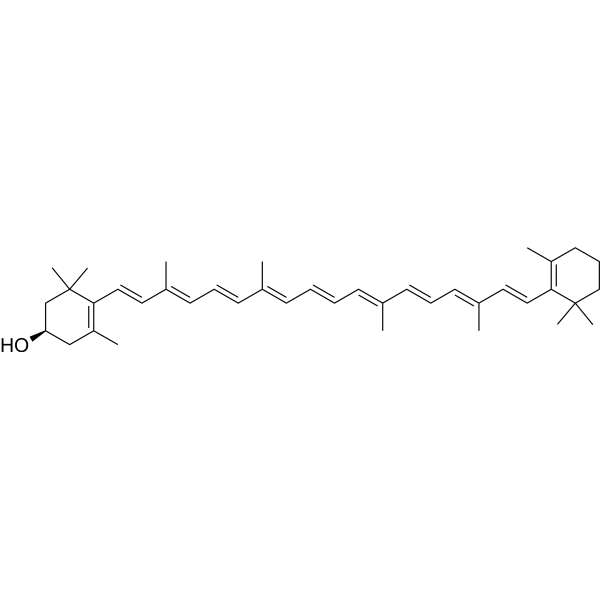
β-Cryptoxanthin ((3R)-β-Cryptoxanthin) is an orally active carotenoid found in fruits and vegetables such as angerines, red peppers, and pumpkin. β-Cryptoxanthin inhibits prevents osteoclast formation and inhibits bone resorption. β-Cryptoxanthin maintains retinol status in vivo. β-cryptoxanthin shows anti-inflammation and anticancer activity. β-Cryptoxanthin can be used for the researches of osteoporosis and bladder carcer.
For research use only. We do not sell to patients.
- CAS No.: 472-70-8
- Formula: C40H56O
- Molecular Weight:552.87
-
Storage:Powder -20°C, 3 years ; In solvent -80°C, 6 months , -20°C, 1 month

To place orders, for customer services and technical support, please contact: MedChemExpress USA
Tel: 609-228-6898 E-mail: [email protected] [email protected]


-
 Biological Activity
-
Chemical Information
- Protocols
- Purity & Documentation
- References
-
 Help & FAQs


-

HY-N2302R
Fucoxanthin (Standard)Marine Carotenoid -
HY-N0411
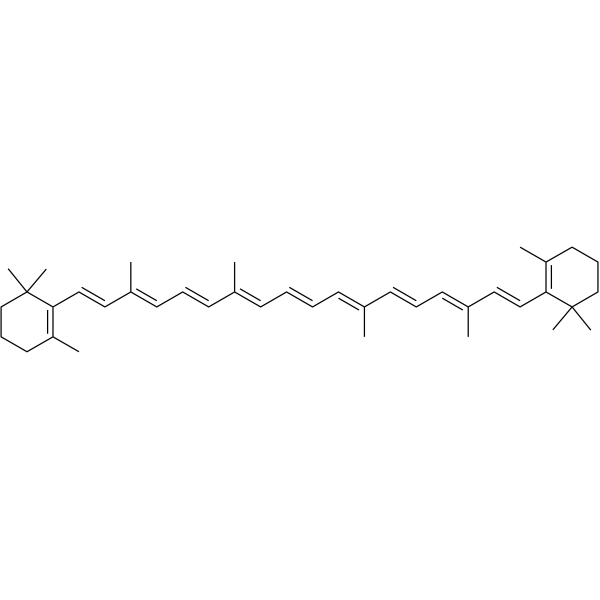
β-CaroteneCarotenoid compound -
HY-B2163
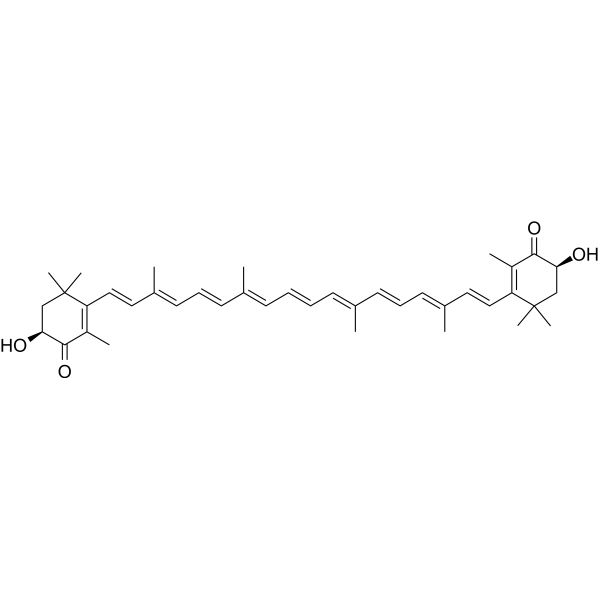
AstaxanthinAntioxidant -
HY-B1960
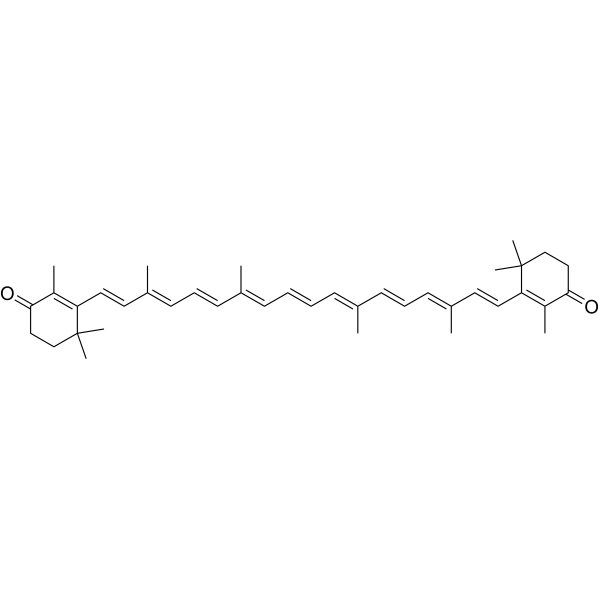
CanthaxanthinAntioxidant -
HY-N6947
LuteinAnti-inflammatory Agent -
HY-N2302
FucoxanthinMarine Carotenoid -
HY-120318
ZeaxanthinDiet-obtained Carotenoid -
HY-N2072
CrocetinAnticancer/Neuroprotective Agent -
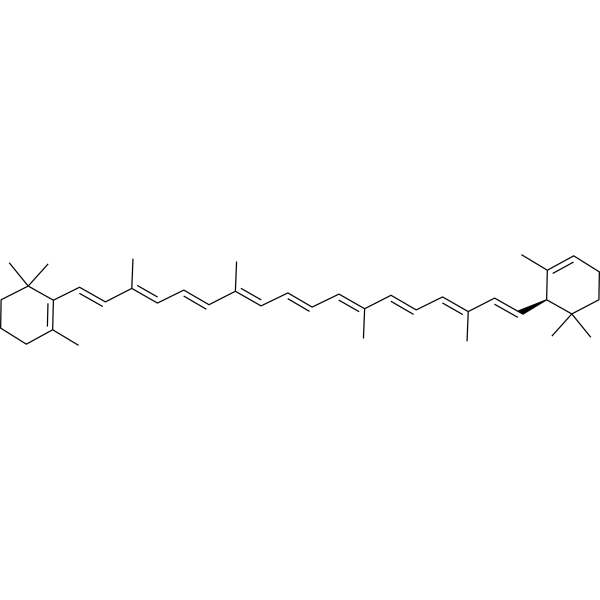
HY-113462
α-CaroteneVitamin A Precursor -

HY-N11697
α-CryptoxanthinCarotenoid -

HY-N2072R
Crocetin (Standard)Anticancer/Neuroprotective Agent -
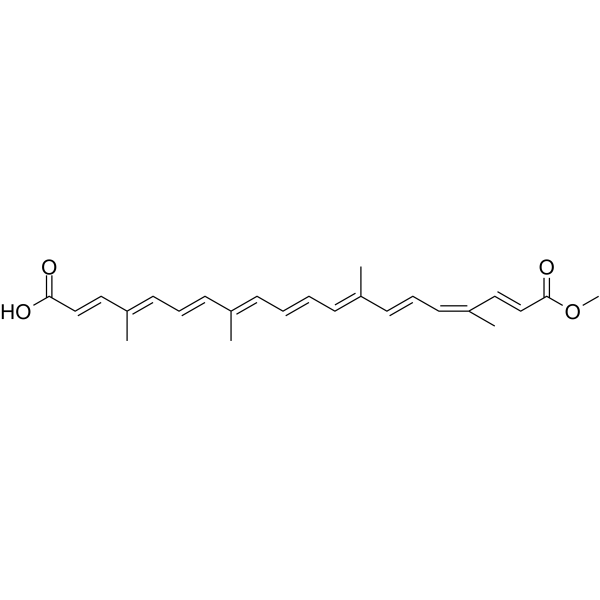
HY-N6884
BixinApoptosis Inducer


Biological Activity
Description
IC50 & Target
|
Human Endogenous Metabolite |
In Vitro
β-Cryptoxanthin inhibits growth, upregulates RARβ mRNA, and transactivates RARE-mediated transcription in BEAS-2B lung epithelial cells in vitro[1].
β-Cryptoxanthin increase calcium content,
protein content, and alkaline phosphatase activity in bone[1].
β-Cryptoxanthin inhibits bone resorption in vitro by preventing osteoclast formation in mouse marrow cultures and inducing caspase-3-dependent apoptosis of mature osteoclastic cells, with synergistic effects alongside zinc[1].
MedChemExpress (MCE) has not independently confirmed the accuracy of these methods. They are for reference only.
In Vivo
β-cryptoxanthin supplementation significantly decreases smoke-induced
squamous metaplasia and inflammation in the lung and lowers tumor necrosis factor a concentrations in lung tissue cells and macrophages in ferrets[1].
β-cryptoxanthin supplementation inhibits nicotine-promoted lung tumorigenesis and emphysema in A/J mice, while restoring key regulatory gene expression and improving survival[1].
β-cryptoxanthin supplementation inhibits N-butyl-N-(4-hydroxybutyl)nitrosamine-induced urinary bladder carcinogenesis in male ICR mice[1].
β-Cryptoxanthin (50-500 µg/kg; p.o.; daily; 1 week) increases bone formation markers and prevents bone loss in multiple rat models of osteoporosis, with enhanced efficacy when combined with zinc[1].
β-Cryptoxanthin (0.05-1.75 mg/kg; p.o.; ad libitum in drinking water; 7 days) dose-dependently suppresses psychosocial stress-induced adrenal hypertrophy in male ddY mice[2].
MedChemExpress (MCE) has not independently confirmed the accuracy of these methods. They are for reference only.
-
Animal Model:Rats with osteoporosis (young male, older female)[1]
-
Dosage:50, 100, 500 µg/kg
-
Administration:Oral; daily; 1 week
-
Result:Increased alkaline phosphatase activity and calcium concentrations in diaphyseal and metaphyseal tissues of young male and older female rats.
Prevented bone loss in streptozotocin-diabetic rats and ovariectomized rats.
Inhibited bone resorption.
Enhanced anabolic effects on bone components when combined with zinc sulfate.
Clinical Trial
| NCT Number | Sponsor | Condition | Start Date |
Phase

|
|---|---|---|---|---|
| NCT01329991 | 2011-05 | PHASE1 |


Chemical Information
-
CAS No. 472-70-8
-
Appearance Solid
-
Molecular Weight 552.87
-
Formula C40H56O
-
Color Red to dark red
-
SMILES
CC1(C)C(/C=C/C(C)=C/C=C/C(C)=C/C=C/C=C(C)/C=C/C=C(C)/C=C/C2=C(C)C[C@@H](O)CC2(C)C)=C(C)CCC1
-
Synonyms
(3R)-β-Cryptoxanthin
-
Structure Classification
-
Shipping
Room temperature in continental US; may vary elsewhere.
-
Storage
Powder -20°C 3 years In solvent -80°C 6 months -20°C 1 month


Purity & Documentation
-
Data Sheet (268 KB)
-
SDS (393 KB)
- English - EN (393 KB)
- Français - FR (393 KB)
- Deutsch - DE (393 KB)
- Norwegian - NO (393 KB)
- Español - ES (393 KB)
- Swedish - SV (393 KB)
- Italian - IT (393 KB)
- Korean - KR (393 KB)
- Portuguese - PT (393 KB)
-
Handling Instructions (2659 KB)
References

Calculators
Concentration (start) × Volume (start) = Concentration (final) × Volume (final)


β-Cryptoxanthin Related Classifications
HY-108059 Related Classifications
 Powered by Bioz