



SU1498
Based on 7 publication(s) in Google Scholar
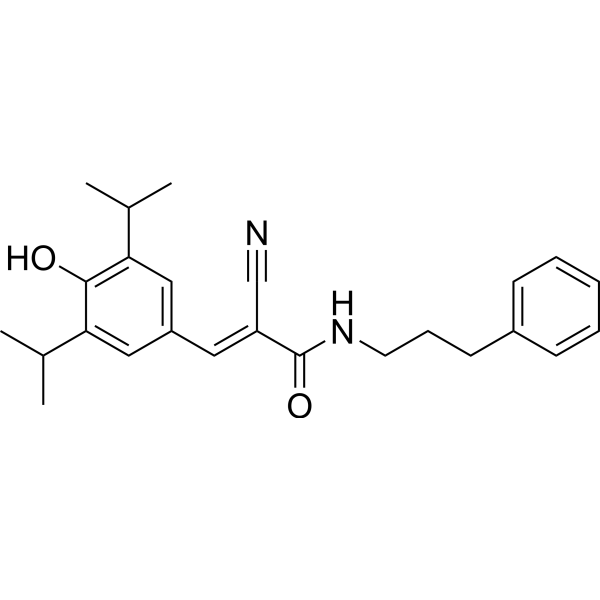
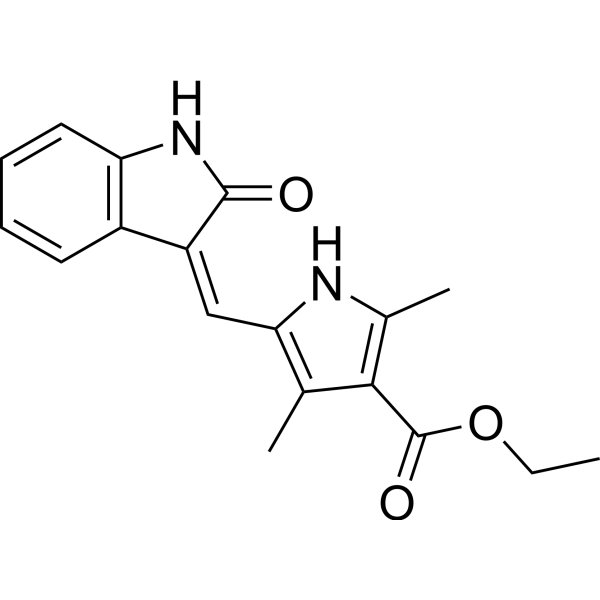
SU1498 (AG 1498) is a selective inhibitor of the VEGFR2; inhibits Flk-1 with an IC50 of value of 700 nM.
Nos produits utilisent uniquement pour la recherche. Nous ne vendons pas aux patients.
- Pureté: 98.84%
- CAS No.: 168835-82-3
- Formule: C25H30N2O2
- Masse moléculaire:390.52
-
Stockage:Powder -20°C, 3 years , 4°C, 2 years ; In solvent -80°C, 2 years , -20°C, 1 year

To place orders, for customer services and technical support, please contact: MedChemExpress USA
Tel: 609-228-6898 E-mail: [email protected] [email protected]


-
 Activité biologique
-
Chemical Information
-
Solvant et solubilité
- Protocole
- Pureté et documentation
- Références
-
 Help & FAQs


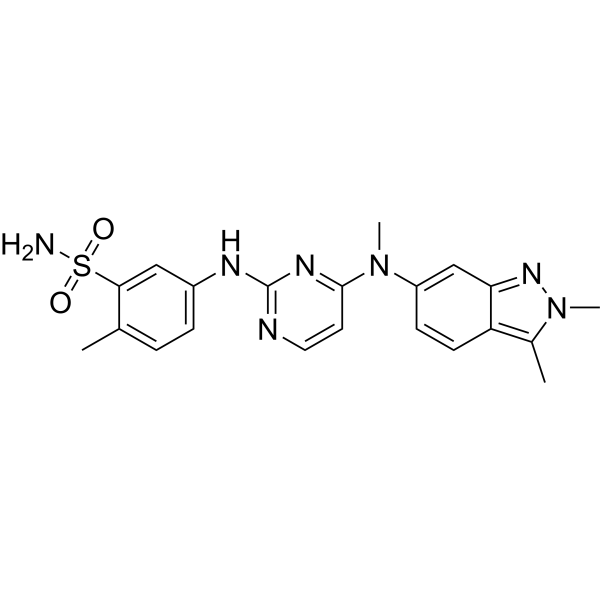
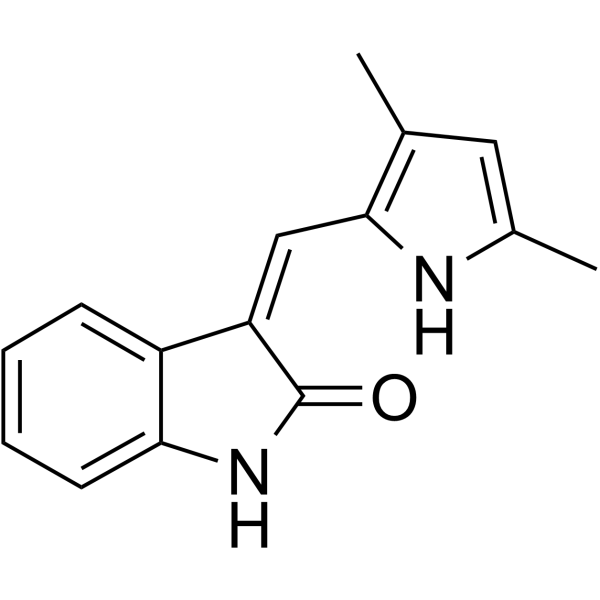
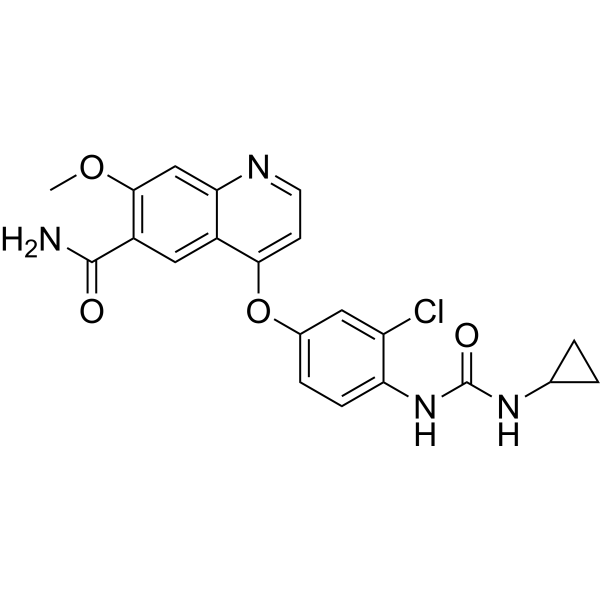
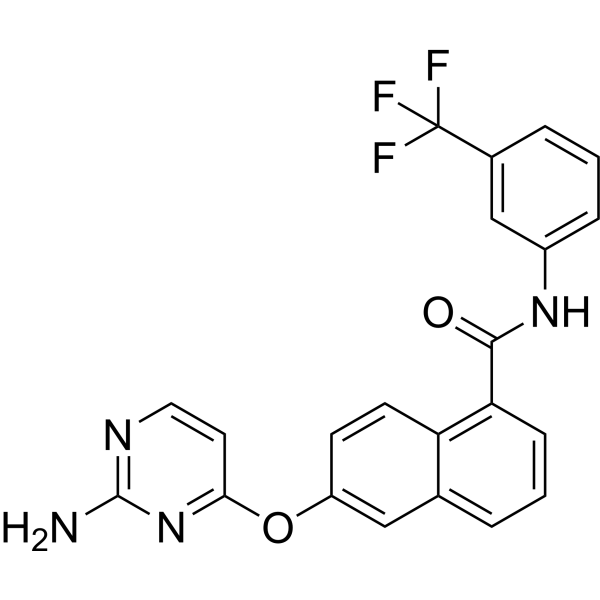
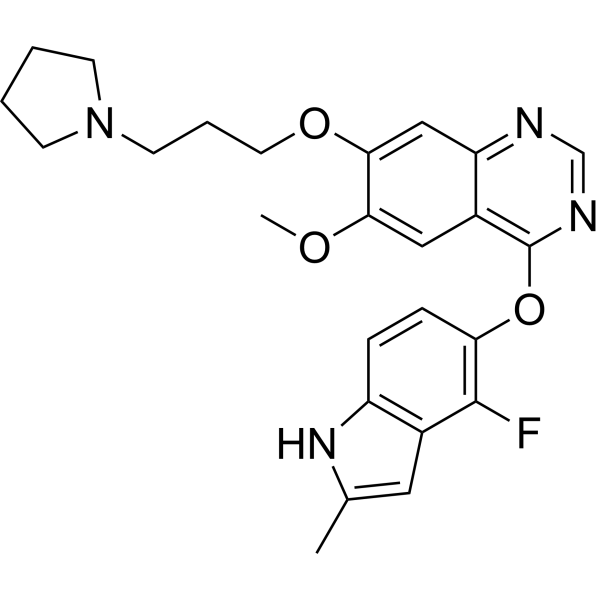
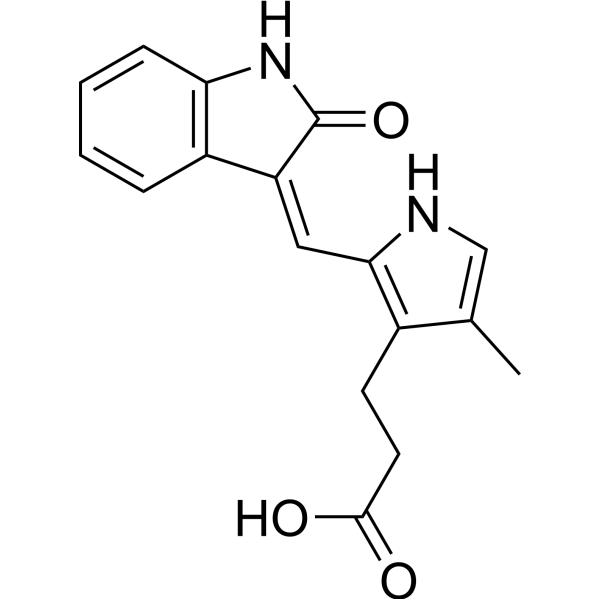
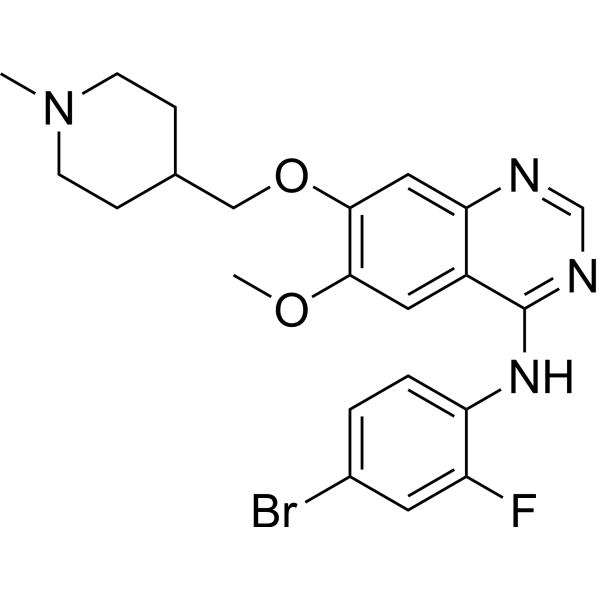
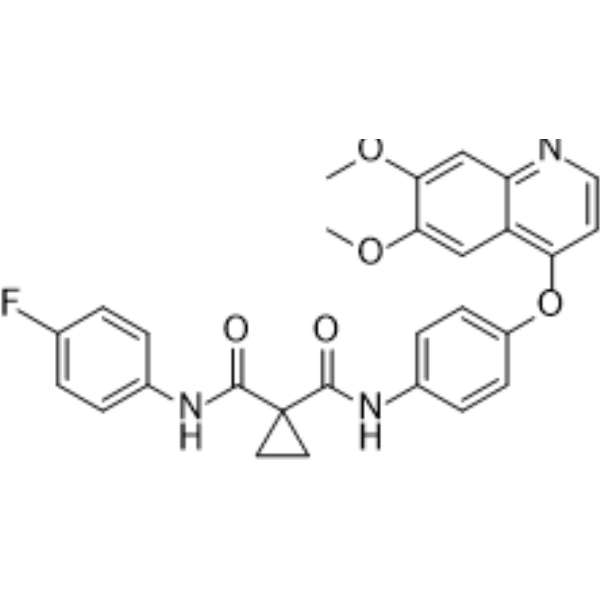
Publications Citing Use of MedChemExpress (MCE) SU1498
More- Adv Funct Mater. 2021 May 24.
- Cell Death Differ. 2026 May 13. [Abstract]
- Phytomedicine. 2020 Nov:78:153300. [Abstract]
- Cell Mol Neurobiol. 2023 Oct;43(7):3575-3592. [Abstract]
- Glia. 2023 Jul;71(7):1648-1666. [Abstract]
- Cell Signal. 2021 Jan:77:109812. [Abstract]
- Pflugers Arch. 2024 Dec;476(12):1913-1928. [Abstract]
Voir tous les produits spécifiques à Isoform VEGFR
More

Activité biologique
Description
IC50 & Target
[1]|
Flk-1 700 nM (IC50) |
In Vitro
SU1498 stimulates accumulation of phosphorylated ERKs in human umbilical vein endothelial cells and in human aortic endothelial cells in a manner that is dependent on the functioning of the upstream components of the MAPK pathway, B-Raf, and MEK kinases. The enhanced accumulation of phospho-ERKs is observed only in cells that have been stimulated with sphingosine 1-phosphate or protein growth factors; SU1498 by itself is ineffective[2]. SU1498 blocks signal transduction from VEGFR2 in MS1 VEGF cells.In the presence of SU1498, levels of Ets-1 are decreased, suggesting that VEGF-VEGFR-2 interactions contributed to baseline levels of Ets-1 expression, and interruption of this autocrine interaction with SU1498 led to decreased expression of Ets-1[3]. SU1498 treatment significantly impacts U87 cell proliferation and apoptosis. SU1498 induces a marked increase in lipids and a decrease in glycerophosphocholine. Accordingly, accumulation of lipid droplets is seen in the cytoplasm of SU1498-treated U87 cells[4].
MedChemExpress (MCE) has not independently confirmed the accuracy of these methods. They are for reference only.


Chemical Information
-
CAS No. 168835-82-3
-
Appearance Solid
-
Masse moléculaire 390.52
-
Formule C25H30N2O2
-
Color White to off-white
-
SMILES
O=C(NCCCC1=CC=CC=C1)/C(C#N)=C/C2=CC(C(C)C)=C(O)C(C(C)C)=C2
-
Synonyms
AG 1498; Tyrphostin SU 1498
-
Livraison
Room temperature in continental US; may vary elsewhere.
-
Stockage
Powder -20°C 3 years 4°C 2 years In solvent -80°C 2 years -20°C 1 year


Publications (7)
-
Journal Impact Factor
-
Most Recent
-
-
Cell Death Differ
Dual targeting of chemoresistance and ferroptosis in gastric cancer: DDR1/VEGFR2 inhibitor K-13 synergizes with docetaxel from preclinical models to phase Ib/II clinical trial. [Abstract]2026 May 13. PMID: 42128929 -
Phytomedicine
Catalpol protects vascular structure and promotes angiogenesis in cerebral ischemic rats by targeting HIF-1α/VEGF. [Abstract]2020 Nov:78:153300. PMID: 32866905 -
Cell Mol Neurobiol
BMECs Ameliorate High Glucose-Induced Morphological Aberrations and Synaptic Dysfunction via VEGF-Mediated Modulation of Glucose Uptake in Cortical Neurons. [Abstract]2023 Oct;43(7):3575-3592. PMID: 37418138 -
Glia
Vascular endothelial growth factor promotes transdifferentiation of astrocytes into neurons via activation of the MAPK/Erk-Pax6 signal pathway. [Abstract]2023 Jul;71(7):1648-1666. PMID: 36960578 -
Cell Signal
Blocking exosomal miRNA-153-3p derived from bone marrow mesenchymal stem cells ameliorates hypoxia-induced myocardial and microvascular damage by targeting the ANGPT1-mediated VEGF/PI3k/Akt/eNOS pathway. [Abstract]2021 Jan:77:109812. PMID: 33164880 -
Pflugers Arch
Unlocking the potential: unveiling tyrphostins with Michael-reactive cyanoacrylate motif as promising inhibitors of human 5-lipoxygenase. [Abstract]2024 Dec;476(12):1913-1928. PMID: 39347835


Solvant et solubilité
In Vitro:
DMSO : 100 mg/mL (256.07 mM; Need ultrasonic; Hygroscopic DMSO has a significant impact on the solubility of product, please use newly opened DMSO)
Please refer to the solubility information to select the appropriate solvent. Once prepared, please aliquot and store the solution to prevent product inactivation from repeated freeze-thaw cycles.
Storage method and period of stock solution: -80°C, 2 years; -20°C, 1 year. When stored at -80°C, please use it within 2 years. When stored at -20°C, please use it within 1 year.
Please refer to the solubility information to select the appropriate solvent. Once prepared, please aliquot and store the solution to prevent product inactivation from repeated freeze-thaw cycles.
Storage method and period of stock solution: -80°C, 2 years; -20°C, 1 year. When stored at -80°C, please use it within 2 years. When stored at -20°C, please use it within 1 year.
Concentration (start) × Volume (start) = Concentration (final) × Volume (final)
In Vivo:
Select the appropriate dissolution method based on your experimental animal and administration route.
- For the following dissolution methods, please ensure to first prepare a clear stock solution using an In Vitro approach and then sequentially add co-solvents:
- To ensure reliable experimental results, the clarified stock solution can be appropriately stored based on storage conditions. As for the working solution for In Vivo experiments, it is recommended to prepare freshly and use it on the same day.
- The percentages shown for the solvents indicate their volumetric ratio in the final prepared solution. If precipitation or phase separation occurs during preparation, heat and/or sonication can be used to aid dissolution.
Add each solvent one by one: 10% DMSO 40% PEG300 5% Tween-80 45% Saline
Solubility: ≥ 2.5 mg/mL (6.40 mM); Clear solution
This protocol yields a clear solution of ≥ 2.5 mg/mL (saturation unknown).
Taking 1 mL working solution as an example, add 100 μL DMSO stock solution (25.0 mg/mL) to 400 μL PEG300, and mix evenly; then add 50 μL Tween-80 and mix evenly; then add 450 μL Saline to adjust the volume to 1 mL.
Preparation of Saline: Dissolve 0.9 g sodium chloride in ddH₂O and dilute to 100 mL to obtain a clear Saline solution.
Add each solvent one by one: 10% DMSO 90% (20% SBE-β-CD in Saline)
Solubility: 2.5 mg/mL (6.40 mM); Suspended solution; Need ultrasonic
This protocol yields a suspended solution of 2.5 mg/mL. Suspended solution can be used for oral and intraperitoneal injection.
Taking 1 mL working solution as an example, add 100 μL DMSO stock solution (25.0 mg/mL) to 900 μL 20% SBE-β-CD in Saline, and mix evenly.
Preparation of 20% SBE-β-CD in Saline (4°C, storage for one week): 2 g SBE-β-CD powder is dissolved in 10 mL Saline, completely dissolve until clear.
In Vivo Dissolution Calculator
Please enter the basic information of animal experiments:
-
-
-
-
Recommended: Prepare an additional quantity of animals to account for potential losses during experiments.
Please enter your animal formula composition:
-
%DMSO +
Recommended: Keep the proportion of DMSO in working solution below 2% if your animal is weak.
-
%+
-
+%Tween-80 + +
-
%Saline +
The co-solvents required include: DMSO, . All of co-solvents are available by MedChemExpress (MCE). , Tween 80. All of co-solvents are available by MedChemExpress (MCE).
Working solution concentration: 0.22 mg/mL
Method for preparing stock solution: mg drug dissolved in μL DMSO. Stock solution concentration: mg/mL.
1. Take μL DMSO stock solution;
2. Add μL .
μL , mix evenly;
3. Then add μL Tween 80, mix evenly;
4. Then add μL
Please ensure that the stock solution in the first step is dissolved to a clear state, and add co-solvents in sequence. You can use ultrasonic heating (ultrasonic cleaner, recommended frequency 20-40 kHz), vortexing, etc. to assist dissolution.

Protocole
Kinase Assay[2]
The ERK1 or ERK2 solution is pipetted into tubes (1 μL per tube) and mixed with 0-10 μL of 50 μM SU1498 (in kinase buffer without ATP). The blank tube receives buffer only. The volume is adjusted to 11 μL with the same buffer, and the mixtures are incubated for 10 min at 25°C. This is followed by the addition of 40 μL of the Elk1-ATP-buffer solution, and the incubations are continued for 30 min at 30°C. The reactions are stopped with 20 μL of 4× sample buffer mix and heating at 95°C for 10 min. Samples (15 μL) are fractionated by SDS-PAGE, and phosphorylated Elk1 is detected by immunoblotting with anti-phospho-Elk1 antibody[2].
MedChemExpress (MCE) has not independently confirmed the accuracy of these methods. They are for reference only.
Cell Assay[4]
For cell proliferation assay, U87 cells are seeded in 24-well plates (30,000 cells/well) and allowed to attach overnight. Cells are then treated for 24 or 72 h with different concentrations of Bevacizumab (from 10 ng/mL to 250 µg/mL) or SU1498 (from 1 µM to 30 µM) in triplicate wells. The cell viability is then assessed with the MTT assay[4].
MedChemExpress (MCE) has not independently confirmed the accuracy of these methods. They are for reference only.


Pureté et documentation
-
Fiche technique (275 KB)
-
SDS (393 KB)
- English - EN (393 KB)
- Français - FR (393 KB)
- Deutsch - DE (393 KB)
- Norwegian - NO (393 KB)
- Español - ES (393 KB)
- Swedish - SV (393 KB)
- Italian - IT (393 KB)
- Korean - KR (393 KB)
- Portuguese - PT (393 KB)
-
Instruction de manipulation (2659 KB)
Références
[1]. Strawn LM, et al. Flk-1 as a target for tumor growth inhibition.Cancer Res. 1996 Aug 1;56(15):3540-5. [Content Brief]
[2]. Boguslawski G, et al. SU1498, an inhibitor of vascular endothelial growth factor receptor 2, causes accumulation of phosphorylated ERK kinases and inhibits their activity in vivo and in vitro.J Biol Chem. 2004 Feb 13;279(7):5716-24. [Content Brief]
[3]. Arbiser JL, et al. Overexpression of VEGF 121 in immortalized endothelial cells causes conversion to slowly growing angiosarcoma and high level expression of the VEGF receptors VEGFR-1 and VEGFR-2 in vivo.Am J Pathol. 2000 Apr;156(4):1469-76. [Content Brief]
[4]. Mesti T, et al. Metabolic impact of anti-angiogenic agents on U87 glioma cells.PLoS One. 2014 Jun 12;9(6):e99198. [Content Brief]


Complete Stock Solution Preparation Table
Please refer to the solubility information to select the appropriate solvent. Once prepared, please aliquot and store the solution to prevent product inactivation from repeated freeze-thaw cycles.
Storage method and period of stock solution: -80°C, 2 years; -20°C, 1 year. When stored at -80°C, please use it within 2 years. When stored at -20°C, please use it within 1 year.
| Optional Solvent | Concentration Solvent Mass | 1 mg | 5 mg | 10 mg | 25 mg |
|---|---|---|---|---|---|
| DMSO | 1 mM | 2.5607 mL | 12.8034 mL | 25.6069 mL | 64.0172 mL |
| 5 mM | 0.5121 mL | 2.5607 mL | 5.1214 mL | 12.8034 mL | |
| 10 mM | 0.2561 mL | 1.2803 mL | 2.5607 mL | 6.4017 mL | |
| 15 mM | 0.1707 mL | 0.8536 mL | 1.7071 mL | 4.2678 mL | |
| 20 mM | 0.1280 mL | 0.6402 mL | 1.2803 mL | 3.2009 mL | |
| 25 mM | 0.1024 mL | 0.5121 mL | 1.0243 mL | 2.5607 mL | |
| 30 mM | 0.0854 mL | 0.4268 mL | 0.8536 mL | 2.1339 mL | |
| 40 mM | 0.0640 mL | 0.3201 mL | 0.6402 mL | 1.6004 mL | |
| 50 mM | 0.0512 mL | 0.2561 mL | 0.5121 mL | 1.2803 mL | |
| 60 mM | 0.0427 mL | 0.2134 mL | 0.4268 mL | 1.0670 mL | |
| 80 mM | 0.0320 mL | 0.1600 mL | 0.3201 mL | 0.8002 mL | |
| 100 mM | 0.0256 mL | 0.1280 mL | 0.2561 mL | 0.6402 mL |


SU1498 Related Classifications
HY-19326 Related Classifications
 Powered by Bioz