



Dapsone hydroxylamine

Based on 1 Customer Validation
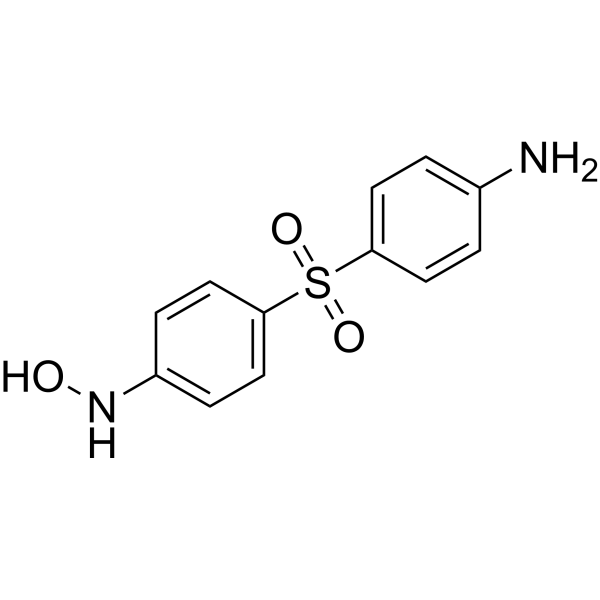
Dapsone hydroxylamine (DDS-NOH) induces methemoglobinemia. Dapsone hydroxylamine inhibits catalase (CAT) activity and reactive oxygen species generation. Dapsone hydroxylamine also has anti-inflammatory activity.
Nos produits utilisent uniquement pour la recherche. Nous ne vendons pas aux patients.
- Pureté : 99.3%
- CAS No.: 32695-27-5
- Formule: C12H12N2O3S
- Masse moléculaire:264.30
-
Stockage:
4°C, sealed storage, away from moisture and light
* In solvent : -80°C, 6 months; -20°C, 1 month (sealed storage, away from moisture and light)

To place orders, for customer services and technical support, please contact: MedChemExpress USA
Tel: 609-228-6898 E-mail: [email protected] [email protected]


-
 Activité biologique
-
Chemical Information
- Protocole
- Pureté et documentation
- Références
-
 Help & FAQs


-
HY-125783
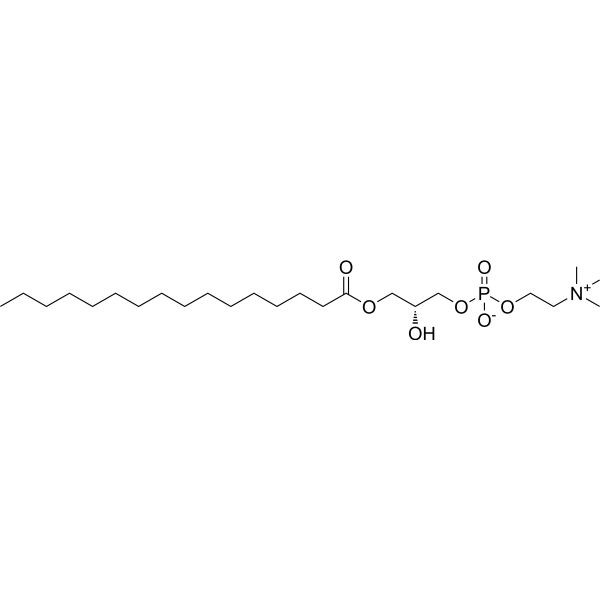
1-Palmitoyl-sn-glycero-3-phosphocholineLysophosphatidylcholine -
HY-N8461
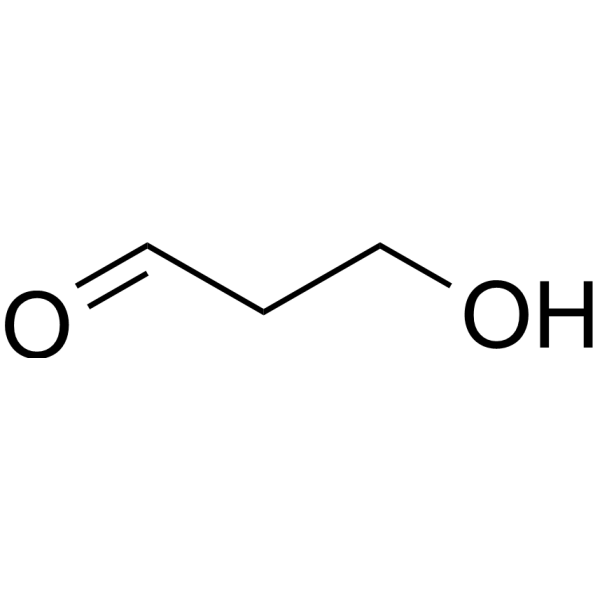
ReuterinAntimicrobial Agent -
HY-120976
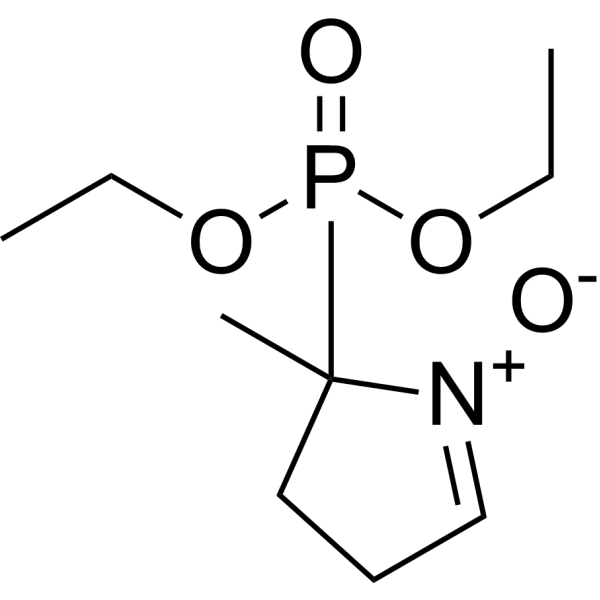
DEPMPOSpin-trapping Probe -
HY-W028393
Indole-3-pyruvic acidAHR Agonist -
HY-W017464
NAPQIAcetaminophen Metabolite -

HY-W028393R
Indole-3-pyruvic acid (Standard)Reference Standard -
HY-113093S
Ethyl glucuronide-d5Stable Isotope -
HY-G0016
N-Acetyl dapsoneDapsone Metabolite -

HY-125783R
1-Palmitoyl-sn-glycero-3-phosphocholine (Standard)Analytical Standard -
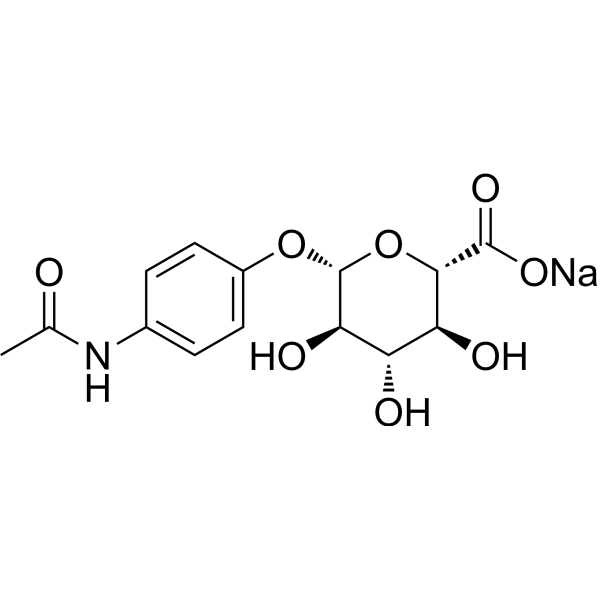
HY-W016034
Acetaminophen glucuronide sodium saltAnalgesic and Antipyretic Agent -
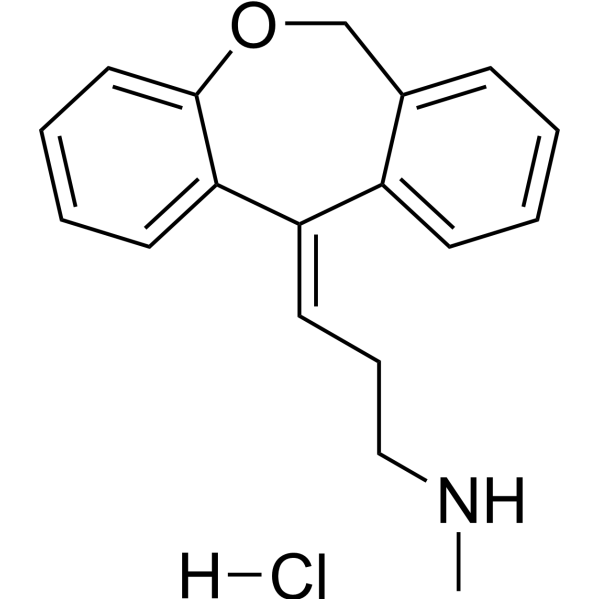
HY-100046
Nordoxepin hydrochlorideDoxepin Metabolite -
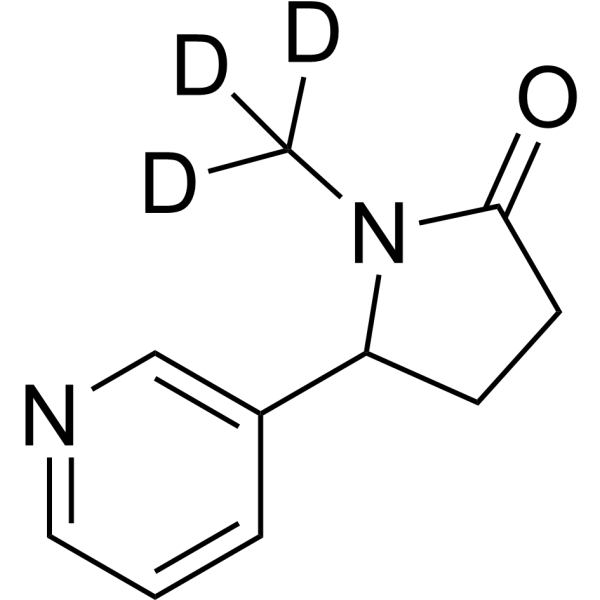
HY-B1178S
(Rac)-Cotinine-d3Stable Isotope


Activité biologique
Description


Chemical Information
-
CAS No. 32695-27-5
-
Appearance Solid
-
Masse moléculaire 264.30
-
Formule C12H12N2O3S
-
Color White to off-white
-
SMILES
O=S(C1=CC=C(C=C1)N)(C2=CC=C(C=C2)NO)=O
-
Synonyms
DDS-NOH
-
Livraison
Room temperature in continental US; may vary elsewhere.
-
Stockage
4°C, sealed storage, away from moisture and light
* In solvent : -80°C, 6 months; -20°C, 1 month (sealed storage, away from moisture and light)


Pureté et documentation
-
Fiche technique (267 KB)
-
SDS (393 KB)
- English - EN (393 KB)
- Français - FR (393 KB)
- Deutsch - DE (393 KB)
- Norwegian - NO (393 KB)
- Español - ES (393 KB)
- Swedish - SV (393 KB)
- Italian - IT (393 KB)
- Korean - KR (393 KB)
- Portuguese - PT (393 KB)
-
Instruction de manipulation (2659 KB)
Références
[1]. Albuquerque RV, et al. In Vitro Protective Effect and Antioxidant Mechanism of Resveratrol Induced by Dapsone Hydroxylamine in Human Cells. PLoS One. 2015 Aug 18;10(8):e0134768. [Content Brief]
[2]. Wozel G, et al. Dapsone hydroxylamine inhibits the LTB4-induced chemotaxis of polymorphonuclear leukocytes into human skin: results of a pilot study. Inflamm Res. 1997 Oct;46(10):420-2. [Content Brief]

Calculators
Concentration (start) × Volume (start) = Concentration (final) × Volume (final)


Dapsone hydroxylamine Related Classifications
HY-137155 Related Classifications
 Powered by Bioz