



LX2761

Based on 1 Customer Validation
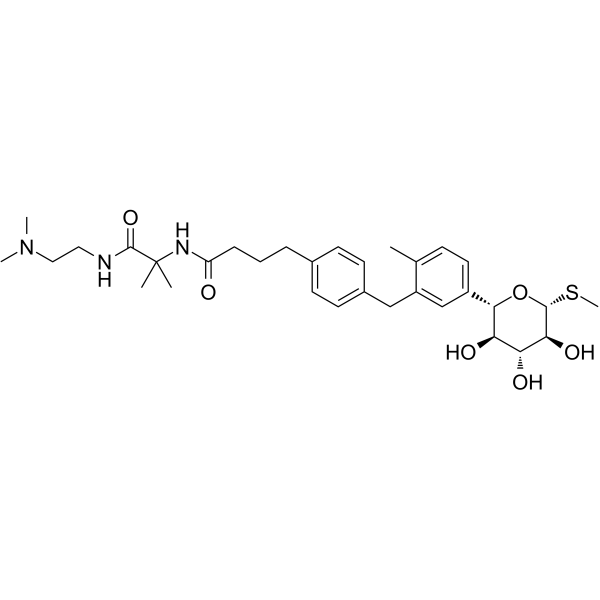
LX2761 is an orally active, dual SGLT1/SGLT2 inhibitor with IC50 values of 2.2 nM and 2.7 nM against human SGLT1 and SGLT2, respectively. LX2761 locks human SGLT1 in an outward-open conformation and blocks its putative water permeation pathway. After oral administration, LX2761 is confined exclusively to the intestinal lumen, delays intestinal glucose absorption, regulates intestinal glucose metabolism, increases cecal glucose levels, reduces cecal pH, improves glycemic control and elevates plasma total GLP-1 levels. However, LX2761 induces diarrhea in a dose-dependent manner. LX2761 can be used in diabetes-related research.
Nos produits utilisent uniquement pour la recherche. Nous ne vendons pas aux patients.
- Pureté: 98.98%
- CAS No.: 1610954-97-6
- Formule: C32H47N3O6S
- Masse moléculaire:601.80
-
Stockage:
-20°C, protect from light
* In solvent : -80°C, 6 months; -20°C, 1 month (protect from light)

To place orders, for customer services and technical support, please contact: MedChemExpress USA
Tel: 609-228-6898 E-mail: [email protected] [email protected]


-
 Activité biologique
-
Chemical Information
-
Solvant et solubilité
- Pureté et documentation
- Références
-
 Help & FAQs


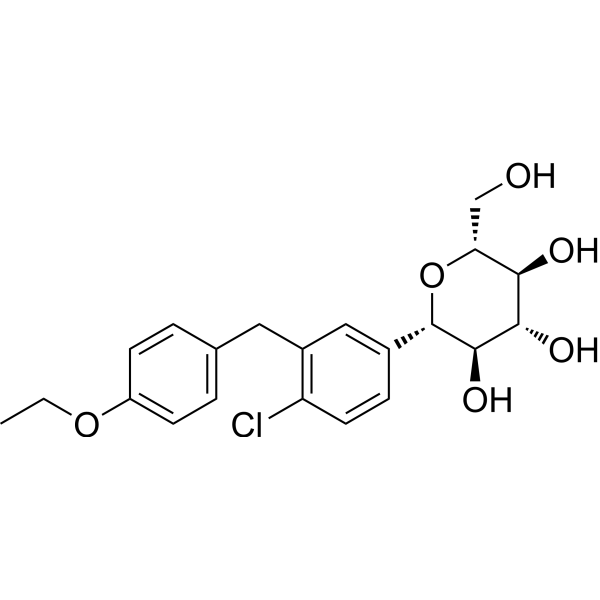
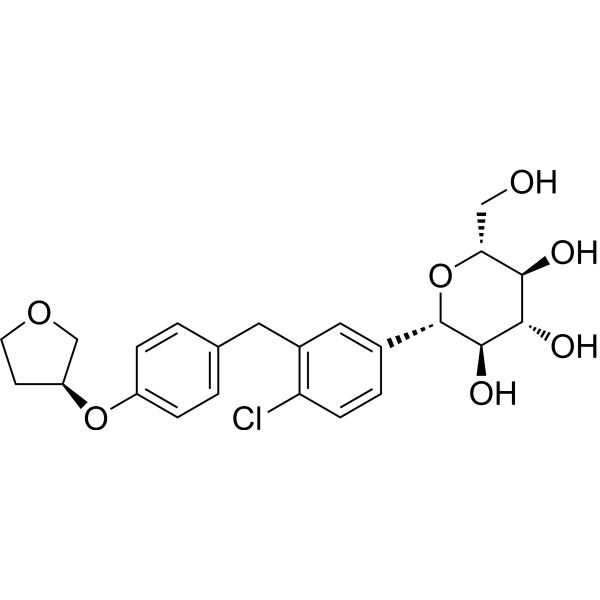
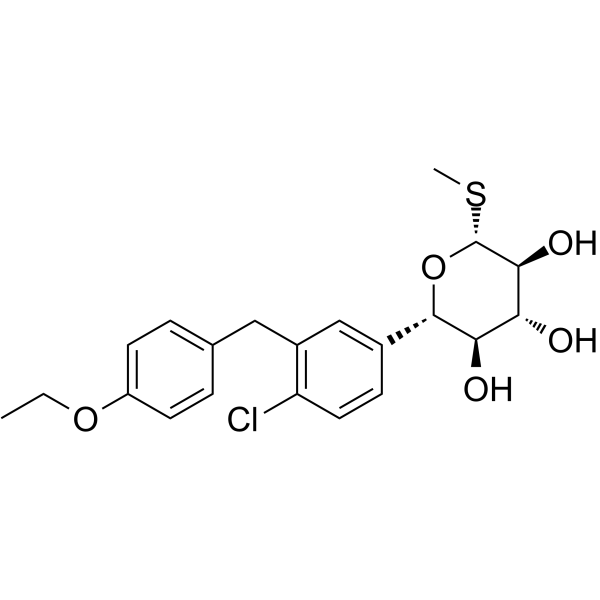



Activité biologique
Description
IC50 & Target
|
hSGLT1 2.2 nM (IC50) |
hSGLT2 2.7 nM (IC50) |
mSGLT1 3.7 nM (IC50) |
rSGLT1 5.7 nM (IC50) |
mSGLT2 1.0 nM (IC50) |
rSGLT2 1.1 nM (IC50) |
SGLT1 5.1 nM (IC50, dog) |
SGLT1 1.4 nM (IC50, monkey) |
SGLT2 1.8 nM (IC50, dog) |
SGLT2 1.1 nM (IC50, monkey) |
Cellular Effect
|
Cell Line

|
Type | Value | Description | References |
|---|---|---|---|---|
| HEK293 | IC50 |
2.2 nM
Compound: 21
|
Inhibition of human HA-tagged SGLT1 expressed in HEK293 cells assessed as decrease in [14C]-AMG uptake measured after 1 to 2 hrs by scintillation counting method
Inhibition of human HA-tagged SGLT1 expressed in HEK293 cells assessed as decrease in [14C]-AMG uptake measured after 1 to 2 hrs by scintillation counting method
|
[PMID: 28045524] |
| HEK293 | IC50 |
2.7 nM
Compound: 21
|
Inhibition of human HA-tagged SGLT2 expressed in HEK293 cells assessed as decrease in [14C]-AMG uptake measured after 1 to 2 hrs by scintillation counting method
Inhibition of human HA-tagged SGLT2 expressed in HEK293 cells assessed as decrease in [14C]-AMG uptake measured after 1 to 2 hrs by scintillation counting method
|
[PMID: 28045524] |
In Vitro
LX2761 (1.0-5.7 nM) potently inhibits SGLT1 and SGLT2 across multiple mammalian species, with IC50 values ranging from 1.0 nM to 5.7 nM in HEK293 cells expressing the respective transporters[2].
LX2761 (1-400 μM; 1 h) binds with high affinity to the hSGLT1-MAP17 complex, locking it in an outward-open conformation and blocking the transporter's water permeation pathway[3].
LX2761 (0.01-1000 nM; 1 h) potently inhibits 1-NBD-glucose uptake by non-tagged wild-type hSGLT1 in AD293 cells with an IC50 of 2.03 nM[3].
LX2761 (0.01-1000 nM; 1 h) potently inhibits 1-NBD-glucose uptake by the hSGLT1_GFP-MAP17_nb complex in AD293 cells with an IC50 of 2.30 nM[3].
LX2761 (0.01-1000 nM; 1 h) has reduced potency for inhibition of 1-NBD-glucose uptake in AD293 cells due to the L274A mutation in hSGLT1[3].
MedChemExpress (MCE) has not independently confirmed the accuracy of these methods. They are for reference only.
Parmacokinetics
In Vivo
LX2761 (0.0225-0.25 mg/kg; p.o.; once daily; for 5 consecutive days) dose-dependently reduces postprandial blood glucose fluctuations and increases tGLP-1 levels in healthy rats fed a high-fat and high-glucose (HGD) diet; the 0.0625 mg/kg dose produces a significant hypoglycemic effect without inducing diarrhea[2].
LX2761 (3 mg/kg; p.o.; once daily; for 49 consecutive days) improves glycemic control, significantly increases the survival rate of mice with advanced Streptozotocin (HY-13753)-induced diabetes, while reducing fasting blood glucose, improving A1C and decreasing postprandial blood glucose fluctuations[2].
A stepwise oral dose escalation regimen of LX2761 (0.5-0.7 mg/kg; p.o.; daily; for 7 consecutive days, with dose escalation gradually implemented between days 45 and 59) significantly reduces the incidence of diarrhea in mice fed a HGD diet, compared to acute administration at the same final dose[2].
Diarrhea induced by LX2761 (0.2-1.5 mg/kg; p.o.; daily; for 4 consecutive days) in HGD mice is antagonized by resistant starch, without impairing the glucose-lowering efficacy of LX2761[2].
MedChemExpress (MCE) has not independently confirmed the accuracy of these methods. They are for reference only.
-
Animal Model:C57BL/6-Tyrc-Brd (male, adult, streptozotocin-induced early-onset diabetes)[2]
-
Dosage:1.5 mg/kg; 3 mg/kg
-
Administration:p.o.; daily; 39 days
-
Result:Significantly and dose-dependently decreased OGTT glucose excursions on days 21 and 39.
Significantly decreased fasting blood glucose levels after 32 days of treatment.
Slowed the rise in A1C levels relative to vehicle after 32 days of treatment.
Significantly increased cecal glucose levels and decreased cecal pH at necropsy.
Did not alter plasma tGLP-1 levels post-glucose challenge.
Did not significantly affect food consumption and body weight.
-
Animal Model:C57BL/6-Tyrc-Brd (male, adult, streptozotocin-induced advanced-onset diabetes)[2]
-
Dosage:1.5 mg/kg; 3 mg/kg
-
Administration:p.o.; daily; 49 days
-
Result:Significantly improved mouse survival relative to vehicle at 3 mg/kg.
Significantly decreased baseline blood glucose and OGTT glucose excursions on day 20 at both doses.
Significantly improved A1C values on day 30 at 3 mg/kg.
Significantly decreased fasting blood glucose and OGTT glucose excursions on day 49 at both doses.
Significantly increased plasma tGLP-1 levels, cecal glucose levels, and decreased cecal pH relative to vehicle at 3 mg/kg on day 49.
Caused rarely observed diarrhea limited to the first few days of treatment.


Chemical Information
-
CAS No. 1610954-97-6
-
Appearance Solid
-
Masse moléculaire 601.80
-
Formule C32H47N3O6S
-
Color White to off-white
-
SMILES
CC1=CC=C([C@H]2[C@H](O)[C@@H](O)[C@H](O)[C@@H](SC)O2)C=C1CC3=CC=C(CCCC(NC(C(NCCN(C)C)=O)(C)C)=O)C=C3
-
Livraison
Room temperature in continental US; may vary elsewhere.
-
Stockage
-20°C, protect from light
* In solvent : -80°C, 6 months; -20°C, 1 month (protect from light)


Solvant et solubilité
In Vitro:
DMSO : 100 mg/mL (166.17 mM; Need ultrasonic; Hygroscopic DMSO has a significant impact on the solubility of product, please use newly opened DMSO)
Please refer to the solubility information to select the appropriate solvent. Once prepared, please aliquot and store the solution to prevent product inactivation from repeated freeze-thaw cycles.
Storage method and period of stock solution: -80°C, 6 months; -20°C, 1 month (protect from light). When stored at -80°C, please use it within 6 months. When stored at -20°C, please use it within 1 month.
Please refer to the solubility information to select the appropriate solvent. Once prepared, please aliquot and store the solution to prevent product inactivation from repeated freeze-thaw cycles.
Storage method and period of stock solution: -80°C, 6 months; -20°C, 1 month (protect from light). When stored at -80°C, please use it within 6 months. When stored at -20°C, please use it within 1 month.
Concentration (start) × Volume (start) = Concentration (final) × Volume (final)
In Vivo:
Select the appropriate dissolution method based on your experimental animal and administration route.
- For the following dissolution methods, please ensure to first prepare a clear stock solution using an In Vitro approach and then sequentially add co-solvents:
- To ensure reliable experimental results, the clarified stock solution can be appropriately stored based on storage conditions. As for the working solution for In Vivo experiments, it is recommended to prepare freshly and use it on the same day.
- The percentages shown for the solvents indicate their volumetric ratio in the final prepared solution. If precipitation or phase separation occurs during preparation, heat and/or sonication can be used to aid dissolution.
Add each solvent one by one: 10% DMSO 40% PEG300 5% Tween-80 45% Saline
Solubility: ≥ 7.5 mg/mL (12.46 mM); Clear solution
This protocol yields a clear solution of ≥ 7.5 mg/mL (saturation unknown).
Taking 1 mL working solution as an example, add 100 μL DMSO stock solution (75.0 mg/mL) to 400 μL PEG300, and mix evenly; then add 50 μL Tween-80 and mix evenly; then add 450 μL Saline to adjust the volume to 1 mL.
Preparation of Saline: Dissolve 0.9 g sodium chloride in ddH₂O and dilute to 100 mL to obtain a clear Saline solution.
Add each solvent one by one: 10% DMSO 90% (20% SBE-β-CD in Saline)
Solubility: ≥ 7.5 mg/mL (12.46 mM); Clear solution
This protocol yields a clear solution of ≥ 7.5 mg/mL (saturation unknown).
Taking 1 mL working solution as an example, add 100 μL DMSO stock solution (75.0 mg/mL) to 900 μL 20% SBE-β-CD in Saline, and mix evenly.
Preparation of 20% SBE-β-CD in Saline (4°C, storage for one week): 2 g SBE-β-CD powder is dissolved in 10 mL Saline, completely dissolve until clear.
In Vivo Dissolution Calculator
Please enter the basic information of animal experiments:
-
-
-
-
Recommended: Prepare an additional quantity of animals to account for potential losses during experiments.
Please enter your animal formula composition:
-
%DMSO +
Recommended: Keep the proportion of DMSO in working solution below 2% if your animal is weak.
-
%+
-
+%Tween-80 + +
-
%Saline +
The co-solvents required include: DMSO, . All of co-solvents are available by MedChemExpress (MCE). , Tween 80. All of co-solvents are available by MedChemExpress (MCE).
Working solution concentration: 0.22 mg/mL
Method for preparing stock solution: mg drug dissolved in μL DMSO. Stock solution concentration: mg/mL. * In solvent : -80°C, 6 months; -20°C, 1 month (protect from light)
1. Take μL DMSO stock solution;
2. Add μL .
μL , mix evenly;
3. Then add μL Tween 80, mix evenly;
4. Then add μL
Please ensure that the stock solution in the first step is dissolved to a clear state, and add co-solvents in sequence. You can use ultrasonic heating (ultrasonic cleaner, recommended frequency 20-40 kHz), vortexing, etc. to assist dissolution.


Pureté et documentation
-
Fiche technique (276 KB)
-
SDS (252 KB)
- English - EN (252 KB)
- Français - FR (252 KB)
- Deutsch - DE (252 KB)
- Norwegian - NO (252 KB)
- Español - ES (252 KB)
- Swedish - SV (252 KB)
- Italian - IT (252 KB)
- Korean - KR (252 KB)
- Portuguese - PT (252 KB)
-
Instruction de manipulation (2659 KB)
Références
[1]. Spatola L, et al. SGLT1 and SGLT1 Inhibitors: A Role to Be Assessed in the Current Clinical Practice. Diabetes Ther. 2018;9(1):427-430. [Content Brief]
[2]. Powell DR, et al. LX2761, a Sodium/Glucose Cotransporter 1 Inhibitor Restricted to the Intestine, Improves Glycemic Control in Mice. J Pharmacol Exp Ther. 2017;362(1):85-97. [Content Brief]
[3]. Niu Y, et al. Structural mechanism of SGLT1 inhibitors. Nat Commun. 2022;13(1):6440. Published 2022 Oct 28. [Content Brief]


Complete Stock Solution Preparation Table
Please refer to the solubility information to select the appropriate solvent. Once prepared, please aliquot and store the solution to prevent product inactivation from repeated freeze-thaw cycles.
Storage method and period of stock solution: -80°C, 6 months; -20°C, 1 month (protect from light). When stored at -80°C, please use it within 6 months. When stored at -20°C, please use it within 1 month.
| Optional Solvent | Concentration Solvent Mass | 1 mg | 5 mg | 10 mg | 25 mg |
|---|---|---|---|---|---|
| DMSO | 1 mM | 1.6617 mL | 8.3084 mL | 16.6168 mL | 41.5420 mL |
| 5 mM | 0.3323 mL | 1.6617 mL | 3.3234 mL | 8.3084 mL | |
| 10 mM | 0.1662 mL | 0.8308 mL | 1.6617 mL | 4.1542 mL | |
| 15 mM | 0.1108 mL | 0.5539 mL | 1.1078 mL | 2.7695 mL | |
| 20 mM | 0.0831 mL | 0.4154 mL | 0.8308 mL | 2.0771 mL | |
| 25 mM | 0.0665 mL | 0.3323 mL | 0.6647 mL | 1.6617 mL | |
| 30 mM | 0.0554 mL | 0.2769 mL | 0.5539 mL | 1.3847 mL | |
| 40 mM | 0.0415 mL | 0.2077 mL | 0.4154 mL | 1.0386 mL | |
| 50 mM | 0.0332 mL | 0.1662 mL | 0.3323 mL | 0.8308 mL | |
| 60 mM | 0.0277 mL | 0.1385 mL | 0.2769 mL | 0.6924 mL | |
| 80 mM | 0.0208 mL | 0.1039 mL | 0.2077 mL | 0.5193 mL | |
| 100 mM | 0.0166 mL | 0.0831 mL | 0.1662 mL | 0.4154 mL |


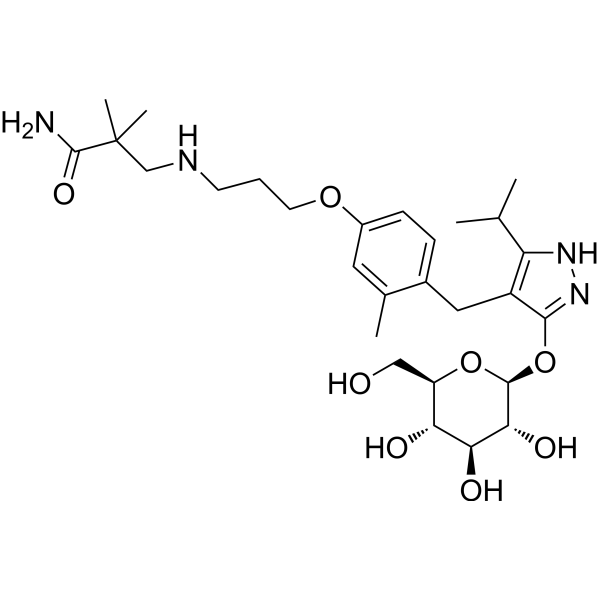
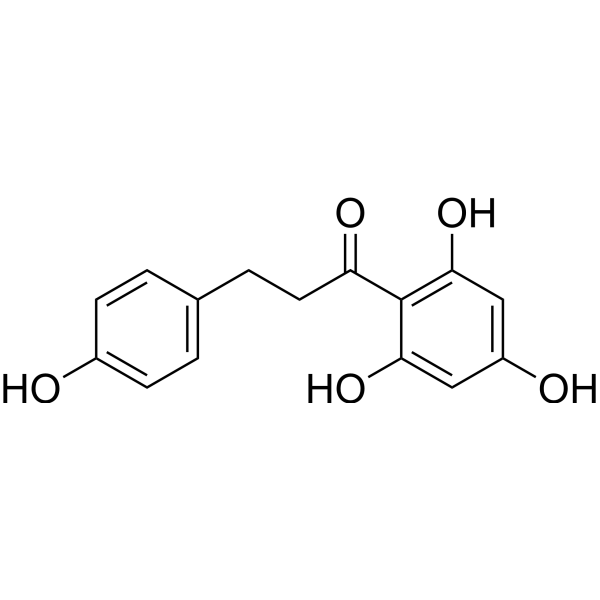
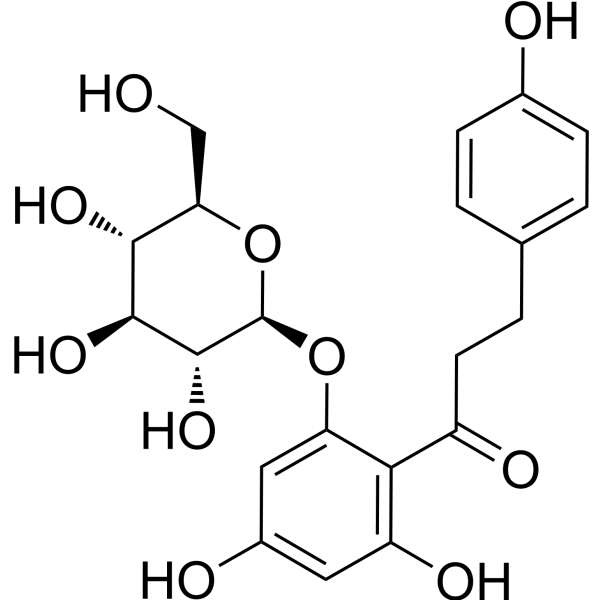
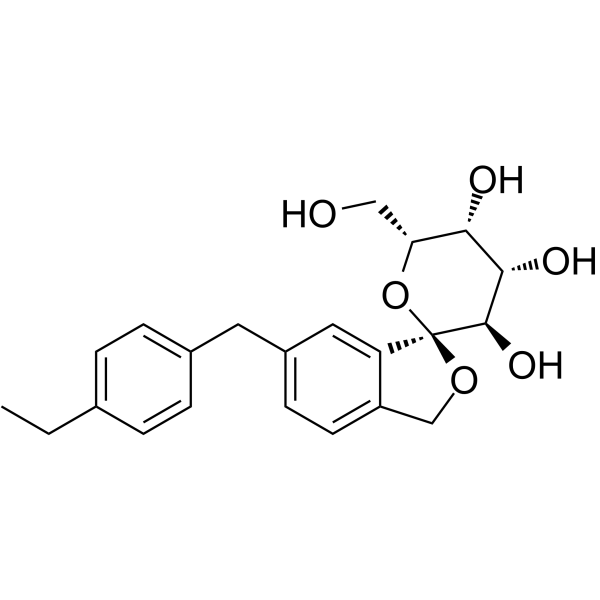
LX2761 Related Classifications
HY-101122 Related Classifications
 Powered by Bioz