



878019-47-7
878019-47-7
Chemical Structure
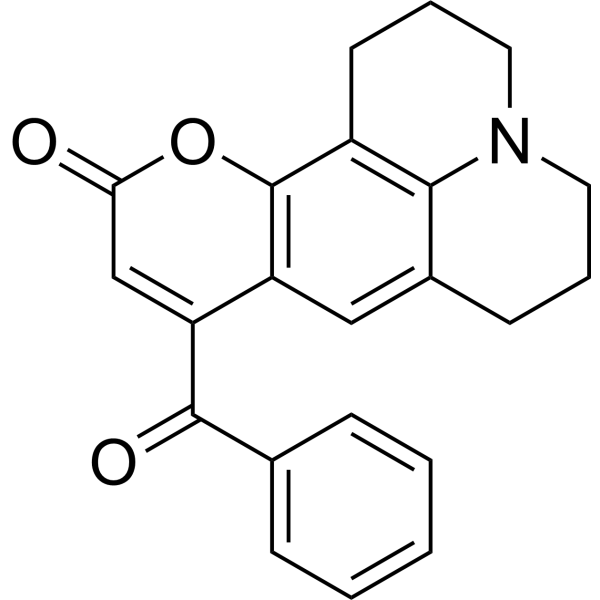
Coumberone
- CAS No.: 878019-47-7
- Formula:C22H19NO3
- Molecular Weight:345.39
IUPAC Name: 9-benzoyl-2,3,6,7-tetrahydro-1H,5H,11H-pyrano[2,3-f]pyrido[3,2,1-ij]quinolin-11-one
InChIKey: DGJJSADMDWUKOJ-UHFFFAOYSA-N
SMILES: O=C1OC2=C(C(C(C3=CC=CC=C3)=O)=C1)C=C4C5=C2CCCN5CCC4
Biological Activity: Coumberone is a metabolic fluorogenic probe, and isoform-selective substrate for all AKR1C isoforms. Coumberone can be reduced by all four members of the AKR1C family to its fluorescent alcohol coumberol. Coumberone can be used for the research of AKR1C[1][2].
| Cat. No. | Product Name | Purity | Description | Pricing | |||||||||||||||||||
|---|---|---|---|---|---|---|---|---|---|---|---|---|---|---|---|---|---|---|---|---|---|---|---|
|
|
Coumberone | 99.73% | Coumberone is a metabolic fluorogenic probe, and isoform-selective substrate for all AKR1C isoforms. Coumberone can be reduced by all four members of the AKR1C family to its fluorescent alcohol coumberol. Coumberone can be used for the research of AKR1C. | ||||||||||||||||||||
|
loading...
/
|
|||||||||||||||||||||||
Structural Analogs
-
Similarity Score 0.78
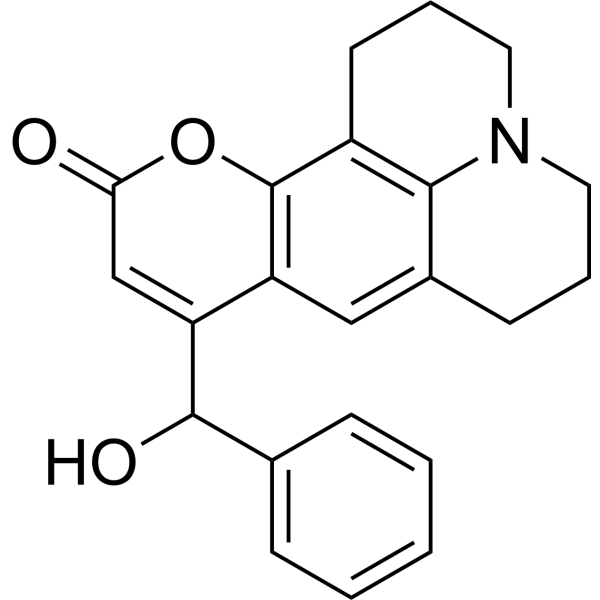 HY-D1342Coumberol
-
Similarity Score 0.67
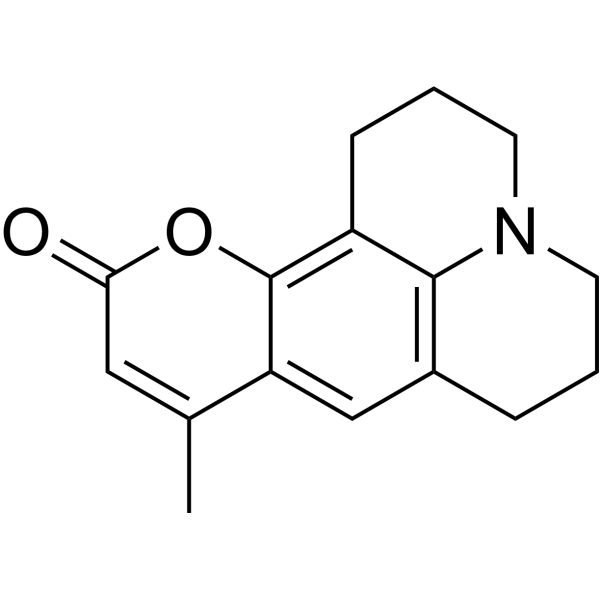 HY-W268197Coumarin 480
-
Similarity Score 0.67
 HY-103465RFFN511 (Standard)
-
Similarity Score 0.66
 HY-103465BFFN511 hydrochloride
-
Similarity Score 0.65
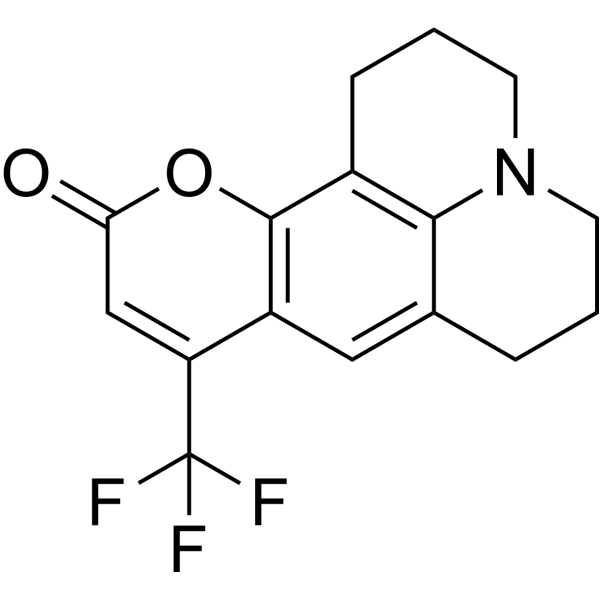 HY-W110772Coumarin153
-
Similarity Score 0.63
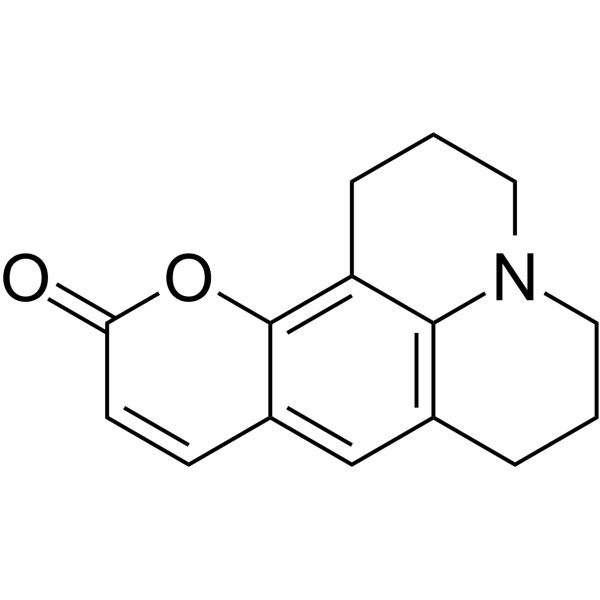 HY-121930Coumarin 6H
-
Similarity Score 0.62
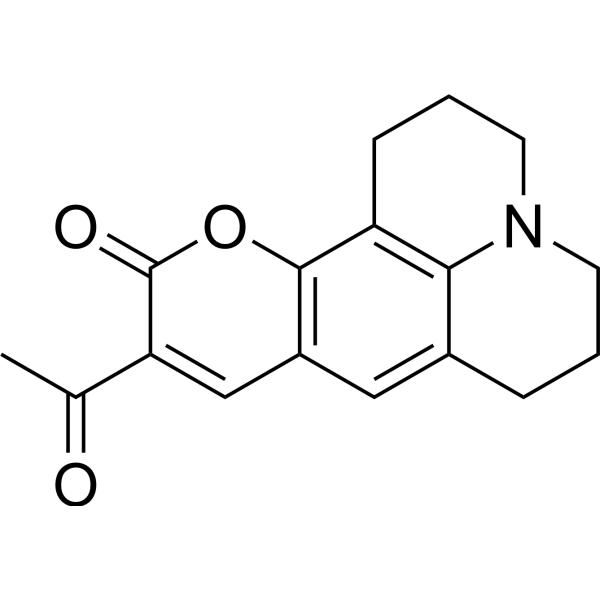 HY-W180804Coumarin 334
-
Similarity Score 0.61
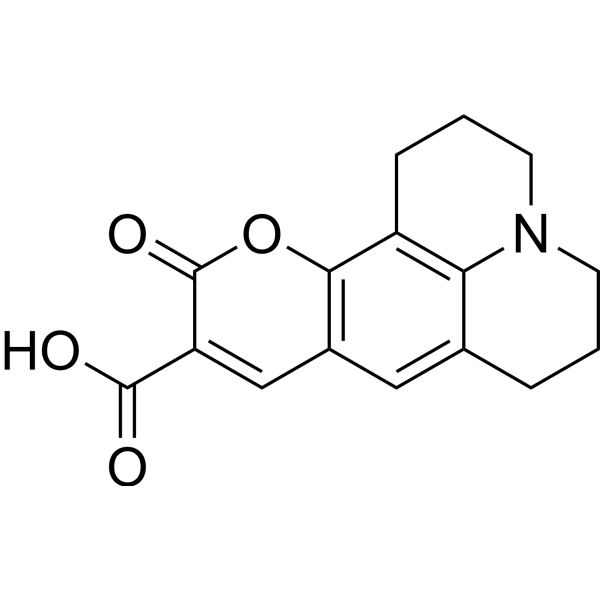 HY-W267364Coumarin 343
-
Similarity Score 0.61
 HY-W324391Coumarin 106
-

Explore the MedChemAI to find more analogs


References
- [1]. Jamieson SM, et al. A novel fluorometric assay for aldo-keto reductase 1C3 predicts metabolic activation of the nitrogen mustard prodrug PR-104A in human leukaemia cells. Biochem Pharmacol. 2014;88(1):36-45. [Content Brief]
- [2]. Halim M, et al. Imaging induction of cytoprotective enzymes in intact human cells: coumberone, a metabolic reporter for human AKR1C enzymes reveals activation by panaxytriol, an active component of red ginseng. J Am Chem Soc. 2008;130(43):14123-14128. [Content Brief]



