



GNE-9815

Based on 1 Customer Validation
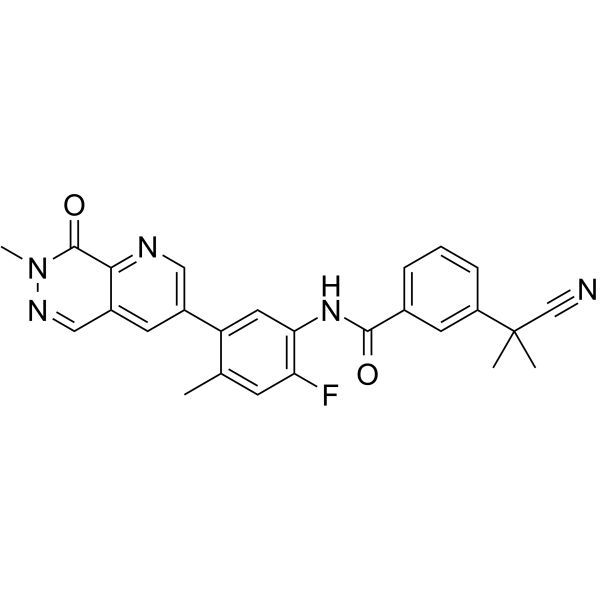
GNE-9815 (compound 7) is a highly selective, pan-RAF inhibitor with good oral bioavailability. GNE-9815 exhibits Ki values of 0.062 and 0.19 nM for CRAF and BRAF, respectively. GNE-9815 combines with MEK inhibitor Cobimetinib (HY-13064) shows synergistic modulation of MAPK pathway. GNE-9815 can be used in studies of KRAS mutant cancers.
Nur für Forschungszwecke. Wir verkaufen nicht an Patienten.
- Reinheit : 98.94%
- CAS. Nr.: 2729996-45-4
- Formel: C26H22FN5O2
- Molecular Weight:455.48
-
Speicherung:Powder -20°C, 3 years ; In solvent -80°C, 6 months , -20°C, 1 month

To place orders, for customer services and technical support, please contact: MedChemExpress USA
Tel: 609-228-6898 E-mail: [email protected] [email protected]


-
 Biologische Aktivität
-
Chemical Information
-
Lösungsmittel & Löslichkeit
- Protokoll
- Reinheit & Dokumentation
- Verweise
-
 Help & FAQs


-
HY-112089
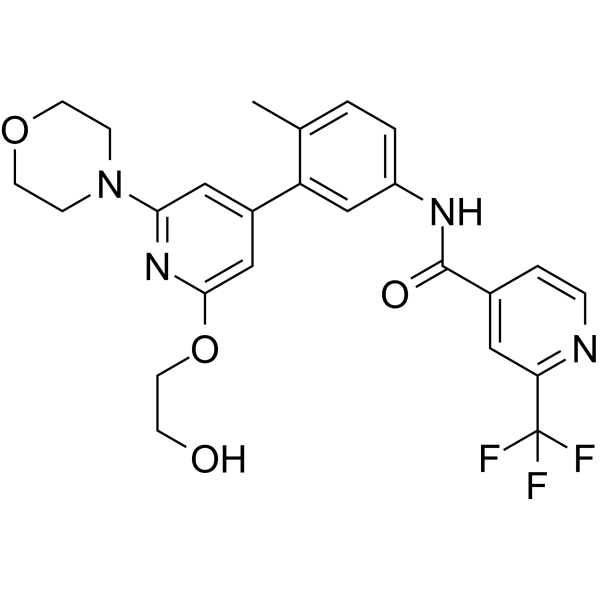
NaporafenibB/CRAF Inhibitor -
HY-10966
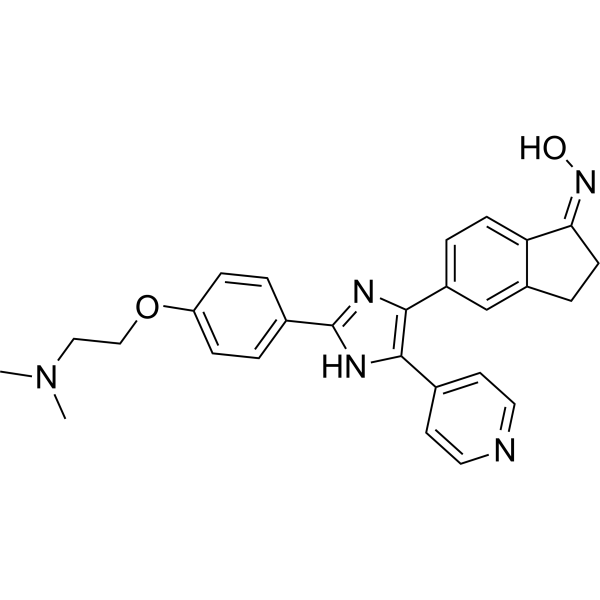
SB-590885BRAF/c-Raf Inhibitor -
HY-15246
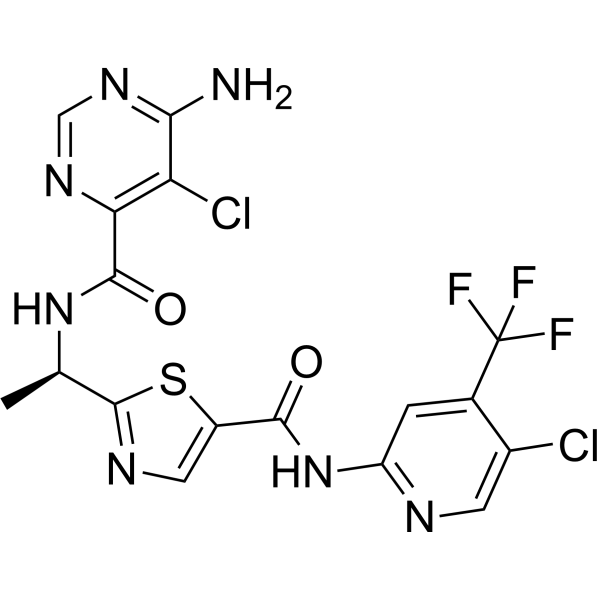
TovorafenibRaf Kinase Inhibitor -
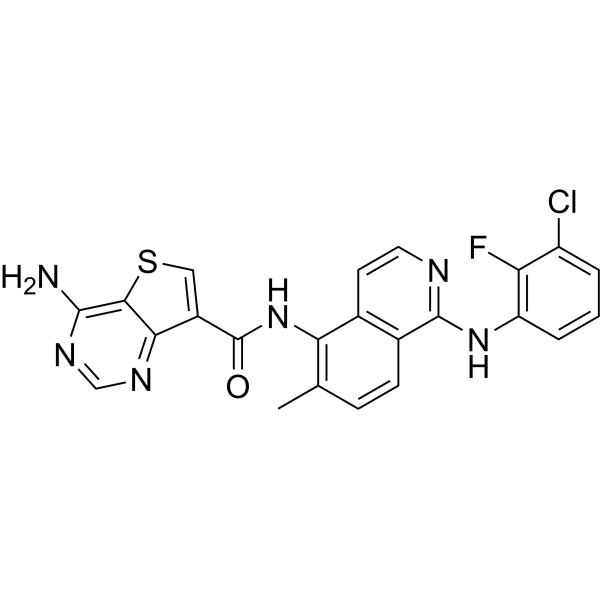
HY-109080
BelvarafenibRAF Inhibitor -
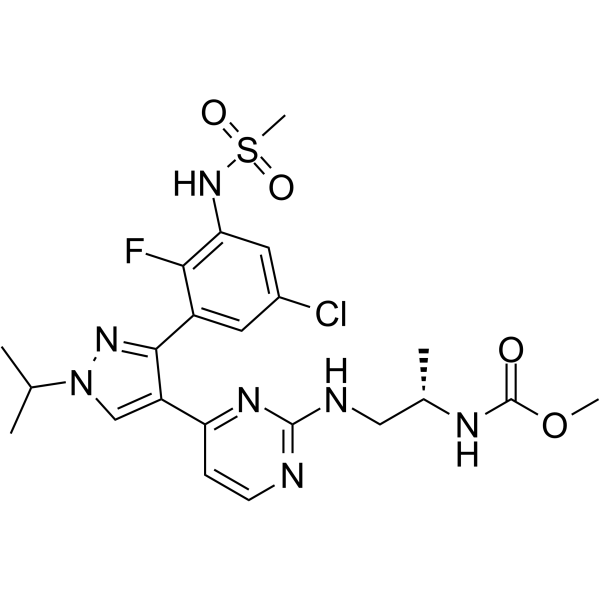
HY-15605
EncorafenibBRAF Inhibitor -
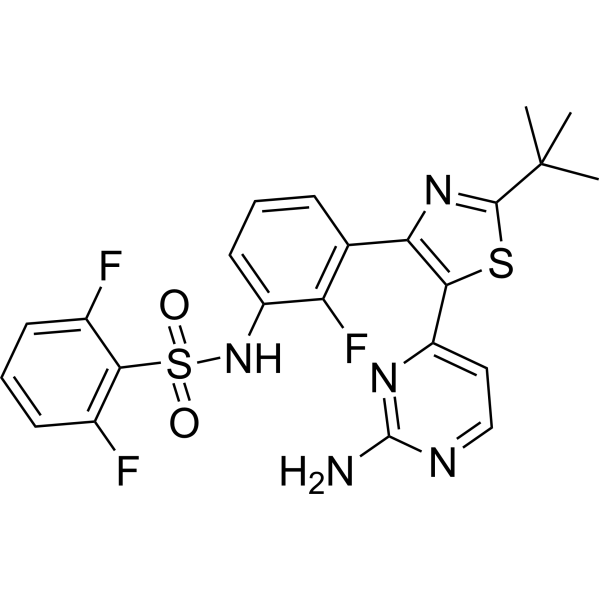
HY-14660
DabrafenibBRAF Inhibitor -
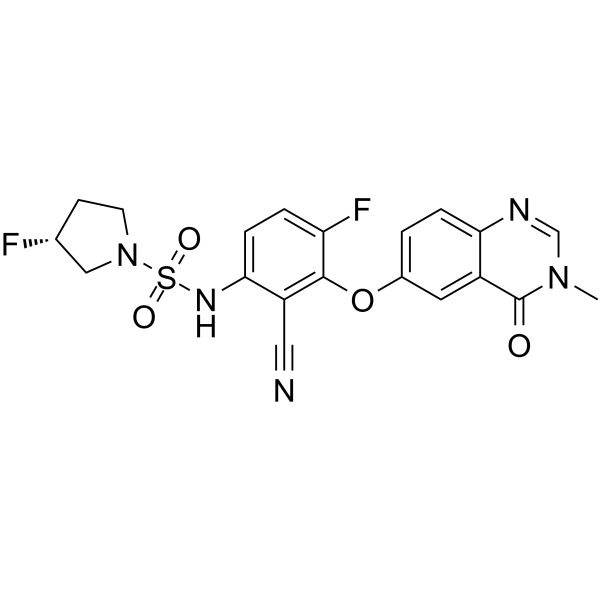
HY-145120
MosperafenibBRAF Inhibitor -
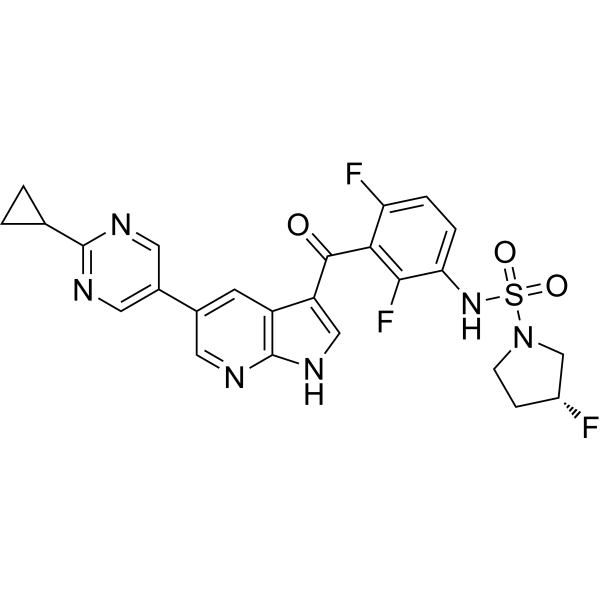
HY-18972
PlixorafenibBRAF Inhibitor -
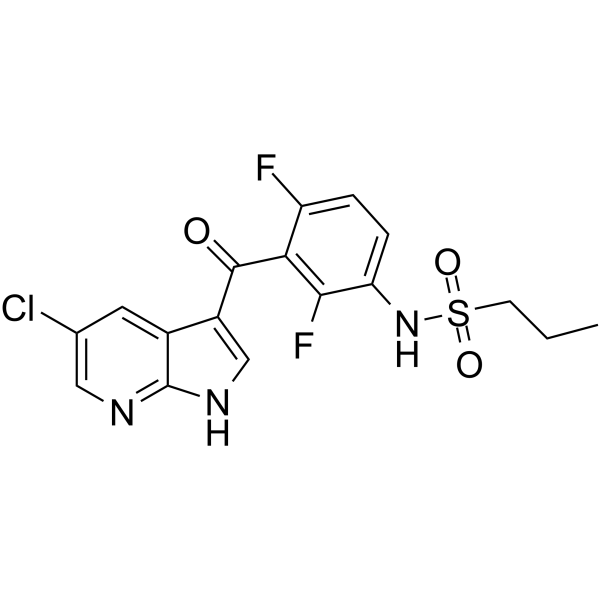
HY-51424
PLX-4720B-Raf Inhibitor -
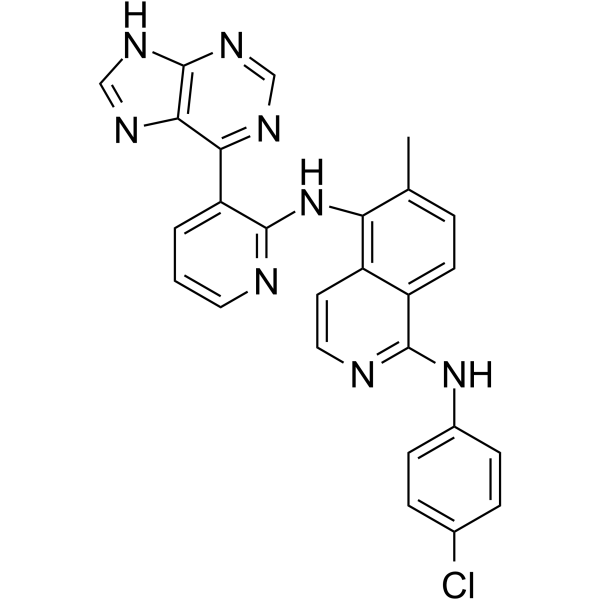
HY-14177
Raf inhibitor 1Raf Inhibitor -
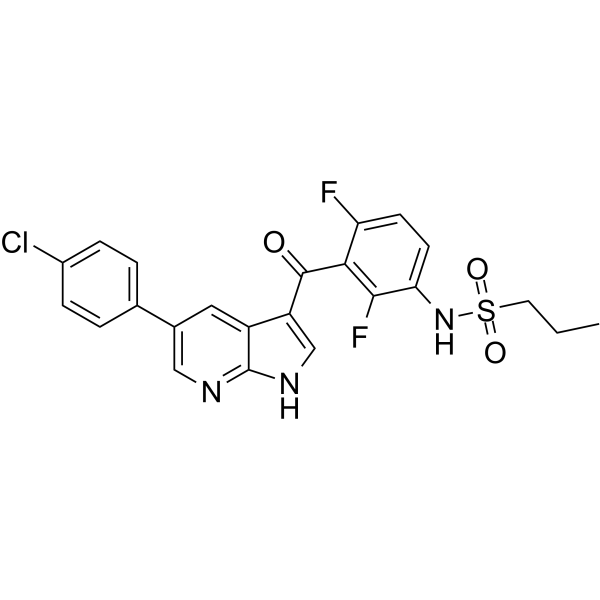
HY-12057
VemurafenibB-Raf Inhibitor -
HY-50864
GDC-0879B-Raf Inhibitor


Biologische Aktivität
Beschreibung
IC50 & Target
[1]|
CRAF 0.062 nM (Ki) |
Braf 0.19 nM (Ki) |
Cellular Effect
|
Cell Line

|
Type | Value | Description | References |
|---|---|---|---|---|
| A549 | IC50 |
369 nM
Compound: 7; GNE-9815
|
Synergistic antiproliferative activity against human A549 cells harboring KRAS mutant assessed as reduction in cell viability in presence of 100 nM cobi-metinib
Synergistic antiproliferative activity against human A549 cells harboring KRAS mutant assessed as reduction in cell viability in presence of 100 nM cobi-metinib
|
[PMID: 34055227] |
| A549 | IC50 |
5470 nM
Compound: 7; GNE-9815
|
Antiproliferative activity against human A549 cells harboring KRAS mutant assessed as reduction in cell viability
Antiproliferative activity against human A549 cells harboring KRAS mutant assessed as reduction in cell viability
|
[PMID: 34055227] |
In Vitro
GNE-9815 shows synergistic activity in KRAS mutant A549 and HCT116 cancer cells in combination with the MEK inhibitor Cobimetinib[1].
MedChemExpress (MCE) has not independently confirmed the accuracy of these methods. They are for reference only. Further protocols information, click here.
In Vivo
GNE-9815 (5 mg/kg; p.o.; single) shows good oral bioavailability and (1 mg/kg; i.v.; single) exhibits low blood clearance, moderate volume of distribution, and short half-life[1].
MedChemExpress (MCE) has not independently confirmed the accuracy of these methods. They are for reference only.
-
Animal Model:Female NCR nude mice (6 to 8-week-old; 24-26 g; HCT116 xenograft mice model)[1].
-
Dosage:15 mg/kg
-
Administration:Intravenous injection or oral administration; single.
-
Result:Resulted in pathway inhibition as demonstrated by partial inhibition of pRSK between 2 and 24 h, but more robust, albeit transient, inhibition of the downstream MAPK target genes, DUSP6 and SPRY4.
Led to deeper inhibition of the downstream MAPK target genes DUSP6 and SPRY4, when combined with the MEK inhibitor Cobimetinib, with maximal inhibition at 8 h and with a more modest rebound in levels at 24 h, post final dose.
-
Animal Model:Female NCR nude mice (6 to 8-week-old; 24-26 g)[1].
-
Dosage:1 mg/kg (for i.v.); 5 mg/kg (for p.o.).
-
Administration:Intravenous injection or oral administration; single.
-
Result:Exhibited CLb, Vdss and t1/2 values of 17 mL/min∙kg, 1.7 L/kg and 1.9 h, respectively.
Showed good oral bioavailability with F% of 37%. (methylcellulose/Tween formulation).


Chemical Information
-
CAS. Nr. 2729996-45-4
-
Appearance Solid
-
Molecular Weight 455.48
-
Formel C26H22FN5O2
-
Color Off-white to light yellow
-
SMILES
N#CC(C)(C)C1=CC(C(NC2=C(F)C=C(C)C(C3=CN=C4C(C=NN(C)C4=O)=C3)=C2)=O)=CC=C1
-
Versand
Room temperature in continental US; may vary elsewhere.
-
Speicherung
Powder -20°C 3 years In solvent -80°C 6 months -20°C 1 month


Lösungsmittel & Löslichkeit
In Vitro:
DMSO : 50 mg/mL (109.77 mM; ultrasonic and warming and heat to 80°C; Hygroscopic DMSO has a significant impact on the solubility of product, please use newly opened DMSO)
Please refer to the solubility information to select the appropriate solvent. Once prepared, please aliquot and store the solution to prevent product inactivation from repeated freeze-thaw cycles.
Storage method and period of stock solution: -80°C, 6 months; -20°C, 1 month. When stored at -80°C, please use it within 6 months. When stored at -20°C, please use it within 1 month.
Please refer to the solubility information to select the appropriate solvent. Once prepared, please aliquot and store the solution to prevent product inactivation from repeated freeze-thaw cycles.
Storage method and period of stock solution: -80°C, 6 months; -20°C, 1 month. When stored at -80°C, please use it within 6 months. When stored at -20°C, please use it within 1 month.
Konzentration (Stammlösung) × Volumen (Stammlösung) = Konzentration (Ziellösung) × Volumen (Ziellösung)
In Vivo:
Select the appropriate dissolution method based on your experimental animal and administration route.
- For the following dissolution methods, please ensure to first prepare a clear stock solution using an In Vitro approach and then sequentially add co-solvents:
- To ensure reliable experimental results, the clarified stock solution can be appropriately stored based on storage conditions. As for the working solution for In Vivo experiments, it is recommended to prepare freshly and use it on the same day.
- The percentages shown for the solvents indicate their volumetric ratio in the final prepared solution. If precipitation or phase separation occurs during preparation, heat and/or sonication can be used to aid dissolution.
Add each solvent one by one: 10% DMSO 40% PEG300 5% Tween-80 45% Saline
Solubility: ≥ 2.5 mg/mL (5.49 mM); Clear solution
This protocol yields a clear solution of ≥ 2.5 mg/mL (saturation unknown).
Taking 1 mL working solution as an example, add 100 μL DMSO stock solution (25.0 mg/mL) to 400 μL PEG300, and mix evenly; then add 50 μL Tween-80 and mix evenly; then add 450 μL Saline to adjust the volume to 1 mL.
Preparation of Saline: Dissolve 0.9 g sodium chloride in ddH₂O and dilute to 100 mL to obtain a clear Saline solution.
Add each solvent one by one: 10% DMSO 90% (20% SBE-β-CD in Saline)
Solubility: ≥ 2.5 mg/mL (5.49 mM); Clear solution
This protocol yields a clear solution of ≥ 2.5 mg/mL (saturation unknown).
Taking 1 mL working solution as an example, add 100 μL DMSO stock solution (25.0 mg/mL) to 900 μL 20% SBE-β-CD in Saline, and mix evenly.
Preparation of 20% SBE-β-CD in Saline (4°C, storage for one week): 2 g SBE-β-CD powder is dissolved in 10 mL Saline, completely dissolve until clear.
In Vivo Dissolution Calculator
Please enter the basic information of animal experiments:
-
-
-
-
Recommended: Prepare an additional quantity of animals to account for potential losses during experiments.
Please enter your animal formula composition:
-
%DMSO +
Recommended: Keep the proportion of DMSO in working solution below 2% if your animal is weak.
-
%+
-
+%Tween-80 + +
-
%Saline +
The co-solvents required include: DMSO, . All of co-solvents are available by MedChemExpress (MCE). , Tween 80. All of co-solvents are available by MedChemExpress (MCE).
Working solution concentration: 0.22 mg/mL
Method for preparing stock solution: mg drug dissolved in μL DMSO. Stock solution concentration: mg/mL.
1. Take μL DMSO stock solution;
2. Add μL .
μL , mix evenly;
3. Then add μL Tween 80, mix evenly;
4. Then add μL
Please ensure that the stock solution in the first step is dissolved to a clear state, and add co-solvents in sequence. You can use ultrasonic heating (ultrasonic cleaner, recommended frequency 20-40 kHz), vortexing, etc. to assist dissolution.

Protokoll
-
Protocol for Pharmacokinetic Study
Pharmacokinetic studies quantify how an organism handles a drug over time through absorption, distribution, metabolism, and excretion, and the core experimental readout is the concentration-time profile of parent drug and, when relevant, metabolites in biological matrices such as plasma, whole blood, urine, bile, or tissue. Pharmacokinetic analysis links dose, route, exposure, clearance, half-life, distribution, bioavailability, and systemic exposure to drug efficacy and toxicity hypotheses rather than measuring a signaling pathway directly. The literature links pharmacokinetics to drug-development phenotypes by showing that drug metabolism and pharmacokinetics influence compound progression, exposure-response interpretation, safety margins, dosing strategy, and failure risk during discovery and development. DMPK science contributes to compound optimization by integrating physicochemical properties, in vitro metabolism, transporter behavior, in vivo exposure, and pharmacodynamic contex


Reinheit & Dokumentation
-
Data Sheet (272 KB)
-
SDS (251 KB)
- English - EN (251 KB)
- Français - FR (251 KB)
- Deutsch - DE (251 KB)
- Norwegian - NO (251 KB)
- Español - ES (251 KB)
- Swedish - SV (251 KB)
- Italian - IT (251 KB)
- Korean - KR (251 KB)
- Portuguese - PT (251 KB)
-
Handling Instructions (2659 KB)
Verweise


Complete Stock Solution Preparation Table
Please refer to the solubility information to select the appropriate solvent. Once prepared, please aliquot and store the solution to prevent product inactivation from repeated freeze-thaw cycles.
Storage method and period of stock solution: -80°C, 6 months; -20°C, 1 month. When stored at -80°C, please use it within 6 months. When stored at -20°C, please use it within 1 month.
| Optional Solvent | Concentration Solvent Mass | 1 mg | 5 mg | 10 mg | 25 mg |
|---|---|---|---|---|---|
| DMSO | 1 mM | 2.1955 mL | 10.9774 mL | 21.9549 mL | 54.8872 mL |
| 5 mM | 0.4391 mL | 2.1955 mL | 4.3910 mL | 10.9774 mL | |
| 10 mM | 0.2195 mL | 1.0977 mL | 2.1955 mL | 5.4887 mL | |
| 15 mM | 0.1464 mL | 0.7318 mL | 1.4637 mL | 3.6591 mL | |
| 20 mM | 0.1098 mL | 0.5489 mL | 1.0977 mL | 2.7444 mL | |
| 25 mM | 0.0878 mL | 0.4391 mL | 0.8782 mL | 2.1955 mL | |
| 30 mM | 0.0732 mL | 0.3659 mL | 0.7318 mL | 1.8296 mL | |
| 40 mM | 0.0549 mL | 0.2744 mL | 0.5489 mL | 1.3722 mL | |
| 50 mM | 0.0439 mL | 0.2195 mL | 0.4391 mL | 1.0977 mL | |
| 60 mM | 0.0366 mL | 0.1830 mL | 0.3659 mL | 0.9148 mL | |
| 80 mM | 0.0274 mL | 0.1372 mL | 0.2744 mL | 0.6861 mL | |
| 100 mM | 0.0220 mL | 0.1098 mL | 0.2195 mL | 0.5489 mL |


GNE-9815 Related Classifications
HY-142160 Related Classifications
 Powered by Bioz