



Solvent Green 3

Based on 1 Customer Validation
Solvent Green 3 is an anthraquinone-based industrial solvent dye. Solvent Green 3 and Solvent Yellow 33 in a 30:70 mass ratio constitute a military green smoke grenade dye mixture, and the purified form is used for coloring pharmaceuticals and cosmetics.
Nur für Forschungszwecke. Wir verkaufen nicht an Patienten.
- CAS. Nr.: 128-80-3
- Formel: C28H22N2O2
- Molecular Weight:418.50
-
Speicherung:
4°C, protect from light
* In solvent : -80°C, 6 months; -20°C, 1 month (protect from light)


To place orders, for customer services and technical support, please contact: MedChemExpress USA
Tel: 609-228-6898 E-mail: [email protected] [email protected]


-
 Biologische Aktivität
-
Chemical Information
-
Lösungsmittel & Löslichkeit
- Reinheit & Dokumentation
- Verweise
-
 Help & FAQs


-
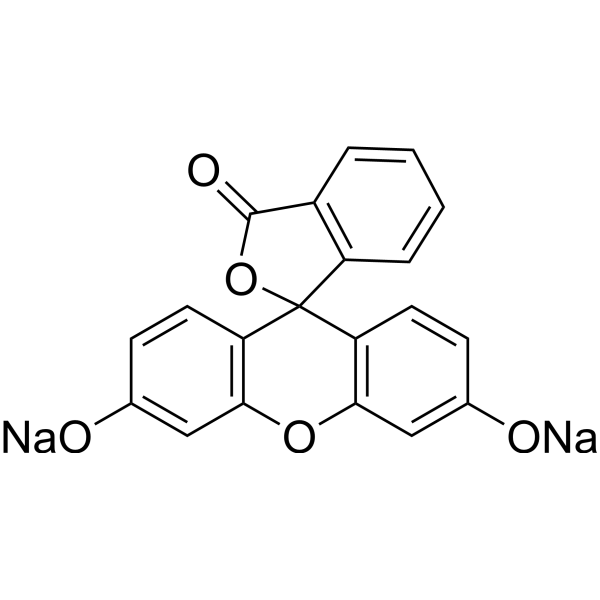
HY-D0208
Fluorescein sodiumFluorescent Tracer -
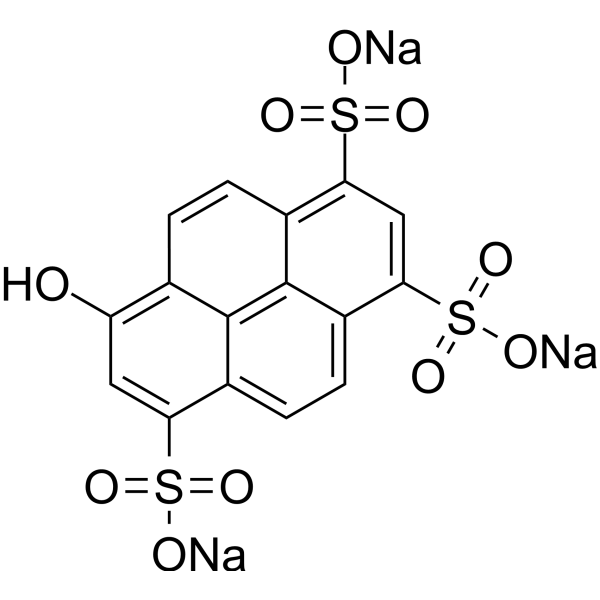
HY-D0023
PyraninePH Indicator -
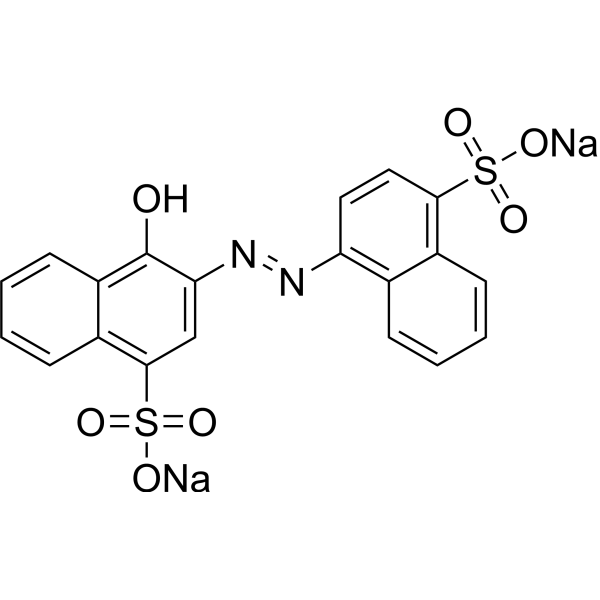
HY-128448
CarmoisineAzo Dye -

HY-135256
Naphthol yellow S, 98%Alkaline Protein Stain -
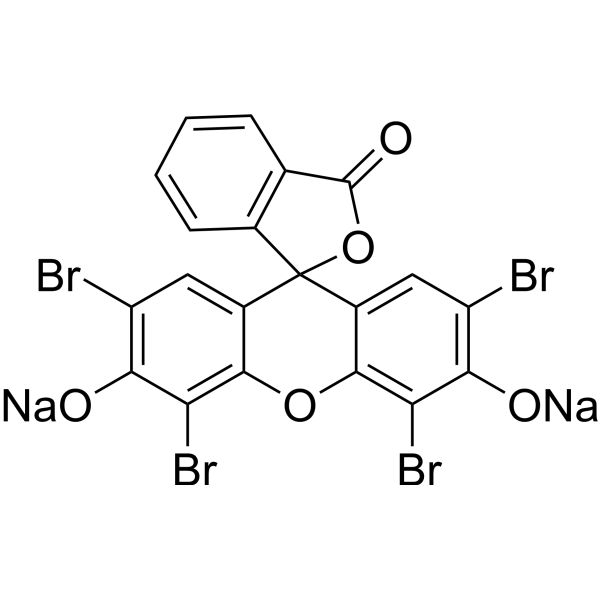
HY-D0505A
Eosin Y disodiumDye Molecule -
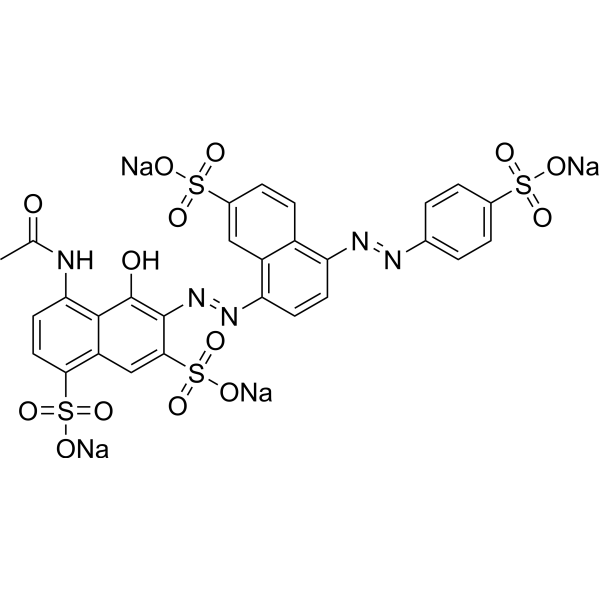
HY-128382
Brilliant Black BNAntiviral Agent -
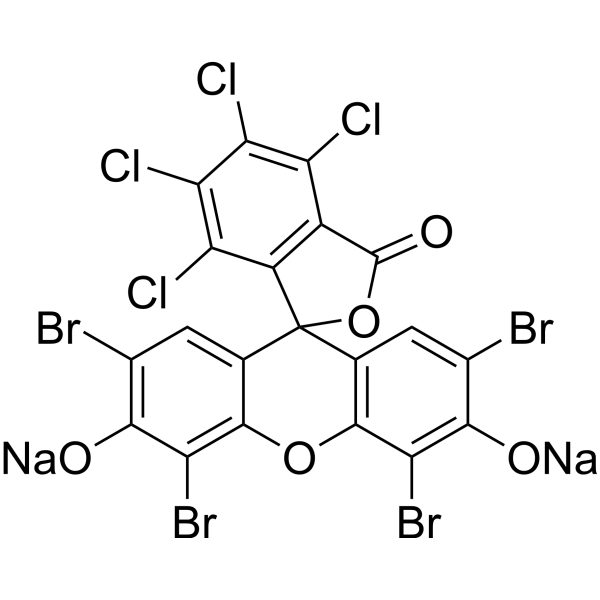
HY-116151B
Phloxine BBiochemical Assay Reagent -
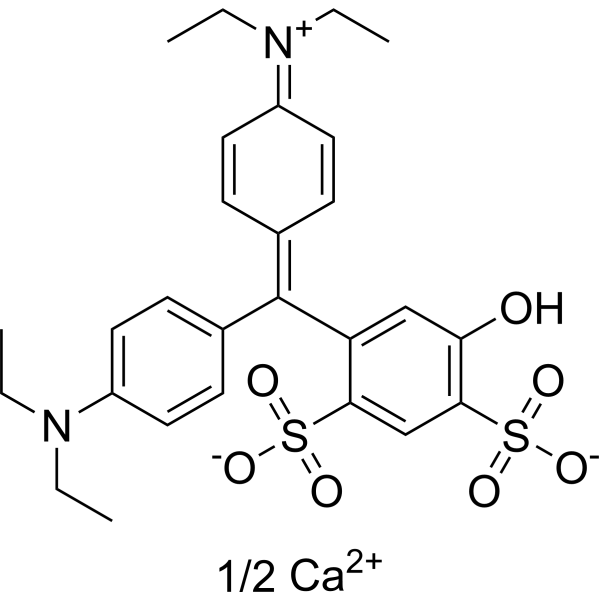
HY-126395
Patent Blue V calcium saltBlue Dye -
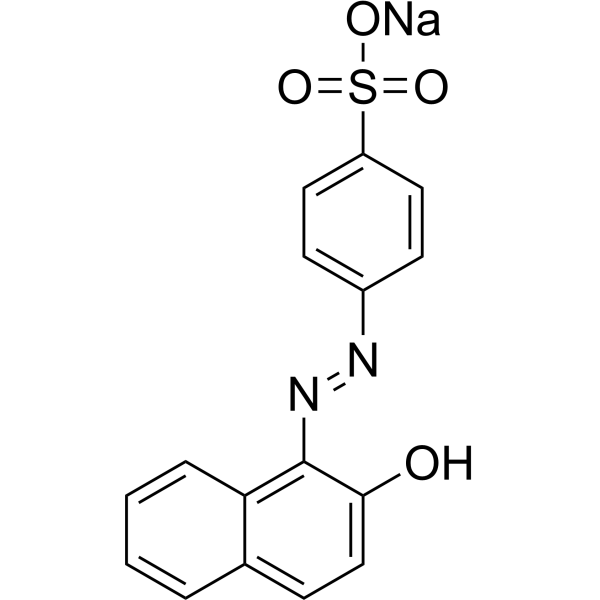
HY-N1442
Acid orange 7Azo Dye -

HY-N1442R
Acid orange 7 (Standard)Azo Dye -

HY-107864
Erythrosine B free acidFluorescent Dyes -

HY-128448R
Carmoisine (Standard)Azo Dye


Biologische Aktivität
Beschreibung
In Vitro
1. Stock solution preparation
1.1 Target material: Solvent Green 3 mixture, i.e., a mixture composed of Solvent Yellow 33 and Solvent Green 3 dye components in a 30:70 ratio.
1.2 Solvent: aerated dilution water for fish and invertebrate stock solutions, and filter-sterilized algal medium for algal stock solutions.
1.3 Use industrial-grade Solvent Green 3 mixture (purity 93-95%), and add excess dye to the selected solvent.
1.4 Stir at the test temperature for 24 h to achieve a saturated solution.
1.5 Vacuum-filter the stock solution through a 0.22 μm filter membrane before use.
1.6 The stock solution is at the water solubility limit. The measured concentrations of the Solvent Yellow 33 component in the Solvent Green 3 mixture at 24, 22, 17, and 12°C are 0.20, 0.16, 0.10, and 0.08 mg/L, respectively.
1.7 Even at a detection limit of 0.002 mg/L, the green component of the Solvent Green 3 mixture is still not detected in water samples.
2. Working solution preparation
2.1 For mammalian cell tests: the diluent is serum-free MEM. Prepare half-log dilutions starting from 1000 μg/mL. Adjust the working solution concentration as needed, and prepare fresh before use.
2.2 For aquatic organism tests: the diluent for fish and invertebrate tests is chlorine-free deep-well dilution water with an average alkalinity of approximately 156 mg/L (as CaCO3), hardness of approximately 190 mg/L (as CaCO3), and pH of approximately 7.8; algal tests use filter-sterilized AAP medium.
2.3 For aquatic organism tests, all tests use solubility-limit solutions; for rainbow trout, a 50% dilution of the solubility-limit solution also needs to be tested. The 50% dilution contains 0.055 mg/L Solvent Yellow 33 component and <0.002 mg/L green component.
2.4 Determine the dye concentration in water at the beginning and end of each test, and LC50 values should be calculated based on measured concentrations.
3. Staining procedure
3.1 For human foreskin fibroblasts[1]:
3.1.1 Seed at 5 × 10³ cells/well in 96-well plates and culture at 37°C until confluence, usually requiring 24-36 h.
3.1.2 Remove the medium and add serum-free MEM containing different concentrations of Solvent Green 3 to the corresponding wells.
3.1.3 Set 4-6 replicate wells per concentration in each experiment.
3.1.4 Add an equal volume of MEM containing 5% serum and HCMV (1000 CCID50/mL) to the corresponding wells.
3.1.5 Incubate the plate at 37°C until the virus control approaches 100% viral cytopathic effect.
3.2 For lung tissue sections[2]:
3.2.1 Use lung tissue from animals exposed to smoke containing Solvent Green 3.
3.2.2 Prepare lung sections no more than 3 mm thick.
3.2.3 Immerse the lung sections in calcium formalin solution (1% calcium chloride in 4% (w/v) formalin) and maintain at 4°C for 16 h.
3.2.4 Wash the sections in hypertonic gum sucrose solution at 4°C for 4 days.
3.2.5 Cut 15 μm-thick frozen sections with a cryostat at -20°C.
3.3 For fish, invertebrates, and green algae[5]:
3.3.1 Fish are fathead minnow, bluegill sunfish, channel catfish, and rainbow trout; invertebrates are Daphnia, amphipods, midge larvae, and mayfly larvae; green algae are Selenastrum capricornutum.
3.3.2 Do not feed fish for 24 h before the start of the test.
3.3.3 Collect newborn Daphnia neonates with algal food and transfer them to clean dilution water before testing.
3.3.4 Transfer other invertebrates to a common pool 24 h before testing and do not feed them, but midge larvae receive a small amount of trout feed/wax leaf powder suspension to build tube nests.
3.3.5 Use small glass tubes of different diameters as substrate for mayfly larvae.
3.3.6 Use static acute bioassay methods for fish and macroinvertebrates.
3.3.7 Expose fish for 96 h and invertebrates for 48 h.
3.3.8 Use 22°C for fathead minnow, bluegill sunfish, channel catfish, Daphnia, midge larvae, and mayfly larvae; use 12°C for rainbow trout; use 17°C for amphipods; use 24°C for green algae.
3.3.9 Use a 16 h light:8 h dark photoperiod during culture, acclimation, and testing for fish and invertebrates.
3.3.10 For algal tests, prepare three parallel flasks for each test condition and determine growth at 0, 24, 48, 72, 96, and 120 h.
3.3.11 Use solubility-limit working solutions; for rainbow trout, include a 50% dilution.
4. Controls
4.1 For cell tests: include uninfected, untreated cell controls and untreated, infected controls.
4.2 For lung tissue: control animals are exposed only to laboratory air in the exposure chamber.
4.3 For aquatic organism and algal tests: set up a control group without Solvent Green 3 mixture in the same dilution water or algal medium for comparison of mortality and algal growth.
4.4 After 120 h, restart algal exposure in uncontaminated medium at an average cell count ≤6,500 cells/mL and allow regrowth for nine more days.
5. Detection and analysis
5.1 Instrument type and wavelength settings:
5.1.1 Use light microscopy for morphological evaluation of cells and frozen lung sections.
5.1.2 Use high-performance liquid chromatography (HPLC) with ultraviolet absorption detection; detect Solvent Green 3 by ultraviolet absorption at 620 nm, and use a 254 nm ultraviolet detector for determination of dye concentration in water.
5.1.3 Use a fluorometer to measure in vivo chlorophyll a fluorescence and a cell counter to measure cell density.
5.2 HPLC conditions: use a reversed-phase C18 column (10 μm, 25 cm × 4.6 mm), elute with a 90% to 100% acetonitrile-water gradient for 10 min at a flow rate of 1 mL/min, then maintain at 100% acetonitrile for 10 min.
5.3 HPLC sample preparation:
5.3.1 For lung samples, carefully remove the lungs to avoid contamination by dye on the fur, homogenize in 1.5 mL acetonitrile, centrifuge, take the supernatant, resuspend the pellet and repeatedly extract with 2 mL acetonitrile until no color is observed, then combine the extracts and dilute to 10 mL with acetonitrile before HPLC analysis.
5.3.2 For aerosol samples, analyze aerosol filter samples obtained from the exposure chamber using the same HPLC method to determine the chemical stability of Solvent Green 3 after aerosol generation.
5.4 Result analysis:
5.4.1 For cell tests, grade morphological changes caused by compound cytotoxicity on a 0-5 scale, with grade 5 defined as complete cytotoxicity. Calculate EC50 and IC50 values by regression analysis. Calculate the selectivity index as SI = IC50/EC50. For Solvent Green 3, EC50 is >2 μM, IC50 is 10 μM, and SI is <1; at concentrations greater than 2 μM, viral cytopathic effect cannot be distinguished from compound cytopathic effect; due to extremely strong toxicity, no antiviral activity is detected.
5.4.2 For lung sections, retained Solvent Green 3 appears blue-green and is mainly localized to alveolar walls, only occasionally seen in alveolar spaces, and in some bronchial and broniolar lumens and arterial walls.
5.4.3 For HPLC, compare the retention time and peak height of samples with purified Solvent Green 3 dye standard.
5.4.4 For aquatic organism tests, determine mortality at 96 h for fish and 48 h for invertebrates. When data allow, calculate LC50 values and 95% confidence limits using the probit method based on the average measured concentration. For algae, determine growth by cell density and chlorophyll a biomass, and compare exposed groups with control groups.
5.4.5 In the rainbow trout test, the solubility-limit Solvent Green 3 mixture causes 50% mortality, while the 50% dilution causes no mortality; due to insufficient partial mortality and complete mortality data, LC50 is not calculated. After 5 days of exposure at the solubility limit, the Solvent Green 3 mixture reduces algal cell density by 98% and biomass by 99% compared with the control group.
MedChemExpress (MCE) has not independently confirmed the accuracy of these methods. They are for reference only.


Chemical Information
-
CAS. Nr. 128-80-3
-
Appearance Solid
-
Molecular Weight 418.50
-
Formel C28H22N2O2
-
Color Dark brown to black
-
SMILES
O=C1C=2C=CC=CC2C(=O)C=3C(=CC=C(NC4=CC=C(C=C4)C)C13)NC5=CC=C(C=C5)C
-
Versand
Room temperature in continental US; may vary elsewhere.
-
Speicherung
4°C, protect from light
* In solvent : -80°C, 6 months; -20°C, 1 month (protect from light)


Lösungsmittel & Löslichkeit
In Vitro:
DMF : 3.33 mg/mL (7.96 mM; ultrasonic and warming and heat to 60°C)
Please refer to the solubility information to select the appropriate solvent. Once prepared, please aliquot and store the solution to prevent product inactivation from repeated freeze-thaw cycles.
Storage method and period of stock solution: -80°C, 6 months; -20°C, 1 month (protect from light). When stored at -80°C, please use it within 6 months. When stored at -20°C, please use it within 1 month.
Konzentration (Stammlösung) × Volumen (Stammlösung) = Konzentration (Ziellösung) × Volumen (Ziellösung)


Reinheit & Dokumentation
-
Data Sheet (291 KB)
-
SDS (394 KB)
- English - EN (394 KB)
- Français - FR (394 KB)
- Deutsch - DE (394 KB)
- Norwegian - NO (394 KB)
- Español - ES (394 KB)
- Swedish - SV (394 KB)
- Italian - IT (394 KB)
- Korean - KR (394 KB)
- Portuguese - PT (394 KB)
-
Handling Instructions (2659 KB)
Verweise


Complete Stock Solution Preparation Table
Please refer to the solubility information to select the appropriate solvent. Once prepared, please aliquot and store the solution to prevent product inactivation from repeated freeze-thaw cycles.
Storage method and period of stock solution: -80°C, 6 months; -20°C, 1 month (protect from light). When stored at -80°C, please use it within 6 months. When stored at -20°C, please use it within 1 month.
| Optional Solvent | Concentration Solvent Mass | 1 mg | 5 mg | 10 mg | 25 mg |
|---|---|---|---|---|---|
| DMF | 1 mM | 2.3895 mL | 11.9474 mL | 23.8949 mL | 59.7372 mL |
| 5 mM | 0.4779 mL | 2.3895 mL | 4.7790 mL | 11.9474 mL |


Solvent Green 3 Related Classifications
HY-116234 Related Classifications
 Powered by Bioz
Keywords