



Protriptyline hydrochloride
Based on 2 publication(s) in Google Scholar
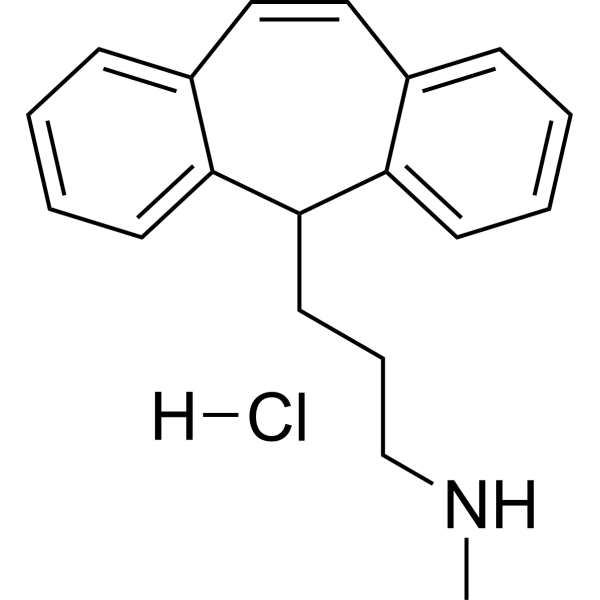
Protriptyline hydrochloride is a potent tricyclic antidepressant (TCA). Protriptyline hydrochloride inhibits AChE activity with an IC50 value of 0.06 mM and inhibits Aβ self-assembly. Protriptyline hydrochloride can be used for the study of depression and Alzheimers disease.
Nos produits utilisent uniquement pour la recherche. Nous ne vendons pas aux patients.
- Pureté : 99.75%
- CAS No.: 1225-55-4
- Formule: C19H22ClN
- Masse moléculaire:299.84
-
Stockage:
4°C, sealed storage, away from moisture
* In solvent : -80°C, 6 months; -20°C, 1 month (sealed storage, away from moisture)

To place orders, for customer services and technical support, please contact: MedChemExpress USA
Tel: 609-228-6898 E-mail: [email protected] [email protected]


-
 Activité biologique
-
Chemical Information
-
Solvant et solubilité
- Protocole
- Pureté et documentation
- Références
-
 Help & FAQs


-
HY-11017
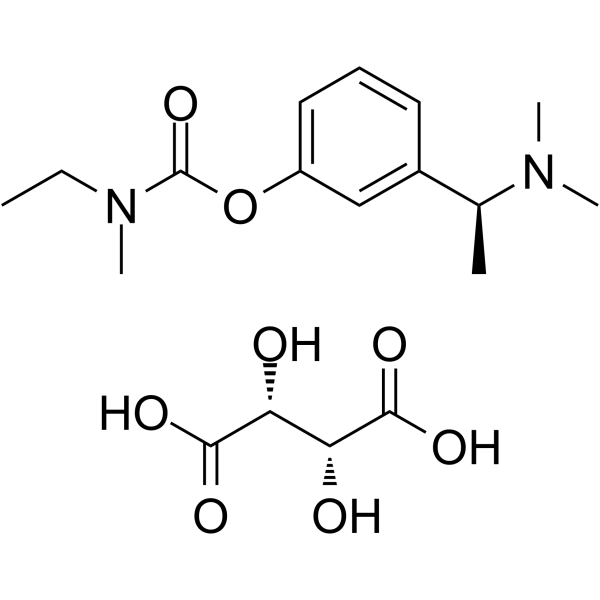
Rivastigmine tartrateCholinesterase Inhibitor -
HY-17368
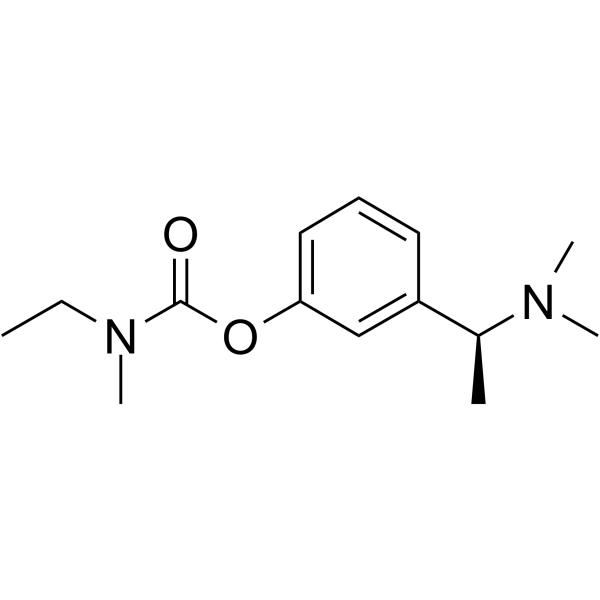
RivastigmineCholinesterase Inhibitor -
HY-B0949R
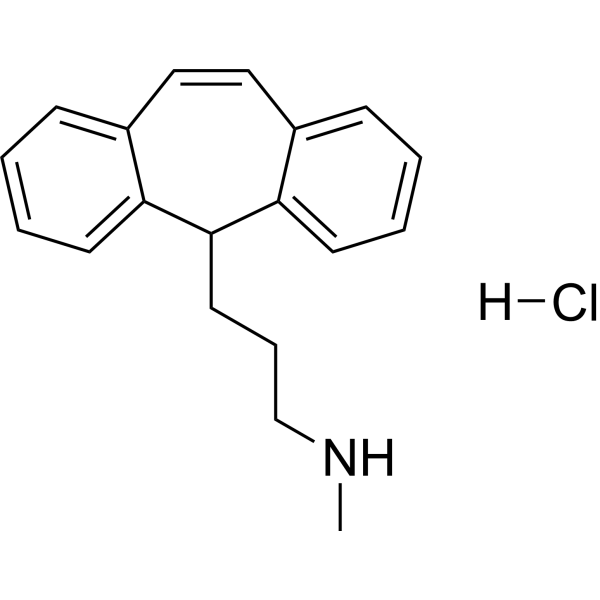
Protriptyline hydrochloride (Standard)Antidepressant Agent -
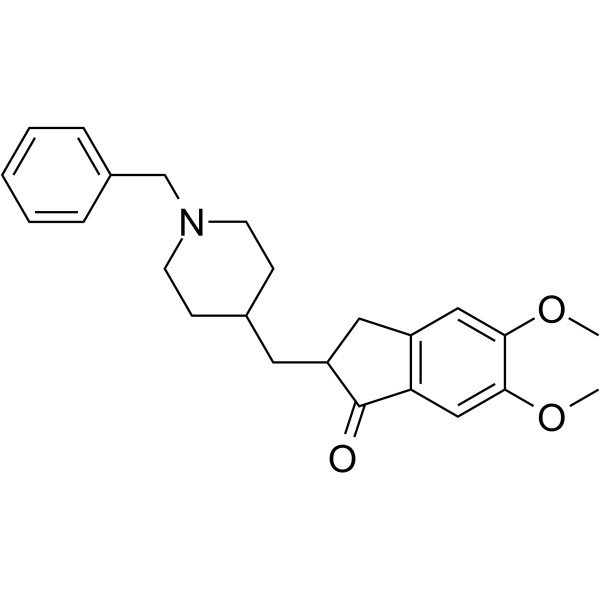
HY-14566
DonepezilSpecific AChE Inhibitor -
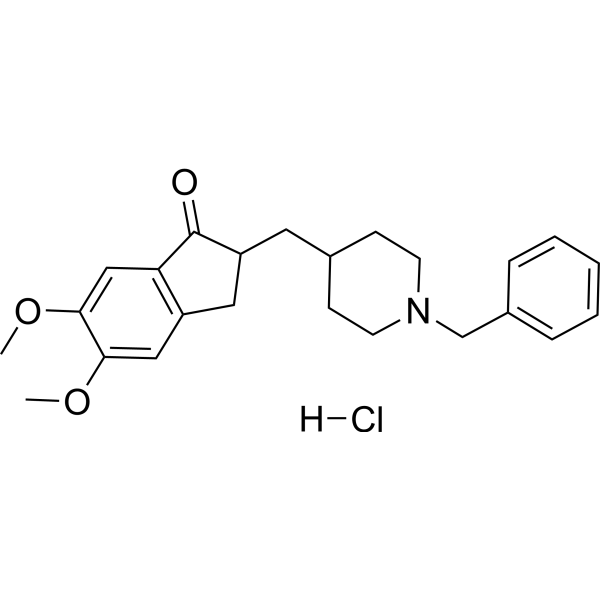
HY-B0034
Donepezil HydrochlorideAChE Inhibitor -
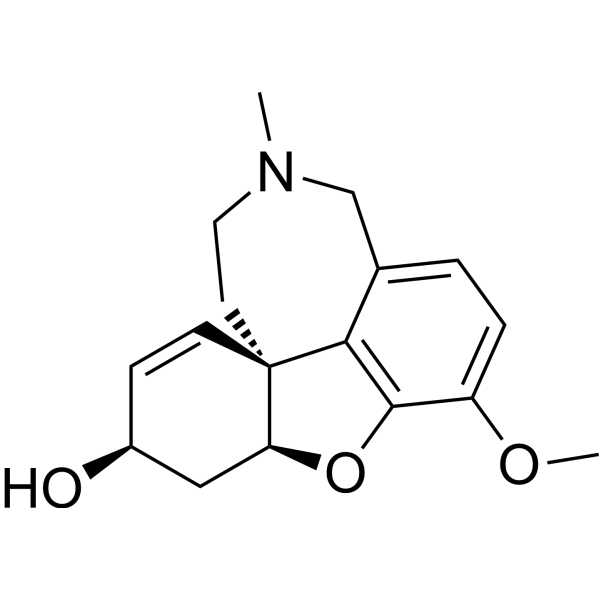
HY-76299
GalanthamineCholinesterase (ChE) Inhibitor -
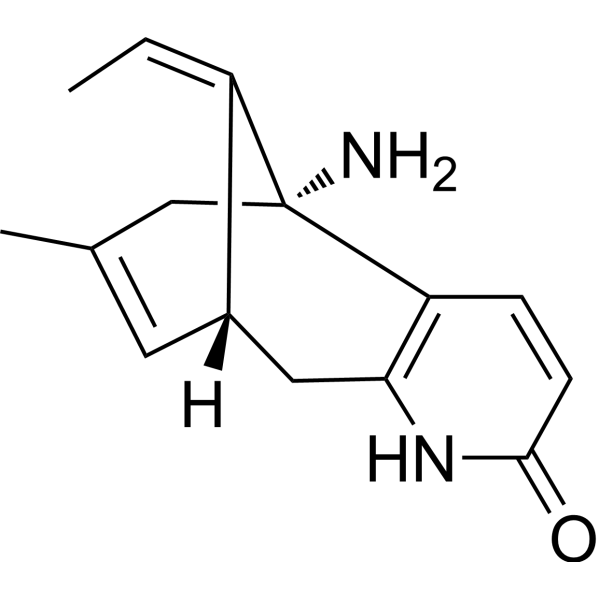
HY-17387
(-)-Huperzine AAChE/NMDA Receptor Inhibitor -
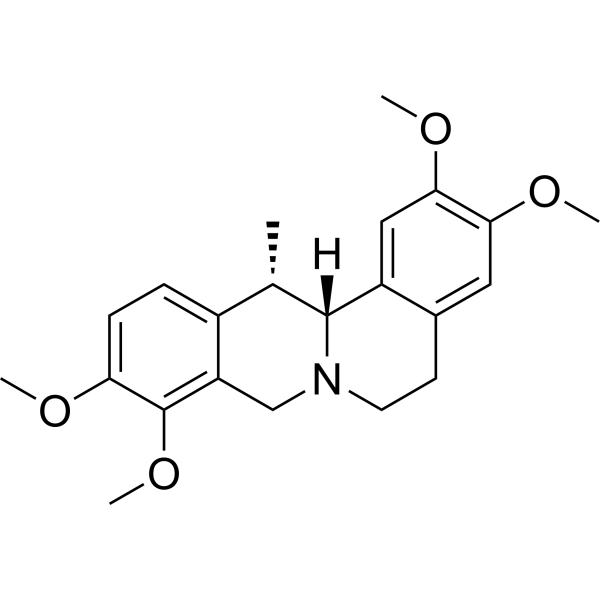
HY-N0923
CorydalineCholinesterase (ChE) Inhibitor -
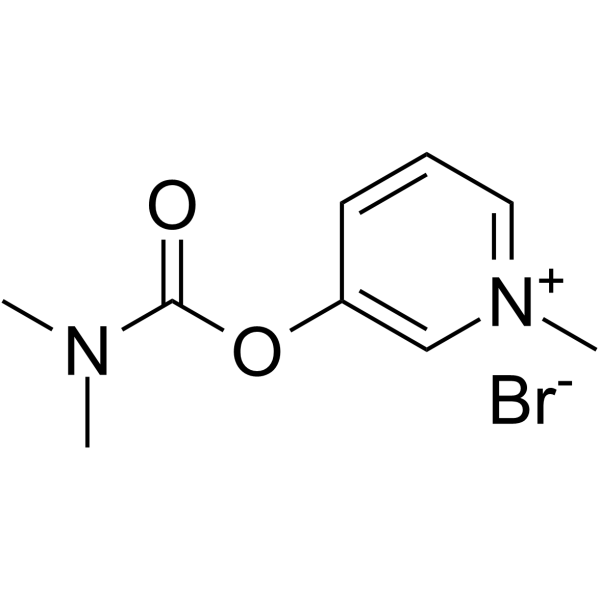
HY-B0207A
Pyridostigmine bromideCholinesterase (ChE) Inhibitor -
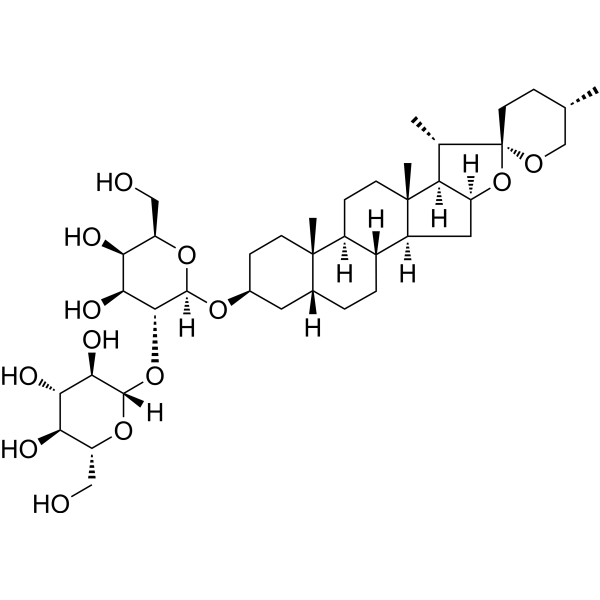
HY-N0810
Timosaponin AIIIAChE Inhibitor -
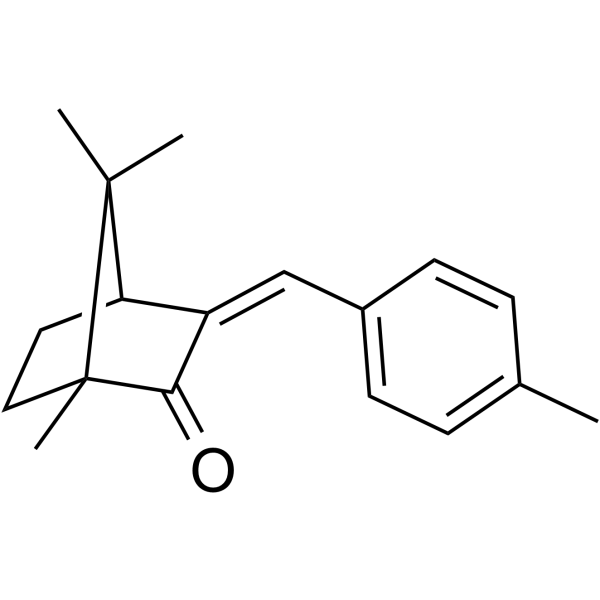
HY-17587
4-Methylbenzylidene camphorEstrogen-Like Drug
Publications Citing Use of MedChemExpress (MCE) Protriptyline hydrochloride
More

Activité biologique
Description
Cellular Effect
|
Cell Line

|
Type | Value | Description | References |
|---|---|---|---|---|
| CHO | IC50 |
0.0017 μM
Compound: Protriptyline
|
Displacement of [3H]nisoxetine from human NET expressed in CHO cells after 120 mins by scintillation counting
Displacement of [3H]nisoxetine from human NET expressed in CHO cells after 120 mins by scintillation counting
|
[PMID: 22420844] |
| CHO | IC50 |
2.8 nM
Compound: Protriptyline
|
Displacement of [3H]nisoxetine from human recombinant norepinephrine transporter expressed in CHO cells measured after 120 mins by scintillation counting method
Displacement of [3H]nisoxetine from human recombinant norepinephrine transporter expressed in CHO cells measured after 120 mins by scintillation counting method
|
[PMID: 27876250] |
| HCC1954 | EC50 |
>10 μM
Compound: Protriptyline
|
Antiproliferative activity against human HCC1954 cells assessed as cell viability incubated for 72 hrs Alamar blue assay
Antiproliferative activity against human HCC1954 cells assessed as cell viability incubated for 72 hrs Alamar blue assay
|
[PMID: 31757681] |
| HCC1954 | EC50 |
>10 μM
Compound: Protriptyline
|
Induction of morphological changes in human HCC1954 cells assessed as number of nuclei incubated for 48 hrs by Hoechst 33342, SYTO14, Phalloidin-594, Wheat germ agglutinin-594, Concavalin-488, MitoTracker DeepRed staining based wide field fluorescent micr
Induction of morphological changes in human HCC1954 cells assessed as number of nuclei incubated for 48 hrs by Hoechst 33342, SYTO14, Phalloidin-594, Wheat germ agglutinin-594, Concavalin-488, MitoTracker DeepRed staining based wide field fluorescent micr
|
[PMID: 31757681] |
| T47D | EC50 |
>10 μM
Compound: Protriptyline
|
Antiproliferative activity against human T47D cells assessed as cell viability incubated for 72 hrs Alamar blue assay
Antiproliferative activity against human T47D cells assessed as cell viability incubated for 72 hrs Alamar blue assay
|
[PMID: 31757681] |
| T47D | EC50 |
7.7 μM
Compound: Protriptyline
|
Induction of morphological changes in human T47D cells assessed as number of nuclei incubated for 48 hrs by Hoechst 33342, SYTO14, Phalloidin-594, Wheat germ agglutinin-594, Concavalin-488, MitoTracker DeepRed staining based wide field fluorescent microsc
Induction of morphological changes in human T47D cells assessed as number of nuclei incubated for 48 hrs by Hoechst 33342, SYTO14, Phalloidin-594, Wheat germ agglutinin-594, Concavalin-488, MitoTracker DeepRed staining based wide field fluorescent microsc
|
[PMID: 31757681] |
In Vitro
Protriptyline hydrochloride (0-70 μM; 24 hours; PC3 cells) causes cytotoxicity in PC3 cells[2].
MedChemExpress (MCE) has not independently confirmed the accuracy of these methods. They are for reference only.
-
Cell Line:PC3 cells
-
Concentration:50, 60 and 70 μM
-
Incubation Time:24 hours
-
Result:Decreased cell viability in a concentration-dependent manner.
In Vivo
MedChemExpress (MCE) has not independently confirmed the accuracy of these methods. They are for reference only.
-
Animal Model:Rat model of AD[3]
-
Dosage:10 mg/kg
-
Administration:Intraperitoneal injection; for 21 days.
-
Result:Reduced pTau, Aβ42 and BACE-1 levels, neurodegeneration, oxidative stress and glial activation. Improved p-ERK/ERK ratio and enhanced BDNF and CREB levels by reducing NFκB and GFAP expression.


Chemical Information
-
CAS No. 1225-55-4
-
Appearance Solid
-
Masse moléculaire 299.84
-
Formule C19H22ClN
-
Color White to off-white
-
SMILES
CNCCCC1C2=CC=CC=C2C=CC3=CC=CC=C13.[H]Cl
-
Livraison
Room temperature in continental US; may vary elsewhere.
-
Stockage
4°C, sealed storage, away from moisture
* In solvent : -80°C, 6 months; -20°C, 1 month (sealed storage, away from moisture)


Publications (2)
-
Journal Impact Factor
-
Most Recent
-
Cell Commun Signal
Tricyclic antidepressants induce liver inflammation by targeting NLRP3 inflammasome activation. [Abstract]2023 May 25;21(1):123. PMID: 37231437 -
Biochem Biophys Res Commun
Identification of the corticotropin-releasing factor receptor 1 antagonists as inhibitors of Chikungunya virus replication using a Gaussia luciferase-expressing subgenomic replicon. [Abstract]2022 Dec 31:637:181-188. PMID: 36403481


Solvant et solubilité
In Vitro:
DMSO : 100 mg/mL (333.51 mM; Need ultrasonic; Hygroscopic DMSO has a significant impact on the solubility of product, please use newly opened DMSO)
H2O : 100 mg/mL (333.51 mM; Need ultrasonic)
Please refer to the solubility information to select the appropriate solvent. Once prepared, please aliquot and store the solution to prevent product inactivation from repeated freeze-thaw cycles.
Storage method and period of stock solution: -80°C, 6 months; -20°C, 1 month (sealed storage, away from moisture). When stored at -80°C, please use it within 6 months. When stored at -20°C, please use it within 1 month.
* Note: If you choose water as the stock solution, please dilute it to the working solution, then filter and sterilize it with a 0.22 μm filter before use.
Please refer to the solubility information to select the appropriate solvent. Once prepared, please aliquot and store the solution to prevent product inactivation from repeated freeze-thaw cycles.
Storage method and period of stock solution: -80°C, 6 months; -20°C, 1 month (sealed storage, away from moisture). When stored at -80°C, please use it within 6 months. When stored at -20°C, please use it within 1 month.
* Note: If you choose water as the stock solution, please dilute it to the working solution, then filter and sterilize it with a 0.22 μm filter before use.
Concentration (start) × Volume (start) = Concentration (final) × Volume (final)
In Vivo:
Select the appropriate dissolution method based on your experimental animal and administration route.
- For the following dissolution methods, please ensure to first prepare a clear stock solution using an In Vitro approach and then sequentially add co-solvents:
- To ensure reliable experimental results, the clarified stock solution can be appropriately stored based on storage conditions. As for the working solution for In Vivo experiments, it is recommended to prepare freshly and use it on the same day.
- The percentages shown for the solvents indicate their volumetric ratio in the final prepared solution. If precipitation or phase separation occurs during preparation, heat and/or sonication can be used to aid dissolution.
Add each solvent one by one: 10% DMSO 40% PEG300 5% Tween-80 45% Saline
Solubility: ≥ 2.08 mg/mL (6.94 mM); Clear solution
This protocol yields a clear solution of ≥ 2.08 mg/mL (saturation unknown).
Taking 1 mL working solution as an example, add 100 μL DMSO stock solution (20.8 mg/mL) to 400 μL PEG300, and mix evenly; then add 50 μL Tween-80 and mix evenly; then add 450 μL Saline to adjust the volume to 1 mL.
Preparation of Saline: Dissolve 0.9 g sodium chloride in ddH₂O and dilute to 100 mL to obtain a clear Saline solution.
Add each solvent one by one: 10% DMSO 90% (20% SBE-β-CD in Saline)
Solubility: ≥ 2.08 mg/mL (6.94 mM); Clear solution
This protocol yields a clear solution of ≥ 2.08 mg/mL (saturation unknown).
Taking 1 mL working solution as an example, add 100 μL DMSO stock solution (20.8 mg/mL) to 900 μL 20% SBE-β-CD in Saline, and mix evenly.
Preparation of 20% SBE-β-CD in Saline (4°C, storage for one week): 2 g SBE-β-CD powder is dissolved in 10 mL Saline, completely dissolve until clear.
For the following dissolution methods, please prepare the working solution directly:
It is recommended to prepare fresh solutions and use them promptly within a short period of time.
The percentages shown for the solvents indicate their volumetric ratio in the final prepared solution. If precipitation or phase separation occurs during preparation, heat and/or sonication can be used to aid dissolution.
Add each solvent one by one: PBS
Solubility: 100 mg/mL (333.51 mM); Clear solution; Need ultrasonic
In Vivo Dissolution Calculator
Please enter the basic information of animal experiments:
-
-
-
-
Recommended: Prepare an additional quantity of animals to account for potential losses during experiments.
Working solution concentration: 0.22 mg/mL
This product has good water solubility, please refer to the measured solubility data in water/PBS/Saline for details.


Pureté et documentation
-
Fiche technique (282 KB)
-
SDS (480 KB)
- English - EN (480 KB)
- Français - FR (480 KB)
- Deutsch - DE (480 KB)
- Norwegian - NO (480 KB)
- Español - ES (480 KB)
- Swedish - SV (480 KB)
- Italian - IT (480 KB)
- Korean - KR (480 KB)
- Portuguese - PT (480 KB)
-
Instruction de manipulation (2659 KB)
Références
[2]. Chang HT, et, al. The mechanism of protriptyline-induced Ca2+ movement and non-Ca2+-triggered cell death in PC3 human prostate cancer cells. J Recept Signal Transduct Res. 2015;35(5):429-34. [Content Brief]
[3]. Tiwari V, et, al. Protriptyline improves spatial memory and reduces oxidative damage by regulating NFκB-BDNF/CREB signaling axis in streptozotocin-induced rat model of Alzheimer's disease. Brain Res. 2021 Mar 1;1754:147261. [Content Brief]


Complete Stock Solution Preparation Table
Please refer to the solubility information to select the appropriate solvent. Once prepared, please aliquot and store the solution to prevent product inactivation from repeated freeze-thaw cycles.
Storage method and period of stock solution: -80°C, 6 months; -20°C, 1 month (sealed storage, away from moisture). When stored at -80°C, please use it within 6 months. When stored at -20°C, please use it within 1 month.
| Optional Solvent | Concentration Solvent Mass | 1 mg | 5 mg | 10 mg | 25 mg |
|---|---|---|---|---|---|
| DMSO / H2O | 1 mM | 3.3351 mL | 16.6756 mL | 33.3511 mL | 83.3778 mL |
| 5 mM | 0.6670 mL | 3.3351 mL | 6.6702 mL | 16.6756 mL | |
| 10 mM | 0.3335 mL | 1.6676 mL | 3.3351 mL | 8.3378 mL | |
| 15 mM | 0.2223 mL | 1.1117 mL | 2.2234 mL | 5.5585 mL | |
| 20 mM | 0.1668 mL | 0.8338 mL | 1.6676 mL | 4.1689 mL | |
| 25 mM | 0.1334 mL | 0.6670 mL | 1.3340 mL | 3.3351 mL | |
| 30 mM | 0.1112 mL | 0.5559 mL | 1.1117 mL | 2.7793 mL | |
| 40 mM | 0.0834 mL | 0.4169 mL | 0.8338 mL | 2.0844 mL | |
| 50 mM | 0.0667 mL | 0.3335 mL | 0.6670 mL | 1.6676 mL | |
| 60 mM | 0.0556 mL | 0.2779 mL | 0.5559 mL | 1.3896 mL | |
| 80 mM | 0.0417 mL | 0.2084 mL | 0.4169 mL | 1.0422 mL | |
| 100 mM | 0.0334 mL | 0.1668 mL | 0.3335 mL | 0.8338 mL |
* Note: If you choose water as the stock solution, please dilute it to the working solution, then filter and sterilize it with a 0.22 μm filter before use.


Protriptyline hydrochloride Related Classifications
HY-B0949 Related Classifications
 Powered by Bioz