



Direct Black 38
Based on 2 publication(s) in Google Scholar
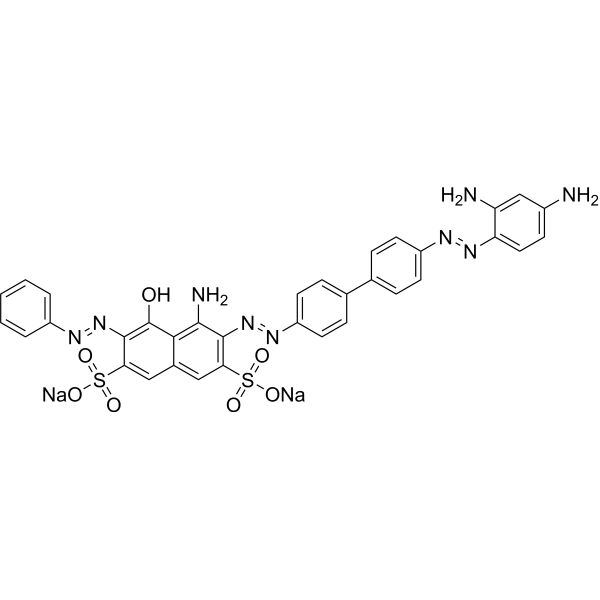
Direct Black 38 (Chlorazol Black E) is a benzidine-based azo dye, a substrate of Enterococcus gallinarum, and is mainly used for textile dyeing. Direct Black 38 is biodegradable after being reduced by microbial enzymes (such as Enterococcus gallinarum azoreductase), breaking the azo bonds and releasing benzidine and 4-aminobiphenyl. Direct Black 38 can be used in environmental toxicology, wastewater treatment and carcinogenicity studies, but its metabolite benzidine is listed as a human carcinogen.
For research use only. We do not sell to patients.
- CAS No.: 1937-37-7
- Formula: C34H25N9Na2O7S2
- Molecular Weight:781.73
-
Storage:
4°C, sealed storage, away from moisture and light
* In solvent : -80°C, 6 months; -20°C, 1 month (sealed storage, away from moisture and light)

To place orders, for customer services and technical support, please contact: MedChemExpress USA
Tel: 609-228-6898 E-mail: [email protected] [email protected]


-
 Biological Activity
-
Chemical Information
-
Solvent & Solubility
- Protocols
- Purity & Documentation
- References
-
 Help & FAQs


-
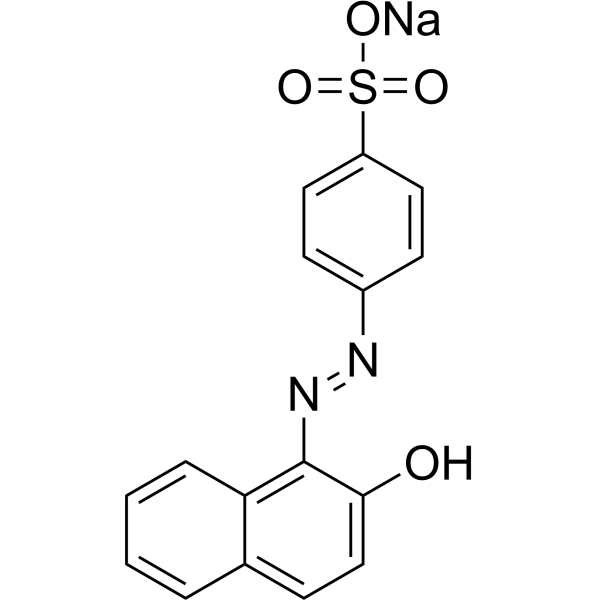
HY-N1442
Acid orange 7Azo Dye -
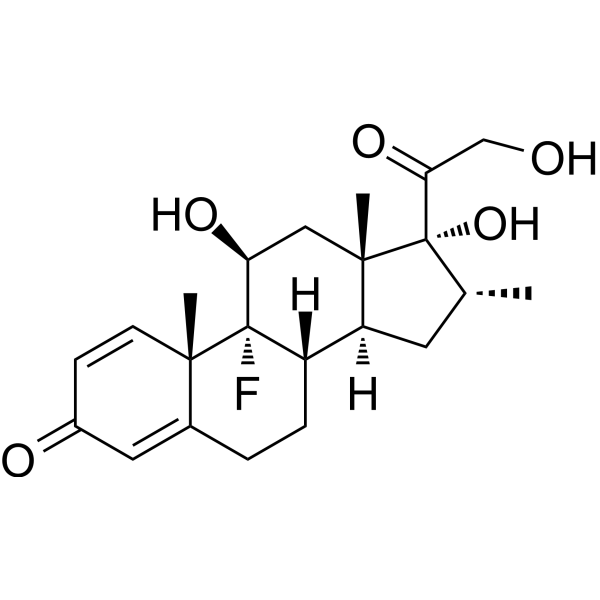
HY-14648
DexamethasoneGR Agonist -
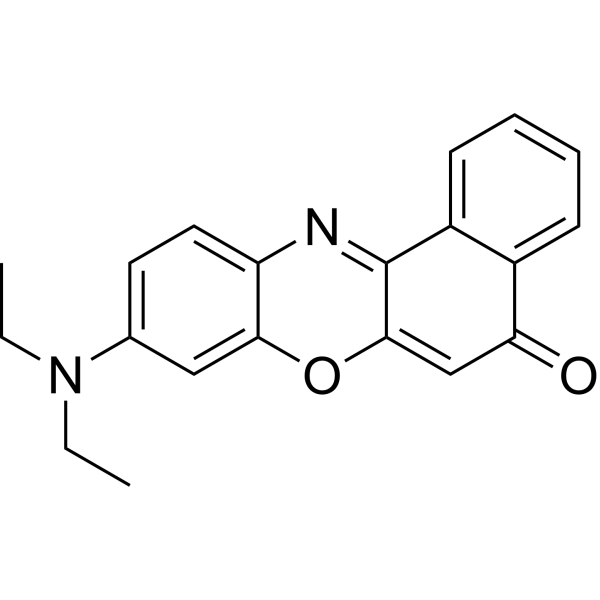
HY-D0718
Nile RedHydrophobic Fluorescent Stain -
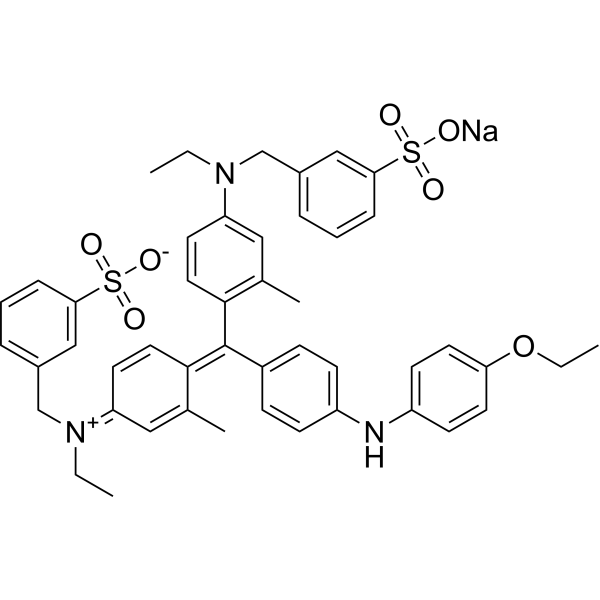
HY-D0014
Brilliant blue G-250Dye/P2×7R Antagonist -

HY-DY1008
Nile Red (solution)Hydrophobic Fluorescent Stain -
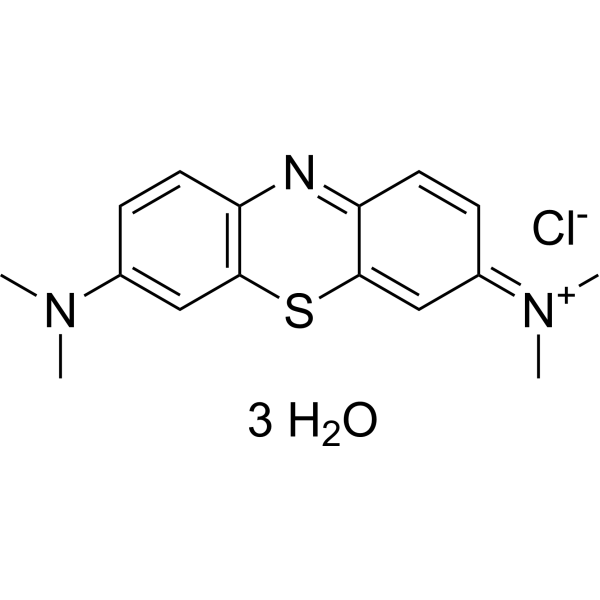
HY-B1359
Methylene blue trihydrateParasite Inhibitor -
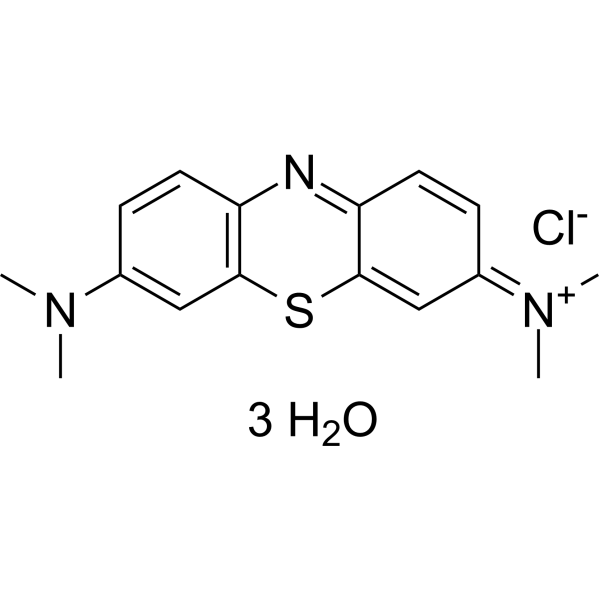
HY-B1359A
Methylene blue indicatorBiochemical Assay Reagent -
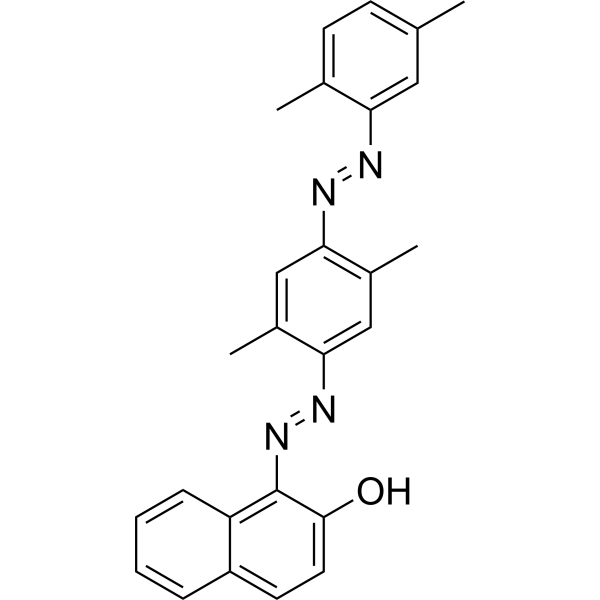
HY-D1168
Oil Red ODiazol Dye -
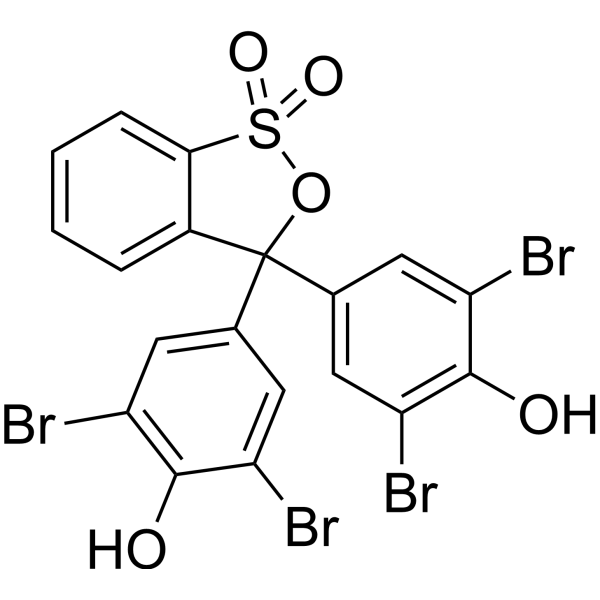
HY-B1571
Bromophenol bluepH Indicator -
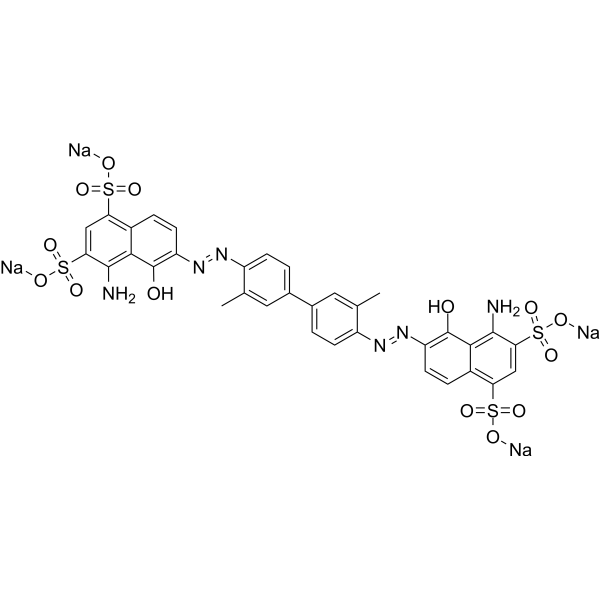
HY-B1102
Evans BlueL-glutamate Uptake Inhibitor -
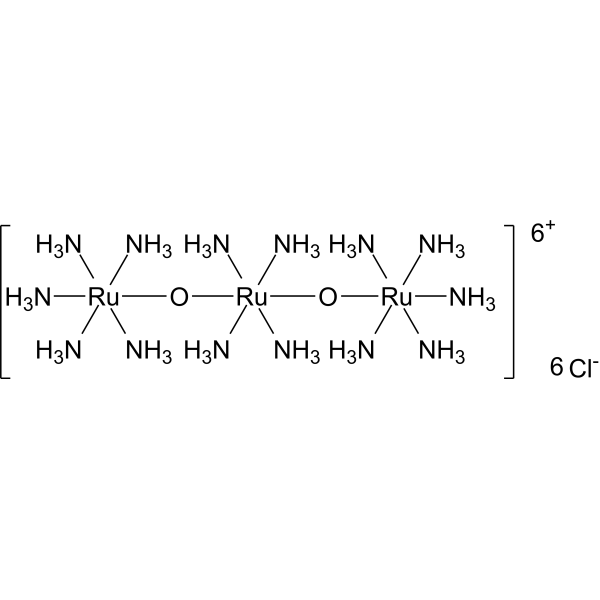
HY-103311
Ruthenium redDye -
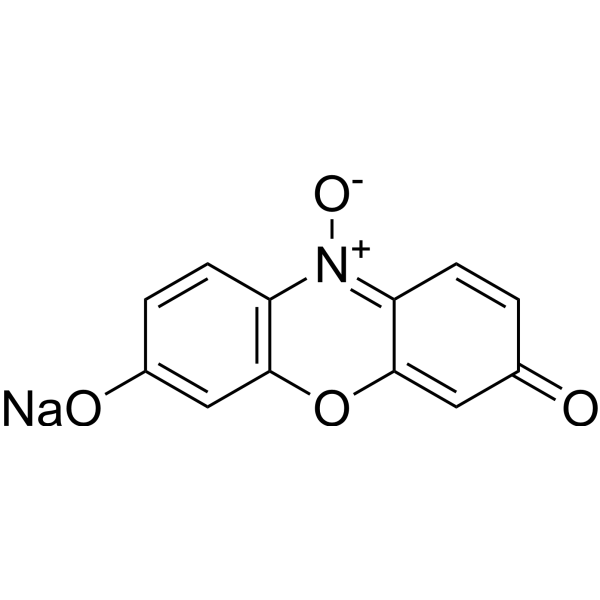
HY-111391
Resazurin sodiumBacterial Inhibitor
Publications Citing Use of MedChemExpress (MCE) Direct Black 38
More

Biological Activity
Description
In Vitro
In the basal medium experiment, Direct Black 38 (25-100 mg/L; 24 h) is decolorized by 53-63% by Enterococcus gallinarum, releasing benzidine and 4-aminobiphenyl[1].
In the Luria broth experiment, Direct Black 38 (20-250 mg/L; 48 h) achieves a decolorization rate of 71-85%, with higher biomass efficiency, in line with Monod kinetics (Vmax=12.8 mg·L-1·h-1), Ks=490.6 mg·L-1)[1].
MedChemExpress (MCE) has not independently confirmed the accuracy of these methods. They are for reference only. Further protocols information, click here.


Chemical Information
-
CAS No. 1937-37-7
-
Appearance Solid
-
Molecular Weight 781.73
-
Formula C34H25N9Na2O7S2
-
Color Light brown to black
-
SMILES
O=S(C1=C(/N=N/C2=CC=C(C3=CC=C(/N=N/C4=CC=C(N)C=C4N)C=C3)C=C2)C(N)=C5C(O)=C(/N=N/C6=CC=CC=C6)C(S(=O)(O[Na])=O)=CC5=C1)(O[Na])=O
-
Synonyms
Chlorazol Black E; Ferristatin II disodium; C.I. 30235
-
Shipping
Room temperature in continental US; may vary elsewhere.
-
Storage
4°C, sealed storage, away from moisture and light
* In solvent : -80°C, 6 months; -20°C, 1 month (sealed storage, away from moisture and light)


Publications (2)
-
Journal Impact Factor
-
Most Recent
-
Cell Metab
Ferroplasticity drives social isolation-induced anxiety via a ventral hippocampal iron-α-synuclein axis. [Abstract]2026 Jan 27:S1550-4131(25)00586-8. PMID: 41605214 -
Int J Mol Sci
CD71-Mediated Effects of Soluble Vasorin on Tumor Progression, Angiogenesis and Immunosuppression. [Abstract]2025 May 20;26(10):4913. PMID: 40430053


Solvent & Solubility
In Vitro:
DMSO : 25 mg/mL (31.98 mM; Need ultrasonic; Hygroscopic DMSO has a significant impact on the solubility of product, please use newly opened DMSO)
H2O : 5 mg/mL (6.40 mM; Need ultrasonic)
Please refer to the solubility information to select the appropriate solvent. Once prepared, please aliquot and store the solution to prevent product inactivation from repeated freeze-thaw cycles.
Storage method and period of stock solution: -80°C, 6 months; -20°C, 1 month (sealed storage, away from moisture and light). When stored at -80°C, please use it within 6 months. When stored at -20°C, please use it within 1 month.
* Note: If you choose water as the stock solution, please dilute it to the working solution, then filter and sterilize it with a 0.22 μm filter before use.
Please refer to the solubility information to select the appropriate solvent. Once prepared, please aliquot and store the solution to prevent product inactivation from repeated freeze-thaw cycles.
Storage method and period of stock solution: -80°C, 6 months; -20°C, 1 month (sealed storage, away from moisture and light). When stored at -80°C, please use it within 6 months. When stored at -20°C, please use it within 1 month.
* Note: If you choose water as the stock solution, please dilute it to the working solution, then filter and sterilize it with a 0.22 μm filter before use.
Concentration (start) × Volume (start) = Concentration (final) × Volume (final)

Protocols
-
Carcinogenicity Bioassay
A carcinogenicity bioassay detects whether long-term exposure to a test substance increases benign or malignant tumor incidence, changes tumor spectrum, or shortens tumor latency in experimental animals; the classical rodent design exposes rats and/or mice to multiple dose levels for most of their lifespan, followed by complete necropsy and histopathologic diagnosis of neoplastic and non-neoplastic lesions. The readout is tumor incidence by organ, sex, species, dose group, and survival status; interpretation requires concurrent controls, dose-response assessment, survival-adjusted tumor statistics, and pathology review because mortality, spontaneous tumor background, and body-weight effects can influence apparent tumor rates.
-
Subchronic/Chronic Toxicity Study
A subchronic/chronic oral toxicity study detects systemic adverse effects caused by repeated administration of a test article, using mortality, clinical signs, body weight, food/water intake, ophthalmology, urinalysis, hematology, serum biochemistry, organ weights, gross necropsy, and histopathology as integrated readouts. The readout reflects dose-related physiological injury, target-organ pathology, reversibility after recovery, and derivation of NOAEL, LOAEL, or related point-of-departure values when the dataset supports them.
-
Acute Systemic Toxicity Study
Acute systemic toxicity studies evaluate adverse effects occurring after a single exposure, or repeated exposure within a short acute window, and the main in vivo readouts are mortality, moribund condition, clinical signs, body-weight change, and gross pathological findings; acute oral toxicity methods were developed to replace classical LD50 testing with reduced-animal designs such as fixed-dose procedure, acute toxic class method, and up-and-down procedure. The fixed-dose procedure classifies acute toxicity by administering predefined dose levels and observing evident toxicity rather than using death as the primary endpoint, whereas the acute toxic class method uses sequential groups of three animals per step and the up-and-down procedure doses animals sequentially to estimate an LD50 with fewer animals than conventional LD50 testing.


Purity & Documentation
-
Data Sheet (272 KB)
-
SDS (419 KB)
- English - EN (419 KB)
- Français - FR (419 KB)
- Deutsch - DE (419 KB)
- Norwegian - NO (419 KB)
- Español - ES (419 KB)
- Swedish - SV (419 KB)
- Italian - IT (419 KB)
- Korean - KR (419 KB)
- Portuguese - PT (419 KB)
-
Handling Instructions (2659 KB)
References


Complete Stock Solution Preparation Table
Please refer to the solubility information to select the appropriate solvent. Once prepared, please aliquot and store the solution to prevent product inactivation from repeated freeze-thaw cycles.
Storage method and period of stock solution: -80°C, 6 months; -20°C, 1 month (sealed storage, away from moisture and light). When stored at -80°C, please use it within 6 months. When stored at -20°C, please use it within 1 month.
| Optional Solvent | Concentration Solvent Mass | 1 mg | 5 mg | 10 mg | 25 mg |
|---|---|---|---|---|---|
| H2O / DMSO | 1 mM | 1.2792 mL | 6.3961 mL | 12.7921 mL | 31.9804 mL |
| 5 mM | 0.2558 mL | 1.2792 mL | 2.5584 mL | 6.3961 mL | |
| DMSO | 10 mM | 0.1279 mL | 0.6396 mL | 1.2792 mL | 3.1980 mL |
| 15 mM | 0.0853 mL | 0.4264 mL | 0.8528 mL | 2.1320 mL | |
| 20 mM | 0.0640 mL | 0.3198 mL | 0.6396 mL | 1.5990 mL | |
| 25 mM | 0.0512 mL | 0.2558 mL | 0.5117 mL | 1.2792 mL | |
| 30 mM | 0.0426 mL | 0.2132 mL | 0.4264 mL | 1.0660 mL |
* Note: If you choose water as the stock solution, please dilute it to the working solution, then filter and sterilize it with a 0.22 μm filter before use.


Direct Black 38 Related Classifications
HY-D0256 Related Classifications
 Powered by Bioz