



Hepatic Cirrhosis
-
Hepatic Cirrhosis (13)

- 1

- Formula: C6H8N2O3
- Molecular Weight: 156.14
L-β-Imidazolelactic acid is an inhibitor of Cholinesterase and Monoamine oxidase, and also the final metabolite of L-Histidine (HY-N0832). L-β-Imidazolelactic acid increases the activity of Superoxide dismutase. L-β-Imidazolelactic acid is applicable to research related to liver cirrhosis and histidinemia.

Collagenase (Type B, animal free) is an animal-free collagen-degrading digestive enzyme and tissue dissociation reagent. Collagenase (Type B, animal free) can digest mouse aorta, myocardium, human umbilical cord, and human liver tissue to isolate primary leukocytes, adult mouse cardiomyocytes, human mesenchymal stem cells, and individual hepatocytes. Collagenase (Type B, animal free) can be used in studies related to liver cirrhosis.
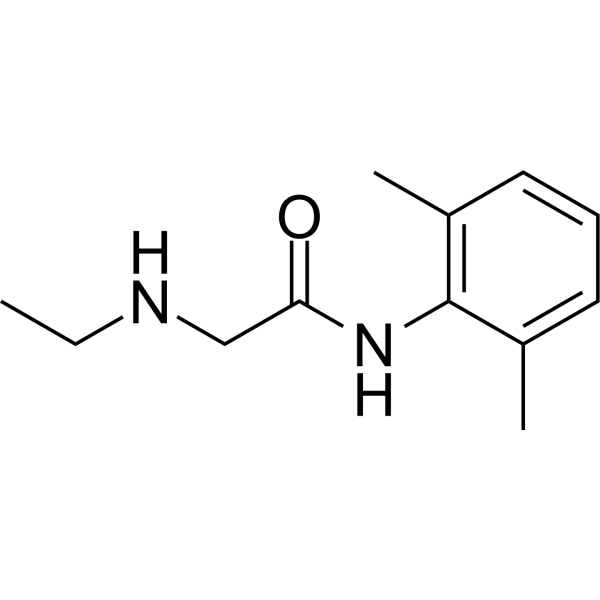
- Formula: C12H18N2O
- Molecular Weight: 206.28
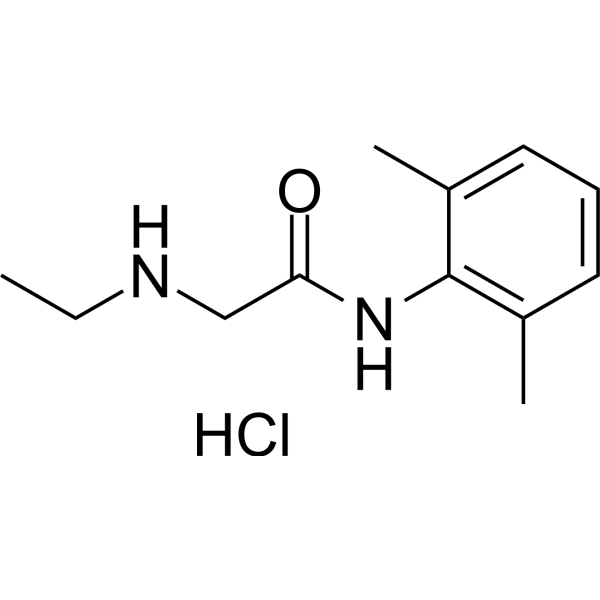
- Formula: C12H19ClN2O
- Molecular Weight: 242.75

- Formula: C16H15N3O3S2
- Molecular Weight: 361.44
M353-0039 is a selective UT-A2 inhibitor with a human IC50 of 0.35 μM. M353-0039 blocks urea transport mediated by UT-A2. M353-0039 can be used for the study of hyponatremia and edema associated with congestive heart failure, nephrotic syndrome, and cirrhosis.

- Formula: C19H19N3O3
- Molecular Weight: 337.37
E822-1968 is an UT-A2 inhibitor with a human IC50 of 0.44 μM. E822-1968 blocks urea transport mediated by UT-A2. E822-1968 can be used for the study of hyponatremia and edema associated with congestive heart failure, nephrotic syndrome, and cirrhosis.

- Formula: C54H62N8O12
- Molecular Weight: 1015.12
L&M-D-MR is a highly specific fluorescent "AND" logic probe with response moieties for leucine aminopeptidase (LAP) and monoamine oxidase (MAO). The coexistence of both LAP and MAO is required for L&M-D-MR to trigger intramolecular cyclization, release fluorophores and activate fluorescence. In the presence of only a single enzyme, L&M-D-MR generates only an extremely weak signal. L&M-D-MR enables bioimaging in living cells and mouse models, and can effectively distinguish different subtypes of liver diseases via blood samples or test strips. L&M-D-MR is widely used in studies related to liver cirrhosis, hepatitis B and drug-induced liver injury.

- Formula: C26H23N5
- Molecular Weight: 405.49

- Formula: C12H18N2O
- Molecular Weight: 206.28
Monoethylglycinexylidide (Standard) is the analytical standard of Monoethylglycinexylidide (HY-118167). This product is intended for research and analytical applications. Monoethylglycinexylidide (MEGX; Norlidocaine) is the major metabolite of Lidocaine (HY-B0185), produced via oxidative metabolism by cytochrome P-450 enzymes in the liver. Monoethylglycinexylidide can be used for research on liver cirrhosis.
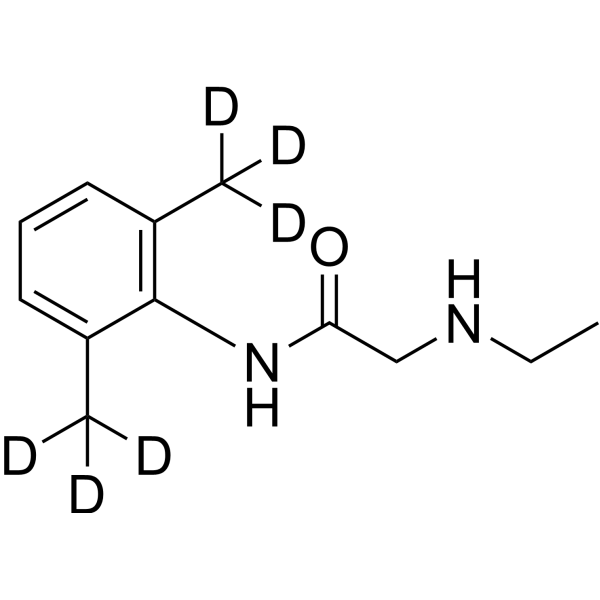
- Formula: C12H12D6N2O
- Molecular Weight: 212.32
Monoethylglycinexylidide-d6 (MEGX-d6; Norlidocaine-d6) is the deuterated-labeled Monoethylglycinexylidide (HY-118167). Monoethylglycinexylidide is the major metabolite of Lidocaine (HY-B0185), produced via oxidative metabolism by cytochrome P-450 enzymes in the liver. Monoethylglycinexylidide can be used for research on liver cirrhosis.
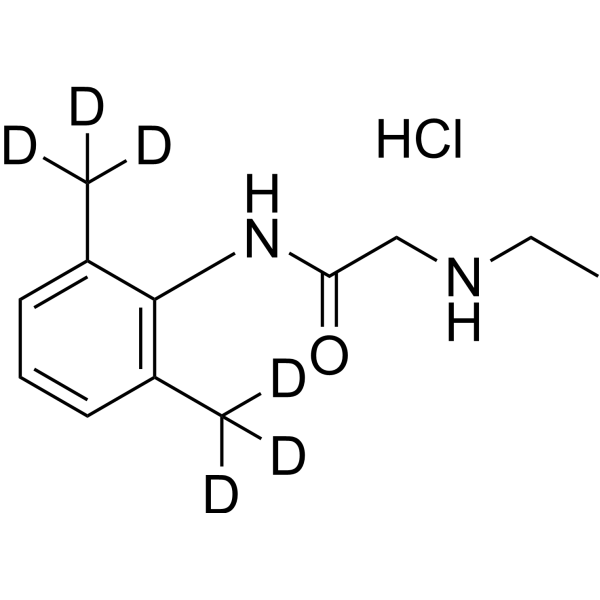
- Formula: C12H13D6ClN2O
- Molecular Weight: 248.78
Monoethylglycinexylidide-d6 hydrochloride is the deuterated-labeled Monoethylglycinexylidide hydrochloride (HY-W099331). Monoethylglycinexylidide hydrochloride (MEGX hydrochloride; Norlidocaine hydrochloride) is the major metabolite of Lidocaine (HY-B0185), produced via oxidative metabolism by cytochrome P-450 enzymes in the liver. Monoethylglycinexylidide hydrochloride can be used for research on liver cirrhosis.

- Formula: C23H32O4S
- Molecular Weight: 404.56
6β-Hydroxy-7α-thiomethylspirolactone is a metabolite of Spironolactone (HY-B0561). 6β-Hydroxy-7α-thiomethylspirolactone can be used in studies of cirrhotic ascites.

- Formula: C12H19ClN2O
- Molecular Weight: 242.75
Monoethylglycinexylidide hydrochloride (Standard) is the analytical standard of Monoethylglycinexylidide hydrochloride (HY-W099331). This product is intended for research and analytical applications. Monoethylglycinexylidide hydrochloride (MEGX hydrochloride; Norlidocaine hydrochloride) is the major metabolite of Lidocaine (HY-B0185), produced via oxidative metabolism by cytochrome P-450 enzymes in the liver. Monoethylglycinexylidide hydrochloride can be used for research on liver cirrhosis.
- 1



