



Chelerythrine
Based on 20 publication(s) in Google Scholar
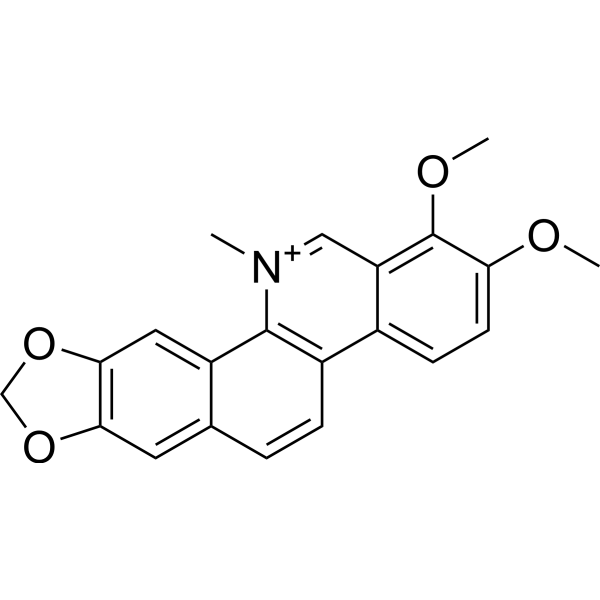
Chelerythrine is an alkaloid, acts as a potent and selective Ca2+/phospholopid-dependent PKC antagonist, with an IC50 of 0.7 μM. Chelerythrine inhibits the BclXL-Bak BH3 peptide binding with IC50 of 1.5 μM. Chelerythrine triggers Apoptosis and Autophagy. Chelerythrine has antitumor, antidiabetic and anti-inflammatory activity. Chelerythrine shows antibacterial activities against Gram-positive bacteria, Staphylococcus aureus (SA), MRSA.
For research use only. We do not sell to patients.
- CAS No.: 34316-15-9
- Formula: C21H18NO4
- Molecular Weight:348.37
-
Storage:
Please store the product under the recommended conditions in the Certificate of Analysis.

To place orders, for customer services and technical support, please contact: MedChemExpress USA
Tel: 609-228-6898 E-mail: [email protected] [email protected]


-
 Biological Activity
-
Chemical Information
- Protocols
- Purity & Documentation
- References
-
 Help & FAQs


-
HY-N0168
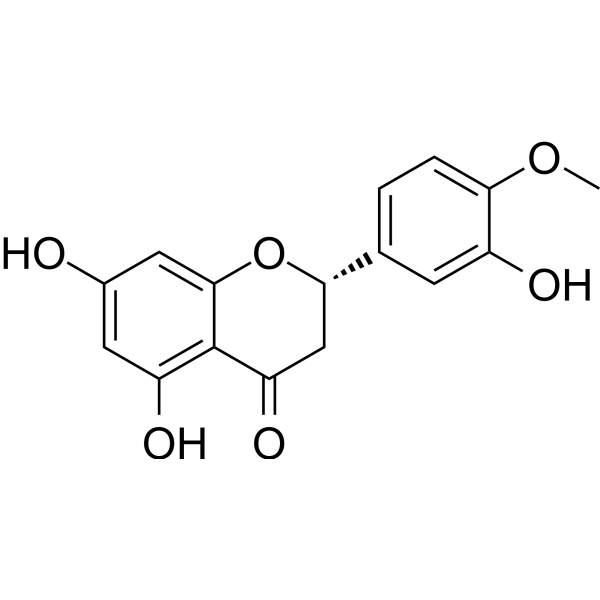
HesperetinUGT Inhibitor -
HY-N0021
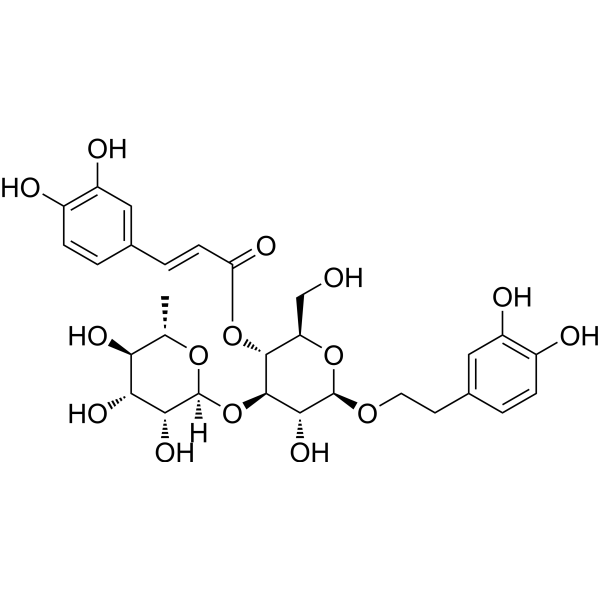
VerbascosideBacterial Inhibitor -
HY-18739
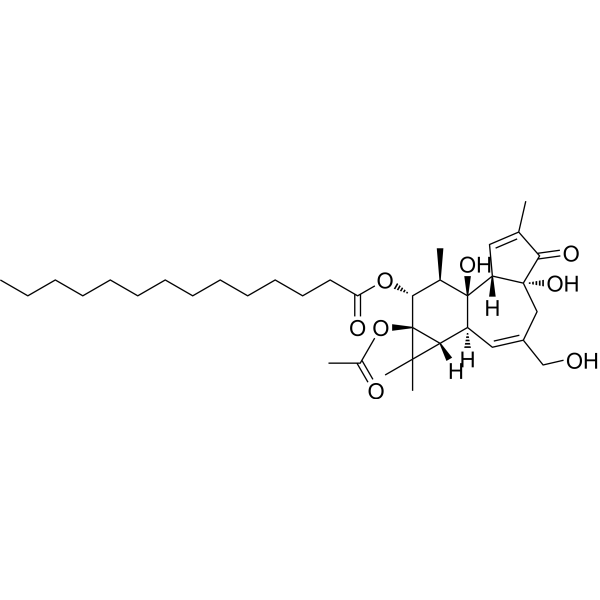
Phorbol 12-myristate 13-acetatePKC Activator -
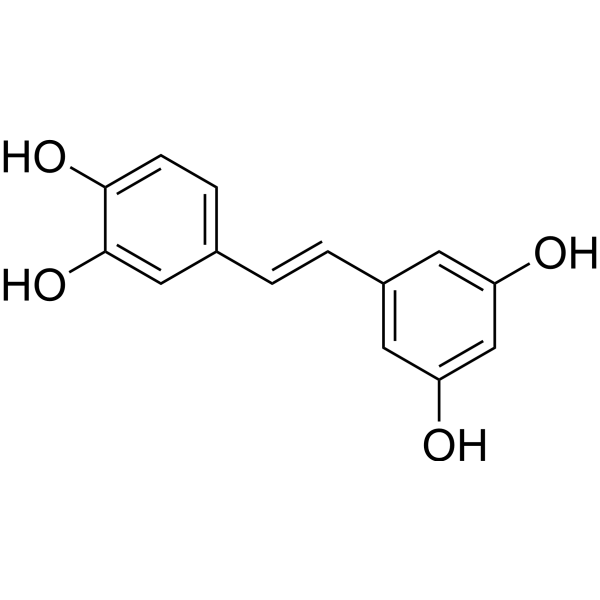
HY-13518
PiceatannolSyk Inhibitor -

HY-N0021R
Verbascoside (Standard)Bacterial Inhibitor -
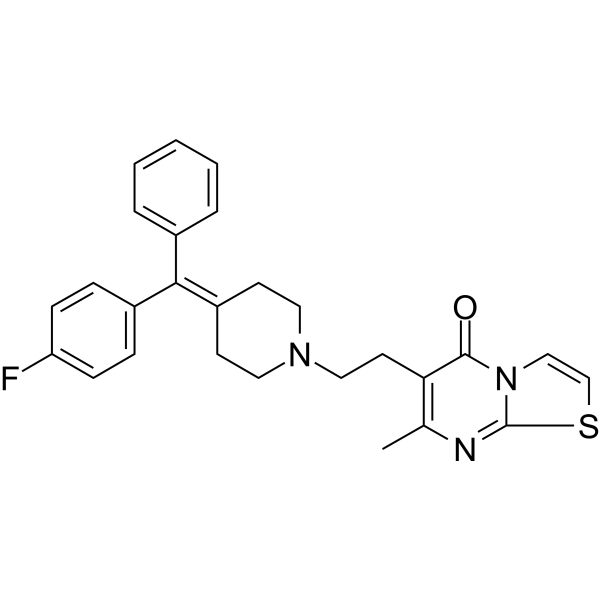
HY-107613
R 59-022DGK Inhibitor -

HY-18739R
Phorbol 12-myristate 13-acetate (Standard)PKC Activator -
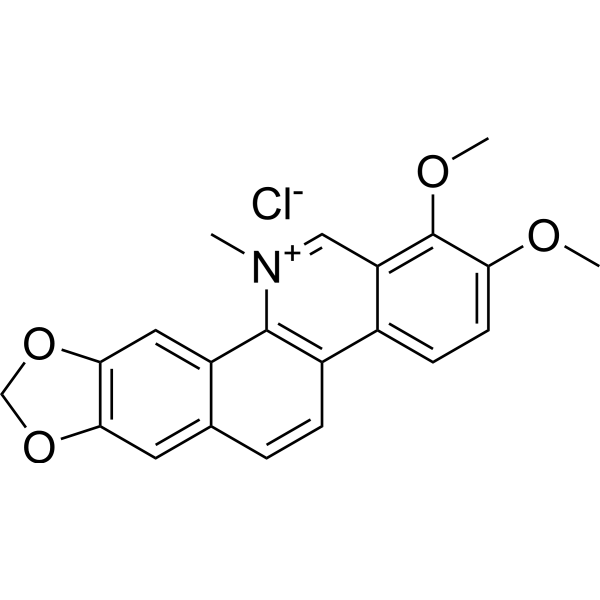
HY-12048
Chelerythrine chlorideBcl-2 Family Inhibitor -

HY-13518R
Piceatannol (Standard)Syk Inhibitor -
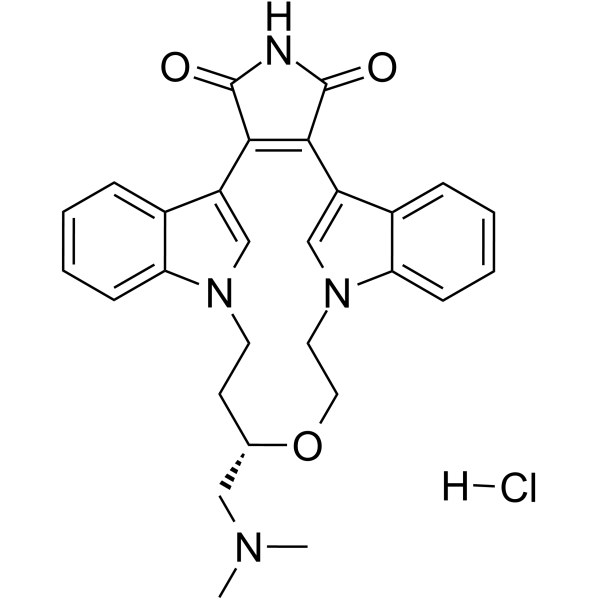
HY-10195B
Ruboxistaurin hydrochloridePKCβ Inhibitor -
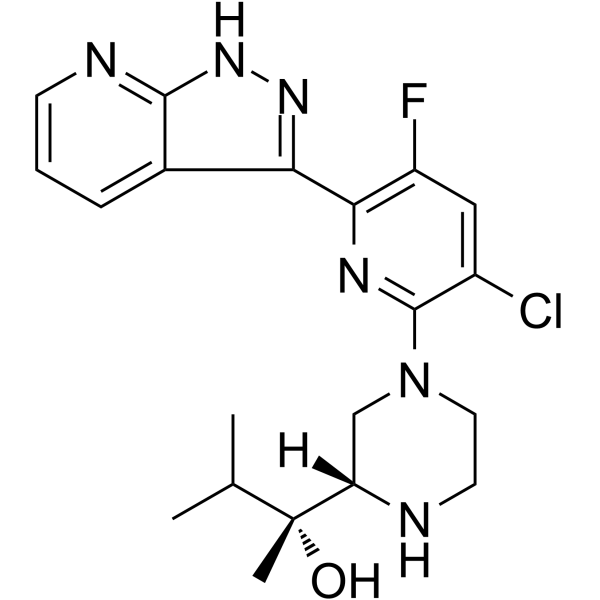
HY-112782
VTX-27PKC θ Inhibitor -
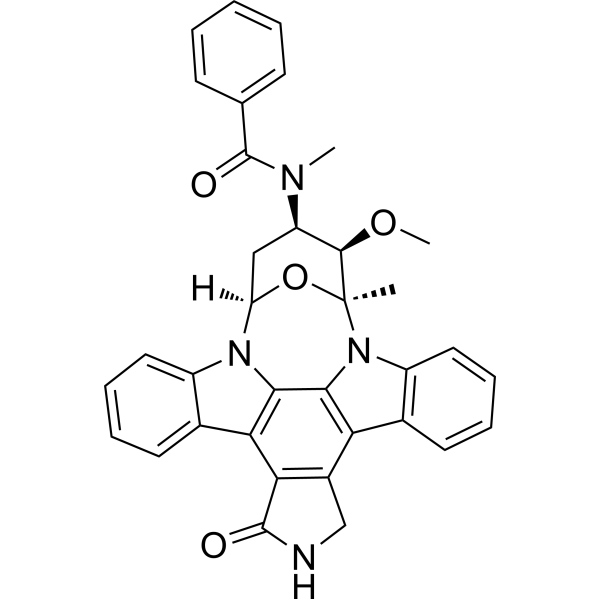
HY-10230
MidostaurinMulti-targeted Protein Kinase Inhibitor
Publications Citing Use of MedChemExpress (MCE) Chelerythrine
More- Cell Commun Signal. 2021 Oct 11;19(1):103. [Abstract]
- J Headache Pain. 2022 Mar 8;23(1):35. [Abstract]
- Phytother Res. 2023 Oct;37(10):4674-4689. [Abstract]
- J Pineal Res. 2026 Mar;78(2):e70135. [Abstract]
- Cancer Cell Int. 2023 Jun 17;23(1):117. [Abstract]
- Nutrients. 2025 Nov 12;17(22):3534. [Abstract]
- Front Pharmacol. 2021 May 13:12:655726. [Abstract]
- Sci Rep. 2017 Aug 23;7(1):9201. [Abstract]
- J Inflamm Res. 2025 Mar 20:18:4213-4231. [Abstract]
- Front Physiol. 2021 Oct 28;12:770430. [Abstract]
- FASEB J. 2019 Dec;33(12):13644-13659. [Abstract]
- Cytokine. 2024 Oct:182:156717. [Abstract]
- Fishes. 2022, 7(5), 229.
- Vet Microbiol. 2026 May:316:110992. [Abstract]
- Biochem Biophys Res Commun. 2024 Dec 20:739:150914. [Abstract]
- Planta Med. 2024 Jun;90(7-08):523-533. [Abstract]
- Bull Sib Med. 2025.
- University of Pennsylvania. 2026.
- Heliyon. 2024 Jul 28;10(15):e35368. [Abstract]
- Research Square Preprint. 2020 Oct.
 Customer Validation & Images

-
WB
-
WB
-
WB
-
Histological Imaging/Staining
-
WB


Biological Activity
Description
IC50 & Target
[1]|
PKC 0.7 μM (IC50) |
Bcl-xL |
Cellular Effect
|
Cell Line

|
Type | Value | Description | References |
|---|---|---|---|---|
| A2780/Taxol | IC50 |
0.4 μM
Compound: 5
|
Antiproliferative activity against human A2780T cells assessed as reduction in cell viability incubated for 48 hrs by CCK-8 assay
Antiproliferative activity against human A2780T cells assessed as reduction in cell viability incubated for 48 hrs by CCK-8 assay
|
[PMID: 39213483] |
| A549 | IC50 |
7.73 μM
Compound: Chelerythrine
|
Cytotoxicity against human A549 cells assessed as reduction in cell viability after 24 hrs by MTT assay
Cytotoxicity against human A549 cells assessed as reduction in cell viability after 24 hrs by MTT assay
|
[PMID: 27561984] |
| A549/TR | IC50 |
0.4 μM
Compound: 5
|
Antiproliferative activity against human A549/Taxol cells assessed as reduction in cell viability incubated for 48 hrs by CCK-8 assay
Antiproliferative activity against human A549/Taxol cells assessed as reduction in cell viability incubated for 48 hrs by CCK-8 assay
|
[PMID: 39213483] |
| HUVEC | IC50 |
4.93 μM
Compound: Chelerythrine
|
Cytotoxicity against HUVEC assessed as reduction in cell viability after 24 hrs by MTT assay
Cytotoxicity against HUVEC assessed as reduction in cell viability after 24 hrs by MTT assay
|
[PMID: 27561984] |
| LoVo | IC50 |
0.4 μM
Compound: 5
|
Antiproliferative activity against human LoVo cells assessed as reduction in cell viability incubated for 48 hrs by CCK-8 assay
Antiproliferative activity against human LoVo cells assessed as reduction in cell viability incubated for 48 hrs by CCK-8 assay
|
[PMID: 39213483] |
| MKN-45 | IC50 |
12.7 μM
Compound: Chelerythrine
|
Cytotoxicity against human MKN45 cells assessed as decrease in cell viability after 48 hrs by MTT assay
Cytotoxicity against human MKN45 cells assessed as decrease in cell viability after 48 hrs by MTT assay
|
[PMID: 27887841] |
| NB-4 | IC50 |
1.49 μM
Compound: Chelerythrine
|
Cytotoxicity against human NB4 cells assessed as decrease in cell viability after 48 hrs by MTT assay
Cytotoxicity against human NB4 cells assessed as decrease in cell viability after 48 hrs by MTT assay
|
[PMID: 27887841] |
| NCI-H1299 | IC50 |
4.28 μM
Compound: Chelerythrine
|
Cytotoxicity against human NCI-H1299 cells assessed as reduction in cell viability after 24 hrs by MTT assay
Cytotoxicity against human NCI-H1299 cells assessed as reduction in cell viability after 24 hrs by MTT assay
|
[PMID: 27561984] |
| NCI-H292 | IC50 |
4.96 μM
Compound: Chelerythrine
|
Cytotoxicity against human NCI-H292 cells assessed as reduction in cell viability after 24 hrs by MTT assay
Cytotoxicity against human NCI-H292 cells assessed as reduction in cell viability after 24 hrs by MTT assay
|
[PMID: 27561984] |
| NCI-H460 | IC50 |
5.14 μM
Compound: Chelerythrine
|
Cytotoxicity against human NCI-H460 cells assessed as reduction in cell viability after 24 hrs by MTT assay
Cytotoxicity against human NCI-H460 cells assessed as reduction in cell viability after 24 hrs by MTT assay
|
[PMID: 27561984] |
| PC-3 | IC50 |
0.4 μM
Compound: 5
|
Antiproliferative activity against human PC-3 cells assessed as reduction in cell viability incubated for 24 hrs by CCK-8 assay
Antiproliferative activity against human PC-3 cells assessed as reduction in cell viability incubated for 24 hrs by CCK-8 assay
|
[PMID: 39213483] |
In Vitro
Chelerythrine (48 h) inhibits the growth of L-1210 cells (IC50: 0.53 uM )[1].
Chelerythrine (0-20 μM, 24 h) inhibits cell viability, induces apoptosis and autophagy in A549 and NCI-H1299 cells[4].
Chelerythrine (0-5 μM, 24 or 48 h) induces apoptosis in BclXL-overexpressing SH-SY5Y cells[3].
Chelerythrine (2.5-10 μM, 16 h) induces mitochondrial depolarization (decrease in mitochondrial potential) in SH-SY5Y cells, and stimulates release of CytC from isolated mitochondria[4].
Chelerythrine (0-100 ng/mL, 24 h) reduces the LPS induced production of NO and TNF-α in primary macrophages[5].
Chelerythrine (MIC: 0.156 mg/mL) shows antibacterial activities against Gram-positive bacteria, Staphylococcus aureus (SA), MRSA, and extended spectrum β-lactamase S. aureus (ESBLs-SA)[6].
MedChemExpress (MCE) has not independently confirmed the accuracy of these methods. They are for reference only.
-
Cell Line:A549 and NCI-H1299 cells
-
Concentration:10, 15, 20 μM
-
Incubation Time:24 h
-
Result:Induced expression of LC3-II in a beclin 1-dependent way.
In Vivo
Chelerythrine (1-10 mg/kg, i.p., at 24 and 1 h before injection of 100 μg/kg LPS) shows anti-inflammatory effects (increased survival rate, decreased serum nitrite and TNF-α level) in LPS induced mice endotoxic shock model[5].
MedChemExpress (MCE) has not independently confirmed the accuracy of these methods. They are for reference only.
-
Animal Model:Unilateral ureteral obstruction (UUO) induced neonatal rats[2]
-
Dosage:5 mg/kg
-
Administration:i.p., daily
-
Result:Attenuated kidney injury (Increased kidney weight and restored renal function).
Inhibited UUO-induced upregulated kidney injury molecule-1 expression, apoptosis, and renal fibrosis.
- Research Protocol for Infectious Diseases
- Annexin V plus membrane-impermeant dye apoptosis staining
- Ca2+ Staining Technique
- Research Protocol for Inflammation-related Diseases
- Gram Staining of Tissue Sections
- Detection of Apoptosis
- TUNEL staining for apoptotic DNA fragmentation
- Cotton Pellet Granuloma
- Carrageenan-Induced Paw Edema
- Autophagy
- Apoptosis Solutions
- Lysosome and acidic-vesicle live-cell staining
- Macroautophagy Solutions


Chemical Information
-
CAS No. 34316-15-9
-
Molecular Weight 348.37
-
Formula C21H18NO4
-
SMILES
C[N+]1=CC2=C(OC)C(OC)=CC=C2C(C=CC3=C4)=C1C3=CC5=C4OCO5
-
Structure Classification
-
Initial Source
-
Shipping
Room temperature in continental US; may vary elsewhere.
-
Storage
Please store the product under the recommended conditions in the Certificate of Analysis.


Publications (20)
-
Journal Impact Factor
-
Most Recent
-
Cell Commun Signal
Zinc-mediated activation of CREB pathway in proliferation of pulmonary artery smooth muscle cells in pulmonary hypertension. [Abstract]2021 Oct 11;19(1):103. PMID: 34635097 -
J Headache Pain
Calcitonin gene-related peptide receptor antagonist BIBN4096BS regulates synaptic transmission in the vestibular nucleus and improves vestibular function via PKC/ERK/CREB pathway in an experimental chronic migraine rat model. [Abstract]2022 Mar 8;23(1):35. PMID: 35260079 -
Phytother Res
Chelerythrine chloride inhibits the progression of colorectal cancer by targeting cancer-associated fibroblasts through intervention with WNT10B/β-catenin and TGFβ2/Smad2/3 axis. [Abstract]2023 Oct;37(10):4674-4689. PMID: 37402476 -
J Pineal Res
Melatonin Enhances the Myometrial Contraction Through MT2-PKC-NRF2/MAFF Signaling Pathway in Sows. [Abstract]2026 Mar;78(2):e70135. PMID: 41854048 -
Cancer Cell Int
High FAAP24 expression reveals poor prognosis and an immunosuppressive microenvironment shaping in AML. [Abstract]2023 Jun 17;23(1):117. PMID: 37328842 -
Nutrients
2025 Nov 12;17(22):3534. PMID: 41305585
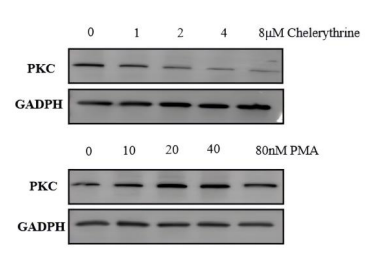
Chelerythrine purchased from MedChemExpress. Usage Cited in: Nutrients. 2025 Nov 12;17(22):3534. [Abstract]
The PKC protein expression in the Chelerythrine (0-8μM)-treated groups gradually decreased with increasing dose.
-
Front Pharmacol
Propofol Inhibits Ischemia/Reperfusion-Induced Cardiotoxicity Through the Protein Kinase C/Nuclear Factor Erythroid 2-Related Factor Pathway. [Abstract]2021 May 13:12:655726. PMID: 34054535 -
Sci Rep
Neuroprotective Effects of CGP3466B on Apoptosis Are Modulated by Protein-L-isoaspartate (D-aspartate) O-methyltransferase/Mst1 Pathways after Traumatic Brain Injury in Rats. [Abstract]2017 Aug 23;7(1):9201. PMID: 28835703
Chelerythrine purchased from MedChemExpress. Usage Cited in: Sci Rep. 2017 Aug 23;7(1):9201. [Abstract]
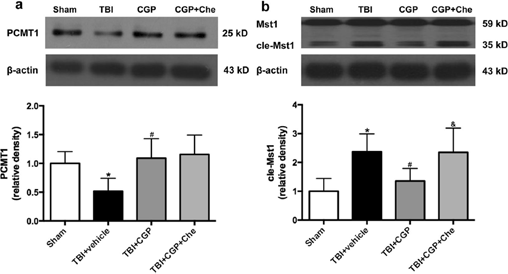
CGP3466B upregulates PCMT1 expression and inhibits cleaved-Mst1 activation at 24 h after TBI. Chelerythrine activates the Mst1 without regulating PCMT1 protein level. (a) Western blot assay for the expression of PCMT1. (b) Western blot assay for the expression of Mst1 and cleaved-Mst1.
-
J Inflamm Res
2025 Mar 20:18:4213-4231. PMID: 40129872
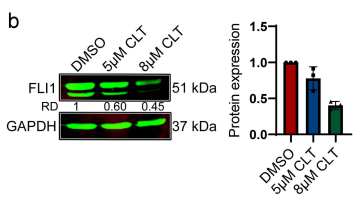
Chelerythrine purchased from MedChemExpress. Usage Cited in: J Inflamm Res. 2025 Mar 20:18:4213-4231. [Abstract]
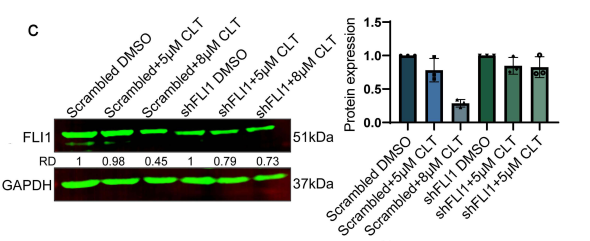
CLT (Chelerythrine chloride, 5 and 8 μM) downregulated the expression of FLI1 in HEL cells, as determined via Western blotting.
Chelerythrine purchased from MedChemExpress. Usage Cited in: J Inflamm Res. 2025 Mar 20:18:4213-4231. [Abstract]
The effect of Chelerythrine (CLT, 5 and 8 μM) on FLI1 downregulation was significantly diminished in the scrambled control cells versus FLI1 knockdown HEL cells.
Chelerythrine purchased from MedChemExpress. Usage Cited in: J Inflamm Res. 2025 Mar 20:18:4213-4231. [Abstract]
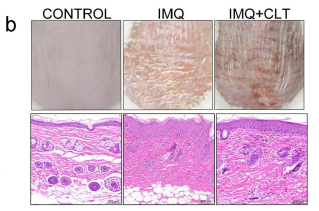
IMQ administration. Images in the top showed significant attenuation in IMQ-induced psoriasis following CLT (Chelerythrine chloride, 4 mg/kg) treatment. H&E staining analysis of the dorsal skin of the IMQ group on day 7 revealed significant epidermal hyperplasia, increased acanthosis, parakeratosis, telangiectasia, and inflammatory cell infiltration. CLT injection significantly reversed these histological changes caused by IMQ, showing less parakeratosis and less epidermal thickening than the IMQ group.
-
Front Physiol
Roles of Endothelial Motilin Receptor and Its Signal Transduction Pathway in Motilin-Induced Left Gastric Artery Relaxation in Dogs. [Abstract]2021 Oct 28;12:770430. PMID: 34777026 -
FASEB J
EphrinB2/ephB2-mediated myenteric synaptic plasticity: mechanisms underlying the persistent muscle hypercontractility and pain in postinfectious IBS. [Abstract]2019 Dec;33(12):13644-13659. PMID: 31601124 -
Cytokine
Chelerythrine ameliorates Aspergillus fumigatus keratitis through suppressing the LOX-1/p38 MAPK signaling pathway. [Abstract]2024 Oct:182:156717. PMID: 39067394 -
-
Vet Microbiol
The Chinese medicine monomer Schisandrin C inhibits PRRSV infection by regulating the OGT-PI3K/AKT/mTOR signaling pathway. [Abstract]2026 May:316:110992. PMID: 41865607 -
Biochem Biophys Res Commun
2024 Dec 20:739:150914. PMID: 39536412 -
Planta Med
Novel Approaches for the Analysis and Isolation of Benzylisoquinoline Alkaloids in Chelidonium majus. [Abstract]2024 Jun;90(7-08):523-533. PMID: 38843792 -
-
-
Heliyon
Pan-cancer investigation of RFX family and associated genes identifies RFX8 as a therapeutic target in leukemia. [Abstract]2024 Jul 28;10(15):e35368. PMID: 39170430 -


Purity & Documentation
References
[1]. Herbert JM, et al. Chelerythrine is a potent and specific inhibitor of protein kinase C. Biochem Biophys Res Commun. 1990 Nov 15;172(3):993-9. [Content Brief]
[2]. Shi B, et al. Protein kinase C inhibitor chelerythrine attenuates partial unilateral ureteral obstruction induced kidney injury in neonatal rats. Life Sci. 2019 Jan 1;216:85-91. [Content Brief]
[3]. Chan SL, et al.Identification of chelerythrine as an inhibitor of BclXL function.J Biol Chem. 2003 Jun 6;278(23):20453-6. [Content Brief]
[4]. Tang ZH, et al.Induction of reactive oxygen species-stimulated distinctive autophagy by chelerythrine in non-small cell lung cancer cells.Redox Biol. 2017 Aug;12:367-376. [Content Brief]
[5]. Li W, et al. Effect of chelerythrine against endotoxic shock in mice and its modulation of inflammatory mediators in peritoneal macrophages through the modulation of mitogen-activated protein kinase (MAPK) pathway. Inflammation. 2012 Dec;35(6):1814-24. [Content Brief]
[6]. He N, et al. Antibacterial mechanism of chelerythrine isolated from root of Toddalia asiatica (Linn) Lam. BMC Complement Altern Med. 2018 Sep 26;18(1):261. [Content Brief]

Calculators
Concentration (start) × Volume (start) = Concentration (final) × Volume (final)


Chelerythrine Related Classifications
HY-N2359 Related Classifications
 Powered by Bioz