



endo-BCN-NHS carbonate

Based on 1 Customer Validation
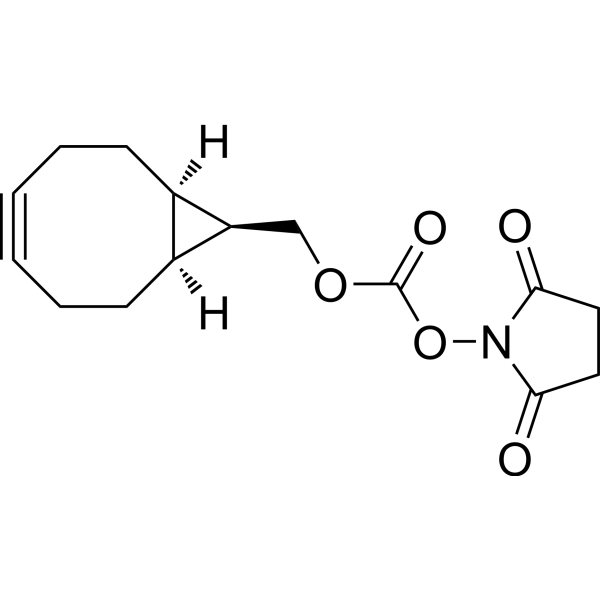
endo-BCN-NHS carbonate is an elastin-like protein (ELP) modification reagent. endo-BCN-NHS carbonate can react with lysine residues in ELP to make ELP carry BCN groups, and then cross-link ELP through strain-promoted azide-alkyne cycloaddition (SPAAC) reaction. endo-BCN-NHS carbonate promotes hydrogel formation. endo-BCN-NHS carbonate is mainly used in cell encapsulation related research.
For research use only. We do not sell to patients.
- Purity : 99.54%
- CAS No.: 1426827-79-3
- Formula: C15H17NO5
- Molecular Weight:291.30
-
Storage:Powder -20°C, 3 years ; In solvent -80°C, 6 months , -20°C, 1 month

To place orders, for customer services and technical support, please contact: MedChemExpress USA
Tel: 609-228-6898 E-mail: [email protected] [email protected]


-
 Biological Activity
-
Chemical Information
-
Solvent & Solubility
- Protocols
- Purity & Documentation
- References
-
 Help & FAQs


-
HY-133439
BCN-PEG4-NHS esterPROTAC Linkers -
HY-W111141
BCN-OHBCN-TPP Probe Control -
HY-141140
5-EthynyluridineCell-permeable Nucleoside -
HY-141165
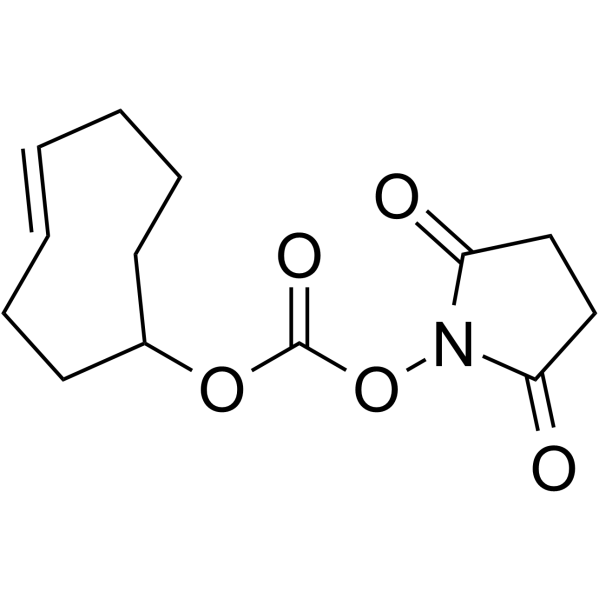
TCO-NHS esterPROTAC Linker -
HY-130283
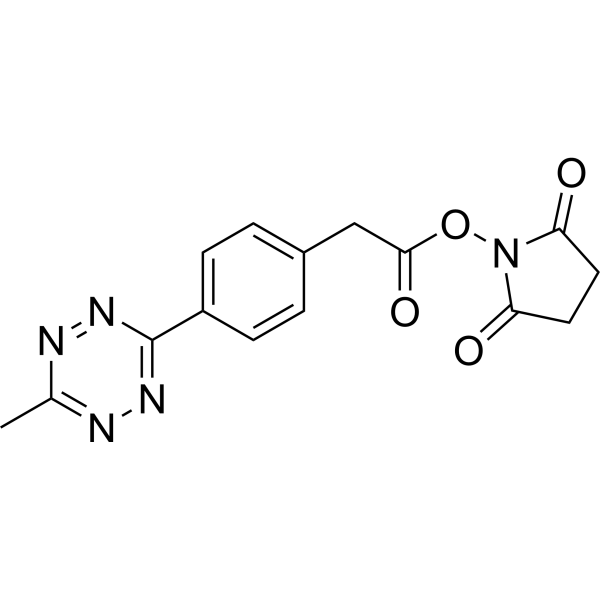
Methyltetrazine-Ph-NHS esterPROTAC Linker -
HY-20336
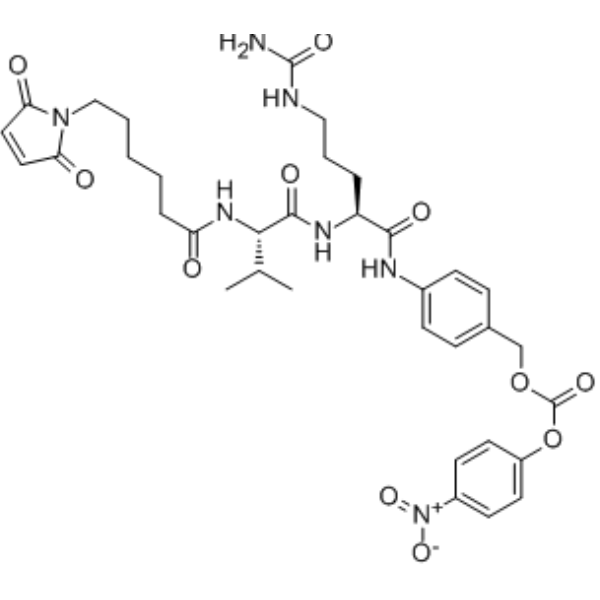
Mc-Val-Cit-PABC-PNPADC Linker -
HY-W072752
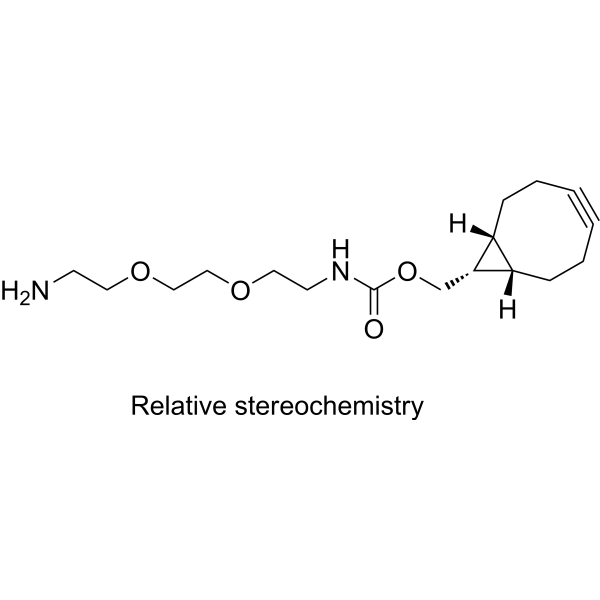
endo-BCN-PEG2-NH2 -
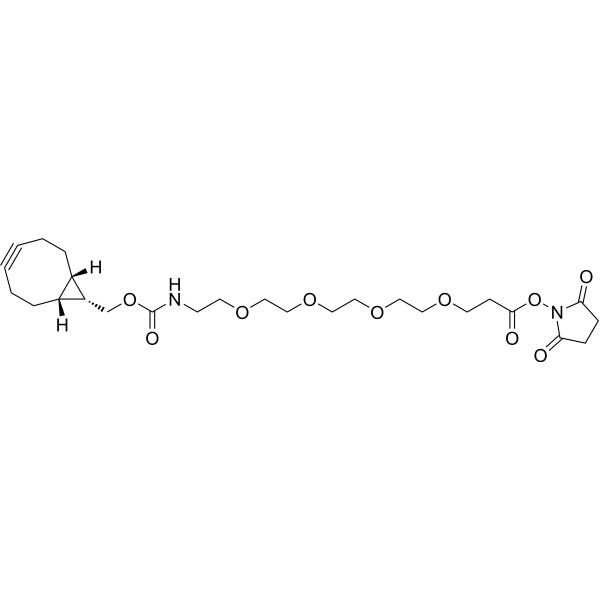
HY-W096079
BCN-endo-PEG4-NHSADC Linker -
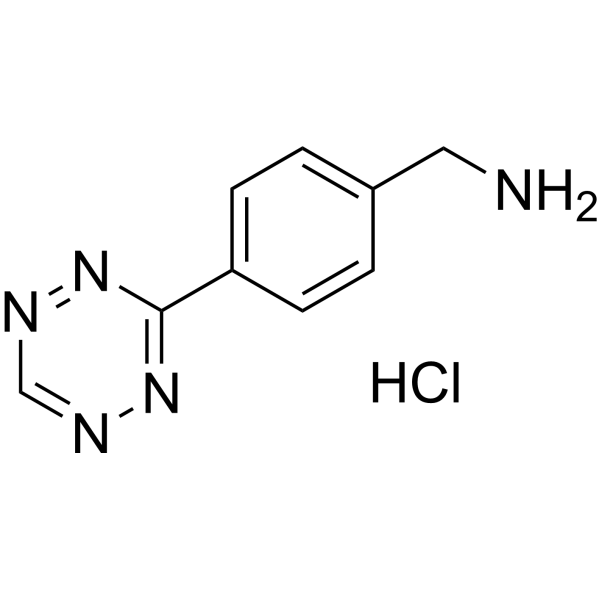
HY-W053709A
Tetrazine-Amine monohydrochlorideClick Chemistry Reagent -
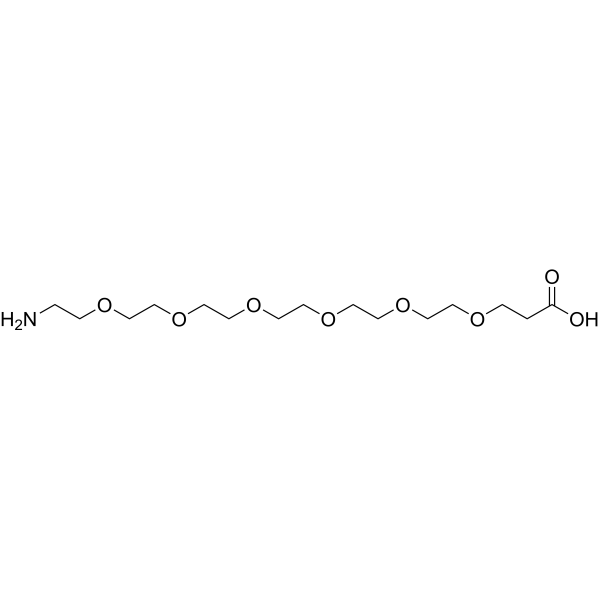
HY-W040257
NH2-PEG6-CH2CH2COOH -

HY-140070
endo-BCN-PEG8-NHS esterPROTAC Linker -
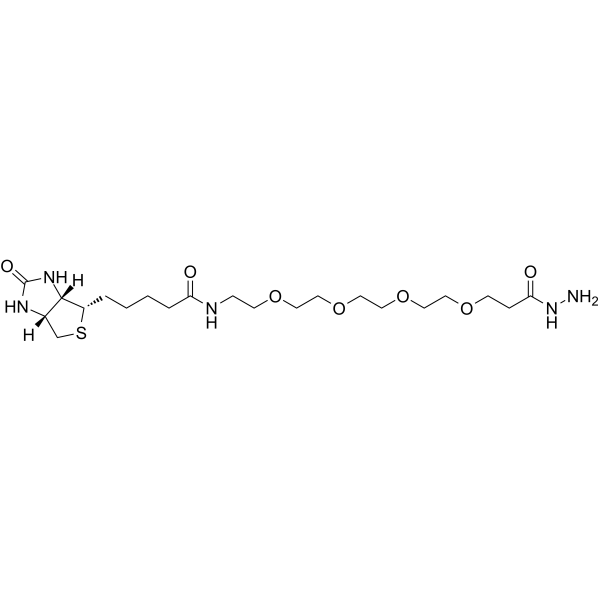
HY-140932
Biotin-PEG4-hydrazidePROTAC Linkers


Biological Activity
Description
In Vitro
Hydrogels containing endo-BCN-NHS carbonate-modified ELP can support the in vitro culture of human bone marrow mesenchymal stem cells (hMSCs), human umbilical vein endothelial cells (HUVECs), and mouse neural progenitor cells (mNPCs)[1].
MedChemExpress (MCE) has not independently confirmed the accuracy of these methods. They are for reference only. Further protocols information, click here.


Chemical Information
-
CAS No. 1426827-79-3
-
Appearance Solid
-
Molecular Weight 291.30
-
Formula C15H17NO5
-
Color White to light yellow
-
SMILES
O=C(OC[C@H]1[C@@]2([H])CCC#CCC[C@@]12[H])ON3C(CCC3=O)=O
-
Shipping
Room temperature in continental US; may vary elsewhere.
-
Storage
Powder -20°C 3 years In solvent -80°C 6 months -20°C 1 month


Solvent & Solubility
In Vitro:
DMSO : 100 mg/mL (343.29 mM; Need ultrasonic; Hygroscopic DMSO has a significant impact on the solubility of product, please use newly opened DMSO)
Please refer to the solubility information to select the appropriate solvent. Once prepared, please aliquot and store the solution to prevent product inactivation from repeated freeze-thaw cycles.
Storage method and period of stock solution: -80°C, 6 months; -20°C, 1 month. When stored at -80°C, please use it within 6 months. When stored at -20°C, please use it within 1 month.
Please refer to the solubility information to select the appropriate solvent. Once prepared, please aliquot and store the solution to prevent product inactivation from repeated freeze-thaw cycles.
Storage method and period of stock solution: -80°C, 6 months; -20°C, 1 month. When stored at -80°C, please use it within 6 months. When stored at -20°C, please use it within 1 month.
Concentration (start) × Volume (start) = Concentration (final) × Volume (final)

Protocols
-
3D Hydrogel Synthetic Scaffold Culture
3D hydrogel synthetic scaffold culture embeds cells, spheroids, organoids, or tissue fragments inside a hydrated crosslinked polymer network so that cells receive matrix and cell-cell cues in three dimensions rather than from a flat plastic surface. A literature-supported model protocol is PEG-4MAL hydrogel culture, in which four-arm maleimide-terminated PEG is functionalized with cysteine-containing adhesive peptides such as RGD and crosslinked with protease-degradable peptides such as GPQ-W; this creates a defined, modular scaffold that supports human organoid generation and culture. The readouts are scaffold-supported growth, morphology, lumen formation, budding, viability, proliferation, lineage-marker expression, and matrix-dependent expansion or differentiation; reported assays include transmitted-light imaging, immunofluorescence, in situ hybridization, qRT-PCR, and rheological characterization.
-
Fibers: Elastic Fiber Staining
Elastic fiber staining is a histochemical technique used to selectively visualize elastin-rich structures such as elastic fibers in connective tissues (e. g. , blood vessels, lung, dermis) based on the affinity of specific dyes or oxidation products for elastin-associated amino acid residues and cross-linked elastic matrix components. Classical methods such as Verhoeff-Van Gieson (VVG), resorcin-fuchsin (Weigert-type stains), or aldehyde fuchsin rely on differential binding of dye complexes to elastic fibers, allowing them to be distinguished from collagen and other extracellular matrix components by contrast staining (typically black or deep purple elastic fibers against red collagen counterstain). These methods are widely used in histopathology to evaluate elastic fiber integrity, fragmentation, or remodeling in vascular diseases, pulmonary pathology, and connective tissue disorders.
-
Directly Induced Neuron Culture
Directly induced neuron culture converts somatic cells, most commonly fibroblasts, into induced neurons without passing through a pluripotent or neural progenitor stage; classic evidence shows that mouse fibroblasts can be converted by Ascl1, Brn2/Pou3f2, and Myt1l, human fibroblasts can be converted by defined neuronal transcription factors, and human fibroblasts can also be converted by miR-9/9-124 with neurogenic or subtype-specifying transcription factors. The readout is acquisition of neuronal identity and function, assessed by neuronal morphology, neuronal markers such as Tuj1/βIII-tubulin, MAP2, synapsin, and subtype markers when relevant, together with functional assays such as action-potential firing, synaptic activity, and electrophysiology.


Purity & Documentation
-
Data Sheet (271 KB)
-
SDS (393 KB)
- English - EN (393 KB)
- Français - FR (393 KB)
- Deutsch - DE (393 KB)
- Norwegian - NO (393 KB)
- Español - ES (393 KB)
- Swedish - SV (393 KB)
- Italian - IT (393 KB)
- Korean - KR (393 KB)
- Portuguese - PT (393 KB)
-
Handling Instructions (2659 KB)
References


Complete Stock Solution Preparation Table
Please refer to the solubility information to select the appropriate solvent. Once prepared, please aliquot and store the solution to prevent product inactivation from repeated freeze-thaw cycles.
Storage method and period of stock solution: -80°C, 6 months; -20°C, 1 month. When stored at -80°C, please use it within 6 months. When stored at -20°C, please use it within 1 month.
| Optional Solvent | Concentration Solvent Mass | 1 mg | 5 mg | 10 mg | 25 mg |
|---|---|---|---|---|---|
| DMSO | 1 mM | 3.4329 mL | 17.1644 mL | 34.3289 mL | 85.8222 mL |
| 5 mM | 0.6866 mL | 3.4329 mL | 6.8658 mL | 17.1644 mL | |
| 10 mM | 0.3433 mL | 1.7164 mL | 3.4329 mL | 8.5822 mL | |
| 15 mM | 0.2289 mL | 1.1443 mL | 2.2886 mL | 5.7215 mL | |
| 20 mM | 0.1716 mL | 0.8582 mL | 1.7164 mL | 4.2911 mL | |
| 25 mM | 0.1373 mL | 0.6866 mL | 1.3732 mL | 3.4329 mL | |
| 30 mM | 0.1144 mL | 0.5721 mL | 1.1443 mL | 2.8607 mL | |
| 40 mM | 0.0858 mL | 0.4291 mL | 0.8582 mL | 2.1456 mL | |
| 50 mM | 0.0687 mL | 0.3433 mL | 0.6866 mL | 1.7164 mL | |
| 60 mM | 0.0572 mL | 0.2861 mL | 0.5721 mL | 1.4304 mL | |
| 80 mM | 0.0429 mL | 0.2146 mL | 0.4291 mL | 1.0728 mL | |
| 100 mM | 0.0343 mL | 0.1716 mL | 0.3433 mL | 0.8582 mL |


endo-BCN-NHS carbonate Related Classifications
HY-W035129 Related Classifications
 Powered by Bioz