



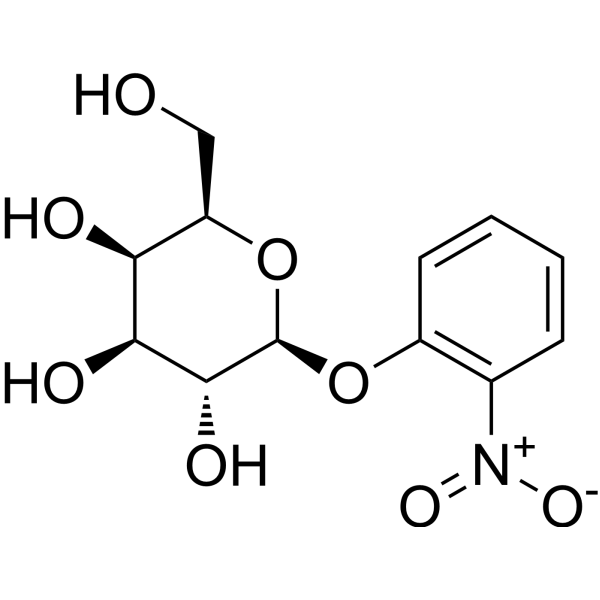
ONPG
Based on 7 publication(s) in Google Scholar
ONPG is a colorimetric and spectrophotometric substrate for detection of β-galactosidase activity.
For research use only. We do not sell to patients.
- Purity : 99.91%
- CAS No.: 369-07-3
- Formula: C12H15NO8
- Molecular Weight:301.25
-
Storage:Powder -20°C, 3 years , 4°C, 2 years ; In solvent -80°C, 2 years , -20°C, 1 year

To place orders, for customer services and technical support, please contact: MedChemExpress USA
Tel: 609-228-6898 E-mail: [email protected] [email protected]


-
 Biological Activity
-
Chemical Information
-
Solvent & Solubility
- Purity & Documentation
- References
-
 Help & FAQs


-

HY-W009756
N-Phenyl-1-naphthylamineFluorescence Probe -
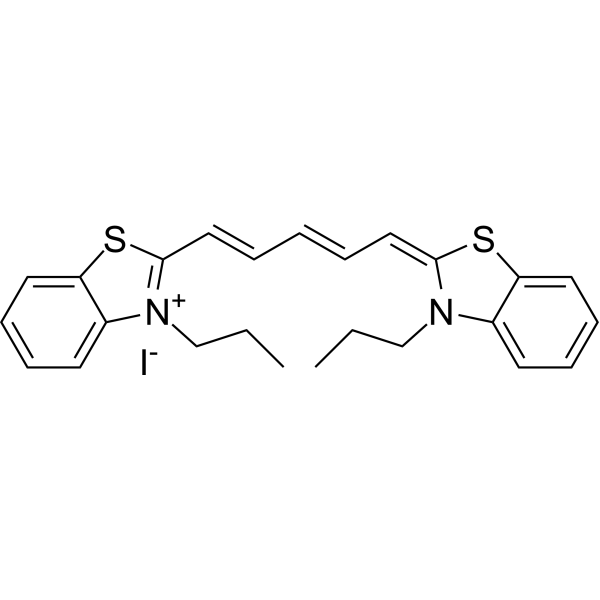
HY-D0085
DiSC3(5)Fluorescent Probe -
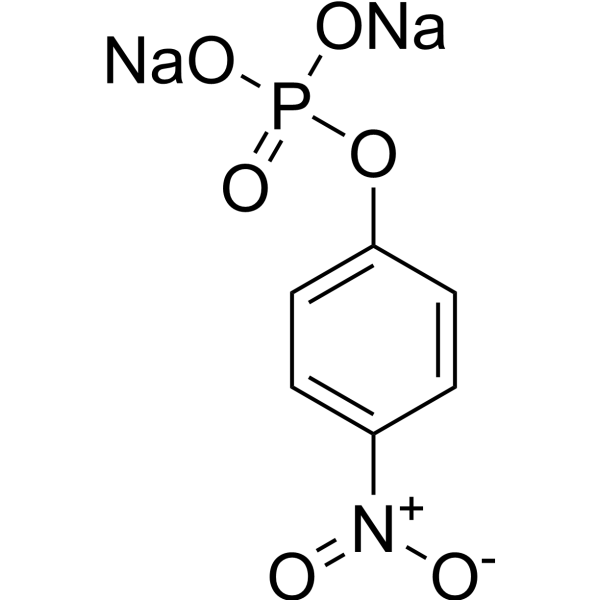
HY-15928
4-Nitrophenyl phosphate disodiumPhosphatases Substrate -
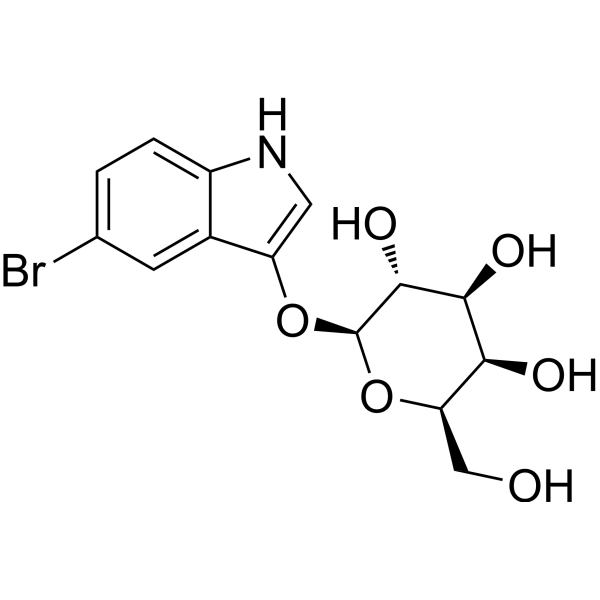
HY-137276
5-Bromo-3-indolyl β-D-galactopyranosideβ-galactosidase Substrate -
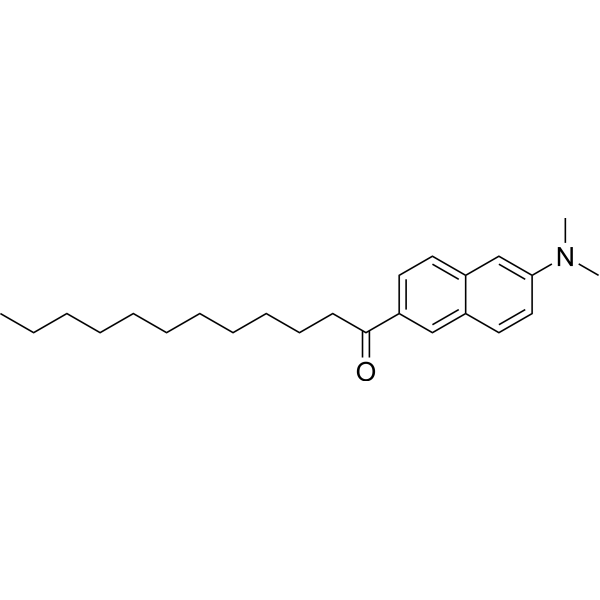
HY-D0080
LaurdanFluorescent Probe -
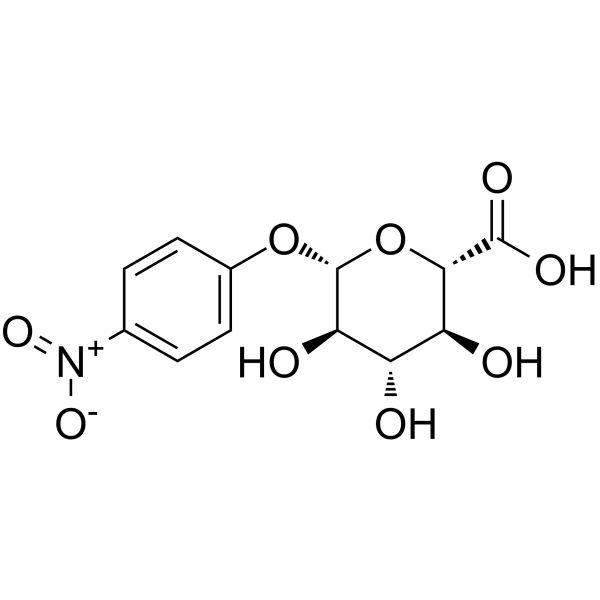
HY-W039892
4-Nitrophenyl β-D-glucuronideβ-Glucuronidase Substrate -
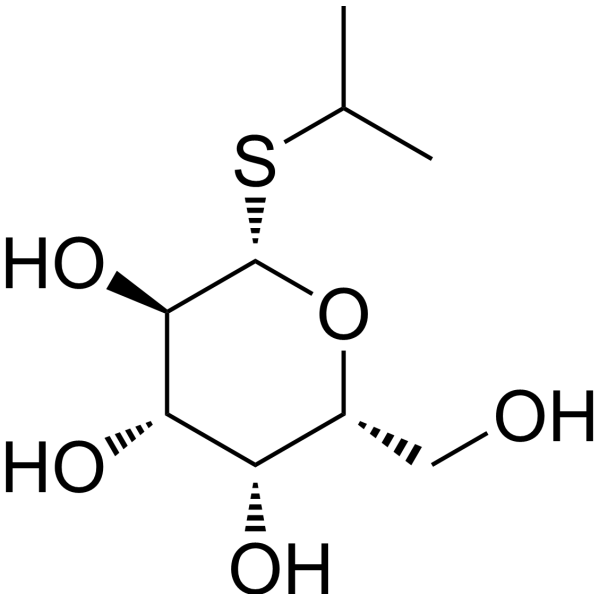
HY-15921
IPTGAllolactose Mimic -
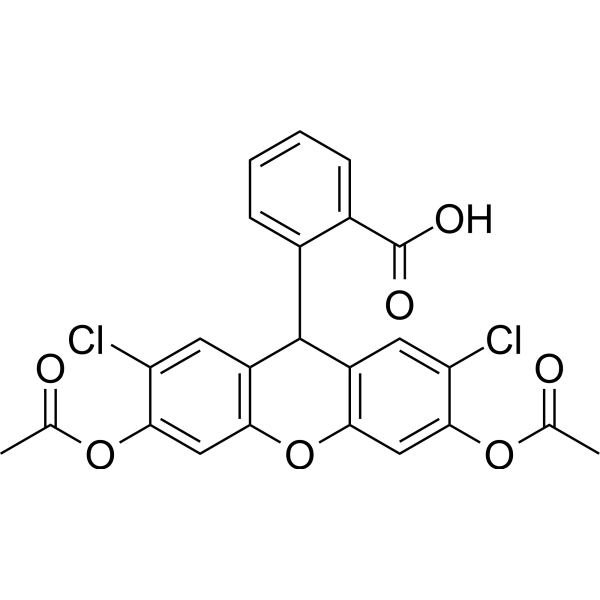
HY-D0940
H2DCFDAROS-Sensitive Probe -
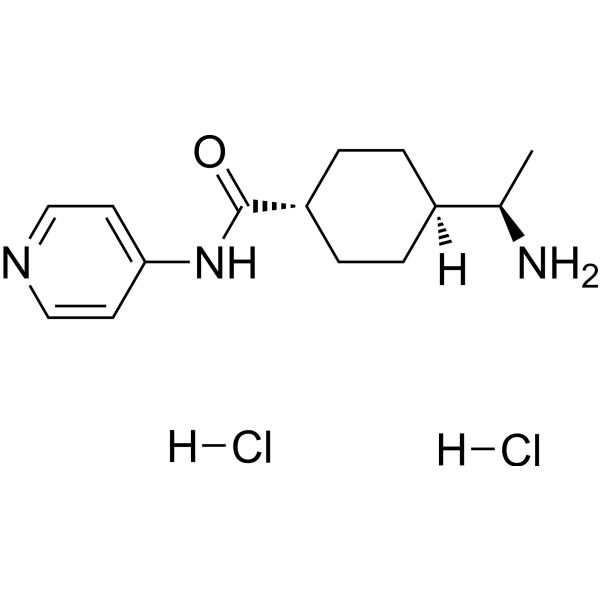
HY-10583
Y-27632 dihydrochlorideROCK Inhibitor -
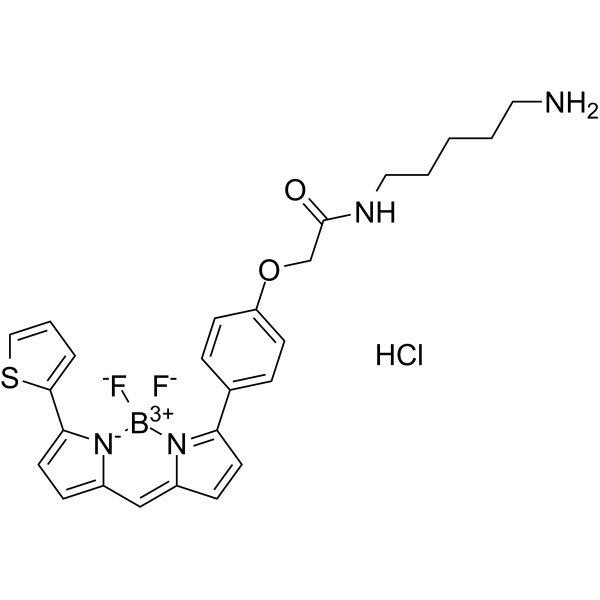
HY-D1594
BODIPY TR CadaverineFluorescent Dye -
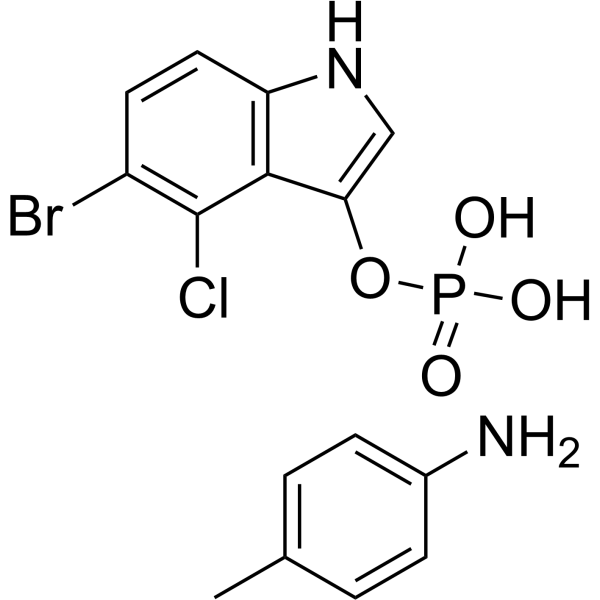
HY-15909
BCIPChromogenic Substrate -

HY-134420
p-Nitrophenyl α-L-fucosideα-L-fucosidase Substrate
Publications Citing Use of MedChemExpress (MCE) ONPG
More- Cell Res. 2021 Jun;31(6):703-712. [Abstract]
- Adv Funct Mater. 2026 Jun 12.
- Biomaterials. 2023 Jun:297:122122. [Abstract]
- Nano Lett. 2020 May 13;20(5):3602-3610. [Abstract]
- Int J Nanomedicine. 2025 Oct 1:20:12009-12018. [Abstract]
- Int J Biol Macromol. 2024 Feb 22;263(Pt 2):130386. [Abstract]
- Plant Physiol. 2025 Oct 31;199(3):kiaf562. [Abstract]


Biological Activity
Description
In Vitro
The enzyme displays high hydrolysis ability for ONPG (100%) and moderate activity for its natural substrate lactose (25.7%). However, the hydrolysis ability of the enzyme towards all other chromogenic nitrophenyl analogues is very weak, indicating that Gal308 is a β-galactosidase with narrow substrate specificity. To investigate the kinetic parameters of recombinant enzyme, the Michaelis-Menten constants (Km), turnover numbers (kcat), and catalytic efficiencies (kcat/Km) of Gal308 for ONPG and lactose are determined. The kcat and Km values are 464.7±7.8 s-1 and 2.7±0.3 mM for ONPG, and 264.2±2.1 s-1 and 7.1±0.8 mM for lactose, respectively. The kcat/Km value of the enzyme for ONPG (172.1 s-1mM-1) is 4.6-fold higher than that for lactose (37.2 s-1mM-1), which clearly demonstrated that the catalytic efficiency of Gal308 for ONPG is much higher than that for lactose[1].
MedChemExpress (MCE) has not independently confirmed the accuracy of these methods. They are for reference only.


Chemical Information
-
CAS No. 369-07-3
-
Appearance Solid
-
Molecular Weight 301.25
-
Formula C12H15NO8
-
Color White to off-white
-
SMILES
O[C@H]([C@@H](O)[C@H]1O)[C@@H](O[C@@H]1CO)OC2=C([N+]([O-])=O)C=CC=C2
-
Synonyms
2-Nitrophenyl β-D-galactopyranoside
-
Shipping
Room temperature in continental US; may vary elsewhere.
-
Storage
Powder -20°C 3 years 4°C 2 years In solvent -80°C 2 years -20°C 1 year


Publications (7)
-
Journal Impact Factor
-
Most Recent
-
Cell Res
2021 Jun;31(6):703-712. PMID: 33159153 -
-
Biomaterials
Combined photothermal and sonodynamic therapy using a 2D black phosphorus nanosheets loaded coating for efficient bacterial inhibition and bone-implant integration. [Abstract]2023 Jun:297:122122. PMID: 37080119 -
Nano Lett
Tetrahedral Framework Nucleic Acids Deliver Antimicrobial Peptides with Improved Effects and Less Susceptibility to Bacterial Degradation. [Abstract]2020 May 13;20(5):3602-3610. PMID: 32272018 -
Int J Nanomedicine
Construction of Baicalein-Loaded Chitosan Nanoparticles for Staphylococcus aureus-Induced Lung Infection Remission. [Abstract]2025 Oct 1:20:12009-12018. PMID: 41054631 -
Int J Biol Macromol
Tailored gelatin methacryloyl-based hydrogel with near-infrared responsive delivery of Qiai essential oils boosting reactive oxygen species scavenging, antimicrobial, and anti-inflammatory activities for diabetic wound healing. [Abstract]2024 Feb 22;263(Pt 2):130386. PMID: 38395288 -
Plant Physiol
VvLBD11/28 repress anthocyanins biosynthesis and intracellular transport to decrease their deposition in grape. [Abstract]2025 Oct 31;199(3):kiaf562. PMID: 41206458


Solvent & Solubility
In Vitro:
H2O : 8.33 mg/mL (27.65 mM; ultrasonic and warming and heat to 60°C)
Please refer to the solubility information to select the appropriate solvent. Once prepared, please aliquot and store the solution to prevent product inactivation from repeated freeze-thaw cycles.
Storage method and period of stock solution: -80°C, 2 years; -20°C, 1 year. When stored at -80°C, please use it within 2 years. When stored at -20°C, please use it within 1 year.
* Note: If you choose water as the stock solution, please dilute it to the working solution, then filter and sterilize it with a 0.22 μm filter before use.
Please refer to the solubility information to select the appropriate solvent. Once prepared, please aliquot and store the solution to prevent product inactivation from repeated freeze-thaw cycles.
Storage method and period of stock solution: -80°C, 2 years; -20°C, 1 year. When stored at -80°C, please use it within 2 years. When stored at -20°C, please use it within 1 year.
* Note: If you choose water as the stock solution, please dilute it to the working solution, then filter and sterilize it with a 0.22 μm filter before use.
Concentration (start) × Volume (start) = Concentration (final) × Volume (final)


Purity & Documentation
-
Data Sheet (281 KB)
-
SDS (396 KB)
- English - EN (396 KB)
- Français - FR (396 KB)
- Deutsch - DE (396 KB)
- Norwegian - NO (396 KB)
- Español - ES (396 KB)
- Swedish - SV (396 KB)
- Italian - IT (396 KB)
- Korean - KR (396 KB)
- Portuguese - PT (396 KB)
-
Handling Instructions (2659 KB)
References


Complete Stock Solution Preparation Table
Please refer to the solubility information to select the appropriate solvent. Once prepared, please aliquot and store the solution to prevent product inactivation from repeated freeze-thaw cycles.
Storage method and period of stock solution: -80°C, 2 years; -20°C, 1 year. When stored at -80°C, please use it within 2 years. When stored at -20°C, please use it within 1 year.
| Optional Solvent | Concentration Solvent Mass | 1 mg | 5 mg | 10 mg | 25 mg |
|---|---|---|---|---|---|
| H2O | 1 mM | 3.3195 mL | 16.5975 mL | 33.1950 mL | 82.9876 mL |
| 5 mM | 0.6639 mL | 3.3195 mL | 6.6390 mL | 16.5975 mL | |
| 10 mM | 0.3320 mL | 1.6598 mL | 3.3195 mL | 8.2988 mL | |
| 15 mM | 0.2213 mL | 1.1065 mL | 2.2130 mL | 5.5325 mL | |
| 20 mM | 0.1660 mL | 0.8299 mL | 1.6598 mL | 4.1494 mL | |
| 25 mM | 0.1328 mL | 0.6639 mL | 1.3278 mL | 3.3195 mL |
* Note: If you choose water as the stock solution, please dilute it to the working solution, then filter and sterilize it with a 0.22 μm filter before use.


ONPG Related Classifications
HY-15926 Related Classifications
 Powered by Bioz