



GAPDH-IN-1

Based on 1 Customer Validation
GAPDH-IN-1 (Compound F8) is a GAPDH inhibitor (IC50 of 39.31 μM for GAPDH enzymatic activity). GAPDH-IN-1 forms a covalent adduct with an aspartic acid in the active site to displace NAD+, a cofactor of the enzyme, with concomitant enhancement of the cysteine-reactive probe reaction with the catalytic cysteine.
For research use only. We do not sell to patients.
- Purity : 98.1%
- CAS No.: 252212-58-1
- Formula: C20H18N2O5
- Molecular Weight:366.37
-
Storage:Powder -20°C, 3 years ; In solvent -80°C, 6 months , -20°C, 1 month


To place orders, for customer services and technical support, please contact: MedChemExpress USA
Tel: 609-228-6898 E-mail: [email protected] [email protected]


-
 Biological Activity
-
Chemical Information
- Protocols
- Purity & Documentation
- References
-
 Help & FAQs


-
HY-W013032A
Oxamic acid sodiumLDH-A Inhibitor -
HY-N7092S
D-Fructose-13C6Stable Isotope -
HY-114365
UDP-GalNAc disodiumEpsC115 Substrate -

HY-113585
1,4-Dideoxy-1,4-imino-D-arabinitol hydrochloride -
HY-113378S
3-Hydroxybutyric acid-d4 sodiumStable Isotope -
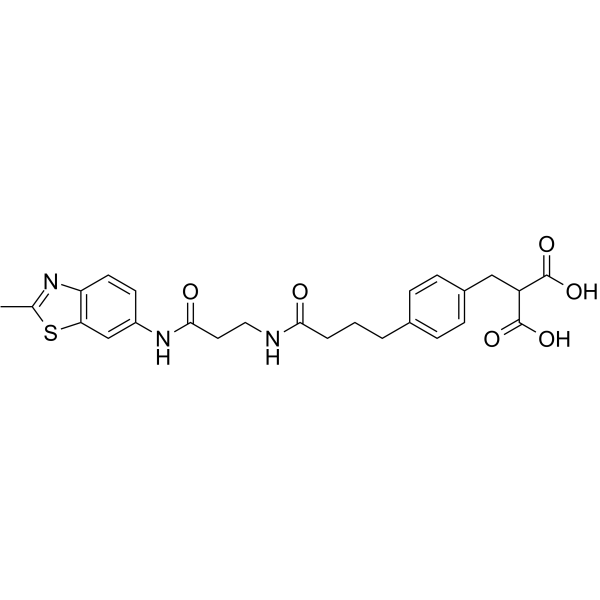
HY-18968
AZ-33LDHA Inhibitor -
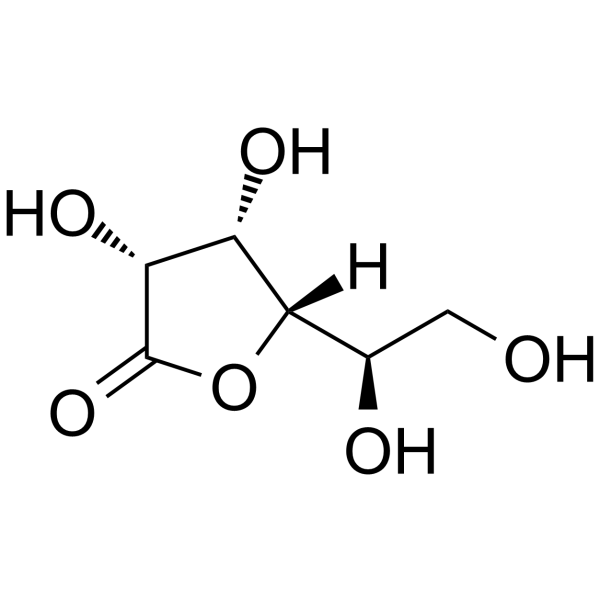
HY-118840
1,4-D-GulonolactoneEndogenous Metabolite -

HY-115709
4,6-O-Benzylidene-D-glucoseAnticancer Agent -
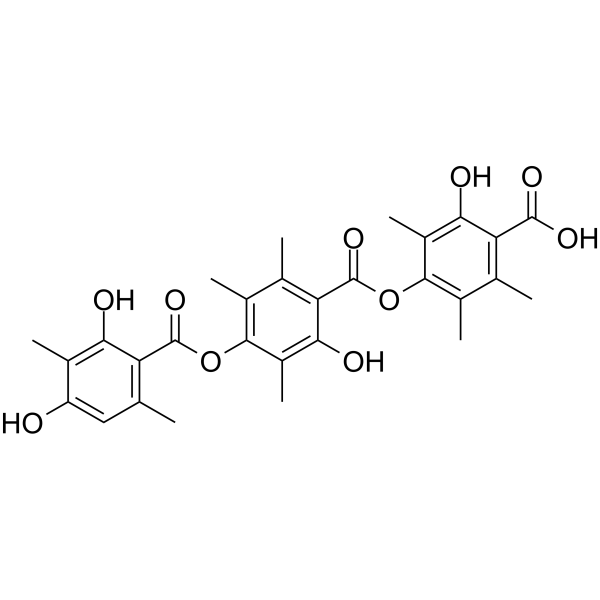
HY-N10225
Thielavin AProstaglandin E2 Inhibitor -
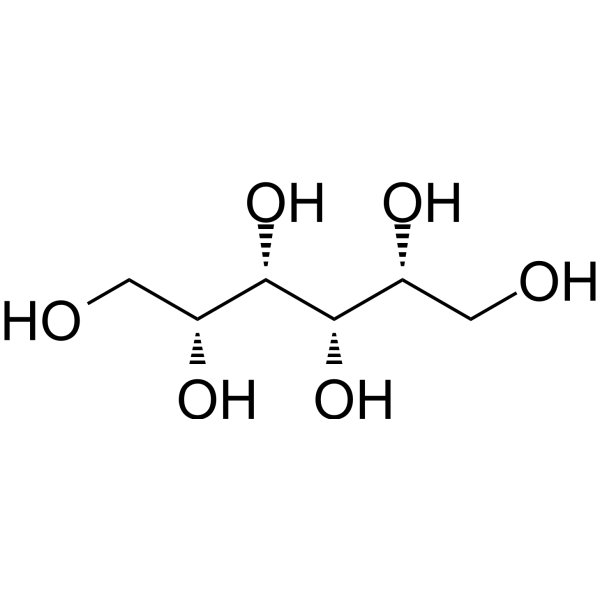
HY-W145584
D-IditolFungal Metabolite -
HY-N8066
Chitobiose octaacetateAcetic Acid Groups -
HY-128029
Glycogen phosphorylase-IN-1Glycogen Phosphorylase Inhibitor


Biological Activity
Description
In Vitro
GAPDH-IN-1 (1.6-50 μM) exhibits a dose-dependent increase in the probe labeling of the 40 kDa protein[1].
GAPDH-IN-1 (50 μM, 4 h) covalently reacts with Asp35 but not cysteine residues in GAPDH, stimulating the subsequent reaction of Cys152 with the iodoacetamide-based (IA) probe[1].
GAPDH-IN-1 (25-50 μM, 24 h) enhances probe and GAPDH responses less in HEK293 cells than in cell lysates[1].
GAPDH-IN-1 (0-100 μM, 24 h) displays a concentration-dependent inactivation of GAPDH in HEK293 cell lysates, with an IC50 of 39.31 μM[1].
GAPDH-IN-1 (0-100 μM) inhibits the viability of HEK293 cells, with an IC50 of 50.64 μM[1].
GAPDH-IN-1-GAPDH adduct can be reduced by the addition of excess NAD+, as evidenced by the band shifts of endogenous GAPDH in a silver-stained gel[1].
MedChemExpress (MCE) has not independently confirmed the accuracy of these methods. They are for reference only. Further protocols information, click here.
-
Cell Line:HEK293 cells transiently expressing FLAG-tagged GAPDH or its cysteine-to-alanine mutants
-
Concentration:50 μM
-
Incubation Time:4 h
-
Result:The band of FLAG-GAPDH was slightly shifted.
Showed band shifts in all the cysteine mutants (C152A, C156A, and C247A).


Chemical Information
-
CAS No. 252212-58-1
-
Appearance Solid
-
Molecular Weight 366.37
-
Formula C20H18N2O5
-
Color White to off-white
-
SMILES
C1(C2=CC(OCC3OC3)=CC=C2)=NN=C(C4=CC(OCC5OC5)=CC=C4)O1
-
Shipping
Room temperature in continental US; may vary elsewhere.
-
Storage
Powder -20°C 3 years In solvent -80°C 6 months -20°C 1 month

Protocols
-
Cell Cytotoxicity Assay
Cytotoxicity assays are usually based on the assessment of cell membrane damage, which can also be indirectly detected by measuring cell viability. Detection methods include MTT assay, CKK-8 assay, LDH assay and ATP assay, etc.


Purity & Documentation
-
Data Sheet (269 KB)
-
SDS (251 KB)
- English - EN (251 KB)
- Français - FR (251 KB)
- Deutsch - DE (251 KB)
- Norwegian - NO (251 KB)
- Español - ES (251 KB)
- Swedish - SV (251 KB)
- Italian - IT (251 KB)
- Korean - KR (251 KB)
- Portuguese - PT (251 KB)
-
Handling Instructions (2659 KB)
References

Calculators
Concentration (start) × Volume (start) = Concentration (final) × Volume (final)


GAPDH-IN-1 Related Classifications
HY-171036 Related Classifications
 Powered by Bioz