



Cy3 NHS ester
Based on 8 publication(s) in Google Scholar
Cy3 NHS ester is a CY dye. CY, short for Cyanine, is a compound consisting of two nitrogen atoms connected by an odd number of methyl units. Cyanine compounds have the characteristics of long wavelength, adjustable absorption and emission, high extinction coefficient, good water solubility and relatively simple synthesis. CY dyes are of en used for the labeling of proteins, antibodies and small molecular compounds. For the labeling of protein antibodies, the combination can be completed through a simple mixing reaction. Below, we introduce the labeling method of protein antibody labeling, which has certain reference significance.
For research use only. We do not sell to patients.
- Purity : 99.24%
- CAS No.: 1393363-07-9
- Formula: C34H40ClN3O4
- Molecular Weight:590.15
-
Storage:
-20°C, protect from light, stored under nitrogen
* In solvent : -80°C, 6 months; -20°C, 1 month (protect from light, stored under nitrogen)

To place orders, for customer services and technical support, please contact: MedChemExpress USA
Tel: 609-228-6898 E-mail: [email protected] [email protected]


-
 Biological Activity
-
Chemical Information
-
Solvent & Solubility
- Purity & Documentation
- References
-
 Help & FAQs


-
HY-D0819
CY5-SEReactive Dye -

HY-DY1063
CY5-SE (solution)Reactive Dye -
HY-135415
Cyanine5.5 NHS ester chlorideCY Dye -
HY-135414
Cyanine5 NHS ester chlorideFluorescent Dye -
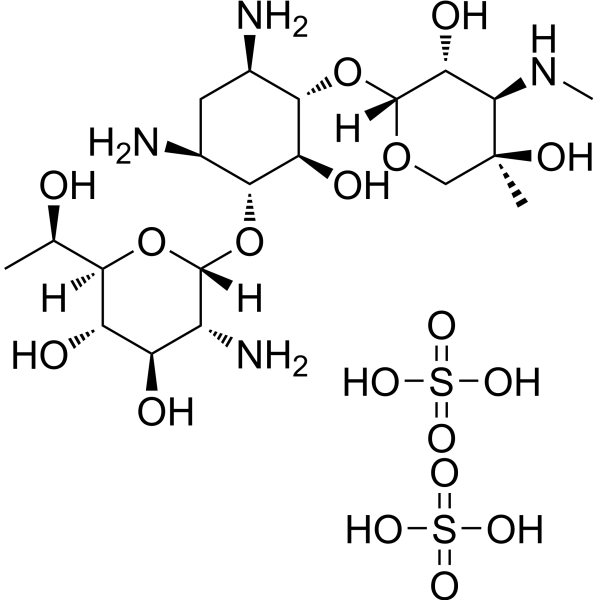
HY-17561
G-418 disulfateAminoglycoside Antibiotic -

HY-134620
Cyanine 5 NHS ester tetrafluoroborateFluorescent Dye -
HY-Y0873J
PEG8000Biochemical reagent -
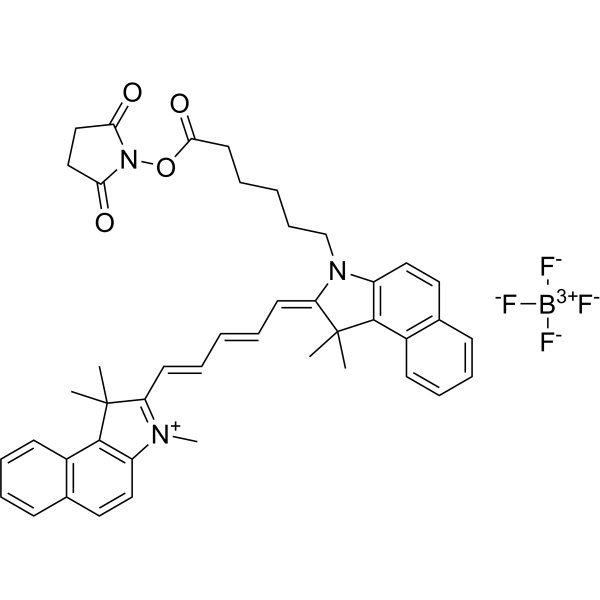
HY-D1322
Cyanine5.5 NHS ester tetrafluoroborateFluorescent Dye -
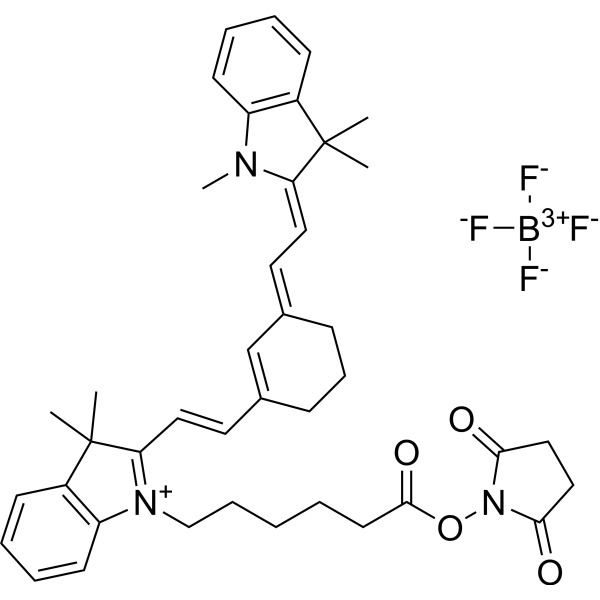
HY-D1315
Cyanine7 NHS ester tetrafluoroborateDye -
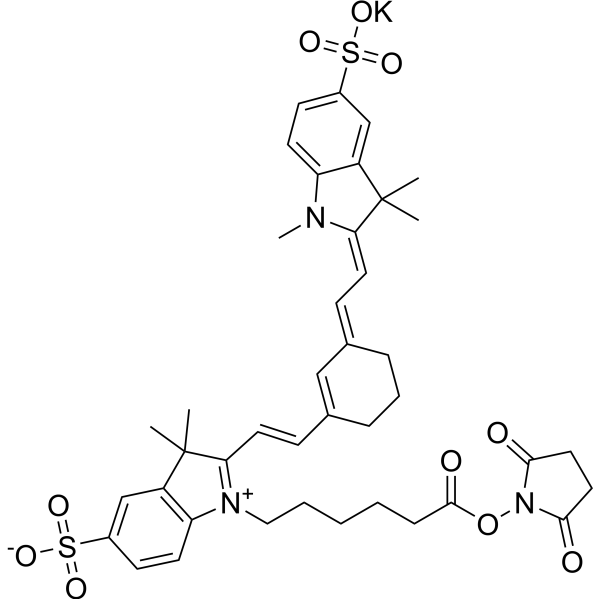
HY-D1352
Sulfo-Cyanine7 NHS ester potassiumDye Reagent -
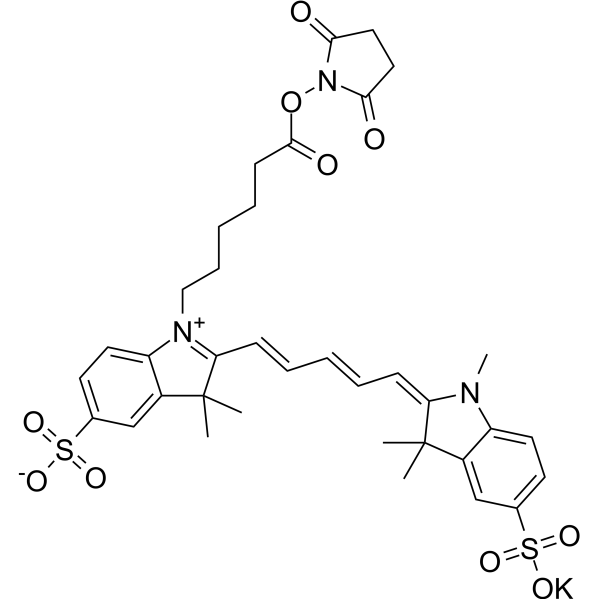
HY-135413A
Sulfo-CY5-NHS ester potassiumReactive Dye -

HY-DY1069
Cy3 NHS ester (solution)Fluorescent Dye
Publications Citing Use of MedChemExpress (MCE) Cy3 NHS ester
More- Adv Sci (Weinh). 2026 Mar;13(14):e12866. [Abstract]
- Biomaterials. 2026 Feb:325:123630. [Abstract]
- Chem Eng J. 2025 Oct 20.
- J Control Release. 2026 Oct 10:398:115222.
- Int J Biol Macromol. 2025 Sep 3;328(Pt 1):147382. [Abstract]
- Cell Rep. 2025 Dec 5;44(12):116658. [Abstract]
- Cancers (Basel). 2026 Jan 15;18(2):270. [Abstract]
- J Infect Dis. 2024 Dec 16;230(6):1476-1487. [Abstract]


Biological Activity
Description
In Vitro
Guide (The following is our recommended protocol. This protocol is only a guide and should be modified according to your specific needs).
1. Protein Preparation
To obtain the best labeling effect, please prepare the protein (antibody) concentration to 2 mg/mL.
1.1 The pH value of the protein solution should be 8.5 ± 0.5. If the pH is lower than 8.0, adjust it with 1 M sodium bicarbonate.
1.2 If the protein concentration is lower than 2 mg/mL, the labeling efficiency will be greatly reduced. To obtain the best labeling efficiency, it is recommended that the final protein concentration range be 2-10 mg/mL.
1.3 The protein must be in a buffer free of primary amines (such as Tris or glycine) and ammonium ions, otherwise the labeling efficiency will be affected.
2. Dye Preparation
Dilute the dye with anhydrous DMSO to prepare a clear stock solution of 10 mg/mL.
3. Calculation of Dye Amount
The amount of dye required for the reaction depends on the amount of protein to be labeled. The optimal molar ratio of dye to protein is approximately 10:1.
Example: Assuming the required labeled protein is 500 μL 2 mg/mL IgG (MW=150,000), and 1 mg of dye is dissolved in 100 μL DMSO, the required dye volume is 4 μL. The detailed calculation process is as follows:
1) mmol (IgG) = mg/mL (IgG) × mL (IgG)/MW (IgG) = 2 mg/mL × 0.5 mL/150,000 mg/mmol = 6.7 × 10⁻⁶ mmol
2) mmol (dye) = mmol (IgG) × 10 = 6.7 × 10⁻⁶ mmol × 10 = 6.7 × 10⁻⁵ mmol
3) μL (dye) = mmol (dye) × MW (dye)/mg/μL (dye) = 6.7 ×10⁻⁵ mmol ×590.15 mg/mmol/0.01 mg/μL = 4 μL (dye)
Note: We recommend using a dye:protein molar ratio of 10:1. If the concentration is too low or too high, the ratio can be adjusted to 5:1, 15:1, or 20:1.
4. Running the Coupling Reaction
1) Slowly add the calculated volume of freshly prepared 10 mg/mL dye to 0.5 mL of protein sample solution, gently shake to mix, and then briefly centrifuge to collect the sample at the bottom of the reaction tube. Avoid vigorous mixing to prevent denaturation and inactivation of the protein sample.
2) Place the reaction tube in a dark place and incubate gently with shaking for 60 minutes at room temperature. Every 10-15 minutes, gently invert the reaction tube several times to thoroughly mix the reactants and improve labeling efficiency.
5. Purification of Conjugates
The following protocol is an example of purifying dye-protein conjugates using a Labelling Kits Centrifugation-Based Rapid Desalting Column (5KD) (HY-D3014).
5.1 Prepare the desalting column according to the instructions.
5.2 Load the reaction mixture onto the top of the desalting column.
5.3 Once the sample has run below the resin surface, immediately add PBS (pH 7.2-7.4).
5.4 Add more PBS (pH 7.2-7.4) to the target sample to complete column purification. Collect the fraction containing the desired dye-protein conjugate.
MedChemExpress (MCE) has not independently confirmed the accuracy of these methods. They are for reference only.
Emission (Em)
570
Excitation (Ex)
550


Chemical Information
-
CAS No. 1393363-07-9
-
Appearance Solid
-
Molecular Weight 590.15
-
Formula C34H40ClN3O4
-
Color Brown to breen
-
SMILES
CC1(C)C(/C=C/C=C2N(C)C3=C(C=CC=C3)C/2(C)C)=[N+](CCCCCC(ON4C(CCC4=O)=O)=O)C5=C1C=CC=C5.[Cl-]
-
Synonyms
Cyanine3 NHS ester
-
Shipping
Room temperature in continental US; may vary elsewhere.
-
Storage
-20°C, protect from light, stored under nitrogen
* In solvent : -80°C, 6 months; -20°C, 1 month (protect from light, stored under nitrogen)


Publications (8)
-
Journal Impact Factor
-
Most Recent
-
Adv Sci (Weinh)
Disrupting the Formation of YAP Condensates Promotes the Activation of AMPKα to Inhibit the Progression of Primary Liver Cancer. [Abstract]2026 Mar;13(14):e12866. PMID: 41486777 -
Biomaterials
Mitocytosis-inducing nanoparticles alleviate gemcitabine resistance via dual disruption of pyrimidine synthesis and redox homeostasis in pancreatic ductal adenocarcinoma. [Abstract]2026 Feb:325:123630. PMID: 40818322 -
-
-
Int J Biol Macromol
Targeted delivery and pro-apoptotic efficacy of an Epstein-Barr virus nuclear antigen 1-specific affibody in EBV-infected cells in vitro. [Abstract]2025 Sep 3;328(Pt 1):147382. PMID: 40912425 -
Cell Rep
In toto imaging shows intravascular proliferation promotes transmigration of daughter cells during brain invasion of Cryptococcus neoformans. [Abstract]2025 Dec 5;44(12):116658. PMID: 41351837 -
Cancers (Basel)
Poliovirus Receptor as a Potential Target in Gastric Signet-Ring Cell Carcinoma for Antibody-Drug Conjugate Development. [Abstract]2026 Jan 15;18(2):270. PMID: 41595191 -
J Infect Dis
Efficacy of a novel affitoxin targeting MOMP against Chlamydia trachomatis in vitro and in vivo. [Abstract]2024 Dec 16;230(6):1476-1487. PMID: 38723186


Solvent & Solubility
In Vitro:
DMSO : 125 mg/mL (211.81 mM; Need ultrasonic; Hygroscopic DMSO has a significant impact on the solubility of product, please use newly opened DMSO)
Please refer to the solubility information to select the appropriate solvent. Once prepared, please aliquot and store the solution to prevent product inactivation from repeated freeze-thaw cycles.
Storage method and period of stock solution: -80°C, 6 months; -20°C, 1 month (protect from light, stored under nitrogen). When stored at -80°C, please use it within 6 months. When stored at -20°C, please use it within 1 month.
Please refer to the solubility information to select the appropriate solvent. Once prepared, please aliquot and store the solution to prevent product inactivation from repeated freeze-thaw cycles.
Storage method and period of stock solution: -80°C, 6 months; -20°C, 1 month (protect from light, stored under nitrogen). When stored at -80°C, please use it within 6 months. When stored at -20°C, please use it within 1 month.
Concentration (start) × Volume (start) = Concentration (final) × Volume (final)


Purity & Documentation
-
Data Sheet (284 KB)
-
SDS (252 KB)
- English - EN (252 KB)
- Français - FR (252 KB)
- Deutsch - DE (252 KB)
- Norwegian - NO (252 KB)
- Español - ES (252 KB)
- Swedish - SV (252 KB)
- Italian - IT (252 KB)
- Korean - KR (252 KB)
- Portuguese - PT (252 KB)
-
Handling Instructions (2659 KB)
References


Complete Stock Solution Preparation Table
Please refer to the solubility information to select the appropriate solvent. Once prepared, please aliquot and store the solution to prevent product inactivation from repeated freeze-thaw cycles.
Storage method and period of stock solution: -80°C, 6 months; -20°C, 1 month (protect from light, stored under nitrogen). When stored at -80°C, please use it within 6 months. When stored at -20°C, please use it within 1 month.
| Optional Solvent | Concentration Solvent Mass | 1 mg | 5 mg | 10 mg | 25 mg |
|---|---|---|---|---|---|
| DMSO | 1 mM | 1.6945 mL | 8.4724 mL | 16.9448 mL | 42.3621 mL |
| 5 mM | 0.3389 mL | 1.6945 mL | 3.3890 mL | 8.4724 mL | |
| 10 mM | 0.1694 mL | 0.8472 mL | 1.6945 mL | 4.2362 mL | |
| 15 mM | 0.1130 mL | 0.5648 mL | 1.1297 mL | 2.8241 mL | |
| 20 mM | 0.0847 mL | 0.4236 mL | 0.8472 mL | 2.1181 mL | |
| 25 mM | 0.0678 mL | 0.3389 mL | 0.6778 mL | 1.6945 mL | |
| 30 mM | 0.0565 mL | 0.2824 mL | 0.5648 mL | 1.4121 mL | |
| 40 mM | 0.0424 mL | 0.2118 mL | 0.4236 mL | 1.0591 mL | |
| 50 mM | 0.0339 mL | 0.1694 mL | 0.3389 mL | 0.8472 mL | |
| 60 mM | 0.0282 mL | 0.1412 mL | 0.2824 mL | 0.7060 mL | |
| 80 mM | 0.0212 mL | 0.1059 mL | 0.2118 mL | 0.5295 mL | |
| 100 mM | 0.0169 mL | 0.0847 mL | 0.1694 mL | 0.4236 mL |


Cy3 NHS ester Related Classifications
HY-112498 Related Classifications
 Powered by Bioz