



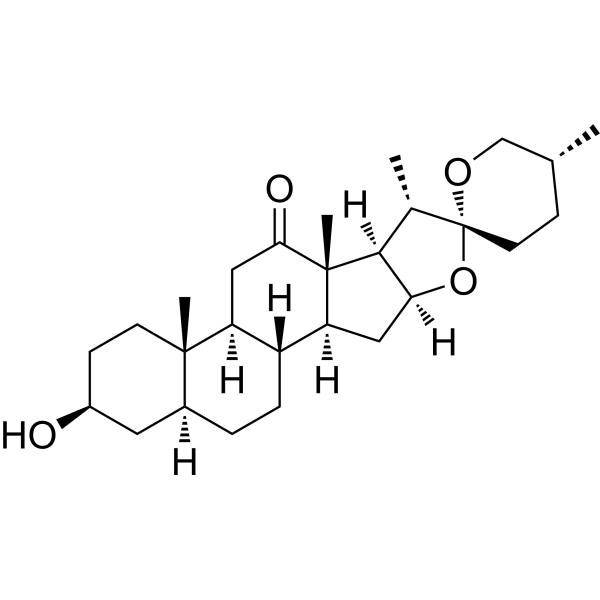
Hecogenin
Based on 1 publication(s) in Google Scholar
Hecogenin is a steroid saponin isolated from Agave sisalana and is a selective inhibitor of human UDP-glucuronosyltransferases. Hecogenin has a wide spectrum of pharmacological activities, including anti-inflammatory, antifungal and gastroprotective effects.
For research use only. We do not sell to patients.
- Purity : 99.96%
- CAS No.: 467-55-0
- Formula: C27H42O4
- Molecular Weight:430.62
-
Storage:Powder -20°C, 3 years , 4°C, 2 years ; In solvent -80°C, 6 months , -20°C, 1 month

To place orders, for customer services and technical support, please contact: MedChemExpress USA
Tel: 609-228-6898 E-mail: [email protected] [email protected]


-
 Biological Activity
-
Chemical Information
-
Solvent & Solubility
- Protocols
- Purity & Documentation
- References
-
 Help & FAQs


-
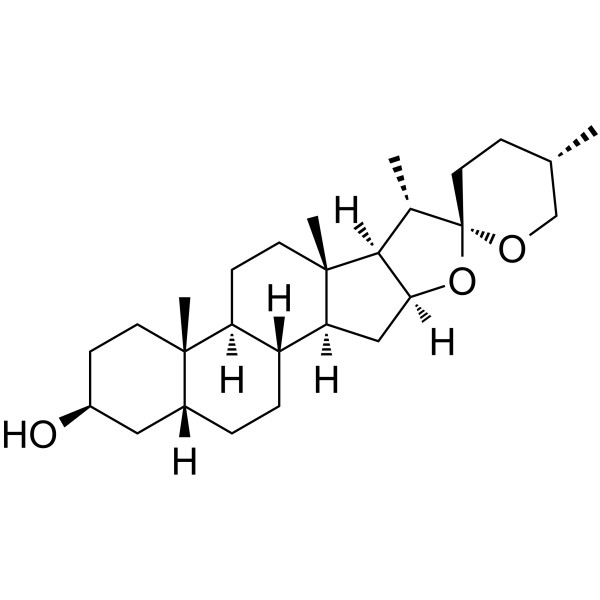
HY-N0073
SarsasapogeninSteroidal Sapogenin -
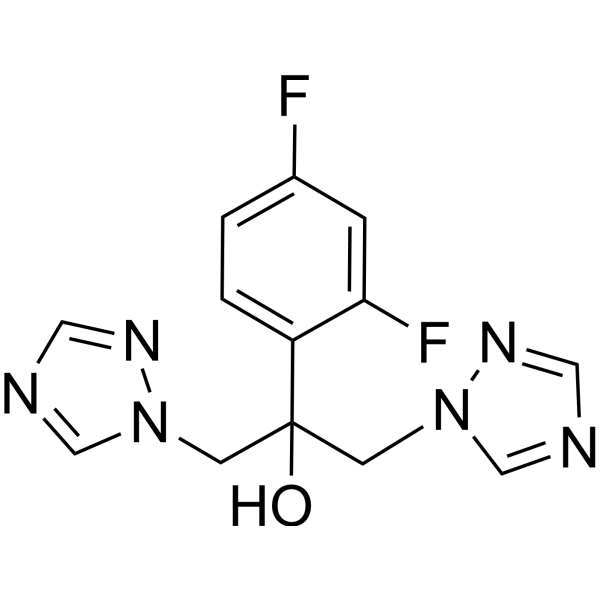
HY-B0101
FluconazoleAntifungal Agent -
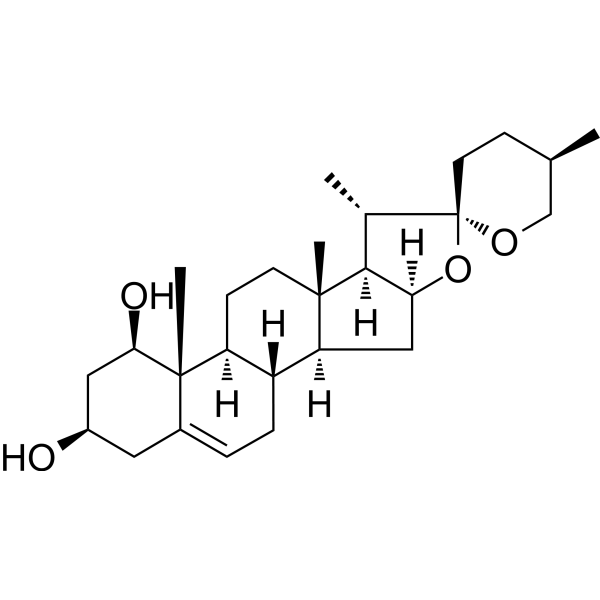
HY-N0496
RuscogeninNOD-like Receptor (NLR) Inhibitor -

HY-N1422R
Hecogenin (Standard)Fungal Inhibitor -
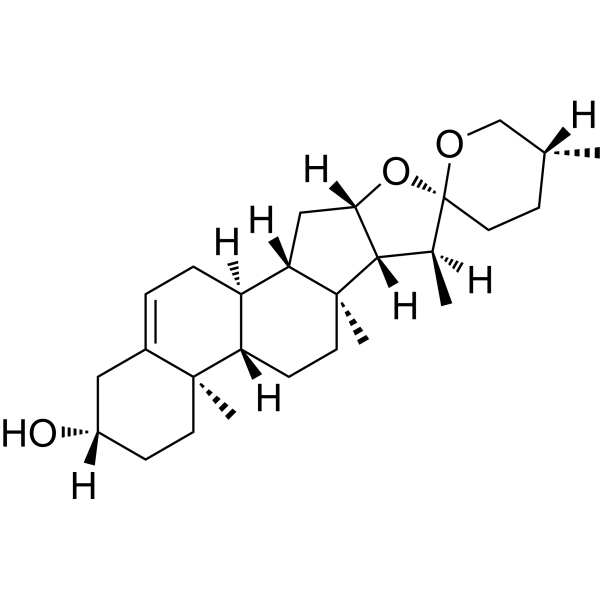
HY-N0177
DiosgeninSTAT Inhibitor -
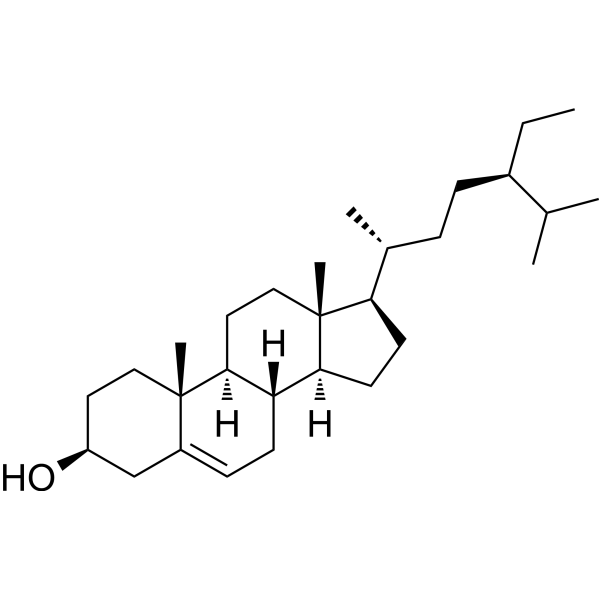
HY-N0171A
Beta-Sitosterol (purity>98%)Dietary Plant Sterols -

HY-N0177R
Diosgenin (Standard)STAT Inhibitor -
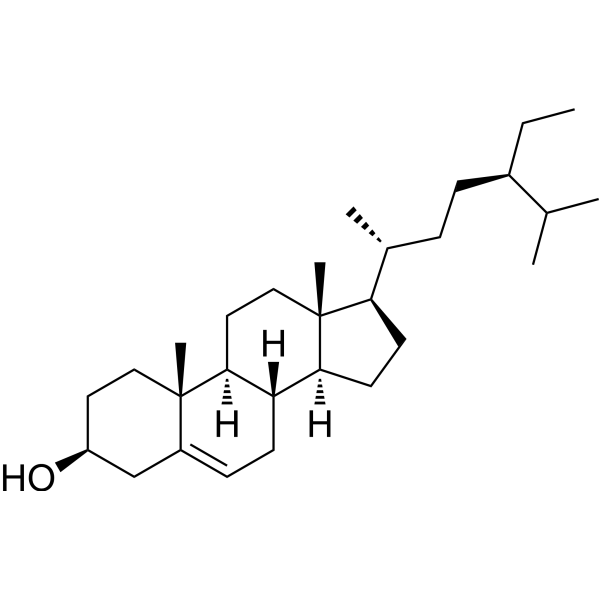
HY-N0171
Beta-Sitosterol (purity>80%)Anticancer Nutraceutical -
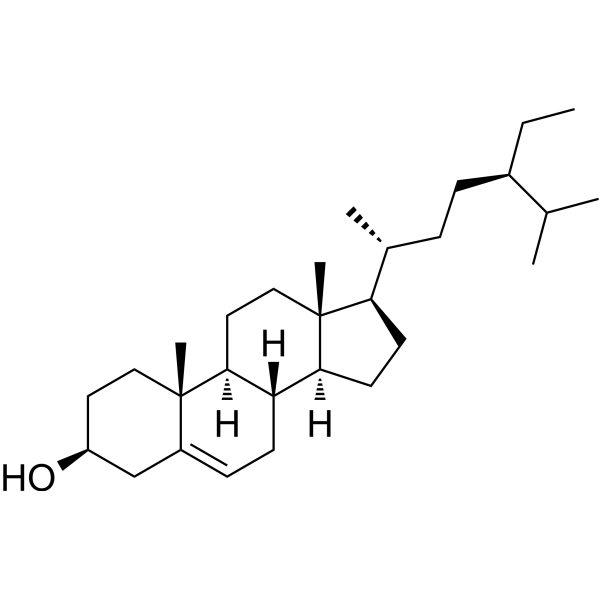
HY-N0171R
Beta-Sitosterol (Standard) -
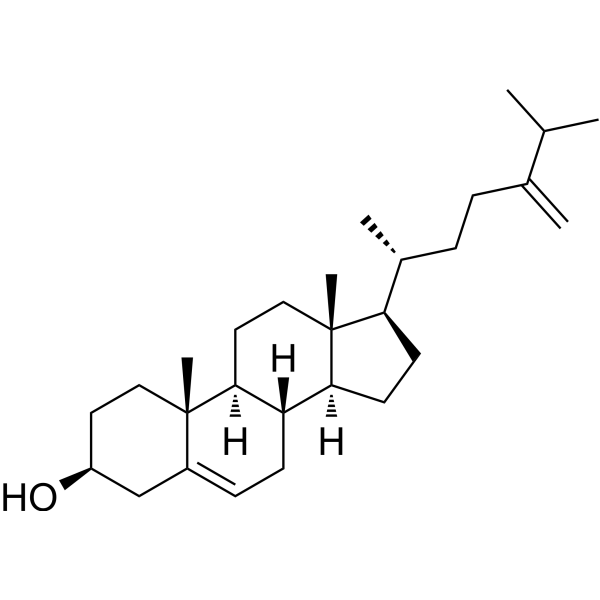
HY-133968
24-MethylenecholesterolSterol -
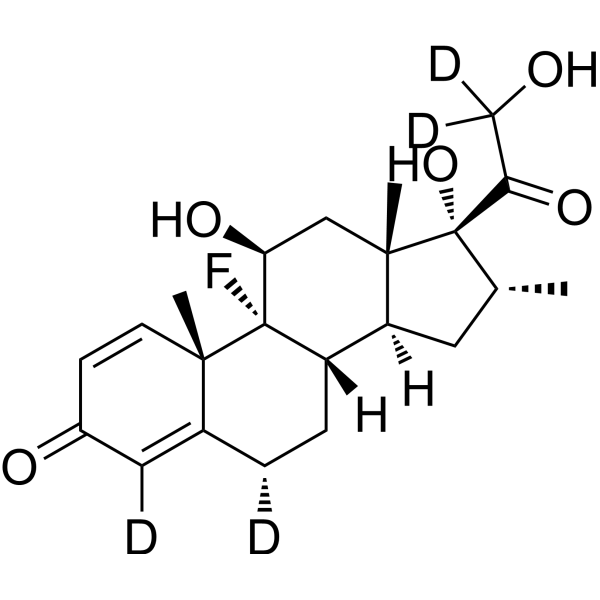
HY-14648S3
Dexamethasone-4,6α,21,21-d4Stable Isotope
Publications Citing Use of MedChemExpress (MCE) Hecogenin
More Customer Validation & Images

-
Cell Proliferation/Viability Assay

-
Cell Migration/Invasion Assay

-
WB

-
RT-PCR


Biological Activity
Description
IC50 & Target
Human UDP-glucuronosyltransferases[1]
Cellular Effect
|
Cell Line

|
Type | Value | Description | References |
|---|---|---|---|---|
| A549 | IC50 |
>40 μM
Compound: Hecogenin
|
Antiproliferative activity against human A549 cells assessed as reduction in cell viability after 48 hrs by MTT assay
Antiproliferative activity against human A549 cells assessed as reduction in cell viability after 48 hrs by MTT assay
|
[PMID: 33735799] |
| BT-474 | IC50 |
38.2 μM
Compound: 1
|
Antiproliferative activity against human BT474 cells after 72 hrs by MTT assay
Antiproliferative activity against human BT474 cells after 72 hrs by MTT assay
|
[PMID: 29066046] |
| HT-29 | IC50 |
>40 μM
Compound: Hecogenin
|
Antiproliferative activity against human HT-29 cells assessed as reduction in cell viability after 48 hrs by MTT assay
Antiproliferative activity against human HT-29 cells assessed as reduction in cell viability after 48 hrs by MTT assay
|
[PMID: 33735799] |
| HUVEC | IC50 |
>100 μM
Compound: Hecogenin
|
Cytotoxicity against human HUVEC cells assessed as reduction in cell viability after 48 hrs by MTT assay
Cytotoxicity against human HUVEC cells assessed as reduction in cell viability after 48 hrs by MTT assay
|
[PMID: 33735799] |
| MCF7 | IC50 |
28.7 μM
Compound: Hecogenin
|
Antiproliferative activity against human MCF7 cells assessed as reduction in cell viability after 48 hrs by MTT assay
Antiproliferative activity against human MCF7 cells assessed as reduction in cell viability after 48 hrs by MTT assay
|
[PMID: 33735799] |
| MCF7 | IC50 |
31 μM
Compound: 1
|
Antiproliferative activity against human MCF7 cells after 72 hrs by MTT assay
Antiproliferative activity against human MCF7 cells after 72 hrs by MTT assay
|
[PMID: 29066046] |
| MDA-MB-231 | IC50 |
28.7 μM
Compound: 1
|
Antiproliferative activity against human MDA-MB-231 cells after 72 hrs by MTT assay
Antiproliferative activity against human MDA-MB-231 cells after 72 hrs by MTT assay
|
[PMID: 29066046] |
| MDA-MB-231 | IC50 |
31.21 μM
Compound: Hecogenin
|
Antiproliferative activity against human MDA-MB-231 cells assessed as reduction in cell viability after 48 hrs by MTT assay
Antiproliferative activity against human MDA-MB-231 cells assessed as reduction in cell viability after 48 hrs by MTT assay
|
[PMID: 33735799] |
| MDA-MB-231 | IC50 |
37.1 μM
Compound: 1
|
Antiinvasive activity against human MDA-MB-231 cells after 24 hrs by cell invasion assay
Antiinvasive activity against human MDA-MB-231 cells after 24 hrs by cell invasion assay
|
[PMID: 29066046] |
| MDA-MB-468 | IC50 |
35.2 μM
Compound: 1
|
Antiproliferative activity against human MDA-MB-468 cells after 72 hrs by MTT assay
Antiproliferative activity against human MDA-MB-468 cells after 72 hrs by MTT assay
|
[PMID: 29066046] |
| SK-BR-3 | IC50 |
33.3 μM
Compound: 1
|
Antiproliferative activity against human SKBR3 cells after 72 hrs by MTT assay
Antiproliferative activity against human SKBR3 cells after 72 hrs by MTT assay
|
[PMID: 29066046] |
| T47D | IC50 |
36.6 μM
Compound: 1
|
Antiproliferative activity against human T47D cells after 72 hrs by MTT assay
Antiproliferative activity against human T47D cells after 72 hrs by MTT assay
|
[PMID: 29066046] |
In Vivo
MedChemExpress (MCE) has not independently confirmed the accuracy of these methods. They are for reference only.
-
Animal Model:Male Swiss mice (20-30 g) with ethanol[1]
-
Dosage:3.1 mg/kg, 7.5 mg/kg, 15 mg/kg, 30 mg/kg, 60 mg/kg and 90 mg/kg
-
Administration:Oral administration; for 15 hours
-
Result:Normalized GSH levels and significantly reduced lipid peroxidation and nitrite levels in the stomach, as evaluated by the ethanol-induced gastric lesion model. Decreased MPO release and significantly protected the gastric mucosa.


Chemical Information
-
CAS No. 467-55-0
-
Appearance Solid
-
Molecular Weight 430.62
-
Formula C27H42O4
-
Color White to off-white
-
SMILES
[H][C@]1(O[C@@]2(OC[C@H](C)CC2)[C@@H](C)[C@@]1([C@]34C)[H])C[C@@]3([H])[C@]5([H])CC[C@@]6([H])C[C@@H](O)CC[C@]6(C)[C@@]5([H])CC4=O
-
Structure Classification
-
Initial Source
-
Shipping
Room temperature in continental US; may vary elsewhere.
-
Storage
Powder -20°C 3 years 4°C 2 years In solvent -80°C 6 months -20°C 1 month


Publications (1)
-
Journal Impact Factor
-
Most Recent
-
Curr Issues Mol Biol
Cinnamomum migao H.W. Li Ethanol-Water Extract Suppresses IL-6 Production in Cardiac Fibroblasts: Mechanisms Elucidated via UPLC-Q-TOF-MS, Network Pharmacology, and Experimental Assays. [Abstract]2025 Sep 26;47(10):798. PMID: 41150746
Hecogenin purchased from MedChemExpress. Usage Cited in: Curr Issues Mol Biol. 2025 Sep 26;47(10):798. [Abstract]
Effect of different concentrations of Hecogenin (1. 20, 40, 80, 160 μM) on CFs viability.
Hecogenin purchased from MedChemExpress. Usage Cited in: Curr Issues Mol Biol. 2025 Sep 26;47(10):798. [Abstract]
Representative images from the Transwell assay showing the migration of CFs treated with MG-EWE, Laurolitsine, and Hecogenin (1 μM).
Hecogenin purchased from MedChemExpress. Usage Cited in: Curr Issues Mol Biol. 2025 Sep 26;47(10):798. [Abstract]
Electrophoretic bands of Collagen I, Collagen III, α-SMA, p-ADRB2, ADRB2, p-JNK, JNK, p-c-Jun, c-Jun, and IL-6 protein expression treated with Hecogenin (1 μM).
Hecogenin purchased from MedChemExpress. Usage Cited in: Curr Issues Mol Biol. 2025 Sep 26;47(10):798. [Abstract]
Expression level of IL-6 mRMA in CFs of rats treated with Hecogenin (1 μM).


Solvent & Solubility
In Vitro:
DMF : 16.67 mg/mL (38.71 mM; ultrasonic and warming and heat to 60°C)
H2O : < 0.1 mg/mL (insoluble)
DMSO : < 1 mg/mL (insoluble or slightly soluble)
Please refer to the solubility information to select the appropriate solvent. Once prepared, please aliquot and store the solution to prevent product inactivation from repeated freeze-thaw cycles.
Storage method and period of stock solution: -80°C, 6 months; -20°C, 1 month. When stored at -80°C, please use it within 6 months. When stored at -20°C, please use it within 1 month.
Please refer to the solubility information to select the appropriate solvent. Once prepared, please aliquot and store the solution to prevent product inactivation from repeated freeze-thaw cycles.
Storage method and period of stock solution: -80°C, 6 months; -20°C, 1 month. When stored at -80°C, please use it within 6 months. When stored at -20°C, please use it within 1 month.
Concentration (start) × Volume (start) = Concentration (final) × Volume (final)

Protocols
-
Research Protocol for Inflammation-related Diseases
The NLRP3 inflammasome is a cytosolic innate immune signaling platform that integrates priming signals and danger-signal activation to promote caspase-1 activation, maturation of IL-1β and IL-18, and gasdermin D-mediated pyroptotic cell death. The core experimental logic is to determine whether inflammatory disease phenotypes are driven by increased NLRP3 expression, ASC-containing inflammasome assembly, caspase-1 cleavage, GSDMD cleavage, and extracellular release of IL-1β/IL-18 rather than by nonspecific cell injury alone. The pathway is strongly linked to inflammation-related disease phenotypes because monosodium urate crystals activate NALP3/NLRP3 inflammasome signaling in gout-like crystal inflammation, cholesterol crystals activate NLRP3 inflammasomes in atherogenesis models, and DSS-induced intestinal inflammation has been reported to involve NLRP3 inflammasome activity. However, experimental colitis studies also show context-dependent protective effects of NLRP3 inflammasome co


Purity & Documentation
-
Data Sheet (275 KB)
-
SDS (392 KB)
- English - EN (392 KB)
- Français - FR (392 KB)
- Deutsch - DE (392 KB)
- Norwegian - NO (392 KB)
- Español - ES (392 KB)
- Swedish - SV (392 KB)
- Italian - IT (392 KB)
- Korean - KR (392 KB)
- Portuguese - PT (392 KB)
-
Handling Instructions (2659 KB)
References


Complete Stock Solution Preparation Table
Please refer to the solubility information to select the appropriate solvent. Once prepared, please aliquot and store the solution to prevent product inactivation from repeated freeze-thaw cycles.
Storage method and period of stock solution: -80°C, 6 months; -20°C, 1 month. When stored at -80°C, please use it within 6 months. When stored at -20°C, please use it within 1 month.
| Optional Solvent | Concentration Solvent Mass | 1 mg | 5 mg | 10 mg | 25 mg |
|---|---|---|---|---|---|
| DMF | 1 mM | 2.3222 mL | 11.6112 mL | 23.2223 mL | 58.0558 mL |
| 5 mM | 0.4644 mL | 2.3222 mL | 4.6445 mL | 11.6112 mL | |
| 10 mM | 0.2322 mL | 1.1611 mL | 2.3222 mL | 5.8056 mL | |
| 15 mM | 0.1548 mL | 0.7741 mL | 1.5482 mL | 3.8704 mL | |
| 20 mM | 0.1161 mL | 0.5806 mL | 1.1611 mL | 2.9028 mL | |
| 25 mM | 0.0929 mL | 0.4644 mL | 0.9289 mL | 2.3222 mL | |
| 30 mM | 0.0774 mL | 0.3870 mL | 0.7741 mL | 1.9352 mL |


Hecogenin Related Classifications
HY-N1422 Related Classifications
 Powered by Bioz