



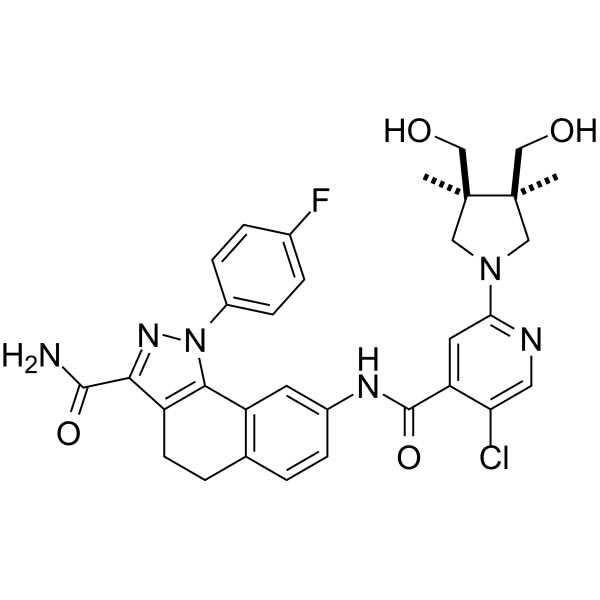
PF-184
PF-184 is a potent and selective IKK-2 inhibitor (IC50: 37 nM) over rhIKK-1, IKKi, and more than 30 tyrosine and serine/threonine kinases. PF-184 can be used in the research of inflammation, such as asthma and chronic obstructive pulmonary disease.
For research use only. We do not sell to patients.
- CAS No.: 3078541-89-3
- Formula: C32H32ClFN6O4
- Molecular Weight:619.09
-
Storage:
Please store the product under the recommended conditions in the Certificate of Analysis.

To place orders, for customer services and technical support, please contact: MedChemExpress USA
Tel: 609-228-6898 E-mail: [email protected] [email protected]


-
 Biological Activity
-
Chemical Information
- Protocols
- Purity & Documentation
- References
-
 Help & FAQs




Biological Activity
Description
IC50 & Target
[1]|
IKK-2 37 nM (IC50) |
In Vitro
PF-184 (0.7 nM-10 μM, 1 h) displays inhibitory activity after successive washes of LPS-stimulated PBMC kinase activation[1].
PF-184 (1 h) broadly inhibits IKK-2-dependent inflammatory products in human disease-relevant cells (such as PBMC, neutrophils, airway epithelial cells, and airway endothelial cells), with IC50 values ranging from 8 nM to 343 nM[1].
PF-184 (2 nM-10 μM, 1 h) inhibits IL-1β-induced TNF-α in a concentration-dependent manner in PBMCs[1].
MedChemExpress (MCE) has not independently confirmed the accuracy of these methods. They are for reference only. Further protocols information, click here.
In Vivo
PF-184 (i.v. 2 mg/kg or p.o. 5 mg/kg, rats) shows a T1 2 (i.v.) value of 1 h, low oral bioavailability (5%), and high i.v. clearance (59 mL/min/kg)[1].
MedChemExpress (MCE) has not independently confirmed the accuracy of these methods. They are for reference only.
-
Animal Model:Rat airway model of neutrophilia[1]
-
Dosage:0.3-2.5 mg/mL, 100 μL
-
Administration:Intratracheal administration
-
Result:Suppressed neutrophil infiltration with an EC50 value of 1 mg/mL.
Suppressed BAL fluid TNF-α and PGE2 levels, and inhibited p65 translocation.


Chemical Information
-
CAS No. 3078541-89-3
-
Molecular Weight 619.09
-
Formula C32H32ClFN6O4
-
SMILES
O=C(C1=NN(C2=C1CCC3=C2C=C(NC(C4=CC(N5C[C@](CO)([C@](CO)(C5)C)C)=NC=C4Cl)=O)C=C3)C6=CC=C(C=C6)F)N
-
Shipping
Room temperature in continental US; may vary elsewhere.
-
Storage
Please store the product under the recommended conditions in the Certificate of Analysis.

Protocols
-
Cell Cytotoxicity Assay
Cytotoxicity assays are usually based on the assessment of cell membrane damage, which can also be indirectly detected by measuring cell viability. Detection methods include MTT assay, CKK-8 assay, LDH assay and ATP assay, etc.
-
Research Protocol for Inflammation-related Diseases
The NLRP3 inflammasome is a cytosolic innate immune signaling platform that integrates priming signals and danger-signal activation to promote caspase-1 activation, maturation of IL-1β and IL-18, and gasdermin D-mediated pyroptotic cell death. The core experimental logic is to determine whether inflammatory disease phenotypes are driven by increased NLRP3 expression, ASC-containing inflammasome assembly, caspase-1 cleavage, GSDMD cleavage, and extracellular release of IL-1β/IL-18 rather than by nonspecific cell injury alone. The pathway is strongly linked to inflammation-related disease phenotypes because monosodium urate crystals activate NALP3/NLRP3 inflammasome signaling in gout-like crystal inflammation, cholesterol crystals activate NLRP3 inflammasomes in atherogenesis models, and DSS-induced intestinal inflammation has been reported to involve NLRP3 inflammasome activity. However, experimental colitis studies also show context-dependent protective effects of NLRP3 inflammasome co


Purity & Documentation
References
[1]. Cynthia D Sommers, et al. Novel tight-binding inhibitory factor-kappaB kinase (IKK-2) inhibitors demonstrate target-specific anti-inflammatory activities in cellular assays and following oral and local delivery in an in vivo model of airway inflammation. J Pharmacol Exp Ther. 2009 Aug;330(2):377-88. [Content Brief]

Calculators
Concentration (start) × Volume (start) = Concentration (final) × Volume (final)


PF-184 Related Classifications
HY-107591B Related Classifications
 Powered by Bioz