



Manelimab
Manelimab (BCD-135) is a monoclonal antibody targeting PD-L1 with PD-L1 inhibitory activity. Manelimab blocks the interaction between PD-L1 and PD-1 to abrogate the immunosuppressive signals of T cells in the tumor microenvironment. Manelimab is applicable for tumor-related research.
商品は「研究用試薬」です。人や動物の医療用・臨床診断用・食品用の製品ではありません。
研究用途以外に使用した場合、当社は一切の責任を負いかねます。
- CAS 番号: 2168561-26-8
-
保管条件:
Please store the product under the recommended conditions in the Certificate of Analysis.


To place orders, for customer services and technical support, please contact: MedChemExpress USA
Tel: 609-228-6898 E-mail: [email protected] [email protected]


-
 生物活性
生物活性
-
化学情報
- プロトコル
- 純度とドキュメンテーション
- 参考文献
-
 Help & FAQs


-

HY-P9902
PembrolizumabPD-1 Inhibitor -

HY-P9904
AtezolizumabAnti-PD-L1 Antibody -
HY-P9903
NivolumabPD-1 Inhibitor -

HY-P9919
DurvalumabPD-L1 Blocking Antibody -

HY-P99052
TislelizumabPD-1 Inhibitor -

HY-P9978
ToripalimabPD-1 Inhibitor -

HY-108730
AvelumabAnti-PD-L1 Antibody -

HY-P99048
SintilimabPD-1/PD-L1 Inhibitor -
HY-P9919A
Durvalumab (anti-PD-L1)PD-1/PD-L1 Inhibitor -

HY-P9971
CamrelizumabPD-1 Neutralizing Antibody -

HY-P99203
CemiplimabPD-1 Inhibitor -

HY-P99785
OpucolimabAnti-PD-L1 Antibody


生物活性
製品説明
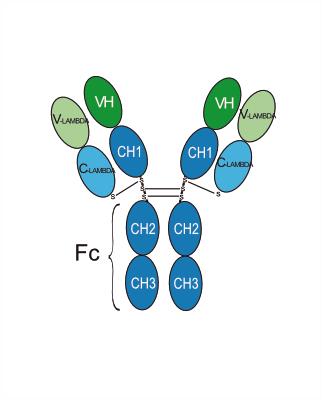
Isotype
Human IgG1 lambda2
Recommend Isotype Controls
Species Reactivity
Human
IC50 & Target
B7-H1/PD-L1/CD274
体外実験
MedChemExpress (MCE) has not independently confirmed the accuracy of these methods. They are for reference only.
臨床実験
| NCT Number | Sponsor | Condition | Start Date |
Phase

|
|---|---|---|---|---|
| NCT01329991 | 2011-05 | PHASE1 |
遺伝子ID
アクセッション番号
Conjugated
Unconjugated
Reconsititution
The product can be reconstituted/diluted with sterile PBS or saline.
Format
-
Human IgG1 lambda2
アプリケーション
ELISA, FACS, Functional assay


化学情報
-
CAS 番号 2168561-26-8
-
SMILES
[Manelimab]
-
別名
BCD-135
-
Formulation
Please refer to the lot-specific COA for specific buffer information.
-
保管条件
Please store the product under the recommended conditions in the Certificate of Analysis.


純度とドキュメンテーション
参考文献

Calculators
濃度 (開始) × 体積 (開始) = 濃度 (終了) × 体積 (終了)


Manelimab 関連分類
HY-P99723 関連分類
 Powered by Bioz